 Skagit County
 Why Burlington Roofs Wear Differently Than Roofs Inland
Burlington sits low in the Skagit Valley, close enough to Puget Sound and the tidal Skagit River delta that salt-tinged marine air is a near-constant presence, not an occasional visitor. Add driving rain that comes in sideways during fall and winter storms, plus a mild, shaded, humid climate that keeps moss actively growing for most of the year, and you have a set of conditions that ages a roof differently than the drier parts of the state see. An asphalt shingle roof here isn't dealing with occasional weather events — it's dealing with sustained moisture exposure, season after season, year after year.
None of this means asphalt shingles are the wrong material for Skagit County. They remain one of the most practical, cost-effective roofing options available, and they perform well here when the installation accounts for what this climate actually does to a roof over its lifespan. The problem is almost never the shingle itself — it's a roof system that was installed the same way it would be in a dry, low-moss climate, then asked to hold up in this one.
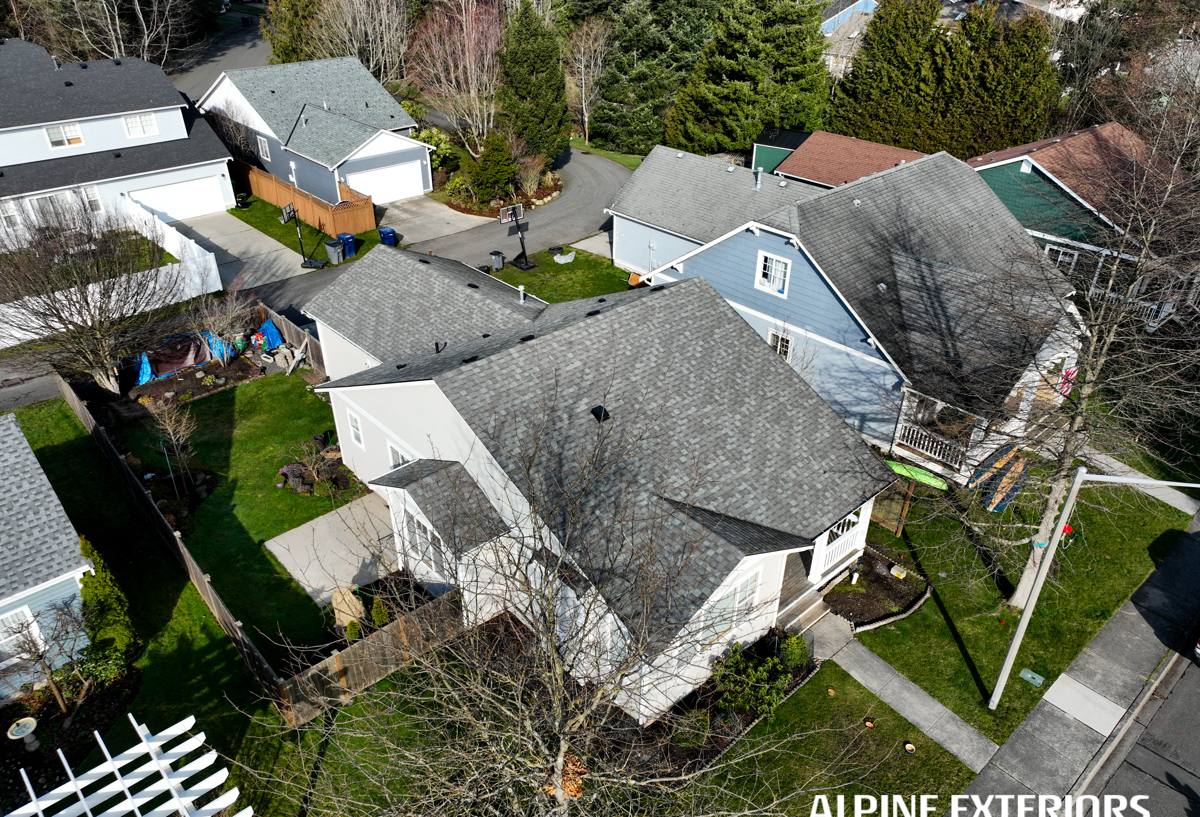
What Burlington Homes Actually Need From a Shingle Roof
A correctly built asphalt shingle roof in this area is really a system of layered defenses, not just a single product nailed to a deck. Each layer is doing a specific job against a specific problem this climate creates.
Moisture Management Below the Shingle
Wind-driven rain doesn't always run straight down a roof slope — it can be pushed sideways and even slightly uphill under high wind. That's why underlayment choice and placement matters more here than it would in a calmer, drier climate. Self-adhering waterproof membrane at eaves, valleys, and around every penetration (vents, chimneys, skylights) gives the roof a second line of defense if wind-driven water gets past the shingle surface, which it eventually will over 20-plus years of Skagit Valley storms.
Ventilation Isn't a Nice-to-Have
Attics in this climate trap moisture from both directions — humid outside air working its way in, and warm, moist household air rising up from inside. Without balanced intake and exhaust ventilation, that moisture condenses on the underside of the roof deck, which leads to rot, mold, and premature shingle failure from underneath — damage a homeowner often doesn't see until it's already extensive.
Choosing the Right Shingle for This Climate
Not every asphalt shingle product handles moss, algae, and constant moisture the same way. The table below reflects general trade-offs we walk homeowners through, not brand-specific claims.
| Shingle Tier | Typical Lifespan | Moss/Algae Resistance | Best Fit | Relative Cost |
|---|---|---|---|---|
| Standard 3-tab | Shorter end of the range | Lower unless treated | Budget-focused reroofs, rentals, outbuildings | $ |
| Architectural/laminate | Mid-to-long range | Good when algae-resistant granules are specified | Most Burlington homes | $$ |
| Premium/designer | Longest range, best warranty structure | Best available, plus heavier wind ratings | Homes with heavy tree cover, higher wind exposure, or longer-term ownership plans | $$$ |
For most homes in Burlington, we recommend architectural shingles with algae-resistant granules as the practical middle ground — they hold up noticeably better against the valley's moss and staining pressure than standard 3-tab shingles, without the full premium price jump. We'll walk you through what fits your specific roof, tree cover, and budget rather than pushing one tier by default.
Moss and Algae: Slow Damage Most Homeowners Miss
Moss doesn't just look bad on a roof — it actively shortens shingle life. As moss colonies establish themselves, they hold moisture directly against the shingle surface, work their root structures under the edges of shingle tabs, and lift them slightly over time. That lifting is what lets wind-driven rain get underneath the shingle rather than shedding off it. Dark algae staining is more cosmetic, but heavy staining is often a sign that granule coverage — the layer that protects the shingle from UV and weather — has thinned in that area.
Given how long Skagit County's moss season runs compared to drier climates, roofs here need either algae-resistant shingle granules, a maintenance plan that includes moss treatment, or both. Skipping this step is one of the most common reasons we see otherwise sound shingle roofs failing years ahead of their expected lifespan.
What a Correct Installation Actually Involves
A shingle roof is only as good as the details underneath and around it. A correct job in this climate includes:
- Full tear-off and deck inspection — soft or delaminated decking gets repaired, not shingled over
- Self-adhering waterproof membrane at eaves, valleys, and all roof penetrations
- Synthetic underlayment across the full field, not just felt paper
- Properly sized and seated metal drip edge at eaves and rakes
- Correct nailing pattern and nail count per shingle — not staples, and not a rushed nail count
- New, properly stepped flashing at every wall, chimney, and skylight intersection
- Balanced ridge and soffit ventilation sized to the attic volume
- Full magnetic nail sweep and site cleanup before we consider the job done
Skipping any one of these doesn't always show up right away. It shows up in year six or eight, as a leak at a valley or a soft spot around a chimney — long after the crew that cut the corner is gone.
Our Process, Start to Finish
We keep the process straightforward and give you real information at each stage, not just a sales pitch.
- Inspection and estimate. We look at the deck, ventilation, flashing, and current shingle condition — not just the surface — and give you an honest read on what the roof actually needs.
- Material walkthrough. We explain the shingle tiers that make sense for your home, your tree cover, and your budget, without pushing the most expensive option by default.
- Scheduling around the weather. Skagit Valley weather windows matter for a roof tear-off. We plan the job for a stretch where we can keep your home protected the entire time, including contingency plans if rain moves in mid-project.
- Tear-off and deck check. We don't shingle over a deck that needs repair — we show you what we find before we cover it.
- Installation. Underlayment, flashing, shingles, and ventilation go in following the correct sequence, not shortcuts.
- Daily cleanup and final walkthrough. You get a clean site every day we're on the roof, and a full walkthrough plus warranty paperwork when the job wraps.
Signs Your Burlington Roof May Need Attention
Most roofing problems in this climate develop gradually. A few things worth checking regularly:
- Granules collecting in gutters or at downspout outlets
- Dark streaking or visible moss patches, especially on north-facing or shaded slopes
- Shingle tabs that are curling, cupping, or lifting at the edges
- Soft or spongy spots when walking the roof (best assessed by a professional)
- Daylight visible through the attic roof deck
- A noticeable jump in heating or cooling costs with no other explanation
- A roof approaching 18-25 years old, depending on shingle tier and past maintenance
Catching any of these early is almost always cheaper than waiting for a leak to show up on a ceiling inside the house.
Maintenance That Actually Extends Roof Life Here
A well-installed shingle roof still benefits from upkeep in a climate like this one. Moss treatment once or twice a year keeps growth from establishing a foothold in the first place. Gutters and downspouts need regular clearing, especially on lots with mature fir or cedar trees, since clogged gutters back water up under the shingle edge. We also recommend against pressure washing shingle roofs — it strips protective granules and shortens the roof's life rather than extending it. Zinc or copper strips near the ridge are a low-maintenance option that reduce moss regrowth over time without chemical treatment.
Why a Crew That Already Works Burlington Matters
Roofing crews unfamiliar with this specific stretch of the Skagit Valley tend to build to a generic standard — one that works fine in a drier climate but under-specifies moisture protection here. A crew that already works Burlington roofs regularly knows which underlayment and ventilation specs actually hold up against this area's rain and moss pressure, understands local permitting through the county and city, and schedules around the real weather patterns rather than guessing. We're also still here after the job is done — for warranty questions, moss maintenance, or anything that comes up down the road — because Skagit County is where we work, not a territory we pass through once.
If you'd like an honest look at what your roof actually needs, we offer free, no-pressure estimates. Use the form below to get started.