 Skagit County
 Why Burlington Roofs Wear Differently
Burlington sits in a stretch of Skagit County where the weather doesn't do a roof any favors. You've got salt-laden air drifting in off the Sound, long stretches of driving rain through the fall and winter, and a moss season that can run eight or nine months out of the year in shaded, north-facing sections of a roof. None of these things destroy a roof overnight. They work slowly, and that's exactly why so many homeowners are surprised when a contractor tells them a roof that "still looks fine from the driveway" actually needs to come off.
Salt air accelerates corrosion on exposed metal — flashing, nail heads, vent caps, gutter fasteners. Driving rain, especially when it comes in sideways during a windstorm, finds every gap in flashing and underlayment that a calmer climate would never expose. And moss doesn't just look bad; it holds moisture against the shingle surface and works its roots into the granule layer, which shortens the life of the roofing material underneath it. A roof built and maintained with these three things in mind will simply outlast one that wasn't.
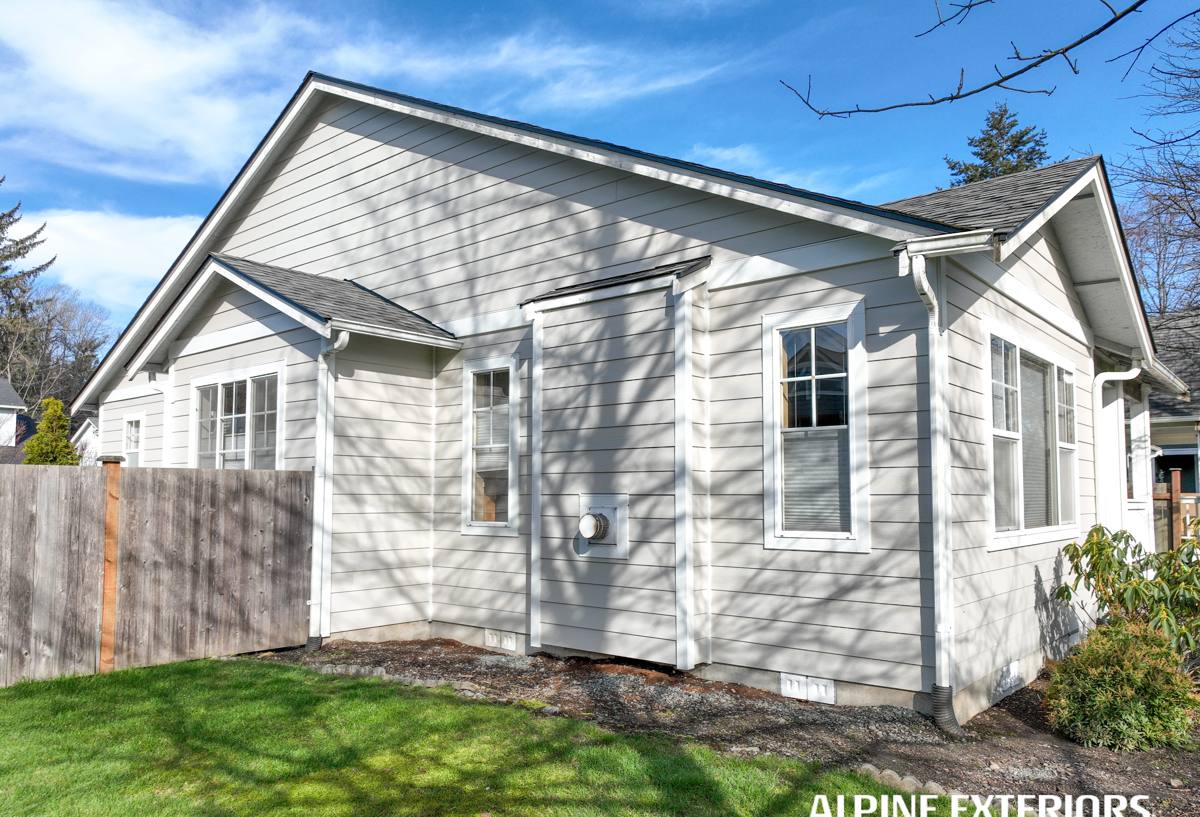
Signs a Burlington Roof Needs Replacing — Not Just Patching
Not every roof problem calls for a full replacement, and a straight contractor will tell you that. But there's a point where patching becomes a waste of money. Here's what usually tips a roof from "repair" into "replace" territory:
- Granule loss heavy enough that you're finding grit in the gutters every time it rains
- Shingles that are cupping, curling, or cracking across multiple sections of the roof, not just one spot
- Soft or spongy decking felt underfoot in the attic, especially near valleys or eaves
- Moss buildup that's thick enough to hold water rather than just sitting on the surface
- Daylight visible through the roof deck at the attic, or water stains that reappear after repairs
- A roof that's past 20-25 years old for asphalt composition, even if it "looks okay" from the ground
If you're only seeing one or two of these in an isolated area, a repair may still make sense. If several are showing up at once, that's usually the roof telling you it's done absorbing this climate's punishment.
What a Correct Roof Replacement Actually Involves
Tear-Off and Deck Inspection
A proper replacement starts with a full tear-off down to the decking — not a layover on top of existing shingles. That's the only way to actually see what's underneath: soft spots, rot around old flashing, or damage from a slow leak that's been hiding under the shingles for years. Any bad decking gets replaced before anything new goes down. Skipping this step is the single most common shortcut that leads to problems five or ten years later.
Underlayment and Water Protection
Given how much driving rain this area sees, the underlayment matters as much as the shingle on top of it. Self-adhering ice-and-water membrane belongs at eaves, valleys, and around every penetration — chimneys, vents, skylights — where wind-driven rain is most likely to work its way underneath the shingle edge. Synthetic underlayment across the rest of the field holds up better and lasts longer than old-style felt paper.
Flashing and Metal Components
Because salt air corrodes exposed metal faster here than it would further inland, flashing material and fastener quality aren't a place to cut corners. Step flashing at wall intersections, proper counterflashing, and correctly lapped valley metal all need to be installed — not just caulked — to shed water correctly for the life of the roof.
Ventilation
A roof replacement is the right time to correct poor attic ventilation, which is one of the most overlooked factors in how long a new roof actually lasts here (more on that below).
Roofing Materials: What Actually Holds Up in This Climate
There's no single "best" roofing material — it depends on your budget, your roof's exposure to shade and moisture, and how long you plan to stay in the home. Here's an honest comparison of the main options we install and service in this area:
| Material | Typical Lifespan | Moss & Moisture Behavior | Relative Cost | Best Fit |
|---|---|---|---|---|
| Architectural asphalt shingle | 25-30 years | Good with proper ventilation and periodic cleaning; algae-resistant granule options help | $$ | Most Burlington homes; best balance of cost and performance |
| Standard 3-tab shingle | 15-20 years | Wears faster in shaded, moisture-heavy sections | $ | Budget-driven projects, shorter hold periods |
| Standing seam metal | 40-50+ years | Excellent — sheds moss and moisture rather than holding it, if finish is corrosion-rated for coastal air | $$$$ | Long-term owners, steep or heavily shaded roofs |
| Cedar shake | 20-30 years with upkeep | Requires the most maintenance in a wet, mossy climate | $$$ | Homeowners committed to regular upkeep for the look |
We steer most Burlington homeowners toward architectural shingle or metal, not because other products are bad, but because they hold up with the least maintenance burden against this specific combination of salt air, rain, and shade. Cedar can look great, but it asks for a level of upkeep — cleaning, treating, replacing individual shakes — that a lot of owners underestimate going in.
Our Burlington Roof Replacement Process
- On-site inspection: We walk the roof and the attic, not just look from the ground, and give you a straight answer on repair vs. replace.
- Written estimate: Material options, scope, and a firm price — no vague allowances that turn into surprise add-ons.
- Scheduling around weather: We work around Skagit County's rain patterns to pick a window with the best odds of a dry, uninterrupted install.
- Tear-off and deck repair: Full removal, deck inspection, and any rot or soft-spot repair before new material goes down.
- Underlayment, flashing, and ventilation: Installed to hold up against wind-driven rain and long-term moisture exposure.
- New roofing material installed to manufacturer spec: This keeps your product warranty valid, which matters more than most homeowners realize until they need it.
- Cleanup and magnetic nail sweep: Job site and yard cleared, debris hauled off.
- Final walkthrough: We show you the finished work and answer questions before we consider the job done.
Ventilation and Moisture: The Part Homeowners Skip
A brand-new roof with poor attic ventilation will still fail early in this climate. Without enough intake and exhaust airflow, moisture from daily living gets trapped in the attic, condenses against the underside of the decking, and slowly rots it from below — regardless of how good the shingles on top are. It also promotes the kind of damp, cool conditions that moss and algae thrive in from the inside out. When we replace a roof, we check ridge vents, soffit intake, and baffles as part of the job, not as an upsell. In a climate this wet, it's not optional — it's part of doing the job correctly.
Permits, Timing, and What to Expect
Most roof replacements in Skagit County require a building permit, and we handle that process as part of the job rather than leaving it on the homeowner. Timing-wise, we aim for drier stretches of the calendar when possible, but roofs don't always wait for ideal weather — a failing roof in the middle of a wet season is still a priority job, and we can install using weather-appropriate sequencing (tarping exposed sections at the end of each work day, for example) to keep the home protected through the process.
Why a Crew That Already Works Burlington Matters
Roofing crews that only pass through an area occasionally tend to treat every job the same way, regardless of climate. A crew that works Burlington and the surrounding Skagit County area regularly already knows which details matter here: where moss tends to build up fastest based on tree cover and sun exposure, which flashing details hold up against the salt air, and how the local permit process actually works. That local familiarity shows up in the decisions made on your roof — not in advertising claims, but in the flashing details, the underlayment choices, and the ventilation work that don't get shortcut because someone's used to building for a drier or calmer climate somewhere else.
It also matters after the job is done. A local crew is easier to reach if a question comes up during the next storm season, and has a track record in the community you can ask neighbors about directly.
Keeping a New Roof Healthy in Skagit County
A correctly installed roof still benefits from basic upkeep in this climate. A short annual routine goes a long way:
- Clear gutters and downspouts before the fall rains start, so water isn't backing up under the roof edge
- Trim back overhanging branches that keep sections of the roof shaded and damp
- Have moss buildup treated or removed before it thickens, rather than after
- Check attic ventilation isn't blocked by insulation or stored items
- Have flashing and sealant points looked at every few years, especially around chimneys and skylights
None of this requires a major time investment, but skipping it is how a well-installed roof loses years off its expected lifespan in this particular climate.
If your roof is showing its age, or you just want an honest opinion on whether it's a repair or a replacement, we're happy to take a look. Fill out the form below for a free, no-pressure estimate — we'll walk the roof, give you a straight assessment, and let you decide from there.