 Skagit County
 Burlington's Climate Is Harder on Siding Than It Looks
Burlington sits in the Skagit Valley, a few miles inland from Padilla Bay and Puget Sound, but that distance doesn't buy homes much protection from marine weather. Moisture-laden air still moves up the valley off the Sound, and combined with the Skagit River's own humidity, siding here deals with a near-constant damp environment for much of the year. Add driving rain that comes in sideways during fall and winter storms, and a moss and algae season that can stretch from October through April on shaded or north-facing walls, and you have a climate that punishes any siding product with weak points in its moisture defense.
Homeowners who moved to Burlington from drier parts of the country are often surprised at how fast siding can show wear here compared to what they're used to. It's not that the materials are inherently bad — it's that Skagit County's combination of salt-tinged air, prolonged wet seasons, and heavy shade from mature trees and valley fog exposes every weakness in a siding system faster than it would in Spokane or Boise.
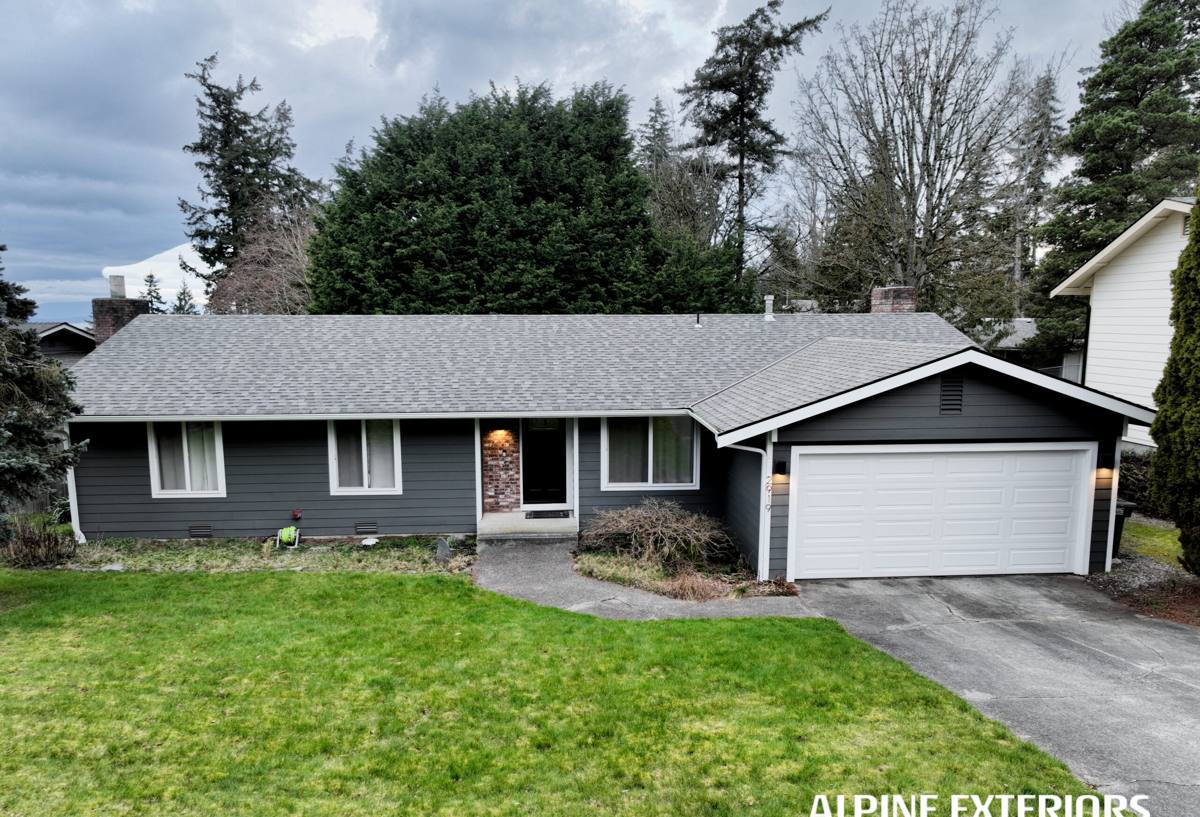
Signs a Burlington Home Needs Siding Replacement, Not Just a Repair
Not every siding problem calls for a full replacement, but there are specific signs that tell us the underlying material or installation is failing rather than just aging cosmetically:
- Soft or spongy spots when you press on the siding, especially near the bottom courses and around window trim
- Persistent moss or dark streaking that returns within weeks of cleaning, even on walls that get some sun
- Visible cupping, warping, or separation at panel seams
- Paint that's bubbling or peeling in sheets rather than just fading
- Interior signs — musty smells, staining on interior walls near exterior corners, or trim that's swelling
- Siding that's original to a home built before the mid-2000s using older wood composite products known for moisture failure
If you're seeing more than one of these, a repair is usually just delaying a bigger job — and in the Skagit Valley's wet cycle, delayed moisture problems tend to compound into sheathing and framing damage underneath.
Why Local Wear Patterns Matter
We see a consistent pattern on Burlington homes: north- and west-facing walls fail first, because they get the least drying sun and the most exposure to storms rolling in off the Sound. East-facing walls near mature landscaping often show the worst moss growth because of shade and reduced airflow. When we assess a home, we're not just looking at the siding — we're reading which walls the local climate is attacking hardest.
What a Correct Siding Replacement Actually Involves
Siding replacement is not just swapping old panels for new ones. Done right, it's a full envelope job, and in a climate like Skagit County's, skipping steps here is what causes premature failure five or ten years down the road.
Full Tear-Off and Sheathing Inspection
We remove the existing siding down to the sheathing so we can actually see what's happening underneath. This is often where hidden problems surface — soft sheathing, old moisture staining, or improperly installed building wrap from a previous job. Any damaged sheathing gets replaced before anything new goes on; installing new siding over compromised sheathing just hides the problem for another cycle.
Weather-Resistive Barrier and Flashing
A correctly installed water-resistive barrier (WRB), properly lapped and taped, is what actually keeps driving rain out of the wall assembly — the siding itself is really the first line of defense, not the last. Flashing at windows, doors, and any roof-to-wall intersections has to be integrated with the WRB in the correct shingle-lap sequence so water is always directed outward and down, never behind the barrier.
Fastening, Clearances, and Ventilation
Fiber cement siding has specific fastening patterns, nailing zones, and minimum clearances from grade, roofing, and decks that manufacturers publish for a reason — get them wrong and you create entry points for moisture. We also make sure there's a proper gap and drainage path behind the siding so any incidental moisture that does get behind the cladding can drain and dry rather than sitting against the sheathing, which matters even more in a valley climate that doesn't dry out quickly between storms.
Why We Only Install James Hardie Fiber Cement
We made a decision as a company to install James Hardie fiber cement siding exclusively, and we don't install vinyl, LP SmartSide, cedar, primed spruce, or other fiber cement brands. That's not a marketing position — it's based on what actually holds up under the conditions we see across Skagit County.
Fiber cement is non-combustible, which matters given the wildfire smoke seasons the Pacific Northwest has seen in recent summers. It doesn't absorb and swell with moisture the way wood-based composite products can, which is a real advantage in a climate where siding rarely gets a long stretch to fully dry out. James Hardie's ColorPlus factory-applied finish is baked on under controlled conditions, which gives it more consistent adhesion and fade resistance than field-applied paint — an important difference in an area with strong UV in summer and constant damp in winter.
James Hardie also engineers specific product lines (their HZ5 designation, for example) for regions with more moisture exposure, which lines up with what Skagit Valley homes actually need. The company backs its products with a strong transferable warranty, which matters to homeowners thinking about resale. We're not saying every other product is unusable — we're saying that after years of doing this work in this specific climate, Hardie is the system we're willing to put our name behind.
Our Siding Replacement Process for Burlington Homes
- On-site assessment — we walk the exterior, check current siding condition wall by wall, and look for signs of moisture intrusion before quoting anything
- Detailed proposal — product line, color, trim details, and a clear scope so there's no ambiguity about what's included
- Tear-off and sheathing repair — old siding removed, sheathing inspected and repaired as needed
- WRB and flashing installation — done to manufacturer specification, not shortcuts
- James Hardie installation — correct fastening, clearances, and joint treatment
- Final walkthrough — we review the completed work with you before calling the job done
Comparing Siding Options for a Skagit County Climate
| Material | Moisture Behavior in Wet Climates | Maintenance Burden | Our Position |
|---|---|---|---|
| Vinyl | Doesn't rot but can warp, crack in cold snaps, and trap moisture behind it if installed poorly | Low, but repairs are hard to color-match after fading | Not installed by us |
| Wood composite (LP SmartSide, etc.) | Wood-based core is vulnerable to swelling and edge failure in prolonged damp conditions | Moderate to high — edge sealing and paint upkeep required | Not installed by us |
| Cedar | Natural material, but requires consistent sealing/staining to resist moisture and moss in shaded, damp areas | High — regular refinishing needed | Not installed by us |
| James Hardie fiber cement | Cement-based composition resists moisture absorption and doesn't support rot | Low — periodic washing, factory finish holds up for years | What we install exclusively |
What Affects the Cost of a Siding Replacement
Every Burlington home is different, so we won't quote a number without seeing the house, but the main cost drivers are consistent across most projects:
- Home size and the amount of wall area being resided
- Condition of the sheathing underneath — hidden moisture damage adds repair cost
- Number of stories, roof lines, and architectural detail (dormers, bump-outs, trim work)
- Product line and profile chosen (lap siding, panel systems, shingle-style accents)
- Amount of trim, fascia, and window/door flashing work involved
- Site access — tree cover, tight setbacks, and driveway access affect labor time
We give a written, itemized proposal so you know exactly what you're paying for and why, rather than a vague lump sum.
Caring for Your New Siding in Burlington's Climate
James Hardie siding is low-maintenance, not no-maintenance. A little seasonal attention goes a long way in this climate:
- Rinse siding annually, especially shaded and north-facing walls, to keep moss and algae from establishing
- Keep gutters clear so overflow doesn't run down the siding face
- Trim back vegetation and tree limbs that hold moisture against walls or block airflow
- Check caulking at trim and penetrations every year or two and touch up as needed
- Watch for any soft spots or staining after major storm events, and address them early
Why Hiring a Crew That Already Works Burlington Matters
A siding crew that only occasionally works in Skagit County doesn't have the same instinct for where moisture problems tend to hide on a valley home, or how much extra attention shaded, north-facing walls need. We work in Burlington and the surrounding Skagit County communities regularly, which means we've seen how homes here actually age — not just how a spec sheet says a product should perform. That experience shows up in the details: where we add extra flashing attention, which walls we scrutinize hardest during tear-off, and how we sequence a job around this area's rain patterns so sheathing isn't left exposed longer than it has to be.
If your Burlington home's siding is showing its age, or you're just planning ahead, we'd be glad to take a look and walk you through what we're seeing. Reach out for a free, no-pressure estimate — we'll assess the home, answer your questions honestly, and give you a clear picture of what a correct replacement would involve.