 Skagit County
 Building Decks That Actually Hold Up in Cedardale
Cedardale sits in the low, damp part of Skagit County where salt-laden air off the water and moisture off the river bottomland are just part of daily life. A deck built here isn't just an outdoor living space — it's a structure that has to survive months of driving rain every fall and winter, then get through a long, gray moss season before summer weather finally shows up. We've built, repaired, and rebuilt enough decks in this stretch of Skagit County to know which construction details actually matter here and which ones are just talk on a sales sheet.
This page covers one job specifically: building decks for homes in and around Cedardale, with a build approach shaped by this region's climate rather than a one-size-fits-all national checklist.
What the Cedardale Climate Does to an Ordinary Deck
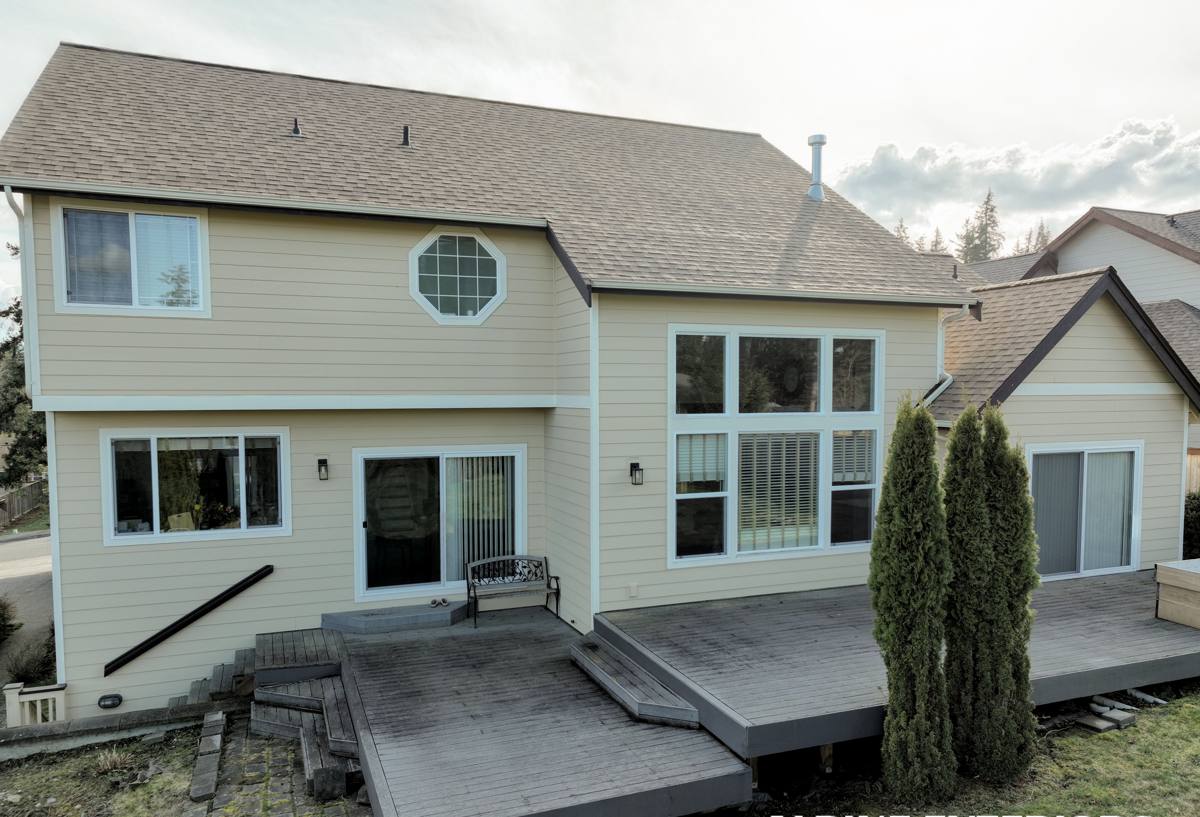
A deck built the same way you'd build one in a dry inland climate will fail early here, and it usually fails in predictable places. Salt air accelerates corrosion on fasteners, brackets, and any exposed metal hardware. Driving rain doesn't fall straight down — wind pushes it sideways and up under flashing, railings, and ledger boards where a lot of contractors don't bother sealing. And the moss season, which in this part of Skagit County can run from early fall well into spring, keeps deck surfaces damp for days at a stretch, which is exactly the environment wood rot, mildew, and slick moss growth need to take hold.
The Three Things We Design Around
- Salt air corrosion — hardware, fasteners, and connectors have to be rated for coastal exposure, not just treated-lumber-compatible.
- Driving rain intrusion — flashing details at the ledger board and any wall connections matter more here than in drier climates.
- Extended moss and moisture exposure — board spacing, airflow underneath the deck, and drainage slope all affect how fast moss and algae take over the surface.
Choosing the Right Decking Material for This Climate
There's no single "best" decking material — there's a best material for your budget and how much upkeep you're willing to do. In a climate like Cedardale's, the tradeoffs between wood and composite decking show up faster than they would somewhere drier, so it's worth being honest about what each option actually asks of you.
| Material | Moisture Behavior | Maintenance | Typical Lifespan Here |
|---|---|---|---|
| Cedar | Naturally rot-resistant but still absorbs moisture; needs to breathe and drain | Annual cleaning, periodic sealing or staining | 15-20 years with upkeep |
| Pressure-treated fir/pine | Treated for rot resistance but end cuts and hardware points remain vulnerable | Regular sealing, moss removal, more frequent board checks | 12-18 years with upkeep |
| Composite decking | Doesn't absorb water or rot, but can still grow surface mildew/moss film | Occasional washing, no sealing or staining | 25-30+ years, manufacturer-dependent |
Why We're Careful About Composite Installation
Composite decking holds up well against rot in a wet climate, but it's less forgiving of poor installation than solid wood. Hidden fastener systems, expansion gaps, and proper joist spacing all have to be dialed in exactly to manufacturer spec, or you end up with boards that buckle, gap unevenly, or trap moisture underneath where it can't evaporate. We install it to spec every time, including in Cedardale's damp underdeck conditions where airflow beneath the boards matters more than it does in a dry climate.
What a Correct Deck Build Involves Here
The visible parts of a deck — the boards, the railing, the stairs — are what homeowners notice first. But the parts that determine whether a deck lasts are underneath and behind the scenes, and they're where corners get cut most often.
- Ledger board flashing that actually sheds water away from the house rim joist, not just a bead of caulk
- Footings poured to the frost depth and bearing requirements for this soil, not guessed at
- Joist tape or equivalent moisture barrier on top of framing lumber to slow rot at the fastener points
- Stainless steel or hot-dip galvanized hardware rated for coastal/high-moisture exposure — not the cheapest fastener that happens to fit
- Board spacing and deck slope that let water actually run off instead of pooling
- Guardrails and stair railings built to current code height and baluster spacing, since most jurisdictions require guards once a walking surface is more than 30 inches above grade
Skip any one of these and the deck might look fine for a year or two. In this climate, the shortcuts show up as soft spots, rust streaks, and railings that work loose — usually right around the time the moss season kicks in and you're least able to get out there and fix it.
Our Deck Building Process
Design and Permitting
We start with a site visit to look at your existing structure or open ground, drainage patterns, sun and rain exposure, and how the deck will tie into the house. Most new decks and deck replacements in Skagit County require a building permit, and attachment points, footing depth, and guardrail specs all get reviewed as part of that process. We handle the permit paperwork and inspections as part of the job so you're not chasing that down yourself.
Construction
Framing goes in first, with attention to ledger flashing and footing placement before a single deck board gets cut. We build in the drainage slope and underdeck airflow at this stage, since it's much harder to correct once decking is installed. Decking, railings, and stairs go on last, with fastener spacing and hardware matched to the material manufacturer's requirements.
Final Walkthrough
Before we consider the job finished, we walk the deck with you — checking railing stability, board spacing, stair rise and run, and drainage — and go over basic care specific to your decking material and to Cedardale's climate.
Keeping a Cedardale Deck Healthy Through Moss Season
Even a well-built deck needs some seasonal attention in this climate. None of it is complicated, but skipping it is how small problems turn into board replacements.
- Sweep leaves and debris off the deck surface regularly in fall — trapped organic matter feeds moss and holds moisture against the boards
- Rinse or lightly scrub visible moss and algae before it gets a foothold, rather than waiting until it's established
- Check that gaps between boards haven't filled with debris, which blocks drainage
- Inspect railing posts and stair stringers once a year for movement, soft wood, or rust streaking at hardware points
- Keep gutters and downspouts near the deck clear so runoff isn't dumping extra water onto or under the structure
- Re-seal or re-stain wood decking on the schedule the product calls for — don't wait until it looks gray and dry
Why Hire a Crew That Already Works in Cedardale
A deck built to a national average spec is a deck built for a climate that doesn't exist here. Contractors who haven't worked this part of Skagit County tend to under-spec fasteners, skip flashing details that don't matter in drier regions, and miss how much airflow underneath a deck actually matters when moss season runs half the year. We already know the local permitting process, we've seen how the soil and drainage behave on this side of the county, and if something needs a warranty adjustment down the line, we're already in the area — not driving in from somewhere that doesn't know this ground.
What a Cedardale Deck Project Typically Costs
Every deck is different, but the biggest cost swings usually come down to a handful of factors rather than square footage alone.
| Cost Factor | Why It Moves the Price |
|---|---|
| Decking material | Composite and premium cedar cost more upfront than pressure-treated lumber but need less long-term maintenance |
| Height above grade | Taller decks need engineered footings, more substructure, and code-required guardrails |
| Railing style | Cable, glass, and custom railing systems cost significantly more than standard baluster railing |
| Site access and grading | Sloped or hard-to-access lots take longer to frame and pour footings correctly |
| Attachment to the house | Ledger flashing and structural tie-in work adds labor that a freestanding deck doesn't need |
We'll walk your specific site and give you a real number based on what your deck actually needs — not a generic per-square-foot quote that ignores the conditions here.
If you're planning a new deck or replacing one that's past its prime, we'd be glad to take a look and give you a straightforward, no-pressure estimate. Fill out the form below and we'll get back to you to schedule a site visit.