 Skagit County
 Building New in Cedardale? Get the Windows Right the First Time
New construction is the one time a window installation gets to be done correctly from the studs out — no old flashing to work around, no rot to cut back to good wood, no compromises forced by an existing rough opening. That's an advantage. It's also the reason a rushed or careless new-construction window install is inexcusable: everything needed to do it right is already open and accessible. On a Cedardale build, that means getting the water management layer, the window selection, and the flashing sequence correct before siding ever goes up, because once the cladding closes that wall, mistakes are hidden for years before they show up as stains, soft trim, or a draft you can't locate.
Cedardale sits in the part of Skagit County where the marine influence off the Sound and the surrounding lowlands is a daily fact of building life, not an occasional storm event. Salt-laden air, wind-driven rain that hits walls sideways instead of falling straight down, and a moss season that runs long and damp all put steady pressure on any envelope. New-construction windows here need to be selected and installed with that in mind from day one — this isn't a climate where a "good enough" install ages gracefully.
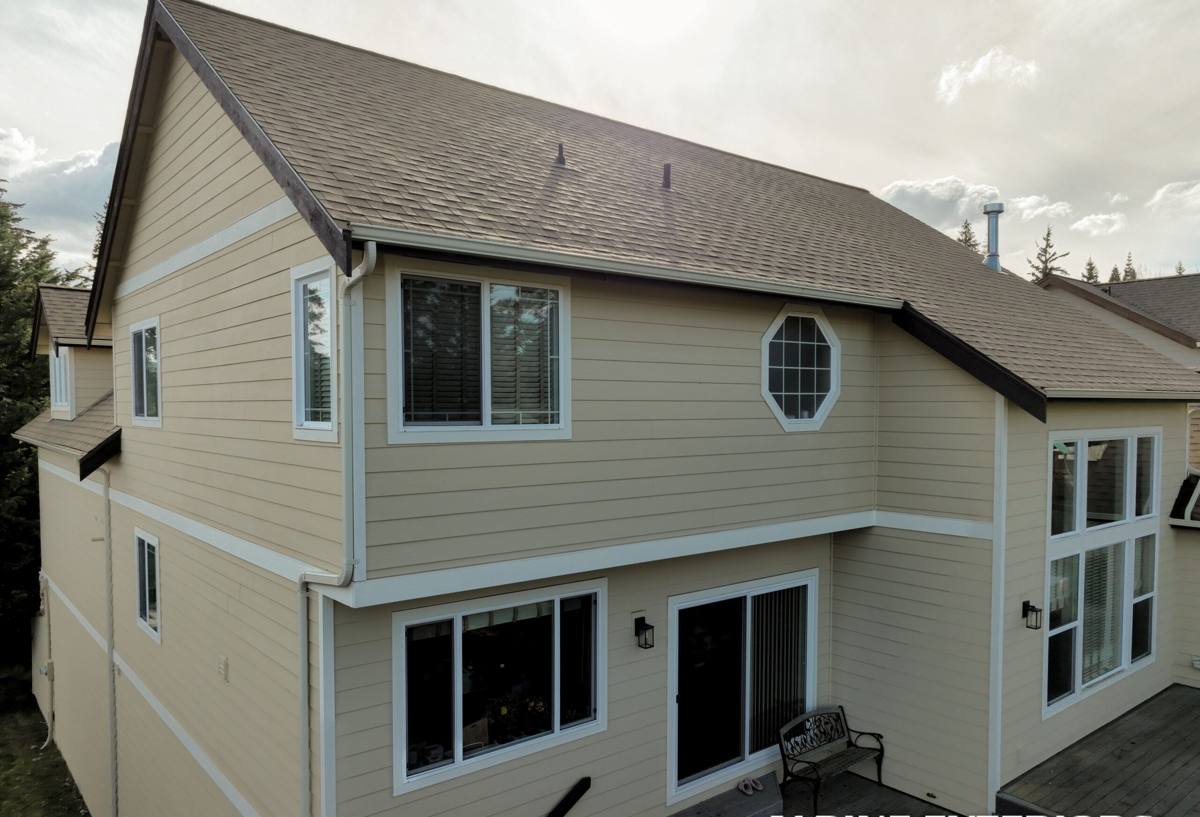
What This Local Climate Actually Demands From a Window Install
Driving Rain Changes the Flashing Job
In a lot of the country, flashing a window is mostly about keeping water from sitting in the sill. Around here, wind pushes rain sideways and even upward under eaves and around corners, which means head flashing, jamb treatment, and sill pan design all have to assume water will be forced at the opening from more than one direction. A flashing detail that would be fine in a calmer climate can leak here within a season or two.
Salt Air Is Hard on the Wrong Materials
Proximity to the Sound means airborne salt reaches inland further than most homeowners expect, especially with prevailing wind. Fasteners, flashing metals, and window hardware that aren't rated for a marine-influenced environment corrode faster than their inland-rated counterparts. It's a slow failure — nothing looks wrong for a year or two — which is exactly why it gets skipped by installers who aren't used to building in this specific part of Skagit County.
Long Moss Season Means Constant Moisture Load
Moss doesn't just grow on roofs here — it thrives on north-facing walls, under eaves, and around window trim wherever moisture lingers. A long wet season means any spot where water can collect or wick into wood framing stays damp for months at a time, not days. New-construction windows need drainage details and rain-screen thinking built in, not added later once moss and soft trim show the water was never leaving.
What a Correct New-Construction Window Install Involves
New-construction windows use a nail fin and are set into the rough opening before the weather-resistive barrier and siding are finished, which is different from a retrofit or replacement install into an existing frame. Done right, the sequence looks like this:
- Rough opening checked for square, level, and correct size — including a small margin for shimming, not a tight fit
- Sill pan flashing installed first, sloped to drain outward, so any water that gets past the window has somewhere to go besides the framing
- Window set, shimmed, and fastened per the manufacturer's schedule — not "close enough" spacing
- Jamb flashing lapped correctly over the sill pan, then head flashing lapped over the jamb flashing and integrated with the weather-resistive barrier above
- Nail fin sealed and taped per manufacturer spec, with attention to corners, where most failures actually start
- Interior and exterior sealant joints completed — backer rod and sealant, not just a bead of caulk over a gap
- Final check for square, smooth operation, and proper drainage before siding closes the wall
Every one of those steps matters on its own, but the sequence matters more — flashing installed out of order (siding paper lapped the wrong way over jamb flashing, for instance) can funnel water directly into the wall instead of away from it. This is the single most common mistake we find when we're called in to fix a new-construction window that's already leaking.
A Quick Self-Check for Homeowners Overseeing a Build
- Sill pan flashing should be visible and clearly sloped before the window goes in — ask to see it
- Head flashing should overlap the weather-resistive barrier above it, not tuck under it
- Fasteners and flashing metal should be rated for coastal/marine exposure, not standard-grade
- Corners of the nail fin should show taped or sealed detail, not just a straight run of tape across the top
- Shims should be visible at the jambs when the window is set — a window with no shim gaps was likely forced into an out-of-square opening
- There should be a visible gap for sealant at the interior and exterior perimeter, not window trim pressed flush against framing
Choosing the Right Window for This Environment
Frame material and glass package both affect how a window holds up to salt air, wind-driven rain, and a wet season that doesn't let up. None of these are automatically "the answer" — each has trade-offs worth understanding before you commit.
| Frame Material | How It Handles This Climate | Trade-Off to Know |
|---|---|---|
| Vinyl | Won't rot or corrode from salt exposure; low maintenance | Can flex over large spans; color/finish options more limited than other materials |
| Fiberglass | Very stable dimensionally, resists moisture and salt well | Higher upfront cost than vinyl |
| Aluminum-clad wood | Attractive interior wood look with a protected exterior face | Cladding seams and any exposed wood need careful detailing to keep salt air and moisture out long-term |
| Bare aluminum | Durable frame, but conducts cold and is more prone to condensation | We generally steer builds away from bare aluminum in this climate — condensation and thermal performance are the honest trade-offs |
We'll talk through the options with you rather than push one line — the right call depends on your budget, the home's design, and how much maintenance you actually want to do down the road.
Why a Crew That Already Works Cedardale Matters
New-construction window installation isn't exotic work, but doing it correctly in this specific stretch of Skagit County means building in habits that aren't universal: assuming wind-driven rain from more than one direction, specifying marine-rated fasteners and flashing without being asked, and detailing drainage paths that account for a moss season measured in months, not weeks. A crew that hasn't built here before can follow the manufacturer's install manual to the letter and still miss the regional adjustments that keep a window performing for decades instead of years.
We also know how the inspection and permitting side works locally, which keeps a new-construction timeline from stalling on paperwork or scheduling surprises. That familiarity comes from doing this work in Skagit County repeatedly, not from a manual.
How We Approach a New-Construction Window Job
We start with a walkthrough of the plans or the framed openings, confirm window sizes and rough opening tolerances against what's actually built, and flag anything that needs correcting before install day — a rough opening that's out of square costs far less to fix before a window is set than after. From there we handle the full flashing and install sequence described above, coordinate timing with your builder or general contractor so windows go in at the right point in the build schedule, and do a final walkthrough with you before siding closes the wall, so you've seen the flashing and drainage details yourself rather than taking it on faith.
We stand behind the installation work, and we're straightforward about manufacturer warranty terms up front — what's covered, what requires registration, and what voids coverage — so there are no surprises later.
What This Typically Costs
New-construction window pricing depends on frame material, glass package, window count and size, and how many openings need extra flashing attention (corners, larger spans, unusual shapes). Broadly, expect vinyl to sit at the lower end of the range, fiberglass and aluminum-clad wood higher, with total project cost scaling directly with the number and size of openings in the build. We'll give you an itemized, honest number after seeing your plans — not a ballpark that changes once work starts.
Get a Free Estimate for Your Cedardale Build
If you're framing a new home or addition in Cedardale, we're glad to walk the site, review your window schedule, and give you a straightforward, no-pressure estimate for the install work — including how we'll handle flashing and drainage for this specific climate. Use the form below to get started.