 Skagit County
 Clear Lake homeowners dealing with siding that's peeling, staining, or going soft at the seams are usually looking at a climate problem more than a product-quality problem. Skagit County's marine air, the driving rain that comes with fall and winter storm systems, and a moss season that runs longer here than in drier parts of the state all put steady pressure on an exterior wall. This page is about one thing specifically: what it takes to put James Hardie fiber cement siding on a Clear Lake home correctly, why that product and that installation standard matter more here than they would somewhere drier, and what our process looks like from first call to final walkthrough.
What Clear Lake's Climate Asks of a Wall System
Three things define exterior work in this part of Skagit County, and they compound each other. Salt-laden marine air moves inland off the Puget Sound region and settles on painted surfaces and exposed fasteners even well away from open water, contributing to corrosion and finish breakdown over time. Driving rain — rain pushed sideways by wind rather than falling straight down — finds every weak lap, unsealed penetration, and hairline gap in a wall, which is a very different stress than a simple downpour. And a long moss season, extended by tree cover and shaded exposures common around Clear Lake, keeps north- and west-facing walls damp for stretches that a sunnier climate simply doesn't produce.
None of that means Clear Lake is a hard place to keep a house looking good. It means the margin for error in material choice and installation detail is smaller than it is elsewhere. A wall assembly that's "close enough" in a dry climate shows its weaknesses here on a predictable timeline — usually as swelling at panel edges, chalking or peeling paint, and moss staining that keeps coming back no matter how many times it's power-washed off.
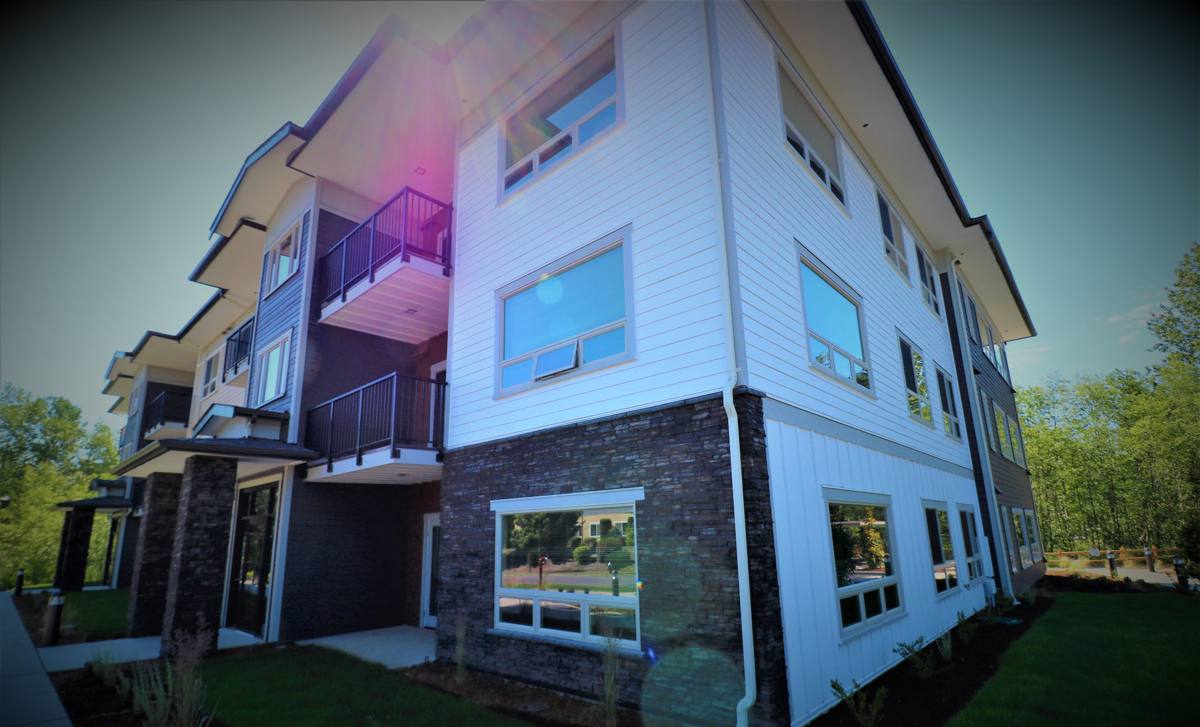
Why We Only Install James Hardie
We install James Hardie fiber cement siding exclusively. We don't install vinyl, LP SmartSide, Cemplank, Allura, primed spruce, or cedar, and we're upfront with every Clear Lake homeowner about why, rather than just quietly steering the conversation.
What the Alternatives Get Right
Vinyl is inexpensive and low-maintenance in the sense that it never needs painting. Engineered wood products like LP SmartSide install fast and take paint well. Cedar and primed spruce look genuinely good and have real fans among homeowners who like the natural-wood aesthetic. None of that is a knock on the products themselves.
Why We Don't Put Them on Homes Here
The trade-offs show up specifically in this climate. Vinyl depends entirely on the water-resistive barrier behind it doing all the work, and it can become brittle with age and UV exposure, which matters over decades of driving rain. Engineered wood siding uses a wood-strand core that's vulnerable at cut edges, fastener penetrations, and joints if water gets in and stays in — a real risk when wind-driven rain is routine rather than occasional. Cedar and primed spruce both require an ongoing maintenance cycle of recoating, caulk renewal, and moss treatment, and that cycle only gets more demanding the longer a surface stays damp. Fiber cement doesn't have an organic core to swell or rot, and Hardie's factory-applied ColorPlus finish is baked on under controlled conditions rather than applied on-site, which holds up better against the wet-dry cycling this climate produces. That's the whole basis of our standard — not that other products are bad, but that we don't think they're the right call for a Clear Lake exterior, and we'd rather say so upfront than sell something we don't believe will hold up.
Choosing the Right Hardie Line for a Clear Lake Home
James Hardie makes several product lines, and the right one depends on the home's style and where it sits on the lot, not just personal preference.
| Product | Typical Use | Why It Fits Here |
|---|---|---|
| HardiePlank lap siding | Most single-family homes | The standard choice; sheds wind-driven rain well when lapped and fastened to spec |
| HardiePanel vertical siding | Modern or board-and-batten looks | Fewer horizontal laps for water to catch on; often mixed with HardiePlank as an accent |
| HardieShingle | Craftsman and cottage-style homes | Staggered or straight-edge profiles that read as traditional shingle without the wood maintenance |
| HardieTrim | Corners, window and door surrounds, fascia | Fiber cement trim that won't rot at the joints the way wood trim does under sustained moisture |
For this part of Skagit County, we specify Hardie's HZ5 formulation, which the manufacturer engineers for heavier-moisture climates rather than shipping a single national product. It's a small distinction on paper but a meaningful one after a decade of wet winters.
What a Correct Installation Actually Involves
Fiber cement siding is only as good as the details underneath it, and this is where a lot of jobs — not just other companies' jobs, but rushed jobs generally — fall short in a climate like this one.
Behind the Siding
A properly installed weather-resistive barrier comes first, lapped correctly so water sheds down and out rather than behind the barrier. On many Clear Lake homes, especially shaded or heavily wooded lots, we build in a rainscreen gap behind the siding so any moisture that does get past the outer layer can drain and the wall can actually dry between storms instead of staying damp against the sheathing.
Flashing and Clearances
Every window, door, and horizontal trim transition needs flashing installed in the correct order — over the layer below, under the layer above — so water is always directed outward. Hardie specifies minimum clearances from grade, roof lines, and decks; skipping those clearances is one of the most common ways a siding job looks fine for two years and then starts failing at the bottom courses.
Fastening and Finish
Corrosion-resistant fasteners, driven at the correct pattern and depth, matter more here given the salt content in the marine air than they would inland in a drier climate. Field-cut edges need to be sealed or primed before installation, not after, and any touch-up paint should be color-matched to the factory ColorPlus finish rather than a generic exterior paint that will weather and fade at a different rate than the rest of the wall.
What to Expect in Writing
- A written scope that names the specific Hardie product, profile, and color — not just "Hardie siding"
- Confirmation of a weather-resistive barrier and, where appropriate for the lot, a rainscreen detail
- Flashing called out at every window, door, and horizontal trim transition
- Minimum clearances from grade and roof lines specified, not left to the crew's judgment on-site
- Corrosion-resistant fasteners and the manufacturer's fastening pattern
- Sealed or primed field-cut edges before those pieces go up
- ColorPlus-matched caulk and touch-up materials
- A copy of the manufacturer's warranty terms and what voids them
Cost Factors on a Clear Lake Project
Every estimate is specific to the house, but the same handful of factors drive most of the variation we see on Clear Lake jobs.
| Factor | Why It Moves the Price |
|---|---|
| Tear-off vs. new construction | Removing old siding, disposing of it, and repairing any sheathing damage found underneath adds labor a fresh install doesn't have |
| Sheathing condition | Moisture-damaged sheathing found once old siding comes off has to be replaced before new siding goes up — this is common enough on older Clear Lake homes to plan for |
| Home shape and trim detail | Multiple gables, dormers, and trim-heavy elevations take more cutting and flashing labor than a simple rectangular footprint |
| Product mix | Combining lap siding with panel accents, shingle sections, or upgraded trim costs more than a single uniform product |
| Access and lot conditions | Tree cover, slope, and tight setbacks common around Clear Lake can add time for staging and material handling |
How We Run a Clear Lake Siding Project
- Walkthrough and moisture check. We look at the existing siding, trim, and any visibly damp areas before we ever write a number down, since what's happening underneath the surface often matters more than how the siding looks from the driveway.
- Written estimate. The proposal specifies the exact Hardie product, profile, and color, along with the underlying barrier and flashing details — not a vague line item for "siding."
- Tear-off and sheathing inspection. Old siding comes off, and any soft or water-damaged sheathing gets identified and repaired before anything new goes up. This step is where surprises show up, and we'd rather find them now than have the homeowner find them in five years.
- Weather-resistive barrier and flashing. Installed and lapped to shed water outward, with a rainscreen detail where the lot and design call for it.
- Hardie installation to manufacturer spec. Correct fastening pattern, clearances, and joint treatment throughout, not just on the visible elevations.
- Trim, caulk, and touch-up. Field-cut edges sealed, joints caulked with ColorPlus-matched product, and a final check of every transition point.
- Final walkthrough. We go over the finished work with the homeowner and register the manufacturer's warranty before we consider the job done.
Keeping Moss and Moisture From Undoing the Work
Good installation buys most of the durability, but a few habits keep a Clear Lake exterior looking the way it should for the long haul. Keep gutters clear so overflow doesn't run down the siding face repeatedly in the same spot. Trim back vegetation that's shading a wall and keeping it damp longer than the rest of the house. A gentle rinse once or twice a year, rather than an aggressive power wash, clears surface moss and grime without driving water behind laps or damaging the finish. Because ColorPlus is a factory-cured finish rather than a field-applied coat, it holds color and resists the chalking that leads most painted siding toward a repaint every several years — one of the more direct ways Hardie's manufacturer warranty differs from what you get with a site-painted product.
Why Local Experience in Skagit County Matters
A crew that already works Clear Lake and the surrounding parts of Skagit County isn't guessing at how the marine climate behaves here — they've seen where moss builds up fastest, which elevations take the worst of the driving rain, and what condition sheathing tends to be in on homes of a given age in this area. That translates into fewer surprises during tear-off, a realistic schedule that accounts for the wet-season work windows this region actually has, and a finished installation built for the conditions the house will face rather than a generic install that happens to look fine on install day.
If your Clear Lake home needs new siding, or you want a second opinion on a bid you've already received, we're glad to walk the property and give you a straight answer along with a free, no-pressure estimate using the form below.