 Skagit County
 Composite Decking Built for Alger's Weather, Not Just Its View
Alger sits in a stretch of Skagit County where thick evergreen canopy, low winter sun, and proximity to Samish Bay combine to keep everything outdoors damp for a large part of the year. That's a tough environment for an outdoor deck. Wood decks in this pocket of the county fight moss, soft spots, and splinters within a few seasons of being built, no matter how well they're sealed. Composite decking was designed for exactly this kind of exposure, but only when it's installed correctly for the site. This page covers what that actually means for a home in Alger — not a generic decking pitch, but the specifics of building a composite deck that holds up here.
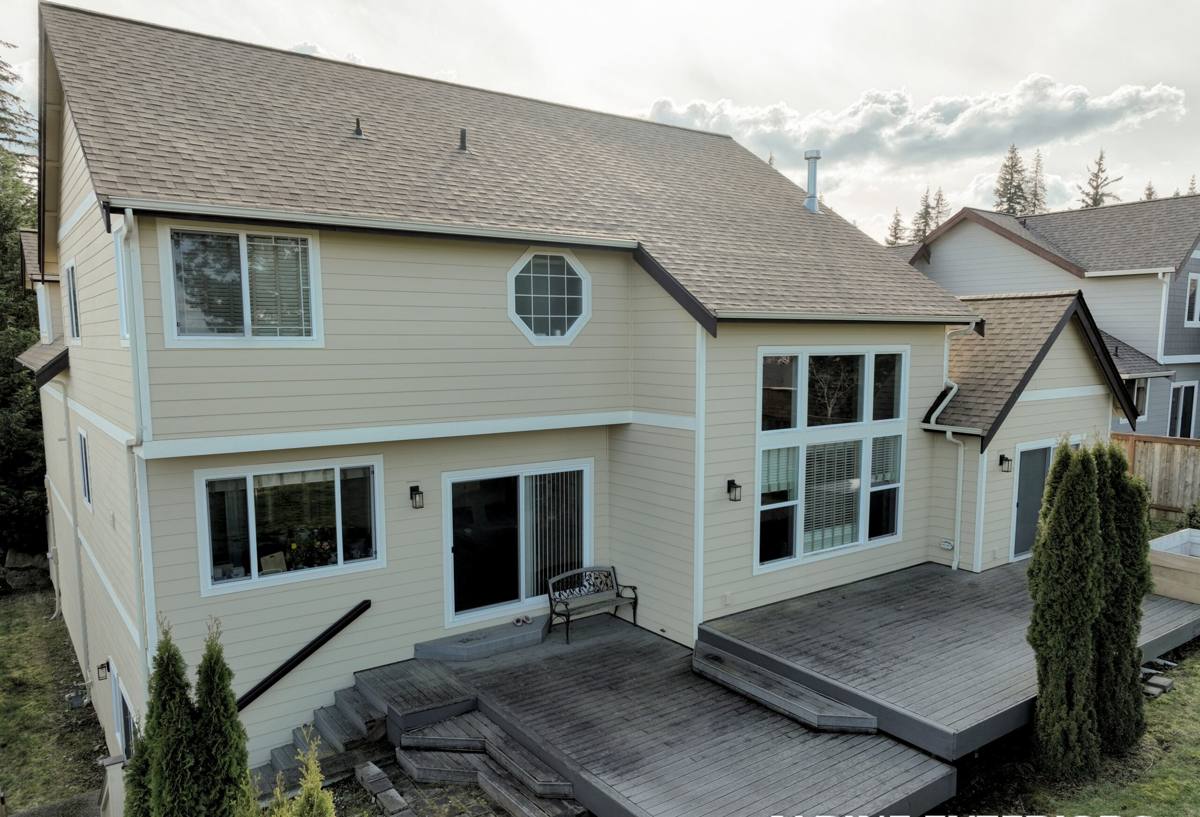
What This Climate Actually Does to a Deck
Skagit County's marine climate brings driving rain off the Sound for months at a stretch, and Alger's tree cover adds its own complications on top of that. A few things we see repeatedly on decks in this area:
- Moss and algae growth on shaded boards that stay damp between storms, especially under fir and cedar canopy that blocks drying sun
- Standing water and soft framing where a deck was built low to the ground without enough airflow underneath
- Salt-tinged moisture carried inland from Samish Bay that accelerates corrosion on lower-grade fasteners and hardware
- Needle and leaf litter that packs into board gaps and holds moisture against the decking surface
- Slick, black-green film on north-facing or heavily shaded decks that becomes a real slip hazard for stairs and landings
None of this means a deck can't last decades in Alger. It means the material choice and the build details both have to account for near-constant moisture rather than the occasional rainstorm.
Why Composite Over Wood for This Location
We install both wood and composite decking, and we're honest with clients about the trade-offs rather than pushing one product across the board. For a shaded, damp lot in Alger specifically, composite earns its higher upfront cost in a few concrete ways:
Moisture behavior
Composite boards, especially capped composite, don't absorb water the way wood fibers do. They won't cup, crack, or rot from sustained dampness the way an untreated or under-maintained wood deck will in this climate. Wood can absolutely work here, but it demands a maintenance schedule — stripping, sealing, sometimes staining — that a lot of homeowners don't want to keep up with year after year.
Maintenance burden
A wood deck in a shaded Alger yard typically needs cleaning and re-sealing every one to two years to keep moss and graying at bay. Composite still needs periodic washing to clear moss and debris, but it doesn't need sealant, staining, or sanding. For a lot of our clients, that's the deciding factor.
Splinters and surface wear
Wood that's been through repeated wet-dry cycles roughens and splinters, which matters if there are kids or bare feet on the deck. Composite stays smooth for its service life.
None of this is a knock on wood decking as a product — it's a fair trade-off between upfront cost and long-term upkeep, and we'll lay out both honestly during your estimate.
Decking Material Comparison
| Factor | Pressure-Treated Wood | Traditional Composite | Capped Composite |
|---|---|---|---|
| Upfront cost | Lowest | Mid | Highest |
| Moisture/moss resistance | Poor without upkeep | Good | Best |
| Annual maintenance | Sealing/staining needed | Occasional washing | Occasional washing |
| Fade/stain resistance | Fades, grays | Moderate | Strong |
| Typical lifespan (Alger conditions) | 10-15 years with upkeep | 20-25 years | 25-30+ years |
| Surface feel underfoot | Rough over time | Smooth | Smooth |
Capped composite — where the core is wrapped in a protective polymer shell — is what we recommend most often for shaded, high-moisture lots like the ones common around Alger, since the cap is what actually resists moss staining and moisture wicking at the board edges.
What a Correct Installation Involves
Most composite deck problems we get called to fix in Skagit County trace back to the framing and flashing underneath, not the decking material itself. A correct install includes:
Ledger attachment and flashing
Where the deck ties into the house, the ledger board needs proper flashing that sheds water away from the siding and framing behind it — not caulk alone. This is the single most common failure point we find on older decks, and it's directly tied to keeping your home's siding and sheathing dry, which is why we treat decking and siding work as connected rather than separate trades.
Joist protection
Untreated cuts and joist tops absorb water fastest. We use joist tape or an equivalent flashing membrane on top of every joist before the decking goes down, which meaningfully extends the life of the substructure in a climate that stays damp this much of the year.
Hidden fastener systems
Most composite boards today use a hidden clip system rather than face screws. This keeps water from pooling in screw heads on the board surface and gives a cleaner finished look, but the clips have to be rated and spaced correctly for the specific board profile — mixing systems or over-spanning joists is a common shortcut that leads to bounce and squeaking.
Airflow underneath
Low-to-grade decks with poor ventilation are exactly what encourages the moss and mildew problem described above. We build in enough clearance and, where the site allows it, skirting with vents rather than solid panels, so air keeps moving under the deck instead of trapping moisture.
Railings, Stairs, and Code
Skagit County building code sets requirements for guardrail height, baluster spacing, and stair rail graspability, and these apply whether you're rebuilding an existing deck or replacing a small section. A few things worth knowing before you plan a project:
- Guardrails are generally required once a deck surface is more than 30 inches above grade
- Baluster spacing has to prevent a 4-inch sphere from passing through — an older deck's railing may not meet this
- Stair handrails need a graspable profile, not just a flat 2x4 cap
- Permits are typically required for new decks and significant rebuilds — we handle this as part of the project rather than leaving it to the homeowner
Composite railing systems are worth considering alongside composite decking for the same moisture and maintenance reasons, though painted wood or metal railings can still make sense depending on the look you're after.
How Our Process Works
- On-site walkthrough — we look at grade, drainage, existing framing (if replacing an old deck), sun exposure, and how the deck ties into your siding
- Honest material recommendation — capped composite, traditional composite, or wood, based on your budget and how shaded the site actually is
- Written estimate — board tier, framing, railing, and any siding/flashing repair the tie-in requires, spelled out separately so you know what you're paying for
- Permit and code check — pulled before work starts, not after
- Demo and framing — old decking removed, framing inspected and repaired or replaced as needed, ledger flashing corrected
- Decking, fascia, and railing installation — hidden fasteners, proper board gapping for drainage and seasonal movement
- Final walkthrough — we go over cleaning and care with you before we consider the job done
Living With a Composite Deck in Alger's Climate
Composite decking is lower-maintenance than wood, not maintenance-free, and that's worth setting expectations on up front. In this specific climate, plan on:
- Washing the deck surface once or twice a year to clear moss, pollen, and needle debris before it stains the cap
- Keeping gutters and downspouts near the deck clear so runoff isn't dumping directly onto boards or framing
- Sweeping debris out of board gaps periodically, especially under heavy tree cover, so it doesn't hold moisture against the surface
- Checking railing connections and fasteners annually, particularly after a hard winter storm cycle
- Trimming back overhanging branches where practical to cut down on shade and debris load
What Drives the Cost
| Cost Factor | Why It Matters |
|---|---|
| Board tier (traditional vs. capped composite) | Capped boards cost more per square foot but resist moss and staining longer |
| Deck size and shape | More linear footage of framing and fascia, plus more cuts on multi-angle layouts |
| Height above grade | Taller decks need more substantial framing, footings, and code-required railings |
| Demo of existing deck | Removing and disposing of an old wood deck adds labor before the new build starts |
| Site access | Wooded, sloped, or tight-access lots common around Alger can add time for material staging |
| Railing and stair material | Composite or metal railing costs more upfront than painted wood but needs less upkeep |
We'd rather walk your specific site and give you real numbers than quote a broad range that doesn't mean much — every one of these factors can move the total meaningfully.
Why a Crew That Already Works Alger Matters
Skagit County's building department, the local frost and rainfall patterns, and the practical reality of building on wooded, sometimes sloped lots around Alger are all things you learn from doing the work here repeatedly, not from a general contracting background. A crew that already knows what a proper ledger tie-in needs to hold up against this much rain, how much airflow a deck needs under this tree cover to keep moss at bay, and what the county actually requires for permits and inspections will save you rework down the line. It also means we're a known, reachable crew if a warranty question comes up years from now — not a company that was in the area for one job and gone.
If you're weighing a new composite deck or a rebuild of an aging wood deck in Alger, we're happy to walk the site and give you a straightforward, no-pressure estimate — just fill out the form below.