 Skagit County
 Deck Repair Built for Concrete's Climate, Not a Generic Checklist
Concrete sits inland along the Skagit River, but that doesn't mean local decks get an easy ride. Between the driving rain off the Cascade foothills, a moss season that can run six months or longer, and the humidity that settles into the valley overnight, wood and composite decking here takes a different kind of beating than decks in drier parts of the state. We've repaired decks all over Skagit County, and the failure patterns we see in Concrete are consistent enough that we can usually tell what's wrong before we even pull up a board.
This page is specifically about deck repair — not deck building, not full replacements (though we'll tell you honestly when that's what you actually need). If your deck has soft spots, gaps that have opened up, ledger board concerns, or a finish that's given up the fight against moss and mildew, this is what we do and how we do it.
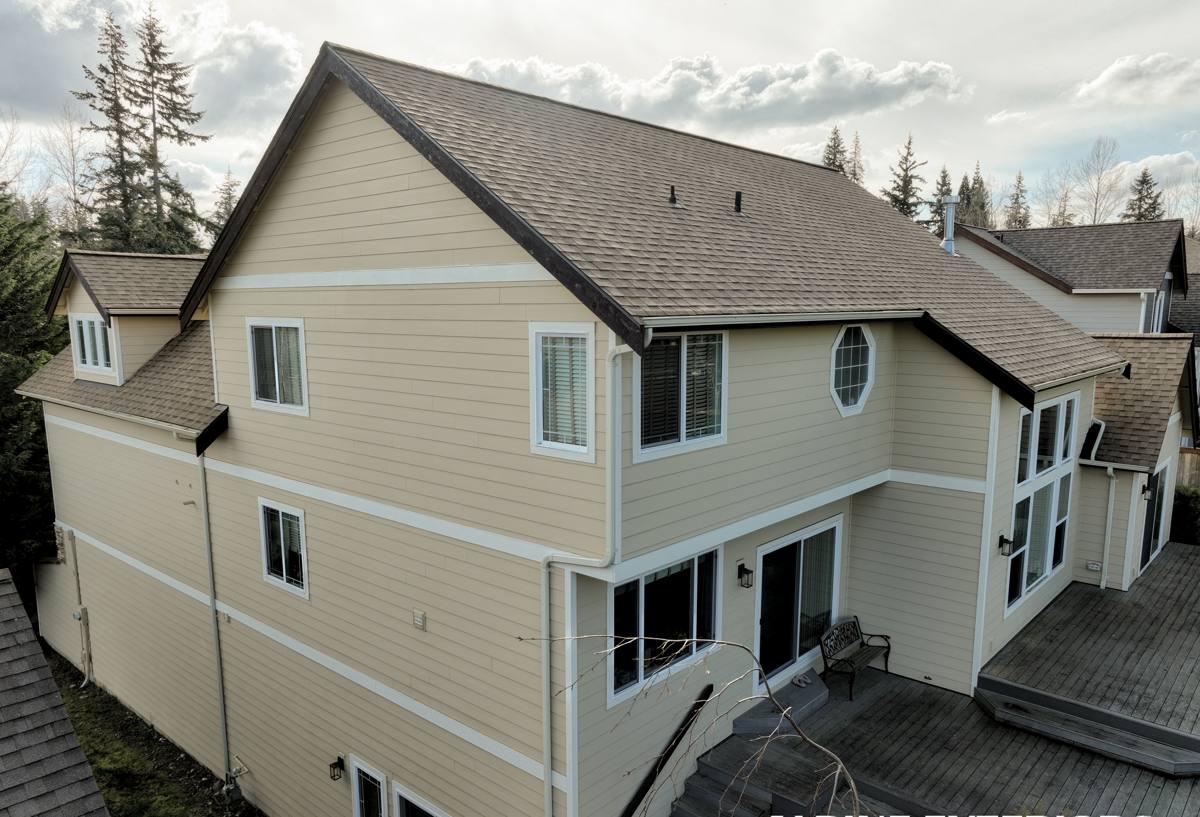
Why Concrete Decks Fail Faster Than People Expect
Moisture That Never Fully Leaves
Skagit County's combination of frequent rain and long stretches of gray, low-sun days means a deck surface can stay damp for days after a storm passes through. Water finds its way into end grain, fastener holes, and any spot where two boards meet tight. Once moisture gets under the surface finish, rot starts from the inside out — which is why a deck can look fine from a few feet away and still have soft, spongy boards underneath.
Moss and Organic Growth
A long moss season isn't just cosmetic. Moss and algae hold water against the deck surface far longer than bare wood would on its own, and moss roots work into tiny surface cracks and widen them over time. Decks that don't get regular cleaning in Concrete tend to develop moisture-trapping growth in shaded corners, under railings, and along the north side of the house within a couple of years of a fresh finish.
Freeze-Thaw and Seasonal Movement
Even though Concrete doesn't see the harshest winters in the state, the valley does get cold snaps combined with damp wood — and that's the combination that causes fasteners to back out, boards to cup, and joints to loosen. Repeated wet-dry-freeze cycles are hard on both wood and composite decking, and they're especially hard on ledger connections and stair stringers if those weren't flashed correctly to begin with.
What "Correct" Deck Repair Actually Involves
A lot of deck repair work we get called out for is a fix on top of a fix — someone screwed down a loose board or slapped sealant on a soft spot without addressing why it failed. Real repair work means finding the actual source of the problem first.
Our Diagnostic Process
- Probe suspect boards, ledger connections, and support posts with an awl to find soft or rotted wood, not just what's visible on the surface
- Check the ledger board flashing where the deck meets the house — this is the single most common source of hidden water damage on older decks
- Inspect joist hangers and fasteners for rust, corrosion, or pull-out, which happens faster near the coast but still shows up throughout Skagit County
- Look under the deck (not just on top) for signs of standing water, poor drainage, or missing ventilation gaps
- Check railings and stair connections for looseness, since these are safety items as much as cosmetic ones
- Assess the existing finish or stain to see if it's still protecting the wood or just holding moisture in
Then the Actual Repair
Once we know what's actually wrong, the repair itself typically involves replacing rotted or damaged boards with matched materials, resetting or replacing corroded fasteners with proper deck-rated hardware, correcting flashing issues at the ledger board so water sheds away from the house instead of into it, and refinishing or resealing the repaired area so it matches and performs like the rest of the deck. We don't consider a repair finished until the underlying cause — moisture intrusion, poor drainage, bad flashing — has been addressed, not just the symptom on top.
Common Deck Repair Scenarios We See in Concrete
| Symptom | Likely Cause | Typical Fix |
|---|---|---|
| Soft or spongy decking boards | Trapped moisture under finish or between boards | Replace affected boards, improve board spacing/drainage |
| Dark staining or slick green film | Moss/algae growth from shade and long wet season | Clean, treat, reseal; recommend drainage or trimming back vegetation |
| Deck pulling away from house slightly | Ledger board flashing failure or fastener corrosion | Re-flash ledger connection, replace hardware, re-secure |
| Wobbly railings or stairs | Loosened or corroded fasteners, seasonal wood movement | Re-bolt connections, replace hardware, add blocking if needed |
| Cupped or warped boards | Uneven moisture exposure, wet-dry cycling | Replace individual boards; assess if a full resurface makes more sense |
| Finish peeling or graying unevenly | UV exposure combined with damp valley air | Strip, sand, and refinish with a product suited to this climate |
Repair vs. Replace: An Honest Look
Not every deck problem needs a full rebuild, and not every deck is worth patching. Here's how we think about it.
When Repair Makes Sense
If the framing underneath is sound — joists, beams, and posts are solid — and the damage is limited to surface boards, railings, or a section of decking, repair is almost always the right call. It's faster, less disruptive, and gets you years more life out of a structure that's fundamentally fine.
When We'll Recommend Replacement Instead
If rot has spread into the joists or ledger framing, if multiple structural connections show corrosion, or if the deck was undersized or under-flashed from the original build, patching individual boards is just delaying a bigger problem. We'll tell you straight if that's what we're looking at rather than billing you for repairs that won't hold.
Cost Factors to Expect
| Factor | Why It Matters |
|---|---|
| Extent of rot/damage | A few boards vs. framing-level damage changes scope significantly |
| Decking material | Cedar, treated lumber, and composite have different material and labor costs to match |
| Access to the deck | Second-story or hard-to-reach decks take longer to work safely |
| Ledger/flashing condition | Flashing corrections add labor but prevent repeat failures |
| Finish matching | Blending new boards into weathered existing decking takes more care and time |
We give straightforward, itemized estimates rather than vague lump sums, so you know exactly what you're paying for and why.
Materials We Use and Why
For structural repairs — joists, ledger boards, framing — we use pressure-treated lumber rated for ground or moisture contact, matched to code requirements for the connection type. For decking surface repairs, we'll match your existing material where possible (cedar, treated lumber, or composite) and talk through trade-offs if you're open to switching materials during the repair. Composite decking, for example, resists moss staining better than wood but can be less forgiving to repair in small sections if the color has weathered — we'll walk you through that before we start, not after.
We use deck-rated, corrosion-resistant fasteners on every job, not general-purpose hardware. In a climate with this much moisture, the fasteners are often the first thing to fail, and it's not worth cutting a corner there to save a few dollars.
Our Process, Start to Finish
- On-site inspection: We walk the full deck, probe suspect areas, and check underneath — not just a surface glance.
- Written estimate: You get a clear breakdown of what's damaged, why, and what it'll take to fix it correctly.
- Scheduling around weather: Deck repair work needs a dry window to do right, so we plan around Skagit County's rain patterns rather than rushing a job in wet conditions.
- Repair and rebuild affected sections: Damaged material comes out, structural issues get corrected, new material goes in and gets properly fastened and sealed.
- Finish and walkthrough: We match stain or sealant to the rest of the deck where possible and walk you through what we did and what to watch for going forward.
Maintenance That Extends the Life of a Repair
A good repair only holds up if the deck gets basic seasonal care afterward. A few habits make a real difference in this climate:
- Sweep debris and standing moisture off the deck regularly, especially in shaded corners
- Reseal or re-stain on the schedule appropriate to your material — don't wait until it's visibly failing
- Keep gutters and downspouts near the deck clear so runoff isn't pooling against ledger connections
- Trim back vegetation that's shading the deck and keeping it damp longer than it needs to be
- Check railings and stair connections once a year for looseness before it becomes a safety issue
Why Hire a Crew That Already Works in Concrete
Deck repair looks straightforward until you're the one standing on a deck that's failing in a spot you can't see. A crew that already works throughout Skagit County knows what a ledger flashing failure looks like after a wet Concrete winter, knows which fastener types actually hold up against this area's moisture and salt-air influence, and isn't guessing at how long a repair needs to cure before it's exposed to the next storm. That local pattern recognition is the difference between a repair that lasts and one you're calling someone about again in two years.
If your deck has soft spots, loose railings, moss buildup, or just doesn't feel as solid as it used to, we're happy to come take a look. We'll give you a straight answer on what's actually going on and a free, no-pressure estimate for fixing it right — just fill out the form below.