 Skagit County
 Asphalt Shingle Roofing for Conway Homes
Conway sits low in the Skagit River delta, close enough to Skagit Bay that salt-tinged air and wind-driven rain are just part of living here. That combination is hard on a roof in ways that homeowners further inland don't have to think about as much. An asphalt shingle roof that's specified and installed correctly for this stretch of Skagit County will hold up for decades. One that's installed the way it might be in a drier, more sheltered part of the state will show problems years earlier — curling edges, granule loss, moss creeping under the tabs, and soft spots at the eaves.
This page is about doing asphalt shingle roofing right for Conway specifically: what the local climate demands, what a correct installation actually includes, and how we approach the job from first estimate to final cleanup.
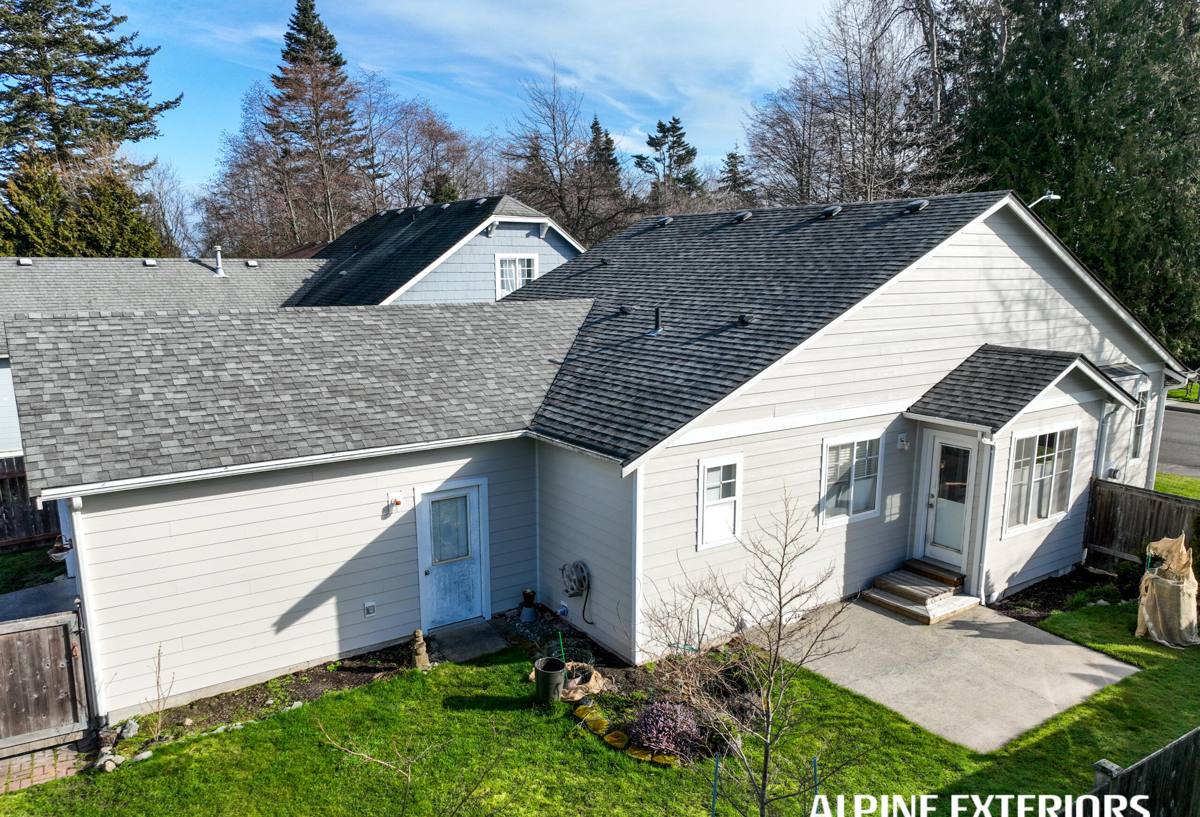
What Conway's Climate Does to a Roof
Three things define roofing conditions in this part of Skagit County, and all three show up on Conway roofs we've looked at.
Salt Air
Being close to Skagit Bay means metal components — flashing, nails, vent stacks, drip edge — face accelerated corrosion compared to homes further from the water. Roofing hardware that's rated for general use but not for coastal-adjacent exposure will rust out well before the shingles themselves wear out, and once flashing fails, water finds its way in around chimneys, skylights, and roof-to-wall transitions.
Driving Rain
Storms moving through the delta tend to push rain sideways, not just straight down. That matters because a roof built only to shed water vertically can still leak when wind drives water up and under the shingle tabs, or sideways into ridge caps and valleys. Sealant strips, nailing patterns, and underlayment choices all need to account for wind-driven moisture, not just gravity.
A Long Moss Season
Mild, wet weather stretches the moss and algae season here longer than in drier climates. Moss doesn't just look bad — it holds moisture against the shingle surface, lifts tabs as it grows, and works its way under the roofing where it can rot the decking underneath. On shaded, north-facing slopes especially, moss can take hold within a couple of years on a roof that wasn't set up to discourage it.
What a Correctly Installed Roof Includes
A shingle roof is a system, not just a layer of shingles nailed to plywood. For Conway's conditions, every layer of that system earns its place.
Decking and Ventilation
Before new shingles go down, the decking gets inspected for soft spots, delamination, or rot — common where old flashing has been leaking slowly for years. Proper attic and roof ventilation matters just as much as the shingles themselves; trapped moisture underneath the deck causes rot and mold regardless of how good the shingles are on top.
Underlayment and Ice/Water Barrier
We use synthetic underlayment across the full roof and self-adhering ice-and-water shield at the eaves, valleys, and any roof-to-wall transitions — the spots most exposed to wind-driven rain and where water is most likely to back up. This is a place where cutting corners doesn't show up until the first bad storm season.
Flashing
Chimneys, skylights, vent stacks, and sidewall transitions all need properly formed and sequenced flashing, not just caulk. Given the salt air here, we favor corrosion-resistant flashing materials and fasteners over standard galvanized options that will rust faster this close to the water.
Shingle Installation
Nailing pattern, exposure, and starter course placement all affect wind resistance. Manufacturers publish specific nailing requirements for high-wind zones, and following them — rather than a generic pattern — is what keeps tabs from lifting in a storm.
Choosing a Shingle for This Climate
Not every asphalt shingle product performs the same way in salt air and driving rain. Here's how the common options compare for a Conway roof.
| Shingle Type | Wind Performance | Moss Resistance | Typical Lifespan Here |
|---|---|---|---|
| 3-tab (economy) | Lower wind rating; tabs can lift in driving rain and gusts | No built-in resistance | 15-20 years |
| Architectural / laminate | Higher wind rating due to thicker, layered construction | Available with algae-resistant granules | 25-30 years |
| Impact-rated (Class 3/4) | Strong wind performance; reinforced mat | Usually available with algae-resistant granules | 25-30+ years, often with insurance discounts |
For most Conway homes, we recommend architectural shingles with algae-resistant (copper-infused) granules as the baseline — the extra cost over 3-tab shingles is modest, and the difference in how the roof handles moss and wind over its life is significant. We don't push 3-tab shingles as a primary option here; on a site this exposed, the shorter lifespan and lower wind rating usually cost a homeowner more in the long run than the upfront savings are worth.
Moss, Algae, and Salt Air: Keeping a Roof Ahead of Them
A well-installed roof still needs some ongoing attention in this climate. A few habits make a real difference:
- Keep overhanging branches trimmed back so shaded sections of roof get more sun and airflow, which slows moss growth.
- Have gutters cleared regularly — clogged gutters hold water against the eaves, which is exactly where ice-and-water shield and shingle edges take the most abuse.
- Consider zinc or copper strips near the ridge on shaded slopes; rain washing over them helps suppress new moss growth between cleanings.
- Have moss physically removed (not pressure-washed, which strips granules) rather than left to spread once it appears.
- Schedule a roof check after major windstorms, since lifted or cracked tabs aren't always visible from the ground.
Signs a Conway Roof Needs Attention
Because this climate accelerates certain kinds of wear, it's worth knowing what to watch for between inspections:
- Granules collecting in gutters or at downspout outlets
- Dark streaking or green-black patches on north-facing slopes
- Shingle tabs that look lifted, curled, or cracked, especially after a windy storm
- Rusty staining around flashing, vent stacks, or nail heads
- Soft or spongy feeling decking when walked on (a sign moisture has already gotten in)
- Daylight visible through the roof deck from inside the attic
- Interior ceiling stains, especially near chimneys, skylights, or exterior walls
Any one of these on its own isn't necessarily an emergency, but they're worth having looked at before the next wet season rather than after.
What Drives the Cost of a Conway Roofing Project
Every roof is different, but the main variables that move the price on a shingle roof job here are consistent.
| Factor | Why It Matters |
|---|---|
| Roof size and pitch | Steeper roofs take longer and require more safety setup, adding labor time |
| Number of layers to remove | Tear-off of old shingles (sometimes multiple layers) adds disposal and labor cost |
| Decking condition | Rotted or soft decking found during tear-off needs replacement before new shingles go down |
| Shingle grade chosen | 3-tab, architectural, and impact-rated products carry different material costs |
| Flashing and ventilation work | Chimneys, skylights, and inadequate ventilation add scope beyond a straightforward re-roof |
| Roof complexity | Valleys, dormers, and multiple roof planes take more time to flash and detail correctly |
We give a written estimate that breaks these out so a homeowner can see exactly what's driving the number, rather than a single lump-sum figure.
Our Process, Start to Finish
- Inspection and estimate: We walk the roof (or use ladder/drone inspection where needed), check the decking, flashing, and ventilation, and give a written, itemized estimate.
- Material selection: We go over shingle options suited to Conway's exposure, including wind rating and moss resistance, so the choice matches the site and the budget.
- Tear-off and deck inspection: Old roofing comes off completely; any soft or damaged decking is identified and replaced before anything new goes down.
- Underlayment and flashing: Ice-and-water shield at vulnerable areas, synthetic underlayment across the field, and corrosion-resistant flashing detailed at every penetration and transition.
- Shingle installation: Installed to manufacturer wind-rated nailing specifications, not a generic pattern.
- Cleanup and final walkthrough: Magnetic sweep for stray nails, debris hauled off, and a walkthrough so the homeowner can see the finished work and ask questions.
Why a Crew That Already Works Conway Matters
A roofing crew that regularly works this part of Skagit County already knows which flashing and fastener grades hold up against the salt air off Skagit Bay, which slopes tend to hold moss longest given the sun and tree cover typical here, and how local wind patterns during fall and winter storms stress a roof. That's different knowledge than a crew that mostly works dry, inland neighborhoods and treats every job the same way. It shows up in the small decisions — where extra ice-and-water shield goes, which fastener grade gets used, how ventilation gets balanced — that don't cost much more up front but make a real difference in how the roof performs ten and twenty years out.
If you're weighing a repair, a full replacement, or just want an honest read on how much life is left in your current roof, we're happy to take a look. There's a free, no-pressure estimate form below — reach out and we'll get you a straight answer.