 Skagit County
 Conway's Climate Is Tougher on Siding Than People Expect
Conway sits low in the Skagit River delta, close enough to Skagit Bay and Puget Sound that salt-laden air is a regular visitor, not an occasional one. Add the long, wet stretch of driving rain that comes through the valley most of the year, plus the shade and dampness that keep moss and algae active on north- and west-facing walls for months at a time, and you have a climate that finds every weakness in a home's exterior. Siding here doesn't just need to look good on installation day — it needs to hold up to salt exposure, standing moisture, and biological growth year after year.
Homeowners who've lived in Conway a while already know the signs: paint that fails faster on the shaded side of the house, trim that stays damp long after a storm passes, and a green tinge on siding that never quite gets full sun. None of that is bad luck. It's what happens when a siding material or installation isn't matched to the actual conditions on the ground.
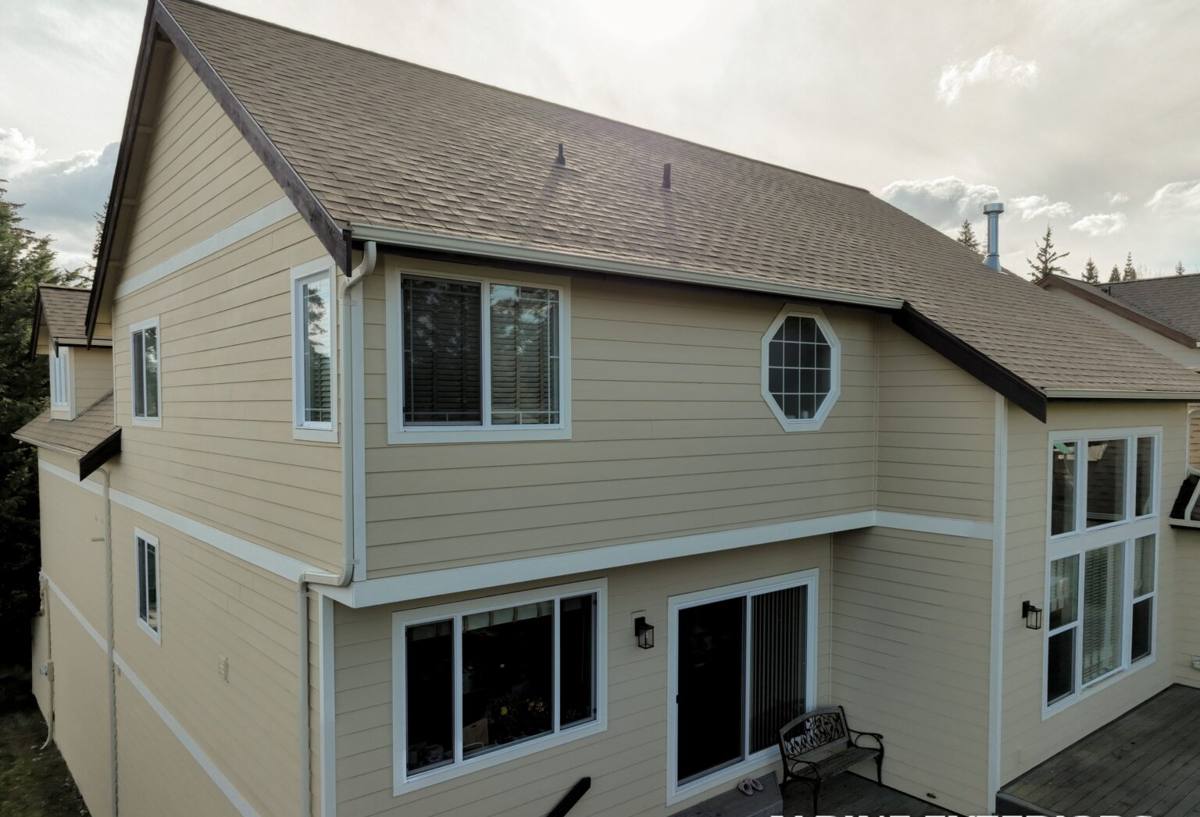
What Conway Homes Actually Need From Their Siding
Given the local conditions, siding in Conway has to do several jobs at once, not just one.
Moisture Management First
Driving rain doesn't just fall — it gets pushed sideways into wall assemblies during storms off the bay. Siding and the water-resistive barrier behind it need to shed that water and let any moisture that does get behind the cladding dry back out, rather than trapping it against the sheathing.
Resistance to Moss and Algae
Shaded, damp surfaces in this part of Skagit County can stay wet long enough for moss and algae to take hold on siding that isn't finished to resist it. A factory finish that resists organic growth matters more here than it would in a drier inland climate.
Salt Air Tolerance
Materials that corrode, swell, or degrade under repeated salt exposure age faster near the bay than the same materials would twenty miles inland. Fasteners, trim, and the siding material itself all need to be chosen with that in mind.
Why We Install Only James Hardie Fiber Cement
We don't offer vinyl, LP SmartSide, primed spruce, cedar, or off-brand fiber cement alternatives like Cemplank or Allura. That's not a marketing position — it's a standard we hold because of what we've seen hold up in this exact climate and what hasn't.
James Hardie fiber cement is non-combustible, dimensionally stable in wet climates, and available in HZ5 formulations engineered for regions with significant moisture exposure — which describes Conway well. The ColorPlus factory finish is baked on in a controlled environment, which gives it better resistance to fading, chipping, and the kind of moss and algae staining that shows up fast on shaded, damp walls near the water. It also carries a strong transferable warranty, but only when the installation itself is done to spec — which is the other half of this equation and the part most homeowners never get to evaluate before signing a contract.
What a Correct Fiber Cement Installation Involves
Fiber cement is only as good as the assembly it's installed into. A rushed or corner-cut install can leave a home with the same moisture problems it started with, just hidden behind new-looking siding.
The Details That Matter Most in This Climate
- A continuous, properly lapped weather-resistive barrier behind the siding
- A rain screen or drainage gap that lets incidental moisture drain and dry rather than sit against the sheathing
- Correct flashing at every window, door, and roofline intersection — the points where driving rain actually gets in
- Fastener placement and spacing that follows manufacturer specs, not shortcuts
- Proper clearance at grade and at horizontal trim so panels aren't wicking up standing moisture
- Factory-cut and factory-sealed panel edges wherever possible, since field-cut edges need to be primed and sealed to hold up
Skip any one of these and you can end up with a wall assembly that traps moisture instead of shedding it — which, in a climate with Conway's rainfall and salt exposure, shows up as problems within a few years rather than a few decades.
Correct Install vs. Common Shortcuts
| Detail | Common Shortcut | Correct Approach |
|---|---|---|
| Drainage behind siding | Siding installed directly against the barrier with no gap | Rain screen or furring strips to allow drainage and airflow |
| Cut panel edges | Left raw and unsealed | Primed and sealed per manufacturer instructions |
| Flashing at openings | Reused old flashing or caulk-only seal | New, properly lapped flashing integrated with the barrier |
| Clearance at grade/trim | Siding tight to grade, decks, or roofs | Manufacturer-specified gap maintained everywhere |
| Fastening | Nail gun set to factory pressure regardless of panel | Fastener type, spacing, and depth matched to panel and substrate |
How Our Process Works on a Conway Home
We start with a walk-around inspection that looks past the surface — checking trim, window flashing, and the condition of the sheathing wherever it's exposed, since those findings shape the scope of the job. From there we measure, plan panel layout to minimize seams and waste, and order Hardie panels and trim in a ColorPlus finish matched to the home.
Old siding comes off in sections rather than all at once where practical, so the wall assembly isn't left exposed to weather longer than necessary — a real consideration given how often the delta sees rain moving through. We install the water-resistive barrier and drainage gap first, then flashing at every penetration, then the Hardie panels and trim to manufacturer spec. We finish with a walk-through so you can see the work before we call it done, and we clean the site fully before we leave.
Signs a Conway Home May Need New Siding Now
- Soft or spongy spots when you press on the siding, especially near the bottom courses
- Paint that's peeling, bubbling, or failing faster on shaded or bay-facing walls
- Persistent moss or algae staining that comes back soon after cleaning
- Visible warping, cupping, or gaps between panels or at trim joints
- Rising heating bills that suggest the wall assembly isn't sealing the way it used to
- Cracked or crumbling siding, particularly around window and door corners
Any one of these on its own isn't necessarily an emergency, but a couple together usually means moisture has been getting behind the siding for a while.
Cost Factors for Fiber Cement Siding in Conway
Every home is different, so we won't quote a number without seeing the house, but these are the factors that move the price most:
| Factor | How It Affects Cost |
|---|---|
| Tear-off vs. install over existing sheathing | Removing old siding and repairing sheathing adds labor but often finds problems worth catching early |
| Home size and number of stories | More wall area and harder access (ladders, staging) increase labor time |
| Trim and detail complexity | Multiple gables, dormers, and window trim take more cutting and fitting than a simple rectangular wall |
| ColorPlus vs. field-painted finish | Factory-finished panels cost more up front but need repainting far less often |
| Site conditions | Tight lots, landscaping, or delta-area soil access can add setup time |
Why It Matters That We Already Work in Conway
A crew that's worked this part of Skagit County knows what driving rain off the bay does to a wall assembly over a winter, and plans the flashing and drainage details accordingly instead of treating it as an afterthought. We know which sides of a house in this area tend to hold moss longest and where extra attention to the finish and drainage pays off. That familiarity also shows up in smaller ways — knowing realistic weather windows for tear-off work in a valley that sees a lot of rain, and ordering materials rated for the salt exposure this area actually sees rather than a generic spec.
It also means we're not learning Skagit County's permitting and inspection expectations on your project. That's less friction and fewer surprises for you, and it's part of why hiring locally experienced installers matters as much as the siding brand you choose.
Get a Straight Answer About Your Siding
If your Conway home is showing any of the wear this climate causes, or you're just planning ahead, we'll take a look and give you an honest read on what's going on and what it would take to fix it right. Reach out for a free, no-pressure estimate — there's no obligation, just a clear picture of your options.