 Skagit County
 Building a Deck That Actually Holds Up in Concrete
Concrete sits in the Skagit River valley, tucked against the foothills of the North Cascades, and that location shapes everything about how a deck should be built here. Homes are often shaded by tall conifers, tucked close to the river or surrounded by forest, and the weather pattern that rolls through Skagit County brings long stretches of driving rain, heavy fall and winter moisture, and the kind of persistent dampness that keeps moss growing for most of the year. A deck built to a generic spec sheet — the kind that works fine in a dry, sunny climate — will show problems here within a few seasons: soft spots, black staining, slick moss patches, and fasteners that back out as wood swells and shrinks with the moisture cycle.
We build decks for this specific environment, not a national average one. That means paying close attention to drainage, material selection, and structural details that matter more in a shaded, wet, river-valley setting than they would somewhere drier.
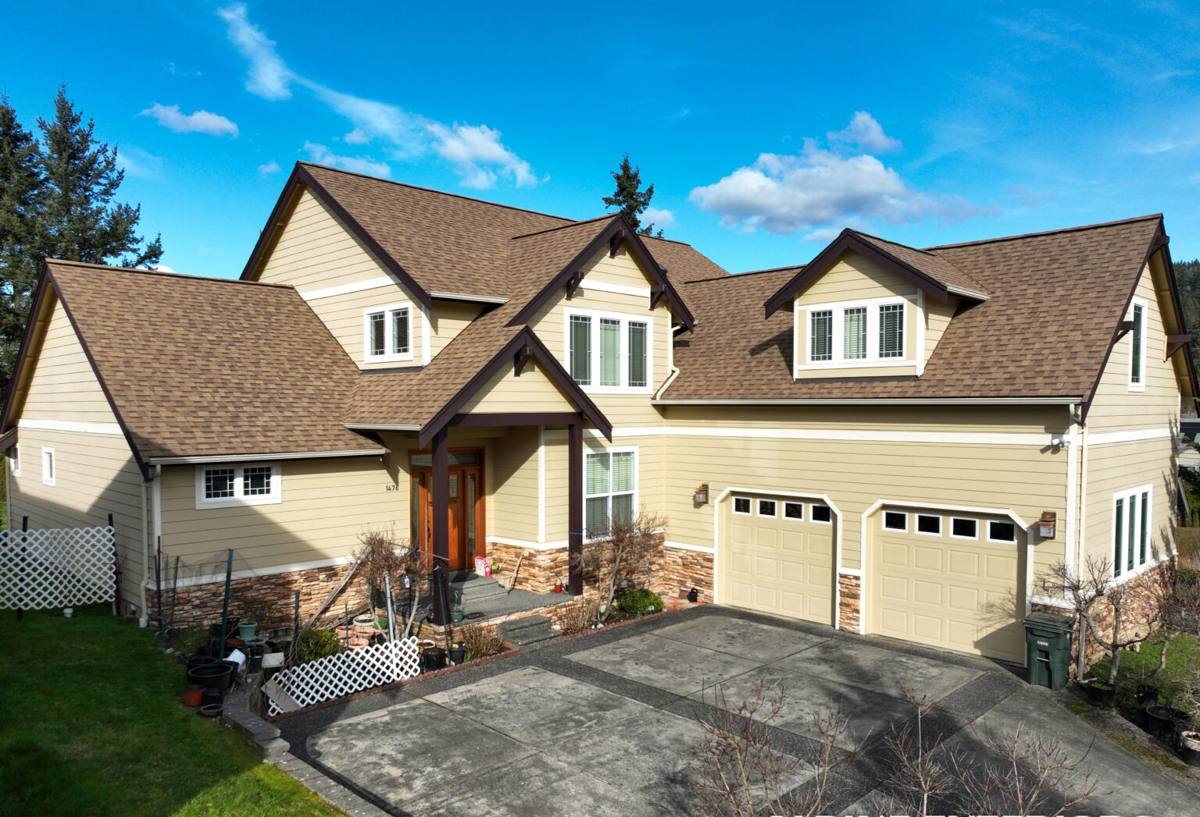
What Concrete's Climate Does to Untreated or Poorly Built Decks
A few things happen consistently to decks in this part of Skagit County when they're not built or maintained correctly:
- Moss and algae take hold fast — shaded decks under tree cover stay damp for days after a storm, and moss doesn't need much time to establish on any surface that holds moisture.
- Fasteners and connectors corrode — the humidity and repeated wet-dry cycling accelerate rust on hardware that isn't rated for exterior, wet-use conditions.
- Wood decking cups and splits — boards that absorb water unevenly (wet underneath, drier on top from occasional sun) warp over a few seasons if spacing and ventilation weren't planned correctly.
- Ledger boards and framing rot from the inside — this is the most serious issue, and it's almost always invisible until the deck is already failing, because it starts at the point where the deck attaches to the house.
None of this is unique to any one street or neighborhood in Concrete — it's a function of the river valley's rainfall and tree cover, and it applies to just about every property in town that isn't sitting in full open sun year-round.
Choosing the Right Decking Material for This Area
Material choice matters more here than in a drier climate, because the difference between a good and a poor choice shows up faster. There's no single "best" material for every home — it depends on budget, how much shade the site gets, and how much upkeep the homeowner wants to do.
| Material | Upfront Cost | Moss/Moisture Resistance | Maintenance | Realistic Lifespan Here |
|---|---|---|---|---|
| Pressure-treated lumber | Lowest | Fair — needs sealing to perform well | Annual cleaning and re-sealing recommended | 15–20 years with upkeep |
| Cedar | Moderate | Good natural resistance, but surface still needs care in full shade | Periodic cleaning and oiling | 15–25 years with upkeep |
| Composite decking | Higher | Very good — doesn't absorb water like wood | Occasional washing to remove surface moss/pollen film | 25–30+ years, backed by manufacturer warranty |
| PVC/capped polymer | Highest | Excellent — fully sealed surface | Lowest of any option | Long service life, strong warranty coverage |
In shaded, tree-heavy lots — which describes a lot of property around Concrete — we lean toward recommending composite or capped polymer decking for the walking surface, because it simply doesn't feed moss and algae the way bare wood does. That said, plenty of homeowners prefer the look and feel of real wood, and a well-built, well-maintained cedar or treated-lumber deck can absolutely hold up here — it just needs a more disciplined maintenance routine, and we're upfront about that trade-off before you commit to a material.
Where We Won't Cut Corners on Material
Regardless of what decking surface you choose, we don't use hardware or framing lumber that isn't rated for exterior, ground-contact, or wet-use conditions as applicable. Using interior-grade fasteners or under-rated structural lumber is a common shortcut that fails quietly over a few years — by the time it shows, it's a structural repair, not a cosmetic one.
The Foundation Nobody Sees: Footings, Framing, and Ledger Attachment
The parts of a deck that actually determine how long it lasts are the parts you never look at after the build is done.
Footings
Footing depth and design need to account for local frost depth and soil conditions. River valley properties around Concrete can have variable soil — some sandy and well-draining, some heavier and slower to shed water — and we adjust footing design to the actual site rather than using a one-size approach.
Ledger Board Attachment
This is the single most common failure point on decks that attach to a house, and it's almost entirely preventable with correct flashing. The ledger board has to be properly flashed to keep water from tracking behind it and into the house's rim joist — a slow leak here can rot both the deck framing and the home's structure before anyone notices. Given how much driving rain Skagit County sees off the river valley in fall and winter, we treat ledger flashing as non-negotiable, not optional.
Joist and Beam Spacing
Correct spacing does two things: it keeps the deck structurally sound under snow or gathering loads, and it allows enough airflow underneath the decking that moisture doesn't just sit and breed moss and mildew on the underside of boards.
Drainage and Ventilation: The Details That Fight Moss
Moss doesn't grow because a homeowner didn't clean often enough — it grows because water sits somewhere it shouldn't. Building it out from the start matters more than trying to scrub it away later.
- Decking gapped correctly so water sheds through rather than pooling on the surface
- Substructure ventilation so the underside of the deck can dry out between storms
- Grading and drainage at ground level so water doesn't collect under a low deck and stay damp indefinitely
- Stair and railing post bases detailed to shed water away from end grain, which is the most absorbent part of any wood component
Permits and Skagit County Code
Most custom deck projects — especially anything attached to the house, elevated, or with railings — require a permit through Skagit County, and inspections check exactly the structural details covered above: footing depth, ledger attachment, and framing. We handle the permit process and coordinate inspections as part of the project, so you're not left tracking down county paperwork on your own.
Our Process, Start to Finish
- On-site assessment — we look at sun/shade exposure, slope, soil, and how the deck will connect to the house before recommending a design or material.
- Design and material selection — we walk through the trade-offs on material, size, and layout in plain terms, based on your budget and how much maintenance you want to take on.
- Permitting — we pull the required Skagit County permit and schedule inspections at the appropriate framing and final stages.
- Footings and framing — built to the site's actual soil and frost conditions, not a generic minimum.
- Ledger flashing and structural connections — done to code, checked before decking goes down.
- Decking, railings, and finish work — installed with correct spacing and fastening for the material chosen.
- Final walkthrough — we go over care and maintenance specific to the material you chose and the site's shade exposure.
Maintenance Checklist for Decks in a Shaded, Wet Site
Whatever material you choose, a little seasonal attention goes a long way in this climate:
- Sweep off fallen needles, leaves, and debris regularly — they trap moisture against the decking surface
- Wash the deck surface at least once a year (spring is a good time, after the wettest months) to remove moss and algae film before it gets established
- Check and clear drainage gaps between boards so water isn't pooling
- Inspect fasteners and hardware annually for corrosion or backing-out
- Re-seal or re-oil wood decking on the manufacturer's recommended schedule — don't wait until it looks dry and gray
- Check the ledger board area and flashing for any signs of staining or soft wood, especially after a wet winter
Why Hire a Crew That Already Works in Concrete
A deck contractor who mostly works in drier, sunnier parts of the state may not think twice about ledger flashing detail or substructure ventilation, because in their climate those shortcuts don't fail as fast. In Concrete's shaded, river-valley setting, they show up in a few seasons, not a few decades. We build decks throughout Skagit County with this specific climate in mind — the moss, the driving rain, the shade — and we don't treat those as edge cases. They're the baseline we design around.
If you're planning a new deck or replacing one that's showing its age, we're happy to come take a look and give you a straightforward, no-pressure estimate — just fill out the form below.