 Skagit County
 Deck Repair Built Around Bow's Coastal Climate
Bow sits along the water between Samish Bay and Padilla Bay, and that location shapes what a deck here goes through every year. Salt-laden air moves off the water and settles into fastener heads, brackets, and post hardware. Storms roll in off the Pacific and drive rain sideways rather than straight down, pushing moisture into joints and connections that would stay dry in a calmer climate. And the shaded, damp corners common on wooded and north-facing lots around Bow support a moss season that runs most of the year, holding water against the decking surface long after a storm has passed.
None of that means a deck can't last in Bow — plenty do. But it does mean deck repair here is rarely just cosmetic work. A soft board, a corroded fastener, or a loose railing post is usually a symptom of moisture that's been working on the structure for a while, and a repair that only addresses what's visible on the surface tends to come back within a season or two. This page covers what actually fails on Bow decks, what a correct repair involves, and how our process works for deck repair specifically in this part of Skagit County.
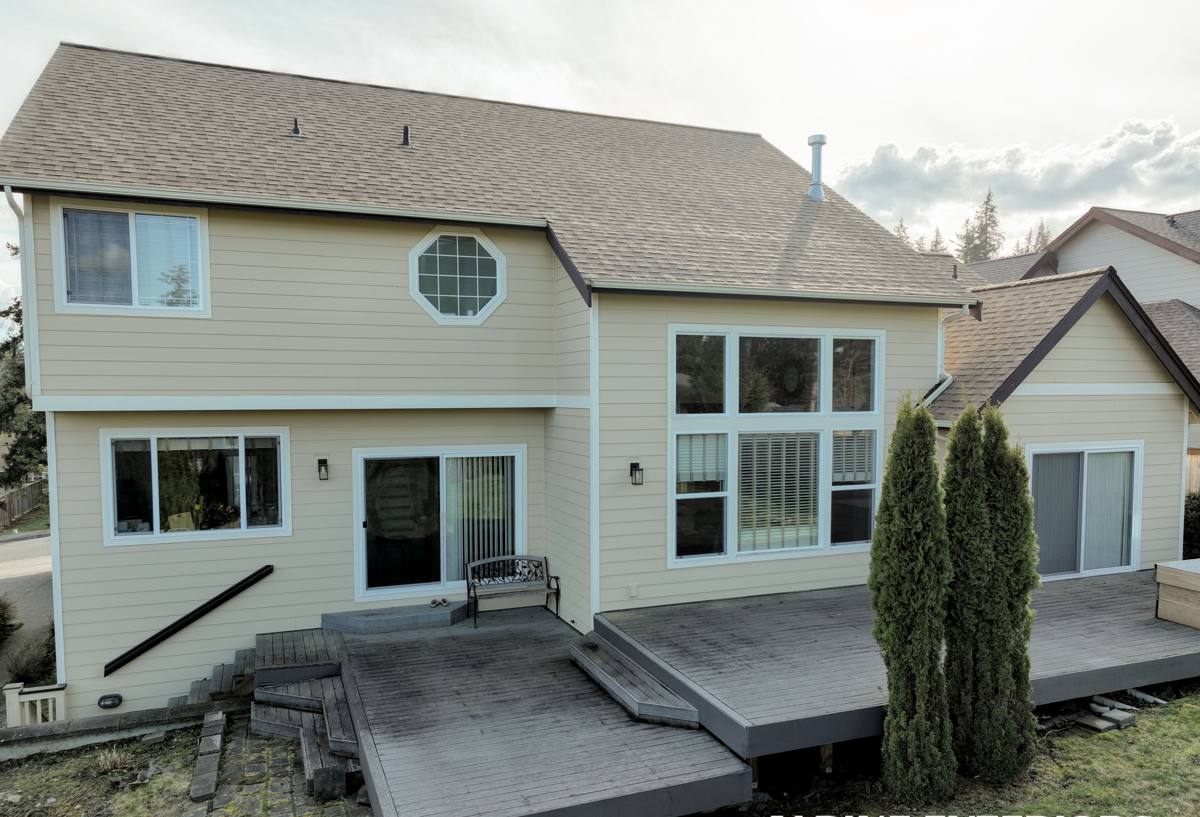
What Actually Fails on a Bow Deck
Fastener and Hardware Corrosion
Standard fasteners and hardware start corroding faster in salt air than most homeowners expect, and a corroding fastener loses holding strength well before it looks obviously bad. On decks, that shows up first at railing post connections, joist hangers, and deck board screws — the points carrying structural load or holding a railing people lean on. By the time rust staining is visible on the surface, the fastener underneath has often already lost some of its grip.
Ledger Board and Rim Joist Rot
The ledger board — where the deck attaches to the house — is one of the most common failure points we find on repair calls in this area. If it wasn't flashed correctly when the deck was built, wind-driven rain works its way behind the board over time and rots the wood from the inside, often with little visible warning until the deck starts to feel spongy or pull slightly away from the house.
Board Cupping, Splitting, and Soft Spots
Wood decking that sits in sustained moisture without adequate gapping or sealing cups, splits, and eventually softens. Composite boards can hold up longer, but even capped composite isn't immune — cut ends, fastener holes, and older uncapped products can absorb moisture at those exposed points and start to fail from the inside out.
Moss and Surface Buildup
Shaded and north-facing decks around Bow grow moss for most of the year, and moss does more than look bad. It holds moisture against the decking surface constantly, which accelerates rot in wood and can stain or degrade the surface of composite and PVC products over time if it's left to build up.
Loose or Failing Railings and Stairs
Railing posts take a lot of lateral stress from people leaning on them, and if the post-to-frame connection has any corrosion or rot behind it, that connection loosens gradually until it's a safety issue rather than a maintenance one. Stair stringers see similar wear, especially where they meet a concrete pad or the ground.
Repair vs. Replacement: How We Decide
Not every deck problem calls for a full rebuild, and not every deck is worth patching. The honest answer depends on how much of the structure is affected and where the damage sits.
| Situation | Usually Repairable | Usually Needs Replacement |
|---|---|---|
| A few soft or split boards, framing sound | Yes — spot-replace affected boards | No |
| Ledger board rot, framing otherwise sound | Yes — ledger replacement and reflashing | Only if rot has spread into rim joists |
| Corroded fasteners, structure otherwise sound | Yes — refastening with corrosion-resistant hardware | No |
| Widespread joist rot or soft framing | Sometimes, if damage is localized | Often — patching soft framing rarely holds |
| Loose railing posts from rot at the base | Yes, if the post pocket can be rebuilt | Only if surrounding framing is compromised too |
| Deck is 20+ years old with scattered issues throughout | Case by case | Often more cost-effective long term |
We won't push a full rebuild when a targeted repair will genuinely hold, and we won't patch a deck that's going to keep failing in new spots every year. We'll walk you through what we actually find and let you make the call with real information in front of you.
What a Real Inspection Checks
- Ledger board condition and flashing where the deck meets the house
- Joist and beam condition, probing for soft spots rather than just looking
- Fastener and hardware condition at railing posts, joist hangers, and connections
- Post base condition, especially where posts meet concrete footings or grade
- Decking surface condition — cupping, splitting, moss buildup, and drainage between boards
- Stair stringer condition and attachment points
- Overall drainage and grading underneath the deck
What a Correct Deck Repair Involves
A repair that actually holds up in Bow's climate goes beyond swapping out the board or bracket that's obviously failing. It includes:
- Tracing damage back to its actual cause — usually a flashing gap, a corroded fastener, or a drainage problem — rather than only replacing what's visibly broken
- Using stainless steel or coastal-grade corrosion-resistant fasteners on any repair, not standard hardware that will corrode again in a few seasons
- Correcting ledger flashing whenever the ledger board itself is opened up for repair, since that's the point most likely to cause the next round of rot if it's left as-is
- Matching replacement decking material and gapping to the existing deck where the goal is a spot repair, so the boards drain the same way the rest of the deck does
- Checking and, where needed, correcting drainage and grading underneath the repaired section
- Rebuilding railing post connections to full structural strength, not just tightening what's loose
Skip any of those steps and a repair can still look fine for a season. The moisture and corrosion that caused the original problem are still there, and they tend to resurface in the same area or right next to it.
How Our Process Works
We start with an on-site inspection, probing suspect boards and framing rather than just eyeballing the surface, and checking the ledger connection, fasteners, and drainage as a matter of course even if that's not where the visible problem is. From there we tell you plainly what we found — what's a straightforward repair, what's worth watching, and what's actually a bigger issue than the original complaint suggested.
For repairs, we match materials and fastening to what the rest of the deck needs to hold up in this climate, using corrosion-resistant hardware and correct flashing details even on a small job, since a repair done with standard hardware just fails again on the same schedule. If the inspection turns up damage that goes beyond what's worth repairing — widespread joist rot or a ledger connection that's failed in multiple spots, for example — we'll say so and talk through what a partial or full rebuild would actually involve, rather than patching something that won't hold.
Keeping a Repaired Deck From Failing Again
A repair holds longer with some routine attention, especially in a climate that doesn't give a deck much of a dry season to recover in:
- Rinse the deck surface periodically to clear salt residue and organic buildup before it works into the wood or cap layer
- Keep gaps between boards clear of leaves and debris so water can actually drain through rather than pooling
- Check railing posts and hardware once a year, particularly heading into the wet season
- Trim back branches or plants that shade the deck and hold moisture against it longer than necessary
- Address any new soft spots or standing water right away — that's the same pattern that caused the original repair, and it doesn't improve on its own
Why It Matters That We Already Work Bow
A crew that mostly works further inland can still repair a deck competently, but Bow's proximity to Samish Bay and Padilla Bay means faster fastener corrosion, more wind-driven rain finding its way into ledger and railing connections, and a moss season that runs longer than it does in more sheltered parts of Skagit County. Working this area regularly means we're not guessing at those conditions when we look at your deck — we know which failure points show up first here and which repairs are worth doing right versus which ones are better handled with a straight answer about replacement instead.
That familiarity also means we're not surprised by what we find when we open up a ledger board or pull a corroded fastener. We've seen the pattern before on other decks in this stretch of the county, and that makes for a more accurate inspection and a repair that's built for what this climate is actually going to do to it.
Get an Honest Look at Your Deck
If your deck has soft boards, a loose railing, or just doesn't feel as solid as it used to, it's worth having someone inspect it before the problem spreads further into the framing. We offer free, no-pressure estimates for deck repair in Bow and the surrounding Skagit County area — use the form below to get a time on the schedule.