 Skagit County
 Why Edison Decks Wear Out Faster Than the Manuals Say
Edison sits close enough to Samish Bay and the surrounding tideflats that salt-laden air is a constant, low-grade attack on anything wood or metal. Add Skagit County's long wet season — months of driving rain off the water followed by a slow, shaded spring — and you get a climate that's rougher on outdoor structures than the national average product warranty was written for. Decks here don't just get rained on; they stay damp for days at a time, especially on the north or shaded sides of a house, which is exactly the condition moss, algae, and rot fungus need to take hold.
Most decking materials sold nationally are rated for "wet climates" in a generic sense. Edison's combination of salt air corrosion and sustained moss-season moisture is more specific than that, and it shows up first in the parts of a deck most homeowners never think to check: fasteners, ledger flashing, and the framing underneath the boards you can see.
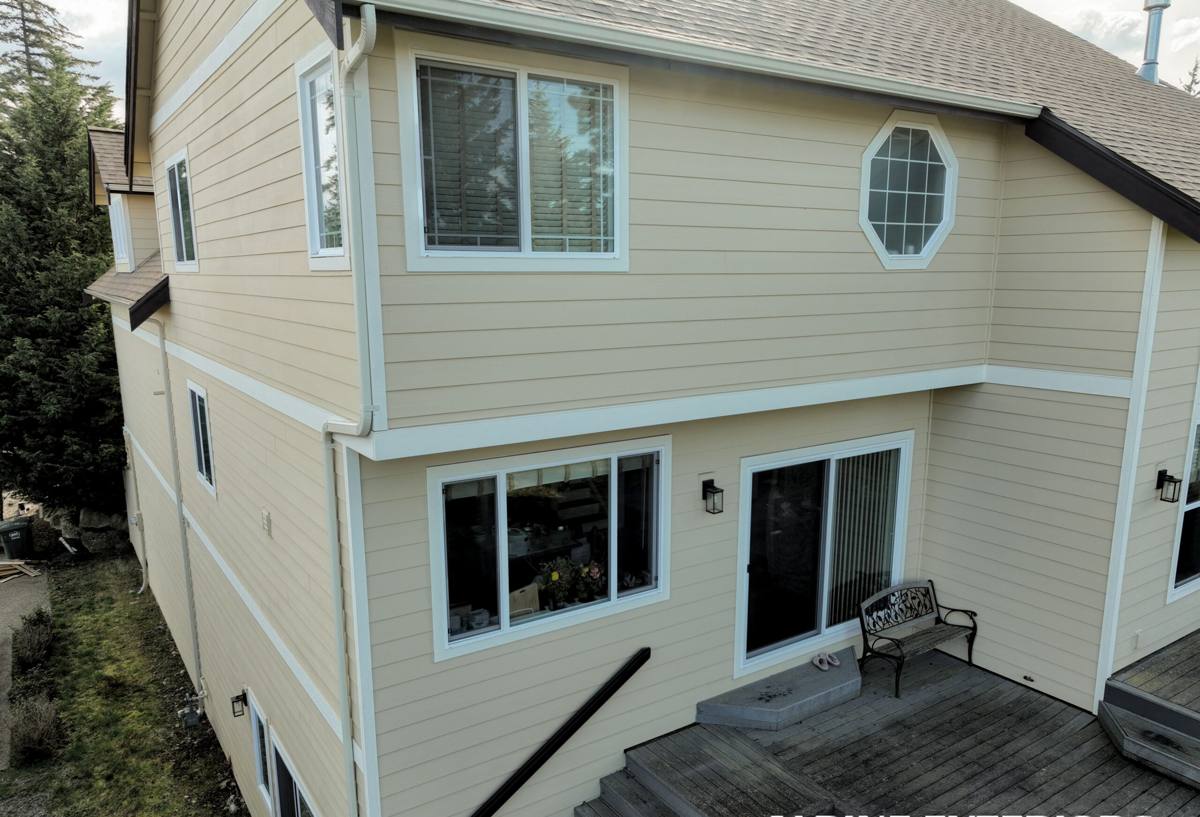
Signs a Deck Needs Replacement, Not Just Repair
A lot of decks get patched for years past the point where patching still makes sense. Replacement is the honest call when the problem is in the structure, not just the surface.
- Soft or spongy spots when you walk the deck, especially near the house or stair landings
- Rust streaking or visibly corroded fasteners, joist hangers, or bolts
- Gaps opening up at the ledger board where the deck meets the house
- Persistent moss or black algae staining that comes back within weeks of cleaning
- Boards that have cupped, split, or separated from the joists
- Railings or posts that flex or wiggle under normal weight
- A deck older than 15-20 years that has never had the substructure inspected
If you're only seeing surface graying or minor board splintering with a solid frame underneath, a repair or resurface can still make sense. The distinction matters because replacing boards over a compromised frame just hides the real problem for another season.
Why the Frame Fails Before the Decking Does
In a marine-influenced climate like this stretch of Skagit County, the visible decking is usually the last thing to fail. Water works its way into end grain, fastener holes, and the ledger connection long before it shows on top. By the time boards look bad, the joists and ledger have often been wet-cycling for years. That's why any honest deck replacement quote starts with pulling boards and looking at what's underneath, not just measuring for new lumber.
Choosing Materials for a Salt Air, High-Moss Environment
There's no single "best" decking material — there's a best fit for how exposed the site is, how much upkeep you want to do, and your budget. Here's how the common options actually perform in Edison's conditions.
| Material | Salt Air / Moisture Behavior | Moss & Algae Resistance | Maintenance |
|---|---|---|---|
| Pressure-treated fir/pine | Prone to warping and fastener corrosion if hardware isn't matched to treated lumber | Needs regular cleaning and sealing to resist growth | Annual sealing recommended |
| Cedar | Naturally moisture-resistant, ages well with airflow underneath | Still needs periodic cleaning in shaded, damp spots | Sealing/staining every 2-3 years |
| Composite (capped) | Handles moisture well; won't rot or splinter | Can still grow surface algae if never cleaned, but doesn't absorb it structurally | Occasional wash, no sealing |
| PVC/vinyl decking | Fully moisture-inert | Best resistance to staining, but surface algae still needs washing | Lowest upkeep, higher upfront cost |
We don't push one material on every job. A shaded, low-airflow deck near mature trees is a poor candidate for bare wood no matter how well it's sealed, because it simply won't dry between rain events. An open, sun-exposed deck can do fine in cedar for decades with normal maintenance. Part of our job is telling you honestly which category your site falls into before you spend money on the wrong material.
What a Correct Deck Replacement Actually Involves
Tear-Off and Frame Inspection
We remove the old decking and railings down to the framing, then inspect every joist, beam, post, and the ledger connection to the house. This is the step that gets skipped on cut-rate jobs, and it's the one that matters most in this climate — a new deck surface on a rotted frame is a short-term fix dressed up as a long-term one.
Ledger Board and Flashing
The ledger — where the deck attaches to the house — is the single most common failure point on decks in wet coastal climates, because it's a wood-to-wood joint that traps water if it isn't flashed correctly. We install proper flashing to shed water away from the house framing, not just caulk over the old connection.
Footings and Structural Support
Footings need to sit below frost depth and bear on solid, undisturbed soil. Where we find undersized or shifted footings, we address them as part of the replacement rather than building a new deck on an old, marginal foundation.
Fasteners and Hardware
In salt air, the wrong fastener corrodes years before the lumber around it fails. We use hardware rated for the decking and treated-lumber combination going in, matched for corrosion resistance rather than whatever is cheapest at the yard.
Decking Installation and Spacing
Board spacing has to account for drainage and airflow, not just appearance. Too tight, and water and debris sit between boards, feeding moss growth; too wide, and you lose comfort and structural feel underfoot. We set spacing based on the material's expansion behavior and the site's typical moisture load.
Railings and Stairs
Railings and stair stringers get the same scrutiny as the deck frame, since they're structural, not decorative. Loose or undersized railing posts are one of the more common safety issues we find on older decks during a replacement.
Permits and Local Requirements
Deck replacement in unincorporated Skagit County and nearby jurisdictions generally requires a permit once you're doing structural work — new footings, a rebuilt frame, or a deck over a certain height or size. Requirements vary by exact location and by how much of the structure is being replaced, so we confirm what applies to your specific property before work starts rather than assuming. Pulling the right permit also matters for insurance and resale, since an unpermitted structural rebuild can become a problem when you sell the house.
Our Deck Replacement Process
- On-site assessment — we walk the existing deck, check the frame and ledger where visible, and talk through what you want from the new deck.
- Written estimate — a clear scope covering demolition, framing repairs or replacement, material choice, and hardware, with no vague allowances.
- Permitting — we handle the permit application where one is required, so you're not chasing paperwork.
- Tear-off and disposal — old decking, railings, and any compromised framing are removed and hauled off.
- Framing and ledger work — footings, joists, and ledger flashing are repaired or rebuilt to current standards.
- Decking, railing, and stair installation — installed to the spacing and fastening specs appropriate for the material and site.
- Final walkthrough — we check the finished deck with you before calling the job done.
Timeline
A straightforward deck replacement typically runs from a few days to a couple of weeks depending on size, whether footings need rebuilding, and weather windows — Skagit County's wet stretches can push a schedule back, and we build that into our planning rather than rushing concrete or fasteners into work in a downpour.
What Deck Replacement Costs, and What Moves the Number
Costs vary widely based on size, material, and how much of the substructure needs rebuilding, so we won't quote a number here that doesn't fit your specific deck. What we can tell you is what actually drives the price up or down:
| Cost Factor | Effect |
|---|---|
| Deck size and shape (multi-level, angles, built-in features) | More cutting and framing labor |
| Frame and footing condition | Hidden rot or undersized footings add rebuild cost once uncovered |
| Material choice (treated wood vs. cedar vs. composite/PVC) | Material cost per square foot varies significantly |
| Railing style and code requirements | Custom or code-driven railing height/spacing adds labor |
| Site access | Difficult access for material delivery or debris removal adds time |
The only way to get an honest number is a walk-through of the actual deck, which is what our estimate visit is for.
Living With a Deck Through Skagit County's Moss Season
Even a well-built deck needs some seasonal attention here. Clearing debris out of board gaps before the fall rains settle in, keeping nearby vegetation trimmed back for airflow, and washing off moss and algae buildup once or twice a year go a long way toward protecting the investment. Decks that stay shaded most of the day — common on lots with mature trees near Edison — will need this attention more often than a deck in full sun, regardless of what material it's built from.
Why Hire a Crew That Already Works This Area
A contractor who works Edison and the rest of Skagit County regularly already knows which details matter here: how ledger flashing needs to handle sustained wet weather, which materials actually hold up against salt air instead of just being rated for "coastal" use in general, and what local permitting actually asks for. That's the difference between a deck built to a generic national spec and one built for the conditions it will actually sit in for the next 20-plus years.
If you're weighing repair versus replacement, or just want an honest look at what your current deck's frame is doing underneath the surface, we're happy to come take a look. The estimate is free, there's no pressure, and you'll get a straight answer about what your deck actually needs.