 Skagit County
 Custom Decks Built for Hamilton, Not Just Sold to Hamilton
Hamilton sits in the Skagit River valley, tucked between timbered hillsides that keep the town shaded and damp for a good part of the year. That's part of what makes it a beautiful place to build an outdoor living space — and part of what makes an outdoor living space fail early if it's built the way a deck gets built in a drier climate. A custom deck here has to handle standing shade, high ground moisture, long stretches of drizzle, and a moss season that can run from fall through spring. We build decks for Hamilton homeowners with all of that in mind from the first sketch, not as an afterthought once the boards start turning green.
This page is about one service in one place: custom deck construction for homes in and around Hamilton. If you're comparing decking materials, sorting out permits, or just trying to figure out why your last deck rotted out from underneath while the surface still looked fine, this is written for you.
Why Skagit County's Climate Is Hard on Decks
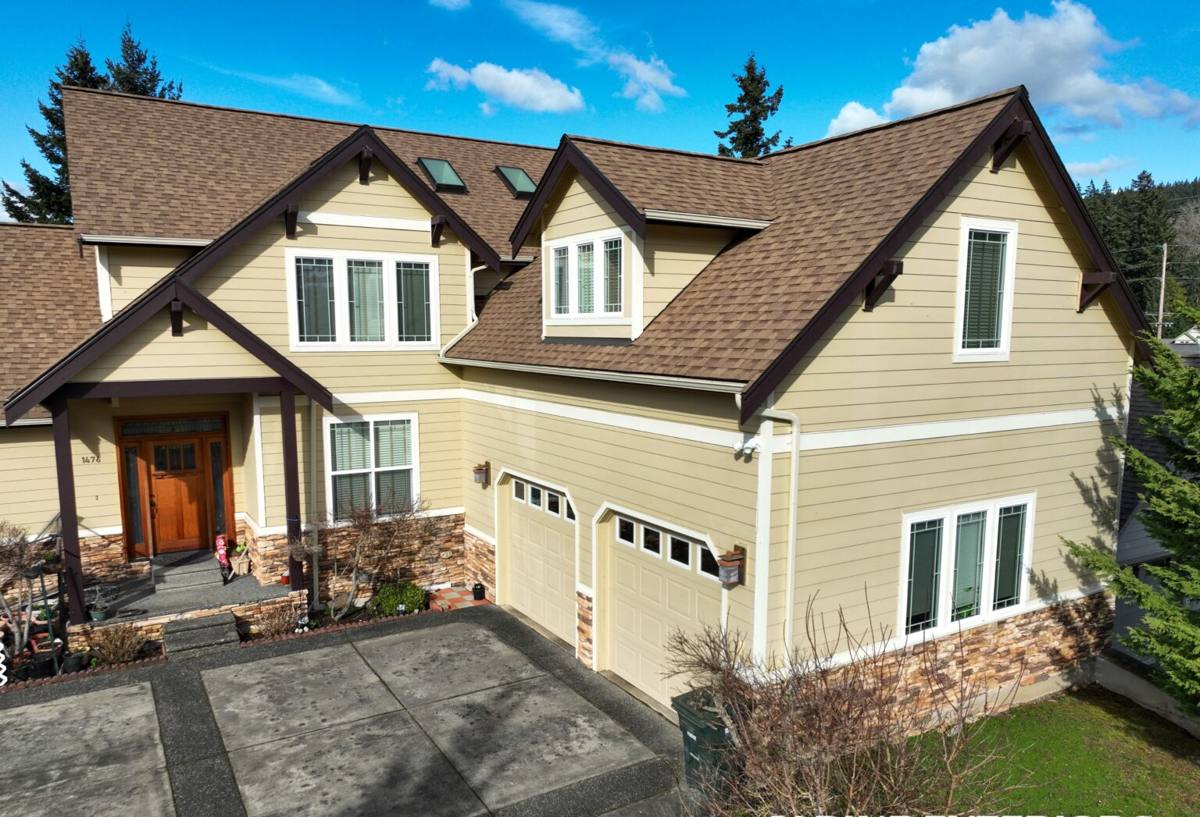
Skagit County's broader climate — salt-influenced marine air near the coast, driving rain across the lowlands, and a moss season that never fully quits — sets the baseline for every exterior structure in the county, siding included. Hamilton's specific version of that challenge is less about salt air and more about the river valley itself: tree cover that blocks sun for hours at a time, elevated humidity off the river bottom, and soil that stays wet longer than it does out on open, exposed lots.
That combination matters for a deck in a few concrete ways:
- Framing lumber and ledger connections that don't dry out between rain events are the most common source of hidden rot — often invisible until a board or post fails structurally.
- Shaded decking surfaces stay damp longer, which is exactly what moss and algae need to establish and spread.
- Footings set in consistently moist, low-lying soil need to be sized and placed with more care than a footing on a well-drained slope.
- Fasteners and hardware that aren't rated for wet-service, high-moisture conditions corrode faster here than manufacturer literature written for a national market usually accounts for.
None of this means a deck in Hamilton is a bad idea — it means it has to be built to the conditions it will actually sit in, not to a generic spec sheet.
What a Correctly Built Deck Needs Here
Ledger Attachment and Flashing
The ledger board — where the deck ties into the house — is the single most common failure point on decks anywhere, and doubly so in a climate that keeps wood wet longer. A correct ledger installation uses proper flashing that directs water away from the house band board, not sealant alone. Sealant fails; flashing, installed correctly, doesn't need to work forever to still be doing its job.
Joist and Beam Protection
Untreated joist tops trap water in the fastener holes where screws and joist hangers penetrate the wood — that's where rot usually starts, well before it shows on the surface. Joist tape or an equivalent protective barrier over the top of every joist and beam is not an upgrade; in a valley climate like Hamilton's, we treat it as standard practice.
Footings Sized for Wet Soil
Footing depth and diameter need to account for how long the soil around them stays saturated, not just the frost line on paper. We assess drainage on the actual lot before we finalize footing placement — a footing plan that works on a well-drained slope in Sedro-Woolley isn't automatically right for a shaded, low-lying yard in Hamilton.
Fasteners and Hardware
Stainless steel or heavy-coated, wet-service-rated fasteners and structural hardware cost more up front than standard hot-dip galvanized hardware, and in a high-moisture valley environment that difference in corrosion resistance is worth paying for once rather than replacing boards twice.
Airflow Underneath
A deck built low to the ground with poor ventilation underneath traps moisture against the framing. Proper clearance and, where the site allows it, a drainage or grading plan underneath the deck keeps air moving and lets wood actually dry between storms.
Choosing the Right Decking Material for a Shaded, Damp Lot
There's no single "best" decking material — there's the right material for your budget, your maintenance appetite, and how much sun versus shade your particular yard gets. Here's how the common options actually compare for a Hamilton-area lot:
| Material | Moisture/Moss Resistance | Maintenance | Typical Lifespan | Cost Tier |
|---|---|---|---|---|
| Pressure-treated wood | Good if sealed and maintained; absorbs moisture if neglected | Annual cleaning and re-sealing recommended in shaded areas | 15–20 years with upkeep | Lowest upfront |
| Cedar | Naturally rot-resistant but still needs care in constant shade | Periodic cleaning, oil or stain every 1–2 years | 15–25 years with upkeep | Mid |
| Composite decking | Very good; won't absorb water like wood, but can still grow surface algae in deep shade | Periodic washing; no staining or sealing | 25–30+ years (check manufacturer warranty) | Mid to high |
| PVC/capped decking | Best moisture resistance of common options | Lowest — occasional washing | 25–30+ years (check manufacturer warranty) | Highest |
On a heavily shaded Hamilton lot, we usually steer homeowners away from bare pressure-treated as a standalone long-term solution unless they're genuinely committed to yearly sealing — not because the material is bad, but because shade removes the drying time that treated lumber relies on to perform. Composite and PVC cost more up front but trade that for far less ongoing maintenance in exactly the conditions this valley produces. The right call still depends on your budget and how much deck upkeep you actually want to do — we'll walk through the honest trade-offs for your specific yard rather than push one product line.
Our Process, Start to Finish
- On-site assessment: We look at sun exposure, drainage, existing structure (if replacing a deck), and how the site handles water during a heavy Skagit rain, not just on a dry day.
- Design and material selection: We talk through layout, decking material, railing style, and any built-ins based on how you'll actually use the space and how much maintenance you want long-term.
- Permitting: Skagit County requires permits for most new deck construction and many replacements. We handle the permit submission and inspections as part of the job — you shouldn't have to be the one chasing that down.
- Construction: Ledger flashing, joist protection, footings, framing, decking, and railing installed to the standards above — not the minimum a permit will pass, but what actually holds up here.
- Final walkthrough: We go over the finished deck with you, including basic care so it stays looking and performing the way it should.
Permits and Local Considerations Around Hamilton
Because Hamilton sits close to the Skagit River, some properties in and around town fall within areas that have additional building requirements tied to floodplain regulations. If your lot is one of them, that affects footing design, deck elevation, and sometimes what's allowed underneath the structure. We check this as part of the initial assessment rather than leaving you to discover it partway through a permit application. If you're unsure whether your property falls into one of these zones, that's a normal question to ask before design work even starts — not something to guess at.
Keeping Moss and Rot Off Your Deck Year After Year
A well-built deck still needs some seasonal attention in this climate — the goal of good construction is to make that attention minor and occasional, not constant. A simple annual routine goes a long way:
- Sweep debris and fallen leaves off the surface regularly, especially in fall — trapped organic matter is what feeds moss growth.
- Rinse or lightly wash the deck surface once or twice a year, more often in heavily shaded spots.
- Check railing posts and stair connections annually for movement or soft spots.
- Re-seal or re-stain wood decking on the manufacturer's recommended schedule — don't wait until it looks like it needs it, because by then moisture has usually already gotten in.
- Keep an eye on the area where the deck meets the house — any staining, soft wood, or gaps at the ledger board deserve a prompt look, not a "next season" note.
Why a Crew That Already Works Hamilton Makes a Difference
A contractor who's built decks throughout the Skagit Valley — not just read a spec sheet for the region — already knows which lots hold water longer, where shade patterns change how fast decking dries out, and what the local permit office actually wants to see in an application. That's not a marketing point, it's a practical one: it means fewer surprises mid-project, fewer redesigns after a site visit reveals something the original plan didn't account for, and a deck that's built for the yard it's actually sitting in rather than a generic template.
We're a Skagit County crew, and Hamilton is part of the territory we work regularly — not a stretch assignment we're pricing on the fly.
Get an Honest Look at Your Project
If you're planning a new deck or replacing one that's showing its age, we're happy to come take a look and give you a straight assessment — what your site needs, what materials make sense for your budget and your yard's sun and shade, and a clear estimate with no pressure to sign anything on the spot. Use the form below to request a free estimate.