 Skagit County
 Siding Built for Hamilton's Corner of Skagit County
Hamilton sits up the Skagit River valley, tucked against the foothills of the North Cascades, and that location comes with its own weather personality. It's not the same exposure as a home a few miles closer to Puget Sound, where salt-laden air off the water works on metal and finishes year-round. Hamilton's problem is different but just as persistent: heavy tree cover, valley humidity that lingers long after a storm passes, and driving rain that comes sideways off the foothills during the wet months. Add a moss season that can stretch from fall through spring, and you have a climate that quietly wears down siding that isn't built to shed water and resist organic growth.
We install James Hardie fiber cement siding exclusively, and this page is specifically about what that looks like for a home in Hamilton — not a generic rundown of the product, but what the local conditions actually demand and how we handle them.
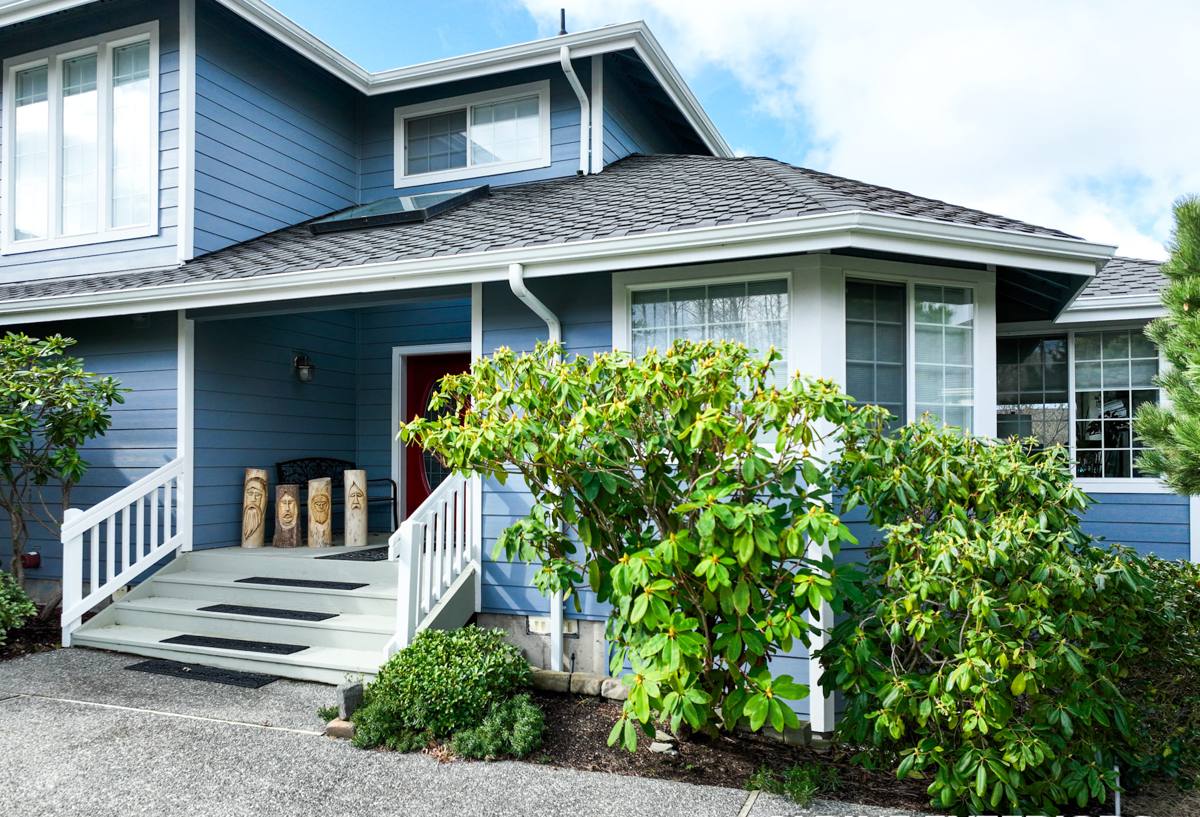
What Skagit Valley Weather Does to Siding Over Time
Most siding failures we see in this part of the county aren't dramatic. They're slow. A house looks fine from the road for years while moisture and organic growth work on it from the surface in and the seams out.
Moss, Algae, and Shade
Hamilton's tree cover and river-valley humidity create ideal conditions for moss and algae to take hold on north- and east-facing walls that don't get much direct sun. On wood-based products — cedar, primed spruce, or engineered wood siding like LP SmartSide — that green film holds moisture against the surface and accelerates rot at the exact spots where it's hardest to see: behind moss mats, in shaded corners, under overhangs.
Driving Rain and Wind-Driven Moisture
Storms moving up the valley don't just fall straight down — they get pushed sideways into wall assemblies, especially on homes with less overhang or exposed gable ends. That kind of driving rain finds every gap in a lap joint, every under-caulked seam, and every spot where flashing was skipped or done wrong. Over years, that's how water gets behind siding rather than just running down the face of it.
Humidity That Doesn't Let Up
Because Hamilton is inland along the river rather than on open water, it doesn't get the same direct salt exposure as siding closer to the Sound — but the trade-off is persistent dampness. Wood-based products need real drying time between rain events to stay stable, and in a shaded valley, that drying window is short. Siding here needs to tolerate staying damp longer, not just survive an occasional soaking.
Why We Install Only James Hardie Fiber Cement
We made a deliberate decision years ago to stop installing anything other than James Hardie fiber cement siding, and conditions like Hamilton's are exactly why. Fiber cement is a mix of cement, sand, and cellulose fiber — it doesn't feed moss and algae the way organic wood fiber does, it doesn't swell and rot when it stays damp, and it's factory-engineered rather than dependent on job-site paint and caulk to hold up long term.
| Factor | James Hardie Fiber Cement | Wood / Engineered Wood (LP SmartSide, cedar, primed spruce) | Vinyl |
|---|---|---|---|
| Moisture & rot resistance | Cement-based, doesn't rot; resists moisture absorption | Wood fiber can swell, delaminate, or rot if moisture gets in | Won't rot, but can trap moisture behind it if installed wrong |
| Moss & algae resistance | Non-organic surface resists growth; factory finish sheds it more easily | Organic material can encourage growth in shaded, damp areas | Resists growth but can still collect surface film |
| Fire resistance | Non-combustible | Combustible | Can warp or melt under heat exposure |
| Finish durability | ColorPlus factory finish, engineered for UV and moisture | Field-applied paint needs repainting on a regular cycle | Color is baked into the material but can fade and doesn't allow repainting easily |
| Long-term appearance | Holds shape and color with proper installation and care | Prone to cupping, warping, and finish failure over time | Can warp or oil-can in temperature swings; looks "plastic" up close |
None of this means every alternative product is a bad product in general terms — LP SmartSide and vinyl both have their place, and cedar has real aesthetic appeal for the right homeowner willing to maintain it. But for the moisture load and moss pressure a Hamilton home deals with, we've concluded that fiber cement is the more honest long-term answer, which is why it's the only thing we put on a wall.
What a Correct James Hardie Installation Involves
The product only performs as well as the installation behind it. A lot of the siding problems we get called out to fix in Skagit County aren't Hardie failures — they're installation shortcuts. On a Hamilton project, correct installation means:
- A properly lapped weather-resistive barrier behind the siding, with all seams and penetrations sealed before a single board goes up
- Flashing at every window, door, and roofline intersection — including kickout flashing where a roof edge meets a wall, one of the most common spots for hidden water intrusion
- Correct fastener type, spacing, and placement per James Hardie's published installation requirements — not shortcuts to save time
- Proper clearance between the bottom edge of the siding and grade, decks, patios, and roof lines, so splash-back and ponding water don't sit against the board
- Factory-caulked or backer-rod joints at butt seams, sized correctly rather than just filled with a bead of caulk
- ColorPlus prefinished boards used as intended, with touch-up product matched correctly rather than mismatched field paint
Every one of those details matters more in a climate that keeps walls damp longer. A missed flashing detail that might dry out quickly in a drier climate can stay wet for days in a shaded Hamilton wall assembly, and that's when rot and mold start working on the sheathing behind the siding — not the siding itself.
Our Process on a Hamilton Project
- On-site assessment. We look at the home's exposure, existing siding condition, trim, and any signs of moisture damage before quoting anything.
- Tear-off and sheathing check. Old siding comes off and we inspect the sheathing underneath. Any rot or soft spots get addressed before new siding goes on — covering damaged sheathing is how small problems turn into expensive ones later.
- Weather barrier and flashing. We install and seal the weather-resistive barrier and all flashing before any Hardie board is hung.
- Installation to James Hardie's specifications. Fastening, clearances, and seams are done to the manufacturer's requirements, not general "close enough" practice.
- Trim, caulking, and finish work. Corners, trim boards, and touch-up are completed with matched ColorPlus product.
- Final walkthrough. We go over the finished job with the homeowner and cover basic care before we consider the project done.
Why a Crew That Already Works in Hamilton Matters
Skagit County is a big, geographically varied place — what a home needs on a windy bluff near the water is different from what a home needs tucked into the river valley near Hamilton. A crew that's worked this area knows what a shaded, damp lot does to a siding installation over time, knows to pay extra attention to flashing on homes with heavy tree cover, and doesn't need to relearn the local weather pattern on your project. That familiarity shows up in the details — where extra flashing gets added, which walls get the most moss pressure, and how much drying time to plan around during a wet-season install.
It also matters for something more basic: being reachable. If a question comes up two years after installation, a contractor who's still working in and around Hamilton is a lot easier to get back on-site than one who did a single job in the area and moved on.
What Affects the Cost of a Hamilton Siding Project
We don't publish blanket pricing because every home is different, but the factors that move the number around are consistent. This gives you a realistic sense of what drives cost up or down before you get a quote.
| Cost Factor | Typical Impact |
|---|---|
| Home size and wall complexity (dormers, gables, cutouts) | High — more corners and transitions mean more labor and trim |
| Condition of existing sheathing | High if repairs are needed — hidden rot from prior moisture issues adds cost |
| Tear-off of existing siding vs. new construction | Medium — removal and disposal of old material adds time |
| Trim, color, and board style choices | Medium — wider trim packages and premium ColorPlus colors cost more than base options |
| Site access (steep lots, tight setbacks, tree cover) | Medium — harder access slows staging and installation |
| Additional flashing or moisture-mitigation work | Low to medium — worth doing right given the local climate |
A house with straightforward walls and sound sheathing will cost meaningfully less than one needing rot repair and complex trim work — but in either case, the honest answer only comes from someone looking at your specific home.
Keeping James Hardie Siding Looking Right in Hamilton's Climate
Fiber cement is low-maintenance compared to wood, but "low-maintenance" isn't "no-maintenance," especially with this much moisture and shade in play. A simple annual routine goes a long way:
- Rinse siding down once a year, focusing on shaded, north-facing walls where moss and algae are most likely to start
- Keep gutters clean so water isn't overflowing and running down the siding face
- Trim back trees and shrubs that keep siding shaded and damp longer than it needs to be
- Check caulking at trim and butt joints every couple of years and re-caulk where it's cracked or pulled away
- Look at flashing above windows and at roof intersections after major storms for any signs of water staining below
- Touch up any chips or scratches with matched ColorPlus touch-up product rather than off-the-shelf paint
None of this is heavy work, but skipping it is how moss gets a foothold and small caulk failures turn into bigger moisture problems down the line.
Ready for an Honest Look at Your Siding
If you're in Hamilton and dealing with siding that's showing moss, staining, or wear from years of valley moisture, we're happy to come take a look and give you a straight assessment — what's actually going on, what it would take to fix it right, and whether James Hardie fiber cement makes sense for your home. The estimate is free, there's no pressure, and you'll get a clear answer either way.