 Skagit County
 Why Lyman Homes Need Siding Built for This Climate
Lyman sits in a part of Skagit County where the weather doesn't do anything in half measures. Homes here take on long stretches of driving rain, humid air that never fully dries out between storms, and shaded, tree-lined lots where moss and algae get a head start on any surface that holds moisture. Add in the broader marine influence that reaches into the county from Puget Sound and you get a siding environment that punishes cheap materials and sloppy installation faster than drier parts of the country ever would.
Siding in Lyman isn't just a cosmetic layer. It's the first line of defense between a wood-framed house and a climate that wants to keep that house wet. Wood-based siding products swell, delaminate, and rot when they can't dry out between rain events. Vinyl flexes and gaps at the seams, giving moisture a path behind the panel. Painted siding of any kind needs constant recoating to keep water out once the factory finish fails. None of that holds up well to a Skagit County wet season that can run for months at a stretch.
That's the backdrop for every siding decision we make on a Lyman home: pick a material engineered for sustained moisture exposure, then install it the way the manufacturer actually specifies — not the way that's fastest for the crew.
Why We Install Only James Hardie Fiber Cement
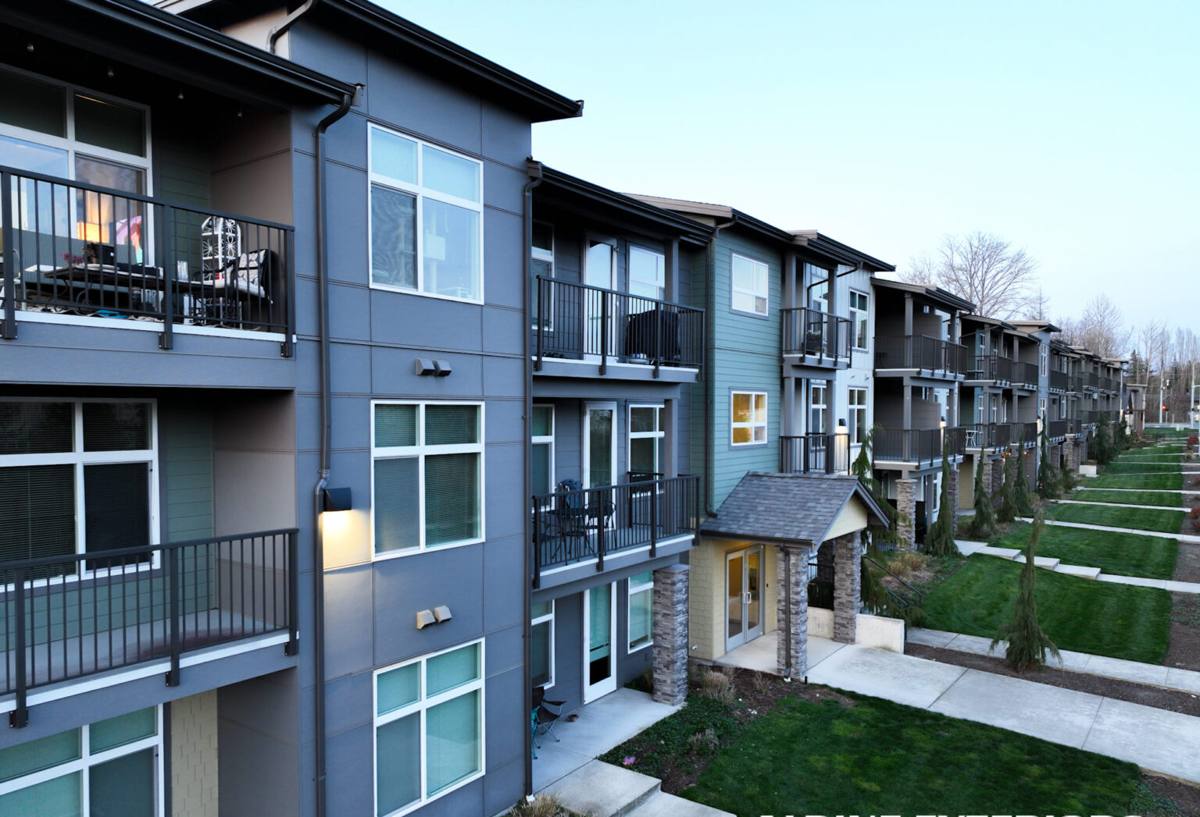
We don't install LP SmartSide, vinyl, Cemplank, Allura, primed spruce, or cedar. That's not brand loyalty — it's a standard we set after weighing how each of those products behaves over a decade or two of Pacific Northwest weather versus how James Hardie fiber cement behaves. Fiber cement is non-combustible, dimensionally stable when wet, and doesn't feed the moss and mildew growth that wood-based products are prone to in shaded, damp settings like much of Lyman. James Hardie backs its boards with a factory-applied ColorPlus finish that's baked on rather than field-painted, and a warranty structure that's transferable to a future homeowner — which matters in a market where siding replacement is a real selling point.
We won't pretend fiber cement is the cheapest option on the shelf, and it isn't the lightest material to handle on a job site. But for a house that has to shed rain for 30+ years in this climate, it's the product we're willing to put our name behind.
The James Hardie Product Lines That Fit Skagit County
James Hardie makes climate-engineered product lines, and the specification that matters most for Lyman is HZ5 — the version formulated for regions with freeze-thaw cycling and sustained moisture, which describes most of western Washington. HZ5 boards are engineered to resist moisture absorption and cracking better than the HZ10 line built for hot, humid southern climates. Using the wrong HZ designation isn't a minor detail — it's the difference between siding that's actually rated for our winters and siding that just looks similar on a shelf.
- HardiePlank lap siding — the most common choice for Lyman homes, available in several exposure widths and profiles (smooth, cedarmill texture)
- HardiePanel vertical siding — often used as an accent or on shed/board-and-batten style sections
- HardieTrim — matching trim boards so window and corner details age at the same rate as the field siding
- HardieSoffit — vented and non-vented options, relevant where roof overhangs need to manage moisture and attic airflow together
Color matters here too. ColorPlus finishes come pre-tinted through the substrate in some product lines and are baked on in a controlled factory environment, which resists the fading and peeling that field-applied paint shows first — usually starting on the sides of a house that catch the most weather.
What a Correct Installation Actually Involves
Most siding failures we get called out to inspect aren't material failures — they're installation failures. James Hardie publishes detailed installation specifications, and skipping steps is the single biggest reason fiber cement siding underperforms in wet climates like ours.
Clearances and Flashing
Hardie siding needs a minimum clearance above roof lines, decks, and grade — typically 6 inches from soil and 2 inches from roofing, though exact numbers depend on the assembly. Skipping this clearance lets splashback and standing moisture wick into the bottom edge of the board, which is exactly where fiber cement is most vulnerable if it's not detailed correctly. Every window, door, and penetration needs proper flashing and a water-resistive barrier behind the siding — not just caulk covering a gap.
Fastening
Hardie specifies fastener type, spacing, and how far from panel edges each nail or screw goes. Over-driven or under-driven fasteners crack boards or leave them loose enough to move in wind, which opens seams over time.
Gaps, Caulking, and Painting Cut Edges
Factory-cut edges come primed, but field cuts expose raw fiber cement that needs to be sealed before installation — a step that's easy to rush and easy to skip. Joints need the gap width Hardie specifies, sealed with a compatible sealant, not just butted tight or over-caulked.
Rainscreen Considerations
On a lot with heavy shade or limited sun exposure — common around Lyman's tree cover — a drainage gap (rainscreen) behind the siding gives any moisture that does get past the cladding a way to drain and the wall assembly a chance to dry. It's not required on every wall, but it's worth evaluating on north-facing or heavily shaded elevations.
Our Process on a Lyman Job
- On-site assessment — we walk the whole exterior, check for existing moisture damage, rot, or trapped water behind current siding, and look at shade patterns and drainage around the foundation.
- Tear-off and substrate check — old siding comes off and we inspect sheathing underneath before anything new goes up. Hidden rot gets addressed here, not buried.
- Weather barrier and flashing — house wrap or building paper, window and door flashing, and drainage details go in before a single piece of Hardie touches the wall.
- Installation to spec — correct HZ5 product, correct fastener schedule, correct clearances, correct joint treatment.
- Trim, caulking, and final inspection — every cut edge sealed, every joint checked, and a walk-through with the homeowner before we call it finished.
Why It Matters That We Already Work in Lyman
A siding job in Lyman has logistics that a crew unfamiliar with the area won't think to plan for — narrow rural roads, tree-covered lots that limit staging space, septic systems and wells that need to be flagged before equipment moves around a yard, and permitting that runs through Skagit County rather than a city building department. A crew that's already worked in the area knows which inspectors to expect, what the county requires for exterior work, and how to stage a job on a lot that doesn't have a lot of flat open space.
There's also a simpler reason local experience matters: we've seen how James Hardie siding actually performs on homes a mile down the road after five, ten, fifteen years in this exact climate. That's a different kind of knowledge than reading a spec sheet — it's watching how a specific installation detail holds up against a Skagit County wet season, year after year.
Cost Factors on a Lyman James Hardie Project
| Factor | Why It Matters | Typical Impact |
|---|---|---|
| Existing wall condition | Hidden rot or moisture damage found during tear-off needs repair before new siding goes on | Can add labor and material cost if sheathing repair is needed |
| Home size and complexity | More corners, dormers, and trim details mean more cutting, flashing, and labor time | Higher per-square-foot cost on complex facades |
| Product line and profile | Lap width, texture (smooth vs. cedarmill), and ColorPlus color selection affect material pricing | Moderate variation between standard and premium selections |
| Site access | Tree cover, narrow driveways, and limited staging space on rural lots slow material handling | Can extend project timeline |
| Rainscreen / drainage plane | Added on shaded or moisture-prone elevations for extra drying capacity | Modest added cost per affected wall |
| Trim and soffit scope | Matching HardieTrim and HardieSoffit to the field siding versus leaving existing trim | Adds cost but keeps aging and appearance consistent |
We give homeowners a real number after walking the property — not a phone estimate — because the condition of what's underneath the existing siding drives more of the cost than the siding product itself.
Caring for Hardie Siding in a Wet, Mossy Climate
James Hardie siding is low-maintenance compared to wood or vinyl, but "low-maintenance" isn't "no-maintenance," especially with the moss and algae pressure common on shaded Skagit County lots.
- Rinse siding with a garden hose (not a pressure washer aimed directly at seams) once or twice a year to clear moss spores and organic buildup before they take hold
- Keep gutters clear so overflow doesn't run down the face of the siding and stay wet longer than it should
- Trim back tree branches and shrubs that keep siding shaded and damp against the wall
- Inspect caulking at trim joints and penetrations annually — recaulk before gaps open up, not after water gets behind the board
- Watch for chalking or fading on ColorPlus finishes near the end of the warranty period as a sign it may be time to talk about maintenance coatings
Questions Worth Asking Before You Hire Anyone
Whoever you hire for a siding project in Lyman, a few questions separate a crew that does this correctly from one that's just fast:
- Are they James Hardie certified or specifically experienced with fiber cement installation, not just siding in general?
- Will they specify HZ5 product for our climate zone, and can they explain why?
- What's their approach to flashing and clearances at windows, doors, and grade?
- Do they inspect and repair sheathing during tear-off, or just cover over what's there?
- What warranty applies to labor, separate from the manufacturer's material warranty?
If you're weighing a siding replacement or new-construction project in Lyman, we're happy to walk the property, look at what's driving the decision, and give you a straight answer on what correct James Hardie installation looks like for your home — no pressure, no obligation. The estimate form below is the easiest way to get that conversation started.