 Skagit County
 Why La Conner Is Hard on Siding
La Conner sits right on the Swinomish Channel, and that waterfront location shapes everything about how siding ages here. Salt-laden air moves through town daily, driving rain comes in sideways off the water during winter storms, and the combination of shade, moisture, and mild Skagit County temperatures gives moss and mildew a long season to work with — often close to year-round on north-facing walls and anything shielded from direct sun. Add in the older farmhouses, waterfront cottages, and historic-character homes that make up much of La Conner's housing stock, and you have a town where siding either holds up to all of that at once or it doesn't.
Homeowners in La Conner tend to notice siding problems earlier than homeowners further inland, simply because the failure modes show up faster. Paint that would last eight years in a drier part of the county might start chalking or peeling in five here. Caulk joints that stay flexible elsewhere get brittle and crack sooner near the water. None of this means La Conner homes need exotic materials — it means the materials and the installation both have to be right for a marine climate, not just adequate for a general Pacific Northwest climate.
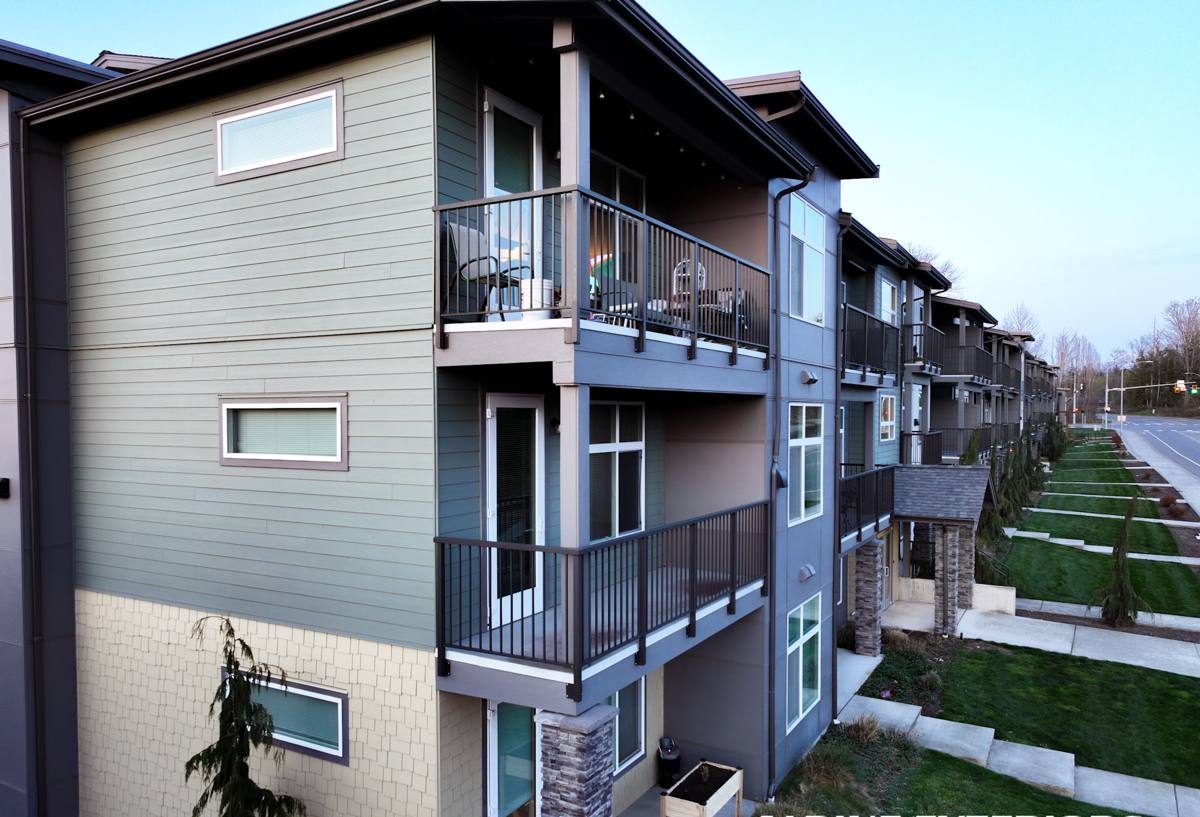
What Salt Air and Driving Rain Actually Do to Siding
Salt air isn't just an irritation for metal fixtures and hardware — it accelerates the breakdown of paint films and finishes on wood-based and composite sidings, and it can work into seams and fastener points faster than plain moisture alone. Driving rain, meanwhile, tests the parts of a siding system most people never think about: the flashing above windows and doors, the gaps behind trim, the laps between courses. A siding material can look fine on a dry, calm day and still be failing behind the surface if water has been finding its way past those details for a few winters.
Moss Season and Shaded Walls
Skagit County's long, damp stretch from fall through spring gives moss and algae plenty of time to establish on shaded or north-facing siding. On materials that absorb moisture or that have organic content, that growth can hold water against the surface long-term, which shortens the life of paint, caulk, and eventually the siding itself. On a non-combustible, moisture-resistant material with a durable factory finish, moss and mildew stay a cosmetic issue you can wash off rather than a structural one.
Signs a La Conner Home Needs Siding Replacement
- Paint that's chalking, peeling, or needing repainting more often than every 6-8 years
- Soft or spongy spots when you press on the siding, especially near the bottom courses or window sills
- Visible warping, cupping, or buckling boards
- Persistent moss or dark staining on shaded walls that comes back quickly after cleaning
- Cracked or gapped caulk joints around trim, windows, and corners
- Rising heating bills or noticeably drafty rooms along exterior walls
- Siding that's more than 20-25 years old, particularly wood-based products in a waterfront setting
What a Correct Siding Replacement Involves
Replacing siding correctly is not a cosmetic swap — it's a full reset of the wall's moisture-management system. In a town like La Conner, skipping any of these steps is how a new-looking wall ends up with hidden rot within a few years.
Tear-Off and Inspection
Full removal of the old siding lets the crew actually see the sheathing underneath. This is where existing water damage, soft wood, or previous flashing mistakes get found and fixed — not covered over.
Weather-Resistive Barrier
A continuous, properly lapped moisture barrier goes over the sheathing before any siding goes on. Every seam, penetration, and transition gets sealed with the barrier's own system rather than general-purpose caulk.
Flashing
Windows, doors, and any horizontal trim get flashed so water is directed out and down, away from the wall assembly, rather than sitting against it. In a driving-rain climate this is the single most common place cheap installs fail.
Siding Installation
Correct fastening patterns, proper gaps at butt joints, and manufacturer-specified clearances from grade, roof lines, and decks all matter for how the siding performs over the next several decades, not just how it looks on install day.
Trim, Caulk, and Touch-Up Paint
Factory-finished siding needs field touch-up only at cut edges and fastener heads — using the matched touch-up product, not a generic exterior paint that will weather differently than the rest of the wall.
Why We Install Only James Hardie Siding
We standardized on James Hardie fiber cement siding and don't install vinyl, LP SmartSide, Cemplank, Allura, primed spruce, or cedar. That's a deliberate call based on what actually holds up in a place like Skagit County, not a sales preference.
James Hardie's HZ5 product line is engineered specifically for climates with heavy moisture exposure — which describes La Conner about as well as any place in Western Washington. Fiber cement doesn't absorb water the way wood-based products do, and it's non-combustible, which matters given how many older homes in this area sit close together in denser neighborhoods. The ColorPlus factory finish is baked on under controlled conditions and holds color and resists fading, chalking, and moisture intrusion far longer than field-applied paint on wood or engineered-wood siding — a real advantage in salt air, where field paint tends to break down faster. Hardie also backs the product with a strong transferable warranty, which matters to buyers when a waterfront or near-waterfront home eventually changes hands.
None of the alternatives are junk — they're reasonable products with real trade-offs. Vinyl is affordable and low-maintenance but can warp in temperature swings and doesn't hold up to impact the way fiber cement does. Engineered wood products like LP SmartSide perform well in many climates but rely on their treated wood core and outer coating staying intact, which is a bigger ask in a wet, salt-air environment over 20-30 years. Primed spruce and cedar are traditional, attractive choices, but both require an ongoing maintenance commitment — repainting, resealing, and watching for moisture — that's harder to keep up with in a climate that gives wood so many months of dampness to work on it. We'd rather put one material on every home we touch and stand behind it fully than offer options we're not confident will perform here.
How Common Siding Materials Compare in a Marine Climate
| Material | Moisture Resistance | Maintenance | Typical Lifespan Here |
|---|---|---|---|
| James Hardie Fiber Cement | Excellent; non-combustible, doesn't absorb water | Low; occasional wash, factory finish resists fading | 30-50 years |
| Vinyl | Good, but can warp/crack in temperature swings | Low, but color fades and can't be repainted easily | 20-30 years |
| Engineered Wood (LP SmartSide) | Moderate; depends on coating and edge sealing staying intact | Moderate; watch seams and cut edges | 20-30 years with upkeep |
| Cedar / Primed Spruce | Fair; absorbs moisture, prone to rot without upkeep | High; repaint/reseal every few years | 15-25 years with diligent maintenance |
Our Process for La Conner Homes
- On-site assessment of the existing siding, sheathing, and any moisture damage specific to your home's exposure
- A written estimate that separates material, labor, and any sheathing repair so you know exactly what you're paying for
- Full tear-off, sheathing inspection, and repair of any damage found before new siding goes on
- Installation of a continuous weather-resistive barrier and proper flashing at every window, door, and penetration
- James Hardie siding installed to manufacturer spec, including fastening, clearances, and joint treatment
- Final walkthrough so you can see the work up close before we consider the job done
What to Ask Any Contractor Before You Hire Them
- Are they licensed and insured to do siding work in Washington?
- Will they inspect and repair sheathing if it's damaged, or just cover over it?
- Do they have manufacturer training or certification for the siding they're installing?
- What does their flashing and moisture-barrier detail actually look like — can they explain it, not just point at the product?
- Do they have experience with homes in La Conner or similarly exposed waterfront areas?
- What warranty covers labor separately from the manufacturer's material warranty?
Why a Local Crew Matters in La Conner
Siding work in La Conner isn't identical to siding work ten miles inland. A crew that already works this area knows which walls take the worst of the winter storms, how much of a head start moss gets on shaded sides of the house, and what kind of flashing and sealing details actually hold up against wind-driven rain off the channel. That's not something you can fully substitute with a general how-to guide — it comes from doing the work here, on homes with the same salt air and the same long wet season yours has to deal with. A crew based in Skagit County can also get to your job for follow-up questions or warranty concerns without a long drive, which matters more than it sounds like once the project is finished and you notice something worth a second look.
If your La Conner home's siding is showing its age or you just want an honest read on whether it's holding up the way it should, we're happy to take a look. Request a free, no-pressure estimate below and we'll walk the exterior with you and tell you straight what we find.