 Skagit County
 Roof Repair in Lyman: Built for a Wet, Tree-Covered Corner of Skagit County
Lyman sits in the Skagit River valley, tucked between farmland and the timbered foothills that climb toward the Cascades. It's a quieter part of Skagit County than the towns along the water, but the roofs here take a beating in their own way. Big conifers overhang a lot of properties, the river valley holds moisture longer than open ground, and the rain that moves through this part of Washington tends to come in sideways as often as it comes straight down. Add in a long moss season that starts earlier and ends later than most homeowners expect, and you've got a climate that's genuinely hard on shingles, flashing, and everything underneath them.
We work roof repair calls in Lyman regularly, alongside the rest of Skagit County — from the saltier air near the shoreline towns to river-valley communities like this one. The specifics change from block to block, but the underlying problem is the same everywhere in this county: water finds the weak point in a roof faster here than it does almost anywhere else in the state, and a repair that isn't done right the first time doesn't stay fixed long.
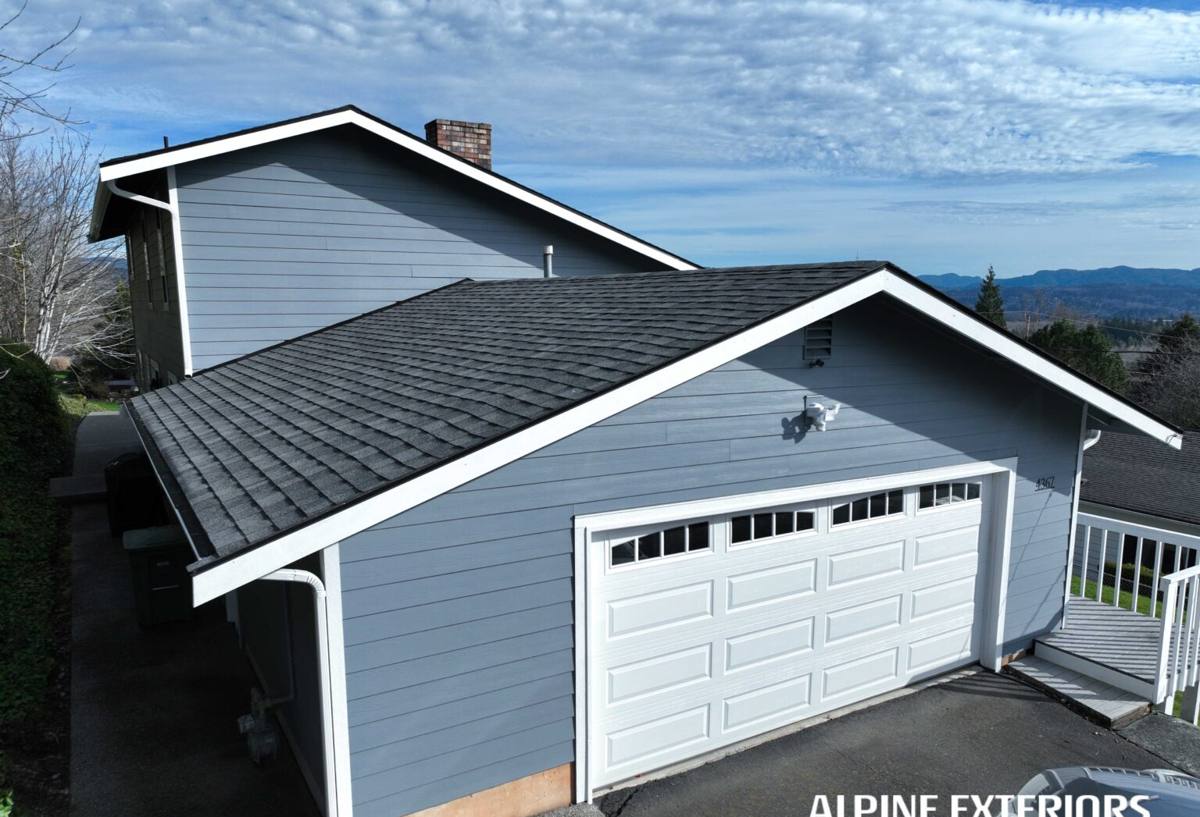
What the Local Climate Actually Does to a Roof
Driving Rain and Wind
Skagit County gets a lot of rain events that come with real wind behind them, and Lyman's position in the river valley can funnel and amplify gusts during storms. Wind-driven rain doesn't just fall on a roof — it pushes up and under shingle tabs, works its way past loose flashing, and finds any gap that a calmer rain would never reach. Repairs that only address the visible damage and ignore how water actually moves under pressure tend to fail again within a season or two.
Moss, Algae, and a Long Growing Season
Between the tree cover common on Lyman lots and the extended damp stretch that runs from fall through spring, moss and algae get a long runway to establish themselves on a roof. Moss isn't just cosmetic — it holds moisture against the shingle surface, lifts tabs as it grows, and accelerates granule loss. By the time moss is visible from the ground, it's usually already done some damage underneath it.
Salt Air and the Broader County Picture
Homes closer to Skagit County's shoreline deal with salt air accelerating corrosion on fasteners, flashing, and metal roofing components. Lyman is far enough upriver that salt exposure isn't the main driver of roof wear here — but we mention it because it's part of why we spec materials and fasteners for the whole county at a higher standard than a fair-weather climate would require. A roof built to hold up near the water will hold up just fine in a river valley, too.
Common Roof Repair Needs We See in Lyman
Most of the repair calls we run in this area fall into a handful of categories:
- Moss-damaged shingles — lifted tabs, granule loss, and soft spots where moss has held moisture against the roof surface for months at a time.
- Flashing leaks — around chimneys, plumbing vents, and roof-to-wall transitions, especially on older homes where flashing was never properly integrated with the underlayment.
- Valley and debris-related leaks — needle and leaf buildup in roof valleys traps water and speeds up material breakdown, particularly under mature conifers.
- Gutter and edge damage — overflowing or damaged gutters send water back up under the roof edge instead of away from the house.
- Wind-lifted or missing shingles — after a storm, usually concentrated on the more exposed roof planes.
What a Correct Roof Repair Actually Involves
Diagnosis Before Repair
A repair is only as good as the diagnosis behind it. Water that shows up as a stain on an interior ceiling can have traveled a surprising distance from the actual entry point — along a rafter, across the underlayment, down a wall cavity. We trace leaks back to their source before we touch a single shingle, because patching where the water is visible instead of where it's entering is the single most common reason a "fixed" roof leaks again.
Matching Materials and Technique
Repairs should match the existing roofing system in material, weight, and installation method — not just color. Mismatched shingles or incompatible flashing metal can create new problems, including galvanic corrosion between dissimilar metals or a repair patch that ages and weathers differently than the surrounding roof.
Flashing, Underlayment, and Ventilation
Most of the repairs that hold up long-term involve more than shingles. Flashing gets rebedded or replaced rather than just resealed with caulk. Underlayment is checked and replaced where it's compromised, not just where it's visibly torn. And roof ventilation gets a look, because trapped moisture under the roof deck causes rot and shortens the life of a repair regardless of how well the exterior work was done.
Repair or Replace? How We Help You Decide
Not every roof problem needs a full replacement, and not every roof is a good candidate for another round of patching. We walk homeowners through the honest version of this decision rather than defaulting to whichever option is more profitable for us.
| Factor | Leans Toward Repair | Leans Toward Replacement |
|---|---|---|
| Roof age | Under 15-20 years, depending on material | Near or past expected lifespan |
| Extent of damage | Localized to one area or penetration | Widespread across multiple roof planes |
| Moss/algae condition | Surface growth, shingles still sound underneath | Granule loss and soft decking under the moss |
| Underlying decking | Solid, no rot found | Soft spots or rot found during inspection |
| History of leaks | First occurrence or isolated incident | Recurring leaks in different spots over time |
Our Roof Repair Process
- Inspection. We get on the roof (weather permitting) or use a close visual and interior check to trace the actual source of the problem, not just the symptom.
- Honest scope and estimate. You get a clear explanation of what's actually wrong, what it takes to fix it correctly, and a written estimate before any work starts.
- Scheduling around the weather. Given how much of the year sees active rain in this area, we plan repair work for realistic dry windows and won't leave a roof open to the elements overnight.
- The repair itself. Matched materials, proper flashing and underlayment work, and attention to how water will move across the repaired area going forward.
- Cleanup and check. Debris, old materials, and fasteners get cleared from the roof, gutters, and ground before we consider the job done.
- Follow-up. We stand behind the work and will come back if something isn't performing the way it should.
Signs You Need Roof Repair Now
- Visible moss or algae streaking on the roof surface, especially on shaded, north-facing slopes
- Shingle granules collecting in gutters or at downspout outlets
- Water stains or discoloration on interior ceilings or upper walls
- Curling, cracked, or missing shingles after a windstorm
- Soft or spongy spots noticeable when walking near a roof edge (from a ladder, not the roof itself)
- Daylight visible through the attic roof deck
- Standing debris or ponding water in a roof valley
What Roof Repair Typically Costs
Every repair is priced on its own scope, but a few factors consistently move the number up or down. We'll always give you a firm written estimate before starting — this table is meant to help you understand what drives the price, not to substitute for that estimate.
| Cost Factor | Why It Matters |
|---|---|
| Roof pitch and access | Steeper roofs and limited access (large trees, tight side yards) take more time and equipment |
| Extent of moss or rot damage | Repairs that reach the decking cost more than surface-level shingle work |
| Flashing complexity | Chimneys, skylights, and multiple roof-to-wall transitions add labor |
| Material match | Older or discontinued shingle styles can be harder and costlier to match |
| Number of repair areas | Consolidating several smaller repairs into one visit is more efficient than repeat trips |
Why Hire a Crew That Already Works in Lyman
A lot of roof repair problems in this part of Skagit County aren't unusual on their own — moss, flashing leaks, and storm damage show up everywhere. What matters is whether the crew doing the work actually understands how those problems behave in this specific climate. A contractor who mostly works drier regions may underestimate how aggressively moss regrows here, or how much wind-driven rain changes where flashing needs to be sealed.
Working Lyman regularly also means we're familiar with the practical realities of rural and semi-rural properties in this area — longer driveways, well and septic systems that need to be respected during access, mature trees that require care during material staging, and the reality that a repair scheduled for "next dry day" sometimes needs real flexibility given how the weather actually moves through the valley. That local familiarity translates into fewer surprises, a more accurate first estimate, and a repair that's built for the conditions it actually has to survive.
If you're dealing with a leak, visible moss damage, or storm-related issues on your roof, we're happy to take a look and give you a straight answer about what it needs. Get in touch for a free, no-pressure estimate using the form below.