 Skagit County
 Why Burlington Homes Need a Roof Built for This Climate
Burlington sits close enough to Puget Sound and the Skagit River delta that homes here deal with a steady mix of salt-tinged air, long stretches of driving rain, and heavy moss pressure that most inland Washington towns never see. A roof that would hold up fine in Wenatchee or Spokane can start showing problems here inside a few years if it wasn't chosen and installed with this specific climate in mind. Metal roofing, done correctly, handles all three of those stressors better than most alternatives — but "done correctly" is doing a lot of work in that sentence, and it's the part that separates a roof that lasts thirty-plus years from one that causes headaches by year ten.
We install metal roofing across Skagit County, and Burlington jobs come with their own set of considerations: proximity to moisture-heavy air off the Sound, tree cover that feeds moss and needle buildup, and older homes with roof decks and ventilation setups that weren't designed with metal in mind. This page covers what actually matters for a metal roof on a Burlington home — not generic marketing points, but the details that determine whether the job holds up.
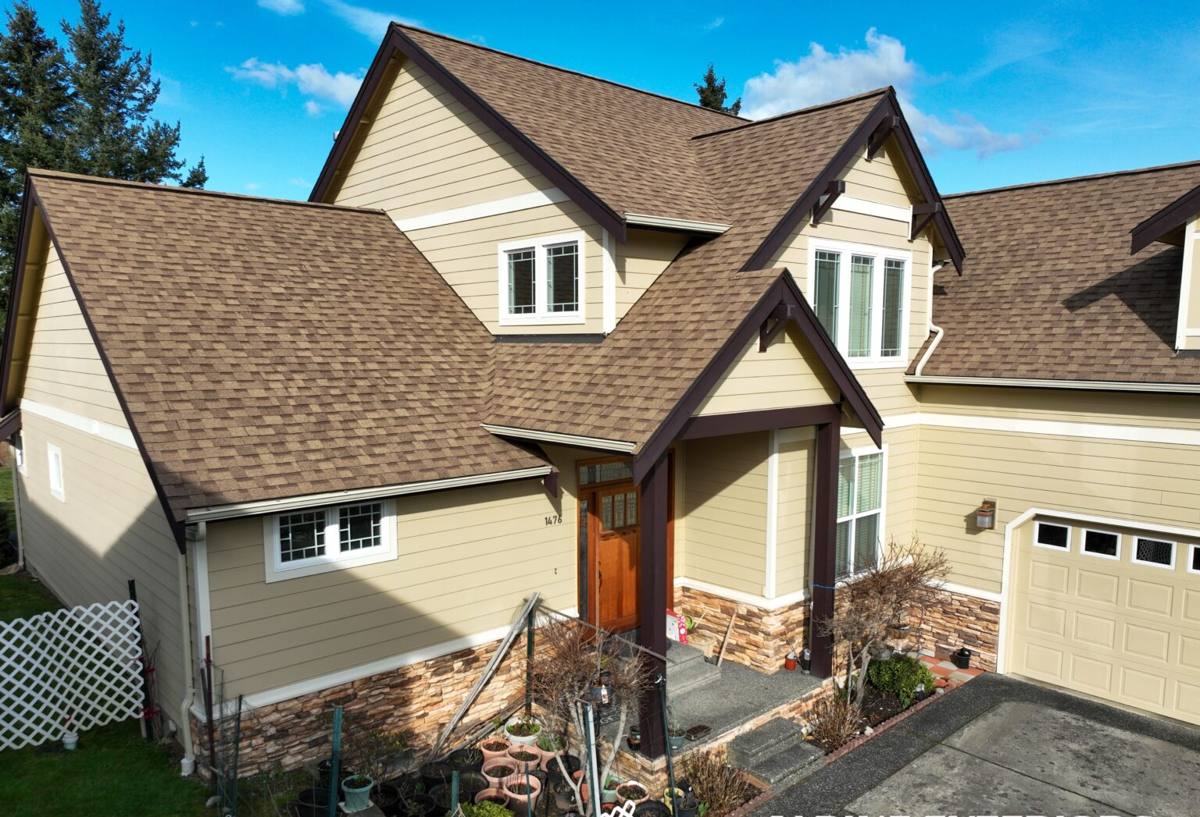
What Salt Air, Rain, and Moss Actually Do to a Roof
Salt Air and Corrosion
Burlington isn't oceanfront, but it's close enough to tidal water and the Sound that airborne salt reaches roofs here in measurable amounts, especially on homes with more open exposure or elevation. Salt-laden moisture accelerates corrosion on any exposed metal — fasteners, flashing, cut edges — faster than it would inland. This is why fastener and coating choice matters more here than it would forty miles east.
Driving Rain and Wind-Driven Moisture
Western Washington rain doesn't fall straight down as often as people assume. Wind off the Sound pushes rain sideways during storms, which means water gets forced up under laps, around penetrations, and into any seam that isn't properly sealed or lapped. A roof design that only accounts for gravity-fed water shedding will eventually leak here. Every seam, flashing detail, and penetration on a metal roof needs to assume the water is coming from an angle, not straight down.
Moss and Organic Growth
Skagit County's tree cover and near-constant damp season create ideal conditions for moss, algae, and lichen. On composition shingles, moss roots into the granule surface and holds moisture against the deck, which is a slow-motion path to rot. Metal roofing gives moss nothing to root into, but it can still collect debris in low-slope areas or wherever water sits, and standing organic matter against any roof surface for months at a time is never a good thing. Panel profile and slope design should account for this from the start.
Why Metal Roofing Is a Strong Fit for Burlington
- Sheds wind-driven rain effectively when seams and laps are installed to spec, rather than relying on granule friction like shingles do
- Nothing for moss to root into, which cuts down (though doesn't eliminate) the moss maintenance cycle common with shingle roofs in this area
- Longer service life than composition shingles in a wet climate — often 40-70 years depending on the product, versus 20-30 for shingles
- Lightweight compared to tile or heavy shingle systems, which is easier on older roof framing common in established Burlington neighborhoods
- Better fire and wind performance than most alternatives, a plus given the storm systems that move through the county
None of this means metal roofing is maintenance-free or automatically the right call for every home and budget. It's a strong option for the specific conditions Burlington deals with, but it needs to be installed correctly to deliver on that.
What a Correct Metal Roof Installation Involves
Deck Inspection and Prep
We don't install a new metal roof over a deck we haven't inspected. Older Burlington homes sometimes have decking that's seen moisture intrusion from a prior roof's slow leaks, and that has to be identified and addressed before anything new goes down. Installing over a compromised deck just hides the problem under new material.
Underlayment Choice
Given how much wind-driven rain this area sees, we use underlayment rated for the exposure metal roofing gets — not a bargain felt product. A quality synthetic or self-adhering membrane at eaves, valleys, and penetrations is cheap insurance against the one storm a year that pushes water somewhere it shouldn't go.
Fastener and Flashing Compatibility
Mixing incompatible metals (say, the wrong fastener alloy against a panel's coating) sets up galvanic corrosion that can eat through material years before it should fail — and it accelerates in salt-influenced air like Burlington gets. We match fasteners, flashing, and trim metal to the panel system so nothing is corroding against itself.
Ventilation
Metal roofs perform best over a properly ventilated attic or roof assembly. Trapped moisture underneath the deck causes problems no matter what's on top of it. Part of our process on Burlington homes is checking existing ventilation and correcting it where it's inadequate, rather than just roofing over the issue.
Panel Seams and Laps
This is where wind-driven rain resistance actually gets decided. Panel overlap, seam type (standing seam vs. exposed fastener), and sealant application at every penetration need to be executed to spec — not approximated. A seam that's "close enough" on a calm day is exactly the seam that leaks during the next Sound-driven windstorm.
Metal Roofing Options: A Practical Comparison
| Panel Type | Best For | Typical Lifespan | Trade-offs |
|---|---|---|---|
| Standing seam | Homes wanting maximum weather resistance and a clean, modern look | 50+ years | Higher upfront cost; hidden fasteners reduce leak points |
| Exposed fastener panel | Budget-conscious projects, outbuildings, some residential applications | 30-40 years | More cost-effective; fasteners need periodic inspection and eventual re-torquing or replacement |
| Stone-coated steel | Homeowners wanting a shingle or tile look with metal's durability | 40-50 years | Higher material cost; more installation detail around coated granule edges |
| Aluminum panel systems | Coastal-influenced areas prioritizing corrosion resistance | 40-60 years | Costs more than steel; excellent choice given Burlington's salt air exposure |
We'll walk through which of these makes sense for your home, your roofline, and your budget rather than pushing one system for every job.
Our Process on Burlington Roofing Projects
- On-site inspection — we assess your current roof, deck condition, ventilation, and any trouble spots specific to your property's exposure and tree cover
- Honest scope and options — we explain what panel systems fit your home and budget, without steering you toward the most expensive option by default
- Written estimate — clear pricing with no vague allowances buried in the fine print
- Tear-off and deck repair — old roofing removed, deck issues identified and corrected before anything new goes on
- Underlayment and flashing — installed to handle wind-driven rain, not just straight-down moisture
- Panel installation — laps, seams, and fasteners installed to manufacturer spec and matched for corrosion compatibility
- Final walkthrough — we go over the finished roof with you before we consider the job done
Cost Factors for a Burlington Metal Roof
Every home is different, and we won't quote a number without seeing your roof, but a few factors consistently move the price:
| Factor | Why It Matters |
|---|---|
| Roof complexity (valleys, dormers, penetrations) | More cuts, flashing, and seams mean more labor and material |
| Panel system chosen | Standing seam and stone-coated systems cost more upfront than exposed-fastener panel |
| Deck condition | Rot or moisture damage found during tear-off adds repair work before installation can proceed |
| Roof pitch and access | Steeper or harder-to-access roofs take longer and require more safety setup |
| Existing ventilation | Correcting inadequate attic ventilation adds scope but protects the new roof's lifespan |
Metal roofing generally costs more upfront than composition shingles, but the lifespan difference — often two to three times longer in this climate — changes the math over the life of the roof. We'll give you real numbers once we've seen your specific project.
Signs Your Burlington Roof May Need Attention
- Moss buildup that keeps returning within months of cleaning
- Granule loss or bald patches on an aging shingle roof
- Water stains on interior ceilings, especially after windy storms
- Sagging or soft spots visible from the ground or attic
- Rusting or failing flashing around chimneys, vents, and valleys
- Daylight visible through the roof deck from inside the attic
If any of these sound familiar, it's worth having someone take a look before the next storm season, not after.
Why Hire a Crew That Already Works in Burlington
Metal roofing installation isn't something you learn once and apply the same way everywhere. A crew that mostly works dry-climate installs won't necessarily think about wind-driven rain the way they need to for a Sound-adjacent town like Burlington. We work throughout Skagit County, which means we've seen how local exposure, tree cover, and weather patterns actually play out on real roofs here — not in a manufacturer's install manual written for a different climate.
That local experience shows up in the decisions that don't get written on the estimate: which valleys need extra underlayment, which roof orientations catch the worst of the wind, and which older Burlington homes need ventilation work before a new roof goes on top. It's the difference between a roof that looks right on installation day and one that's still performing correctly a decade later.
If you're weighing metal roofing for your Burlington home, we're happy to take a look and give you a straightforward, no-pressure estimate — what your roof actually needs, what it will cost, and why. Fill out the form below to get started.