 Skagit County
 Roof Repair Built for Skyline's Climate
Homes in Skyline sit in one of the wetter corners of Skagit County, and the roof over your head takes the brunt of it. Between marine-influenced salt air drifting in off Puget Sound, long stretches of driving rain through fall and winter, and a moss season that can run eight months out of the year, a Skyline roof works harder than roofs in drier parts of the state. Small problems that would sit dormant in a dry climate turn into active leaks here fast, because there's rarely a long enough dry spell for a minor issue to just dry out and wait.
Roof repair in this area isn't a one-size-fits-all trade. It requires knowing how moss actually damages shingles over time, how wind-driven rain finds its way past flashing that would hold up fine somewhere else, and which repair methods actually last through another Skagit County winter instead of failing again in twelve months.
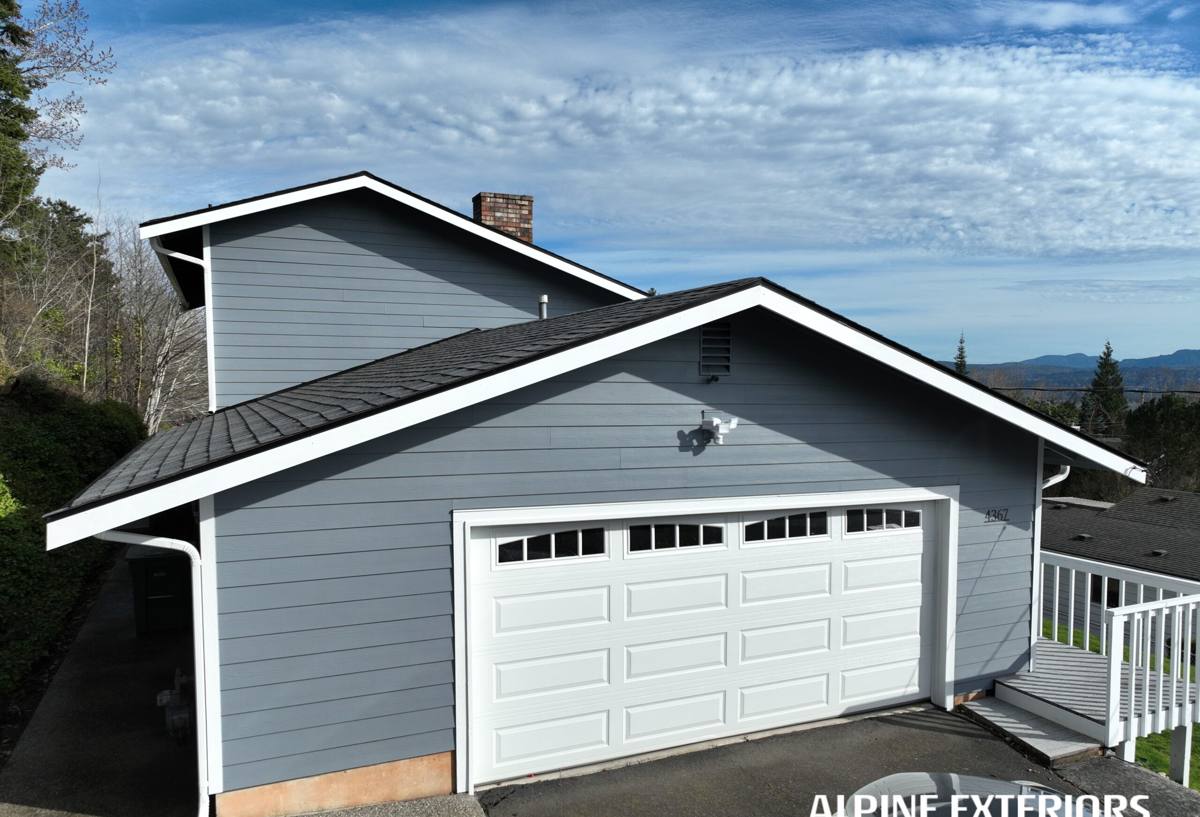
What Skyline Homes Commonly Need
After years of working roofs in this part of the county, a handful of repair issues show up again and again on Skyline homes:
- Moss and organic growth damage — moss holds moisture against the roof surface, lifts shingle edges, and accelerates granule loss
- Flashing failures around chimneys, skylights, and roof-to-wall transitions, where driving rain gets pushed sideways under improperly sealed or aging flashing
- Valley leaks where two roof planes meet and water volume concentrates, especially during heavy rain events
- Damaged or missing shingles from wind gusts common to the area, or from age-related brittleness
- Clogged or failing gutters that back water up under the roof edge instead of carrying it away
- Soft or rotting roof decking found under long-term slow leaks that went unnoticed
Salt-tinged marine air also plays a role that's easy to overlook. It accelerates corrosion on exposed metal fasteners, flashing, and vents faster than it would inland, which is one more reason repairs here need to use the right materials, not just whatever's on the truck.
Why Moss Season Matters So Much Here
How Moss Actually Damages a Roof
Moss doesn't just look bad. It grows a root structure that works its way under shingle tabs, holding constant moisture against the roofing material and the underlying felt or synthetic underlayment. Over months, that trapped moisture breaks down granule adhesion, softens shingle edges, and creates the exact conditions that let water find a way through. On a north-facing slope or a roof shaded by trees, moss can establish itself within a single wet season and keep spreading if it's never addressed.
Why Timing Matters
Because Skagit County rarely gets long dry stretches, a roof with active moss growth doesn't get a chance to dry out and self-correct the way it might in a drier climate. That's why we treat moss removal and prevention as part of roof repair, not a separate cosmetic service. Removing existing growth, treating the surface, and installing zinc or copper strips where appropriate at the ridge line are all part of giving a repaired roof a real chance to last.
What a Correct Repair Actually Involves
A proper roof repair isn't just slapping a patch of new shingles over a leak. It starts with finding the actual source of the problem, which isn't always where the water is showing up inside the house — water can travel along decking or rafters before it drips somewhere visible. Our process on a typical repair call looks like this:
- Full visual inspection of the roof surface, flashing points, valleys, penetrations, and gutter system
- Interior inspection where a leak has been reported, to trace the water path back to its source
- Identification of contributing factors — moss buildup, failed sealant, corroded fasteners, damaged decking
- A clear explanation of what's actually wrong and what repair options exist, in plain language
- Repair work using materials matched to the existing roof system and appropriate for our marine climate
- A final check to confirm the fix addresses the root cause, not just the visible symptom
Skipping steps in that process is how homeowners end up paying for the same leak twice. A patch over a symptom without finding the source is a temporary fix at best.
Repair vs. Replacement: How We Help You Decide
Not every roof problem needs a full replacement, and not every roof problem should be patched indefinitely either. We look at the age of the roof, the extent of the damage, how much of the decking underneath is still sound, and how many separate issues are competing for attention. The table below outlines the general factors that push a decision one way or the other.
| Factor | Favors Repair | Favors Replacement |
|---|---|---|
| Roof age | Under 15-20 years, condition still solid | Nearing or past expected lifespan |
| Damage extent | Localized to one area or a few spots | Widespread across multiple slopes |
| Decking condition | Dry and structurally sound | Soft, rotted, or repeatedly wet |
| Leak history | First occurrence or isolated cause | Recurring leaks in different spots over time |
| Moss/granule loss | Surface-level, recently developed | Long-term, with visible shingle degradation |
We'll always give you our honest read on which side of that table your roof falls on, along with the reasoning behind it, so you're making the call with real information rather than guesswork.
Materials and Methods We Use
Repair materials matter as much as workmanship. For a fix to hold up through another Skagit County winter, we match the repair to the existing roofing material — asphalt composition, cedar, or metal — rather than using a generic patch that ages differently than the surrounding roof. On flashing repairs, we use corrosion-resistant metal and proper sealants rated for sustained wet exposure, since the marine air here is harder on standard fasteners than it would be further inland. Where moss has been an ongoing problem, we discuss zinc or copper control strips as a preventive measure, since they release trace metals with rainfall that discourage regrowth over time without chemical treatments that need reapplying every season.
We also pay close attention to ventilation while we're up there. Poor attic ventilation traps moisture against the underside of the roof deck, which contributes to premature aging and can mimic or worsen leak symptoms even when the roofing surface itself is intact.
Signs a Skyline Homeowner Shouldn't Ignore
Because our wet season stretches on for so long, catching problems early makes a real difference in cost and scope. Watch for:
- Dark streaking or visible moss patches on the roof surface, especially on shaded or north-facing slopes
- Granules collecting in gutters or at downspout outlets
- Ceiling stains or discoloration after heavy rain events
- Daylight visible through the attic roof deck
- Curling, cracked, or missing shingles
- Sagging sections of roofline
- Rust streaks near metal flashing or vent boots
Any one of these on its own doesn't necessarily mean a major problem, but they're worth a look before the next round of driving rain turns a small issue into an interior repair.
Why a Local Crew Matters for This Kind of Work
Roof repair is one of those trades where local experience genuinely changes the outcome. A crew that works Skyline and the surrounding Skagit County area regularly knows which roof styles and ages are common in the neighborhood, understands how the local moss and rain patterns behave through the seasons, and has already seen how different roofing materials hold up against our specific mix of salt air and sustained moisture. That's different from general roofing knowledge that doesn't account for what this particular climate does to a roof over time.
There's also a practical side to it: a local crew can typically respond faster when a leak shows up mid-storm, and stands behind the work because they're not driving in from out of the area for a single job.
What to Expect When You Call Us
We start with a straightforward inspection and an honest conversation about what we find. If it's a simple repair, we'll tell you that. If the roof has bigger issues developing, we'll explain what we're seeing and why, using plain language rather than pressure tactics. Our goal on every repair call is a fix that actually holds up through the next wet season, not just a patch that gets us off your roof for the moment.
If you're dealing with a leak, visible moss, storm damage, or just want a second opinion on your roof's condition, we're happy to take a look. Reach out for a free, no-pressure estimate using the form below, and we'll get a straightforward assessment scheduled.