 Skagit County
 Building a Deck That Actually Holds Up in Burlington
Burlington sits in the Skagit Valley, close enough to Padilla Bay and the Sound that salt-laden air reaches yards here even without an ocean view, and close enough to the Cascades' rain shadow edge that the region still gets long stretches of driving, wind-blown rain most of the year. Add in the low winter sun angle and the shade from mature evergreens common on Skagit County lots, and you get a near-permanent damp season where moss, algae, and slow-drying wood are the default condition, not the exception. A deck built with generic, big-box assumptions - the kind that might be fine in a drier climate - tends to show its weaknesses here within a few seasons: soft spots near the ledger, rust streaks below fasteners, moss creeping into board gaps, and railings that loosen because the post connections were never really engineered for saturated, freeze-thaw-cycling lumber.
A deck built correctly for Burlington isn't a different-looking deck. It's the same clean lines and layout you'd want anywhere, but with the water management, fastener selection, and structural detailing chosen specifically for a climate that stays wet longer than most of the country. That's the difference we focus on for every custom deck we build in this area.
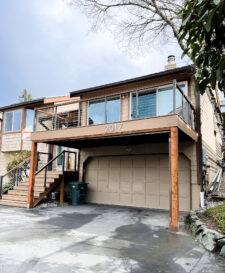
What "Correct" Actually Means for a Skagit County Deck
There's a lot of daylight between a deck that passes inspection and a deck that's actually built right for this climate. The gap usually comes down to a handful of details that don't show up in a quick look but decide whether the structure is still solid in fifteen years.
Ledger Attachment and Flashing
The ledger board - where the deck attaches to the house - is the single most common failure point on decks in wet climates, because it's the one place where water is constantly trying to get behind the house's siding and into the rim joist. A correct ledger installation uses proper structural flashing (not just caulk), a drainage gap or flashing tape system behind the ledger, and lag bolts or through-bolts sized and spaced to code - not just a handful of deck screws. We treat this connection as the most important part of the build, because everything else can be done perfectly and a bad ledger still rots the house.
Framing and Fastener Corrosion
Damp air and standing moisture accelerate corrosion on the wrong hardware fast. We use hot-dip galvanized or stainless structural hardware and coated fasteners rated for ground contact and treated lumber contact (many older or cheaper fastener coatings react badly with modern ACQ-treated wood and corrode from the inside out). This matters more here than in a dry climate, because Burlington's decks rarely get a long stretch to fully dry out between rain events.
Drainage Under and Around the Deck
Skagit Valley's flat terrain and clay-heavy soil in many areas mean water doesn't always drain away quickly on its own. Grading beneath and around the deck, keeping joists ventilated, and avoiding low spots where water pools against posts or beams all matter for how long the structure lasts.
Decking Material Options for Burlington's Weather
Every decking material available today can be made to work in Skagit County - the question is what trade-off you're comfortable with in maintenance, cost, and appearance. We walk every customer through this honestly rather than pushing whatever has the best margin.
| Material | How It Handles Our Climate | Maintenance | Typical Lifespan |
|---|---|---|---|
| Pressure-treated wood | Reliable if sealed and kept ventilated underneath; can trap moisture in tight grain if not maintained | Annual cleaning, re-sealing every 1-2 years | 15-20 years with upkeep |
| Cedar | Naturally rot- and insect-resistant, ages gracefully, but softer and needs regular sealing to resist moss and graying | Cleaning and oil/sealer yearly or every other year | 20-25 years with upkeep |
| Composite decking | Doesn't absorb water or rot, resists moss better than wood on the surface, but can stay slippery longer in shaded, damp spots | Periodic washing, no sealing required | 25-30+ years, manufacturer-warrantied |
| PVC/capped composite | Fully sealed surface, best moisture and moss resistance, most consistent performance in shade | Occasional washing | 25-30+ years, manufacturer-warrantied |
For heavily shaded Burlington lots near mature trees, we often steer homeowners toward composite or capped composite for the walking surface simply because it resists the moss and algae film that makes wood decks slick in the wet months. That's a maintenance conversation, not a durability scare - a well-built and well-maintained wood deck is a fine choice too, especially if you like the look and don't mind the upkeep.
Footings, Framing, and Skagit Valley Ground Conditions
Deck footings need to sit below the frost line and bear on undisturbed, stable soil - and Skagit County's mix of river valley silt, clay, and fill soil in newer developments means we don't assume the ground is the same from one Burlington lot to the next. We size and place footings based on what's actually under a given yard rather than a one-size answer, and we build framing to current local code span tables for joist size, spacing, and beam sizing rather than stretching lumber further than it should go to save a few boards. Post bases are set above grade and above expected splash-back, since ground-contact wood at the base of a support post is one of the more common quiet failure points on older decks in this region.
Railings, Stairs, and Hardware
Railings take direct weather exposure and constant hand contact, so we pay close attention to post-to-frame connections here - through-bolted with structural screws or brackets rated for the load, not toe-screwed. Metal balusters and cable rail systems are popular in this area for their clean look, but we spec stainless or powder-coated corrosion-resistant hardware throughout, since raw or lightly coated steel will show rust streaks on lighter decking within a couple of wet seasons. Stair stringers get the same ground-contact and fastener treatment as the main structure, since stairs sit closest to grade and take the most splash-back moisture.
Our Process, Start to Finish
- On-site consultation: We look at your yard's sun/shade pattern, drainage, existing grade, and how the deck will connect to the house before talking materials or layout.
- Design and material selection: We walk through layout options and an honest material comparison based on your maintenance preference, budget, and how shaded the space is.
- Permitting: We handle the permit application and coordinate required inspections through the applicable local jurisdiction.
- Site prep and footings: Layout, excavation, and footing placement below frost depth on stable soil.
- Framing: Ledger flashing, joists, beams, and posts built to code span tables with corrosion-resistant hardware throughout.
- Decking, railing, and stairs: Installed per manufacturer spacing and fastening specs for whichever material you chose.
- Final walkthrough: We go over the finished deck with you, including basic care and what to watch for seasonally.
Permits and Local Code in Skagit County
Most new decks and deck replacements in and around Burlington require a building permit, and requirements can differ slightly depending on whether the property falls under City of Burlington jurisdiction or unincorporated Skagit County. Permitting covers things like footing depth, guardrail height and baluster spacing, stair rise/run, and ledger attachment - all details that matter far more for long-term safety than they might seem on paper. We manage the permit process as part of the job so you're not the one tracking down inspection requirements.
Maintenance Checklist for Skagit County Deck Owners
Whatever material you choose, a little seasonal attention goes a long way in this climate. We give every customer guidance specific to their decking material, but the basics apply across the board:
- Sweep debris and standing leaves off the deck surface regularly, especially in fall - trapped organic matter holds moisture and feeds moss growth.
- Wash the deck surface at least once a year (more often in heavily shaded spots) to remove algae film before it becomes a slip hazard.
- Check and clear gaps between boards so water can drain through rather than pooling on the surface.
- Inspect the ledger flashing and the area where the deck meets the house annually for any signs of water staining or soft wood.
- For wood decks, re-seal or re-stain on the schedule recommended for your product - skipping a cycle in this climate shows up fast.
- Check railing post connections periodically for any looseness, which can indicate a fastener issue worth addressing early.
- Keep vegetation and mulch pulled back from direct contact with framing or posts to reduce moisture and pest exposure.
Why It Matters to Hire a Crew That Already Works in Burlington
Deck-building advice that works in Arizona or even in drier parts of Eastern Washington doesn't automatically transfer to the Skagit Valley. A crew that already builds regularly in Burlington and the surrounding Skagit County communities knows the local permitting contacts, has already seen how the soil and drainage behave on flat valley lots versus sloped ones, and has already made (and corrected) the mistakes that come from underestimating how long this region stays wet. That local experience shows up in the parts of the deck you can't see once it's finished - the flashing behind the ledger, the hardware inside the framing, the footing depth - which are exactly the parts that determine whether you're dealing with a repair job in ten years or a deck that just keeps working.
If you're planning a new deck or replacing an aging one in Burlington, we're happy to walk your property, talk through material options honestly, and put together a straightforward estimate - no pressure, no upsell script. The form below is the easiest way to get that conversation started.