 Skagit County
 Siding Built for Sedro-Woolley's Climate, Not Just Its Curb Appeal
Sedro-Woolley sits in a stretch of Skagit County where the weather doesn't do anything in half measures. You get long stretches of driving rain off the Sound, humid air that never fully dries out between storms, and enough shade and moisture on north-facing walls to keep moss and algae in business year-round. Add in the salt-laden air that reaches inland from Puget Sound on windy days, and you have a climate that is genuinely hard on exterior siding — harder than most manufacturers' marketing brochures let on.
This page is about one thing: installing James Hardie fiber cement siding correctly on homes in and around Sedro-Woolley. Not a general overview of Hardie products, not a county-wide pitch — just what this specific siding needs to do here, what a correct installation looks like, and why the crew doing the work matters as much as the material itself.
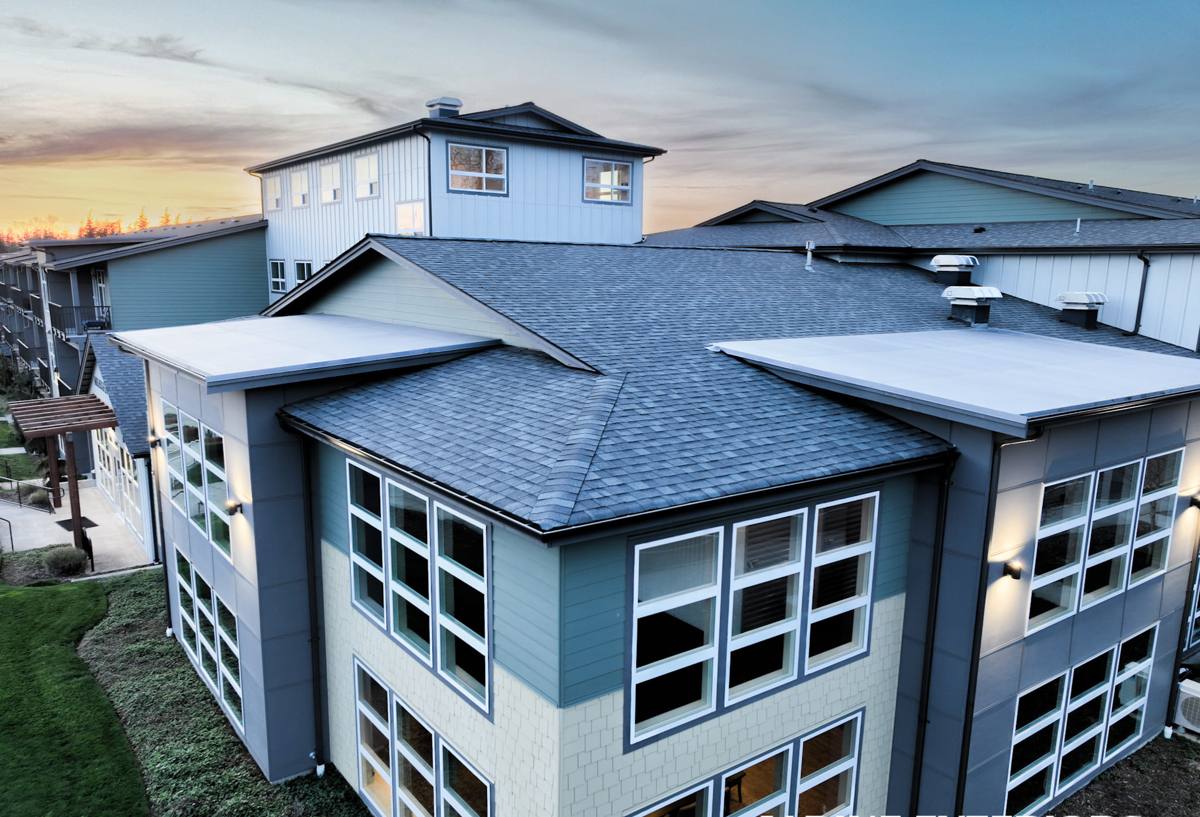
What Skagit County Weather Actually Does to Siding
Before talking about the fix, it's worth being honest about the problem. Most siding failures we see in this area aren't from one dramatic storm — they're from years of small, repeated exposure that wears down materials not engineered for it.
Moisture That Doesn't Let Up
Sedro-Woolley gets a genuinely long wet season. Siding here isn't just rained on — it stays damp longer than it would in a drier climate, because overcast skies and high humidity slow evaporation. Materials that absorb moisture, swell, or trap water behind the surface age faster here than the same product would in eastern Washington.
Moss and Algae Pressure
Shaded elevations, tree cover, and persistent dampness are exactly what moss and algae need to take hold. On porous or poorly finished siding, this shows up as green-black streaking and staining that's difficult to fully clean without damaging the surface underneath.
Salt Air, Even This Far Inland
Sedro-Woolley isn't a coastal town, but weather systems moving in off Puget Sound and the Salish Sea still carry salt-laden moisture inland, especially during winter storms. Over years, that salt exposure accelerates corrosion on fasteners and metal trim and degrades certain coatings faster than inland-only exposure would.
Temperature Swings and Wood-Adjacent Materials
Freeze-thaw cycles are milder here than in the mountains, but they're not absent. Materials that swell when wet and shrink when they dry — like untreated or primed wood-based products — take on stress with every cycle. Over a decade or two, that stress shows up as cracking, cupping, and paint failure at the seams.
Why We Only Install James Hardie Fiber Cement
We made a deliberate decision to install James Hardie exclusively — not vinyl, not LP SmartSide, not cedar, not primed spruce. That's not a marketing gimmick; it's a standard we hold because of what we've seen these climate stresses do to alternative materials over time.
- Non-combustible core: Hardie's fiber cement is engineered from cement, sand, and cellulose fiber — it doesn't burn, warp from heat, or provide fuel the way wood-based or vinyl products can.
- Moisture-resistant by design: Fiber cement doesn't absorb and swell the way wood-based composite siding can, which matters enormously in a climate where siding rarely gets a long stretch to fully dry out.
- Factory-applied ColorPlus finish: The finish is baked on at the factory under controlled conditions, resisting fade and chipping far better than field-applied paint, which struggles to cure properly in damp, cool weather anyway.
- Climate-engineered product lines: Hardie makes region-specific HZ formulations. The HZ5 line used in the Pacific Northwest is engineered for exactly this kind of moisture and temperature profile, rather than being a one-size-fits-all product.
- Real warranty backing: Hardie's non-prorated limited warranty and transferable coverage reflect a manufacturer standing behind the product for the long haul — something worth factoring in given how many years this siding needs to perform.
We're not going to tell you cedar looks bad or that vinyl is worthless — both have their place. But we've drawn a line on what we're willing to put our name behind on Skagit County homes, and it's Hardie.
What Correct Hardie Installation Actually Involves
A lot of siding problems people blame on "bad materials" are actually installation problems. Fiber cement is unforgiving of shortcuts in a climate like ours, because any gap in the water management plan gets tested constantly, not occasionally.
Water Management Comes First
Before a single piece of siding goes up, the wall needs a proper drainage plane: correctly lapped weather-resistant barrier, flashing at every horizontal transition, window and door integration that sheds water outward instead of trapping it, and a rainscreen gap where conditions call for it. This is the part of the job nobody sees once it's finished — and it's the part that determines whether the siding lasts 10 years or 40.
Fastening and Clearances
Hardie specifies exact fastener types, spacing, and penetration depth, along with minimum clearances from grade, roof lines, and other surfaces. Skipping these specs to save time is one of the most common causes of premature failure — improperly fastened boards can crack, and insufficient clearance from grade invites the moisture wicking we're trying to avoid in the first place.
Cuts, Seams, and Caulking
Every cut edge on fiber cement siding needs to be sealed per manufacturer spec, and factory-primed edges need field touch-up paint before installation, not after. Seams need proper backing and the right sealant — not just a bead of caulk applied to cover a gap.
Trim and Accessory Integration
Corner boards, trim, and any transition points to roofing, decking, or masonry are common leak points if not detailed correctly. On homes with the kind of moss and moisture pressure we see around Sedro-Woolley, these details matter more than they would in a drier region.
Our Process on a Sedro-Woolley Project
| Stage | What Happens | Why It Matters Here |
|---|---|---|
| Assessment | Walk the home, check existing sheathing and water damage, evaluate moss/algae history and shaded elevations | Reveals hidden moisture problems before they're covered up again |
| Water management plan | Design flashing, barrier, and rainscreen approach per elevation | Skagit County's wet season punishes shortcuts here more than almost anything else |
| Product selection | Confirm HZ5 profile, plank style, and ColorPlus finish | Matches the product engineering to our actual regional exposure |
| Installation | Fasten, flash, seal, and finish to Hardie spec and local code | Determines whether the siding performs for decades or needs early repair |
| Final walkthrough | Inspect seams, trim, caulking, and clearances with the homeowner | Catches any detail before it becomes a callback |
Why Local Experience in Sedro-Woolley Matters
A crew that's worked houses throughout Skagit County already knows which elevations take the worst of the weather, which older neighborhoods tend to have specific sheathing or moisture issues, and how local permitting and inspection expectations run. That's not something a crew passing through on a regional route picks up. It shows in small decisions — where to add extra flashing, which wall needs a rainscreen gap even if it's not strictly required, how aggressively to plan around the moss season when scheduling exterior work.
It also means accountability. A contractor based in the area has a reputation to maintain with neighbors, not just a single job to close out and move on from.
Signs Your Current Siding Isn't Holding Up
- Green or black streaking that returns quickly after cleaning
- Soft spots, bubbling, or visible swelling near seams and bottom edges
- Paint that's peeling or chalking faster than expected
- Visible gaps or separation at trim and corner boards
- Rust staining running down from fasteners or metal flashing
- Rooms that feel damp or musty near exterior walls
Cost Factors Worth Understanding Up Front
We're not going to quote a number here that doesn't apply to your house — every project varies with size, existing wall condition, and how much water-management work is needed. But it helps to understand what actually drives cost on a Hardie installation.
| Factor | Why It Affects Cost |
|---|---|
| Existing wall condition | Rot or moisture damage found during tear-off needs repair before new siding goes on |
| Home shape and trim detail | More corners, dormers, and trim transitions mean more labor-intensive detailing |
| Product line and profile | Lap width, texture, and finish selection affect material cost |
| Access and site conditions | Steep lots, mature landscaping, or tight access can add labor time |
| Scope of water management upgrades | Adding a rainscreen or full flashing overhaul is worth it, but does add cost |
What to Expect During the Project
Siding replacement is disruptive, but it shouldn't be a mystery. Expect a clear tear-off and disposal plan, protection for landscaping and walkways, a defined daily work schedule, and open communication if anything unexpected turns up once the old siding comes off — which happens more often than homeowners expect, especially on older homes where hidden moisture damage wasn't visible from outside.
Weather scheduling matters too. We plan around Skagit County's wetter months where possible, since fiber cement installation and finish touch-up go better in drier conditions, even though the product itself is built to handle our climate once it's properly installed.
If your Sedro-Woolley home needs new siding, or you're just trying to figure out whether what you have is holding up the way it should, we're happy to take a look. Reach out for a free, no-pressure estimate using the form below.