 Skagit County
 Why Sedro-Woolley Roofs Take a Different Kind of Beating
Sedro-Woolley sits where the Skagit Valley starts climbing into the Cascade foothills, and that location comes with its own roofing problems. Homes here deal with driving rain off the Pacific weather systems, heavy tree cover from the surrounding timber country, and salt air that still reaches inland from Skagit Bay and Puget Sound. Put those three together and you get a long moss season almost every year, along with more moisture cycling through a roof than most shingle manufacturers plan for when they write their warranties.
None of that means a roof in Sedro-Woolley is doomed to constant problems. It means repairs here need to account for moisture and organic growth as the default condition, not the exception. A roof repair that would hold up fine in a dry, low-tree-cover neighborhood can fail within a season or two here if it's done without that context.
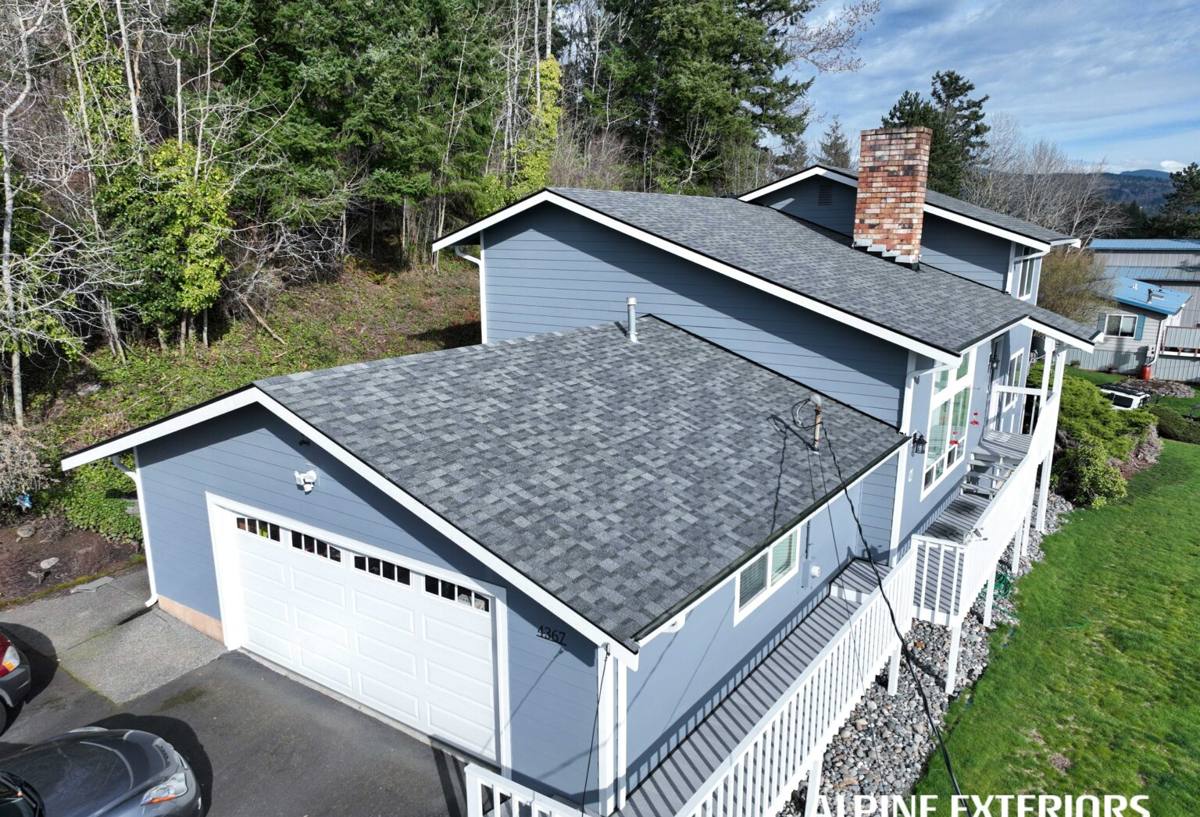
What a Long Moss Season Actually Does to a Roof
Moss and lichen don't just look bad — they actively shorten a roof's life. Moss holds moisture directly against the shingle surface long after the rest of the roof has dried out, which softens asphalt and speeds up granule loss. As moss mats thicken, they lift shingle edges enough for wind-driven rain to get underneath. Roots and rhizoids from lichen can work into the shingle surface itself, which is a slower process than moss but just as damaging over a few seasons.
The tree cover that shades a roof and keeps moss season going also drops needles and debris that clog valleys and gutters. When water can't drain off the roof properly, it backs up under the shingle edge — one of the more common causes of interior leaks we trace back during a repair call in this area.
Signs Your Roof Needs Repair, Not Just a Look
Most roof problems give some warning before they turn into an interior leak. Worth checking for, especially heading into the wetter months:
- Dark streaking or visible moss/lichen patches, particularly on north-facing or shaded slopes
- Granules collecting in gutters or at downspout outlets
- Shingle edges that are curling, cupping, or visibly lifted
- Daylight visible through the roof deck from inside the attic
- Water stains or discoloration on ceilings, especially after a stretch of driving rain
- Soft or spongy spots when walking the roof (a sign moisture has reached the decking)
- Flashing that's separated, rusted, or pulling away around chimneys, skylights, or vent pipes
- Missing, cracked, or torn shingles after a windstorm
Common Repair Jobs We See Around Sedro-Woolley
A handful of repair types come up repeatedly on homes in this area, mostly because of the local climate pattern rather than bad luck or poor original construction:
- Moss and lichen removal and treatment — cleared without damaging the shingle surface, then treated to slow regrowth
- Flashing repair around chimneys, skylights, and vent pipes, which is where wind-driven rain most often finds a way in
- Valley repair — valleys carry the most water on any roof and take the most wear here
- Localized shingle replacement after storm damage, rather than a full re-roof when the rest of the roof is sound
- Decking repair where sustained moisture has softened or rotted the sheathing under a section of shingles
- Gutter and drainage correction so water actually clears the roof instead of backing up under shingle edges
What a Correct Repair Actually Involves
A repair that just patches the spot you can see from the ground often misses the real problem. Water travels before it shows up as a stain, so a proper repair traces the path back to where it's actually getting in — which is sometimes several feet from where the ceiling stain appears.
Steps we don't skip
Every repair should include: confirming the actual entry point rather than assuming it's directly above the interior damage; checking the decking underneath before it gets covered back up, since a rotted section needs to be replaced, not just shingled over; using flashing and underlayment that matches how the original roof was built, not a shortcut patch; and matching shingle color and style as closely as the market allows, understanding that sun-faded existing shingles may never match a brand-new bundle perfectly.
We also check whether the leak is actually a leak, or condensation from poor attic ventilation being mistaken for one — a mix-up that's easy to make and wastes money if the repair targets the wrong problem.
Repair or Replace? What We Actually Weigh
Not every roof problem needs a full replacement, and not every roof is a good candidate for another round of patches. Here's roughly how we think through it:
| Factor | Points Toward Repair | Points Toward Replacement |
|---|---|---|
| Roof age | Under 15–18 years, one issue area | Near or past the material's expected lifespan |
| Extent of damage | Localized to one section or penetration | Spread across multiple slopes |
| Decking condition | Solid, dry sheathing under the damaged area | Soft, rotted, or repeatedly wet decking |
| Repair history | First or second repair on this roof | Third-plus repair in a few years |
| Moss/moisture pattern | Manageable with cleaning and maintenance | Chronic moss regrowth despite treatment |
| Budget timeline | Need a stable roof now, replacement later | Planning a longer-term investment |
We'll tell you honestly which side of that table your roof lands on. A repair that's just delaying an inevitable replacement isn't a good use of your money, and we'd rather say so up front than sell you a patch.
Common Repair Jobs We See Around Sedro-Woolley
Materials for Repairs in This Climate
Most repair work on Sedro-Woolley homes involves asphalt composition shingles, since that's the majority of the existing roof stock in the area. Architectural (dimensional) shingles hold up better against moss and wind-driven rain than older 3-tab styles, largely because of their heavier weight and layered profile, which is worth factoring in if a repair area is large enough to consider upgrading just that section.
Metal roofing repairs come up less often but do happen, usually around fastener backout or sealant failure at penetrations rather than the panels themselves. For cedar shake roofs, our standard is to be upfront that shake requires more consistent moisture management in a climate like this — regular cleaning and treatment aren't optional the way they might be in a drier region — and we'll walk through that maintenance commitment honestly rather than talk anyone into or out of a material based on appearance alone.
Our Process
We keep the repair process straightforward:
- Free on-site inspection, including the attic side when a leak is involved, not just a look from the ground
- A written estimate that explains what we found and why we're recommending repair over replacement (or vice versa)
- Work scheduled around weather windows — driving rain limits how many workable days we get in a given stretch, so we plan for that rather than promise a date we can't hit
- Cleanup of the work area, including old shingle debris and moss removal waste
- A clear explanation of what's covered under our workmanship warranty and what falls under the shingle manufacturer's coverage
Why a Crew That Already Works Sedro-Woolley Matters
A roofing crew that regularly works this part of Skagit County already knows which failure points show up again and again here — moss-driven granule loss, valley wear from heavy runoff, flashing fatigue from repeated wet-dry cycling. That's not something you learn from a single job; it's a pattern you recognize after doing this work across enough homes in the same climate.
Local familiarity also means knowing the county's permitting requirements when a repair crosses into replacement territory, having working relationships with local material suppliers so a repair doesn't stall waiting on shingles from out of the area, and being realistic about scheduling around the region's wetter months instead of overpromising a turnaround that weather won't allow.
Basic Maintenance Between Repairs
A few habits go a long way toward stretching the life of a repair in this climate:
- Clear gutters and downspouts at least twice a year, more often if you're under heavy tree cover
- Have moss and lichen treated before it establishes into thick mats, not after
- Trim back branches that keep a roof section shaded and damp longer than the rest of the roof
- Check the attic for daylight, damp insulation, or musty smell once a year
- Address small flashing or shingle issues promptly rather than waiting for an interior leak to confirm them
If you're seeing any of the warning signs above, or it's just been a while since your roof was actually looked at rather than glanced at from the driveway, we're happy to come take a look. The estimate is free, there's no pressure attached to it, and you'll get a straight answer about whether you need a repair, a bigger repair, or nothing at all right now.