 Skagit County
 Alger's Weather Is Harder on Siding Than It Looks
Alger sits in a stretch of Skagit County where wooded hillsides, open farmland, and nearby saltwater all meet. That mix creates a siding environment that's more demanding than most homeowners realize. Rain here isn't just frequent — much of it arrives sideways, driven by wind off Samish Bay and the surrounding lowlands, which means siding takes on water at seams, corners, and trim joints that a calmer climate would never test. Add in salt-laden air moving inland from Puget Sound and the extended gray, damp stretches that let moss and algae take hold on shaded walls, and you've got a climate that will find every weakness in a siding job within a few winters.
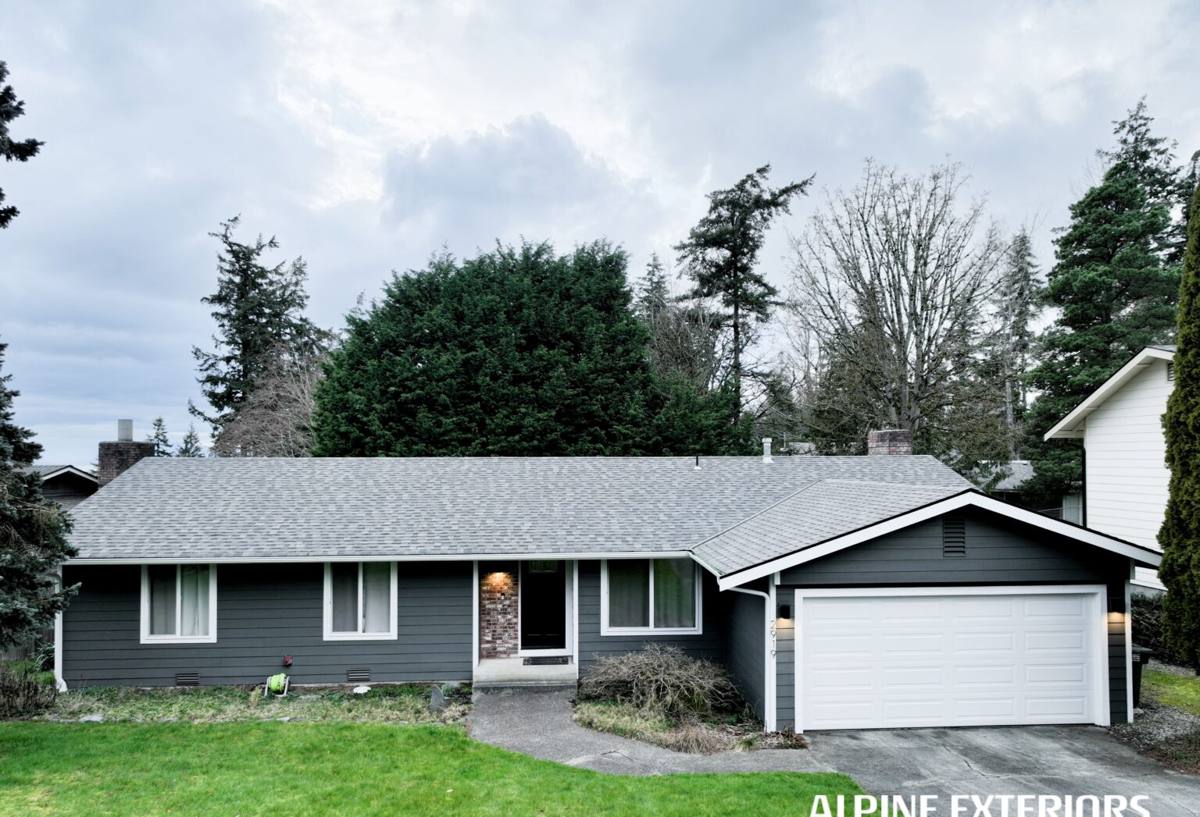
None of this means siding is doomed to fail in Alger. It means the material and the installation both have to be chosen and executed with this specific climate in mind, not a generic one. That's the whole point of this page: what a correctly installed, long-lasting siding system looks like on a home in this part of Skagit County.
What Driving Rain and Salt Air Actually Do to a Wall
Wind-Driven Rain Finds the Gaps
On a still day, water sheds off a wall the way it's supposed to. In a wind-driven rain event — common here in fall and winter — water gets pushed sideways and even slightly upward at butt joints, window and door trim, and inside corners. If the water-resistive barrier behind the siding isn't lapped correctly, or flashing at windows and penetrations isn't detailed to shed water outward and down, moisture gets behind the cladding. Once that happens repeatedly over years, sheathing and framing start to suffer even if the siding face still looks fine.
Salt Air Accelerates Everything Metal
Homes closer to Skagit County's saltwater edges deal with airborne salt that accelerates corrosion on fasteners, flashing, and trim metal. Uncoated or undersized fasteners can start streaking with rust years before they should, and that streaking often shows up on the siding face right where a fastener is holding a critical joint together. Material choice for fasteners and flashing matters as much here as the siding itself.
Moss and Algae Are a Moisture Story, Not Just a Cosmetic One
Alger's tree cover and long damp season mean north-facing and shaded walls develop moss and algae faster than open, sun-exposed elevations. That's mostly an appearance issue on a properly installed, moisture-resistant siding — but on a wall where water is already getting trapped behind the cladding, moss buildup holds even more moisture against the surface and makes a slow problem worse.
What a Correct Installation Involves Here
A siding job that will actually hold up in Alger's climate is decided well before the first plank goes up. The sequence matters as much as the product.
Water Management Behind the Siding
- A continuous, properly lapped water-resistive barrier installed shingle-style so every seam sheds water downward and outward
- Flashing at every window, door, and penetration that directs water back out of the wall assembly, not into it
- A drainage gap or rainscreen strategy so any moisture that does get behind the siding can dry out and drain instead of sitting against the sheathing
- Careful integration at roof-to-wall intersections and deck ledgers, which are common leak points in wet climates
Fastening and Field Detail
Fiber cement siding has specific nailing patterns, fastener spacing, and clearance requirements from grade and roof lines that are laid out by the manufacturer for a reason — they're the difference between a wall that manages water correctly and one that doesn't. Corrosion-resistant fasteners are non-negotiable this close to saltwater. Field cuts need factory-matched touch-up or, better, planning that minimizes exposed cut edges altogether, since a cut edge left unsealed is a fast track for moisture intrusion.
Why We Install Only James Hardie Fiber Cement
We don't install vinyl, LP SmartSide, primed wood, or other fiber cement brands. That's a deliberate standard, not a sales pitch. James Hardie is a non-combustible, fiber cement product that holds its shape and finish in sustained moisture exposure better than wood-based or vinyl alternatives, and Hardie engineers its HardieZone product formulations for specific climate categories — the marine, high-rainfall conditions of Western Washington fall into the wetter, milder end of that system. That's a meaningful detail when the product on your wall is going to spend eight or nine months a year in some form of dampness.
ColorPlus Finish Matters More Here Than in a Dry Climate
Hardie's ColorPlus finish is baked on at the factory under controlled conditions, which gives it better fade and moisture resistance than a field-applied paint job. In a climate where a fresh paint job on wood siding can start showing wear within a few years due to constant damp-dry cycling, a factory finish engineered to hold up outdoors for well over a decade is a real practical advantage, not just a convenience.
Comparing Siding Options for an Alger Home
| Factor | James Hardie Fiber Cement | Vinyl | Wood / LP-Style Panel |
|---|---|---|---|
| Moisture resistance | Engineered for high-rainfall climates; won't rot or swell | Doesn't absorb water itself, but seams and panels can trap moisture behind them | Vulnerable to swelling, rot, and moss growth if moisture gets in |
| Salt air / coastal exposure | Holds finish and shape well near saltwater | Can become brittle and discolor with UV and salt exposure over time | Finish and substrate both degrade faster near saltwater |
| Finish longevity | Factory ColorPlus finish, long fade resistance | Color is through-body but can chalk and fade; can't be easily refreshed | Requires repainting or restaining on a recurring cycle |
| Fire performance | Non-combustible | Combustible, can melt or deform near heat sources | Combustible |
| Typical maintenance | Periodic washing; caulk checks | Low maintenance but can crack or warp | Regular painting/sealing, moss treatment |
This isn't a claim that other products can't perform anywhere — it's why, specifically for the weather patterns Alger and the rest of Skagit County deal with, we've standardized on one system we trust to be installed correctly and to hold up.
How Our Process Works
- On-site assessment — we look at existing siding condition, moisture damage if any, wall orientation, and exposure to wind and rain on your specific lot
- Tear-off and inspection — old siding comes off and we inspect sheathing and framing for hidden moisture damage before anything new goes up
- Water-resistive barrier and flashing — installed and lapped correctly at every seam, window, and penetration
- Hardie siding installation — installed to manufacturer fastening and clearance specifications, with corrosion-resistant fasteners
- Trim, caulking, and touch-up — factory-matched finishing at cut edges and joints
- Final walkthrough — we review the finished job with you before calling it done
Living With Moss, Algae, and Salt Air Long-Term
Even a well-installed, moisture-resistant siding system benefits from basic upkeep in this environment. A yearly rinse of shaded, moss-prone elevations keeps organic growth from building up. Checking caulking at trim and penetrations after the wet season catches small gaps before they become water paths. None of this is heavy maintenance — it's the kind of light attention that lets a correctly installed Hardie system go the distance in a climate that doesn't forgive shortcuts.
Signs Your Current Siding May Be Failing
- Soft or spongy spots when pressed, especially near the bottom of walls or under windows
- Paint that's bubbling, peeling, or won't hold a fresh coat
- Visible gaps, warping, or cupping at seams and panel edges
- Persistent moss or algae that returns quickly after cleaning
- Rust streaking below fastener heads or trim
- Musty smell or visible staining on interior walls that share an exterior wall
Why It Matters That We Already Work in Alger and Skagit County
A siding crew that works this area regularly already knows which wall orientations take the worst wind-driven rain, where salt air exposure is more aggressive, and how to sequence a job around Skagit County's wet season instead of getting caught mid-installation by it. That local pattern recognition shows up in the details — flashing choices, fastener selection, scheduling — that don't always make it into a generic installation guide but make a real difference in how long the job lasts.
If you're weighing a siding replacement or new siding installation on a home in Alger, we're glad to come take a look and talk through what your specific walls need. There's no pressure and no cost to get an honest assessment and a straight answer on what correct installation would involve for your house — the form below is the easiest way to get that started.