 Skagit County
 Skyline sits up on the bluff on the west side of Anacortes, and the same open water views that make it a desirable place to live also put homes there in the direct path of wind and weather coming off the Salish Sea. Windows take more of that punishment than almost any other part of a house — they're where the wall assembly has the most seams, the most hardware, and the most opportunities for water to get in if the installation isn't done right. We install and replace windows throughout Skagit County, and Skyline is one of the areas where getting the flashing and sealing details correct matters more than it does on a sheltered, inland lot.
What Skyline's Exposure Does to a Window Installation
A window on a bluff lot in Skyline isn't dealing with the same conditions as one a few miles inland. The elevation and open water frontage mean less wind break, more direct salt-laden air, and rain that regularly gets driven sideways into the wall instead of falling straight down. None of that changes what a window is supposed to do, but it does change how much margin for error an installer has — and in this location, that margin is thin.
Wind-Driven Rain
Storms off the Salish Sea don't lose much force by the time they reach Skyline's bluff-facing homes. Rain pushed sideways by wind finds gaps around a window opening that would never see moisture in a calmer setting, which means flashing has to be lapped correctly and sealed with materials built for sustained exposure — not just caulked and hoped for.
Salt Air and Corrosion
Direct water frontage means more salt in the air here than at a comparable inland Skagit County property. Over years, that accelerates corrosion on hardware, fasteners, and lower-grade frame components. A window that would hold up fine on the mainland side of the valley can start showing pitted hardware or stiff, hard-to-operate sashes years earlier on a Skyline lot.
Moss, Shade, and Prolonged Moisture
Many Skyline properties are shaded by mature evergreens even with a water view close by, and that shade combined with the region's long wet season creates ideal conditions for moss and mildew on sills, trim, and the wood framing around older windows. Moisture that would dry out in a day on a sun-exposed wall can sit for a week or more on a shaded elevation, which is exactly the kind of long moss season this part of Skagit County is known for.
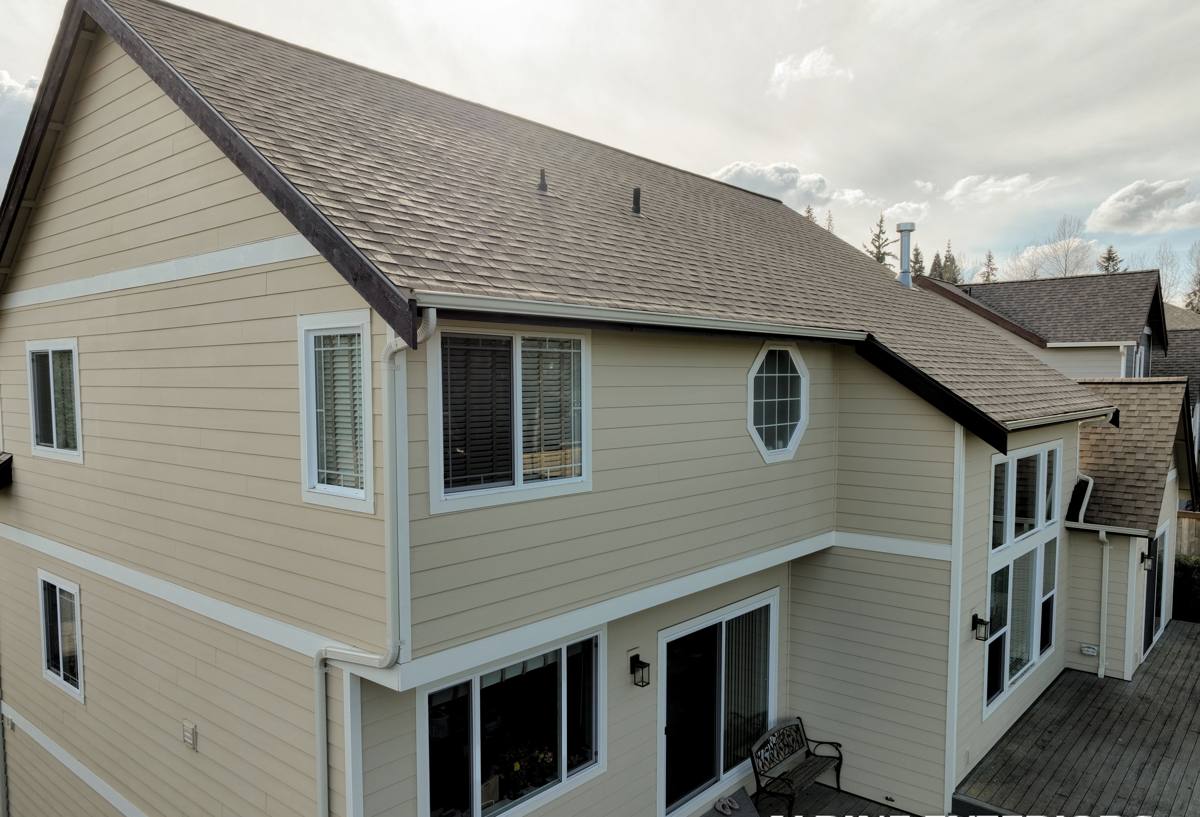
Signs a Skyline Home Needs Window Attention
Most window failures we see on Skyline properties don't start with a cracked pane. They start quietly, at the frame and the flashing, and by the time they're obvious inside the house the damage has usually been building for a while.
- Fogging or trapped moisture between the panes of a double-pane window
- Drafts or cold spots at the frame even with the window fully latched
- Soft, discolored, or visibly rotting wood at the sill or surrounding trim
- Hardware that's stiff, corroded, or harder to operate than it used to be
- Visible daylight or gaps where the frame meets the siding
- Paint or finish chalking and peeling faster on water-facing walls than elsewhere on the house
- Interior sill staining after wind-driven rain events, even if the window looks fine when it's dry
What a Correct Window Installation Involves
Removal and Opening Assessment
The old unit comes out carefully, and we check the rough opening for hidden problems before anything new goes in — soft framing, failed old flashing, or moisture that's already gotten behind the original installation. On a bluff-exposed home, this is often where we find the real story behind a window that's been performing poorly.
Flashing and Weatherproofing Sequence
This is the step that decides whether a window installation holds up on a lot like this. Flashing has to be sequenced so water is always directed out and away from the rough opening — never trapped behind the window or the siding above it — and every seam gets sealed with materials rated for sustained wind and moisture exposure. This is standard on every window we install here, not an upgrade.
Setting, Shimming, and Sealing the Unit
The new window gets set square and plumb, shimmed correctly so it operates smoothly for years rather than binding after a season of settling, and sealed at the interior and exterior per the manufacturer's specification for the unit going in.
Trim and Finish Integration
Exterior trim gets tied back into the surrounding siding so the finished look is clean and the water management around the opening stays continuous rather than getting interrupted at the trim line — a common weak point on rushed installs.
Choosing Window Materials for a Bluff-Exposed Home
We don't push one window brand as the only right answer for every Skyline home. What matters is frame material, glazing package, and hardware grade that actually holds up to direct water frontage — and we'll walk through the honest trade-offs for your specific home rather than defaulting to whatever's easiest to install.
| Frame Material | How It Holds Up on the Bluff | Maintenance |
|---|---|---|
| Vinyl | Resists rot and corrosion well; performs reliably in sustained coastal moisture | Low — occasional cleaning, no repainting |
| Fiberglass | Dimensionally stable across temperature swings; strong option for larger or heavier units | Low — can be painted if a custom color is wanted |
| Wood, uncladded | Vulnerable to rot if moisture gets behind the finish, especially on a shaded, water-facing wall | High — regular repainting or refinishing required |
| Wood-clad (exterior vinyl or aluminum over wood) | Exterior holds up like a clad material while keeping a wood interior look | Moderate — exterior is low-maintenance, interior finish still needs periodic attention |
Glazing and Hardware
Double or triple-pane glazing with a low-E coating helps with both energy performance and reducing interior condensation during Skagit County's damp winters, which is a common complaint in older single-pane homes. Hardware grade matters more here than on an inland property — corrosion-resistant hardware is worth specifying on a Skyline install rather than accepting whatever's standard on a given line.
Our Window Installation Process
- On-site assessment — we look at the existing windows, check frame and hardware condition, and evaluate how the current flashing ties into the siding around each opening
- Honest recommendation — repair, replace, or in some cases a modified opening, explained with the reasoning behind it
- Material and glazing selection — frame material, glazing package, and hardware grade matched to a bluff-exposed home, not a one-size answer
- Ordering and lead time — a realistic timeline for the units to arrive, since this isn't a same-week job for most configurations
- Removal and opening prep — the old unit comes out and any hidden issues with the opening get addressed before the new window goes in
- Installation and flashing — the new unit is set, shimmed, and flashed to a sequence built for wind-driven rain and salt exposure
- Trim and finish — exterior trim integrated cleanly with the surrounding siding
What Affects the Cost of Window Installation
We won't quote a number without seeing the openings, but the factors that move price on a Skyline job are consistent from one house to the next.
| Factor | Why It Matters |
|---|---|
| Frame material | Vinyl, fiberglass, and wood-clad differ in both unit cost and long-term maintenance |
| Glazing package | Double vs. triple-pane and low-E coatings affect both price and performance |
| Opening condition | Rot, old flashing failures, or out-of-square framing add repair work before the new unit goes in |
| Number of windows | A full-house or multi-window project typically has better per-unit economics than a single replacement |
| Size and configuration | Larger units, sliders, or units with grilles or specialty hardware cost more to manufacture and install |
| Access and site conditions | Elevation, tight lot access, or second-story openings can add labor time |
A Quick Checklist Before You Hire
- Confirm current Washington contractor licensing and active liability insurance
- Ask specifically how they handle flashing integration with the existing siding, not just which window brand they sell
- Get a written scope that separates the manufacturer's product warranty from the installation warranty
- Ask for a realistic lead time on ordering before you commit to a schedule
- Ask whether they recommend repair or replacement for each window, and why
Why a Crew That Already Works Skyline Matters
Manufacturer installation guides are written for average, sheltered conditions. A bluff lot in Skyline isn't average — the combination of direct wind exposure, salt air, and shaded, moisture-holding corners of a property stacks the deck against a shortcut installation more than it would on a calmer inland site. A crew that has actually installed windows on this stretch of the Anacortes waterfront knows which details in the manufacturer's guidance are non-negotiable here, and where extra time on flashing or sealant is worth it even when it's not strictly required elsewhere in Skagit County.
That experience shows up in decisions that don't get discussed in a sales pitch — how much lap a flashing course needs on a water-facing wall, whether a sill needs a sloped detail instead of relying on caulk, which hardware grade is worth specifying for direct salt exposure. Those choices are what decide whether a window installation is still performing cleanly in fifteen years or showing drafts and rot in five.
Getting Started
If you're dealing with drafty, foggy, or hard-to-operate windows on a Skyline property, or you're planning ahead for a renovation and want windows that will actually hold up to the bluff's wind and salt exposure, it's worth having someone look at the openings before you start pricing units. We offer free, no-pressure estimates for window installation in Skyline and throughout Skagit County — use the form below to get a time on the schedule.