 Skagit County
 Board & Batten Siding in Alger: Built for the Weather Here, Not Just the Look
Alger sits in that stretch of Skagit County where the terrain does a lot of the climate's work for it — low-lying land near water, tree cover that holds onto moisture, and enough distance from any big city to still feel like farm and forest country. Board and batten siding fits that setting. The vertical lines read as farmhouse, craftsman, or modern-rustic depending on the trim details, and it's a look a lot of homeowners in this part of the county are asking for right now, whether they're building new or replacing tired siding on an older place.
But board and batten is also a siding profile that punishes a sloppy install more than most. The vertical seams, the battens covering the panel joints, the exposure to wind-driven rain coming off the water and low fields around Alger — all of it means the installation details matter more here than they would on a straightforward lap-sided home in a drier climate. This page is about what that actually means for a house in this specific area, not board and batten siding in general.
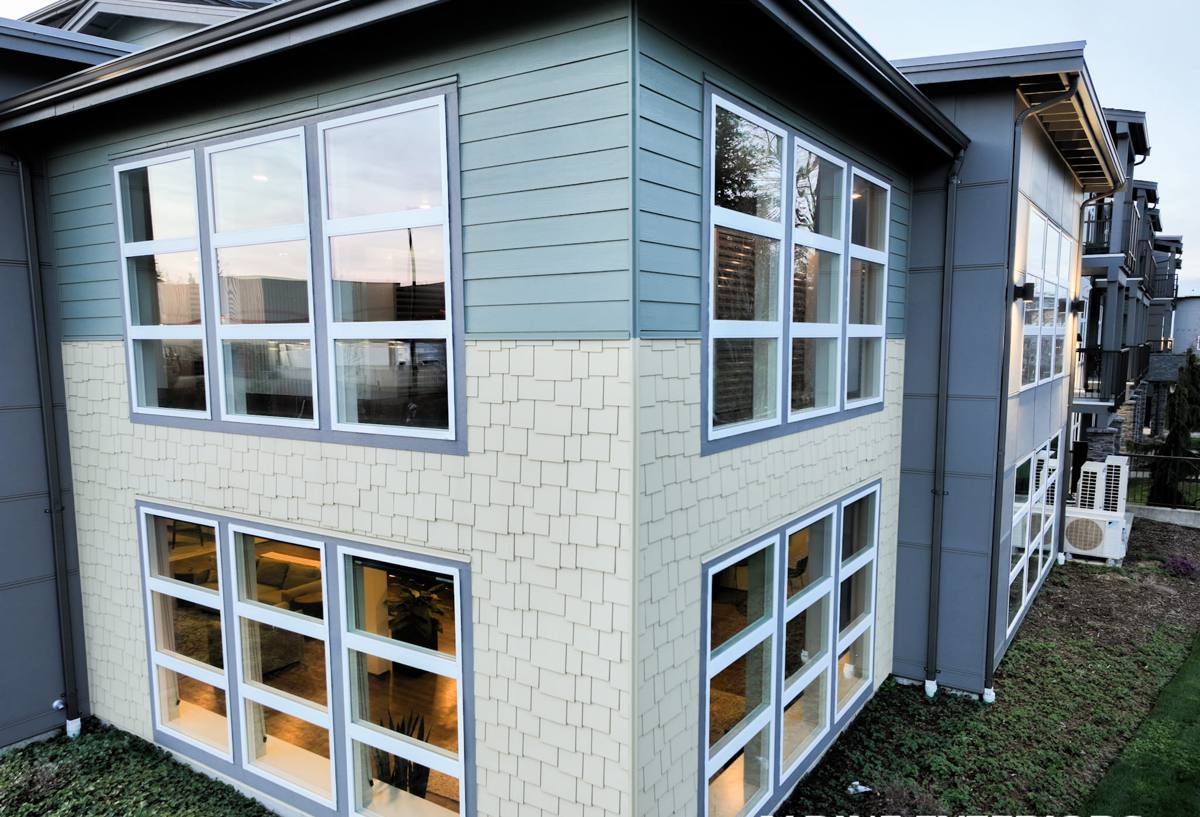
What Skagit County's Climate Does to Board & Batten Siding
Three things define the weather load on siding in and around Alger, and all three show up on this page's topic sentence for a reason: salt air, driving rain, and a long moss season.
Salt Air and Metal Fatigue
Alger isn't right on the beach, but it's close enough to Samish Bay and the broader Salish Sea airflow that salt-laden moisture reaches homes here, especially on west- and south-facing walls that catch the prevailing weather. Salt air accelerates corrosion on anything metal — fasteners, flashing, trim screws. On a board and batten wall, the fastener count is higher than on lap siding because you're securing both the base panel and the battens over it. If those fasteners aren't rated for coastal exposure, corrosion shows up first as rust streaking below each nail head, then eventually as failed fastening that lets panels shift and water in.
Driving Rain and Wind Direction
Skagit County gets a lot of rain, but the damaging version isn't the gentle straight-down kind — it's wind-driven rain that hits siding at an angle and gets pushed sideways and upward under laps, battens, and trim. Board and batten has more vertical seam length than horizontal lap siding, and every one of those seams is a potential entry point if the flashing and drainage plane behind it aren't done correctly. A wall that looks fine in a light rain can still be taking on water during a real Skagit County storm if the assembly behind the cladding wasn't built to manage it.
Moss Season
Skagit County's moss season isn't a few weeks — it's most of the year on shaded, north-facing, or tree-adjacent walls, which describes a lot of lots around Alger. Moss and algae hold moisture against the siding surface far longer than open sun-exposed walls ever see. On battens especially, moss tends to establish in the narrow shadow line where the batten meets the panel, which is also the exact spot where water is most likely to sit if drainage isn't working.
Why Board & Batten Is Less Forgiving Than Lap Siding
Lap siding is designed to shed water downward off each overlapping course by gravity alone — it's a fairly forgiving system. Board and batten works differently: the battens are there to cover and protect the vertical seams between panels, not to shed water the way a lap does. That means the water management has to happen behind the cladding, not on the surface.
This is the single biggest thing homeowners in Alger should understand before choosing this profile: board and batten looks simpler than lap siding, but the assembly behind it needs to be more deliberate. A rainscreen gap, correctly lapped weather-resistive barrier, and properly flashed panel joints aren't optional upgrades on this profile — they're what keeps the wall dry when driving rain and long wet seasons are the norm rather than the exception.
The Correct Installation System
We install James Hardie fiber cement exclusively, and for board and batten specifically that means either HardiePanel vertical siding with battens or the Hardie Artisan vertical siding line, depending on the reveal and trim profile a homeowner wants. A few non-negotiables for a correct install in this climate:
- A drainage gap (rainscreen) behind the panels so any moisture that does get past the cladding has somewhere to go instead of sitting against the sheathing
- A correctly lapped and taped weather-resistive barrier under the panels, installed before any siding goes up
- Stainless steel or hot-dip galvanized fasteners rated for coastal and high-moisture exposure — not standard interior-grade fasteners that will corrode faster in this air
- Proper flashing at every horizontal panel joint, not just caulk covering a gap
- Battens fastened into structural framing at the correct spacing, not just into the panel itself
- Factory-applied ColorPlus finish, which resists moisture and mildew far better than a field-applied paint coat on cut edges and trim
- Kick-out flashing and proper clearance at rooflines, decks, and grade so water is directed away from the wall assembly, not into it
Our Process for Alger Board & Batten Projects
1. On-Site Assessment
We look at wall orientation relative to prevailing wind and rain, existing moisture damage, tree cover and shading (relevant to moss risk), and the current siding and sheathing condition before quoting anything.
2. Tear-Off and Sheathing Check
Old siding comes off and we inspect the sheathing underneath for rot or soft spots, which is common on homes where a previous siding job skipped a proper drainage plane. Any compromised sheathing gets repaired before new siding goes up — covering a wet wall with new siding just hides the problem.
3. Weather Barrier and Rainscreen
We install a correctly lapped weather-resistive barrier and a drainage gap behind the panels. This step is invisible once the job is done, but it's the part that actually determines whether the wall stays dry through a Skagit County winter.
4. Panel and Batten Installation
Panels go up plumb and level with correct fastening patterns, followed by battens fastened into framing with the spacing and reveal the homeowner chose. Flashing goes in at every horizontal joint.
5. Finish Details
Trim, caulking at penetrations (not at panel joints that should be flashed instead), and a final walkthrough. We point out any drainage or grading issues we noticed during the job, even if they're outside the siding scope, because they affect how the new siding performs.
Board & Batten vs. Lap Siding: Cost and Performance Factors for Alger Homes
| Factor | Board & Batten | Lap Siding |
|---|---|---|
| Installed cost | Generally higher — more fasteners, trim, and labor per square foot | Generally lower — simpler, faster install |
| Water management | Relies on drainage plane and flashing behind the cladding | Sheds water by gravity across overlapping courses |
| Moss/algae exposure | More shadow lines and seams where moss can establish on shaded walls | Fewer horizontal ledges for moss to hold onto |
| Salt air fastener load | Higher fastener count (panel + battens) needing corrosion-resistant hardware | Fewer fasteners, still needs coastal-rated hardware |
| Architectural fit | Farmhouse, craftsman, modern-rustic | Traditional, broadly versatile |
Neither profile is objectively "better" — it's a question of the look a homeowner wants and being honest about what that look requires to hold up in this specific climate.
Living With Board & Batten in Alger's Climate
A correctly installed system needs far less upkeep than a poorly installed one, but no siding in Skagit County is maintenance-free. A few things worth doing on any board and batten home here:
- Rinse moss and algae growth off shaded or north-facing walls periodically rather than letting it build up over multiple wet seasons
- Keep gutters and downspouts clear so runoff isn't sheeting down the wall face during heavy rain
- Check caulking at windows, doors, and penetrations yearly — flashed joints shouldn't need it, but sealant at trim transitions does wear over time
- Trim back vegetation that shades walls and holds moisture against the siding
Signs Your Board & Batten Siding Needs Attention
- Rust streaking below fastener heads or at batten edges
- Persistent moss or dark staining that returns quickly after cleaning
- Soft or spongy spots when pressed near the base of the wall
- Visible gaps or movement in battens
- Paint or finish peeling at cut edges or trim corners
Why a Crew That Already Works Alger Matters
A siding crew that works Alger and the surrounding parts of Skagit County regularly already knows which wall orientations take the worst of the driving rain, which lots hold onto moss longest, and what a corroded fastener pattern looks like after a few seasons of salt air. That's not something you learn from a manual — it's what you pick up from doing this work, on these homes, in this specific weather, over and over. It also means we're not guessing at local permitting or inspection expectations; we've been through them.
We install James Hardie fiber cement exclusively because it's engineered for exactly this kind of climate — non-combustible, dimensionally stable in wet-to-dry cycling, and backed by a factory finish that holds up to years of moss, rain, and salt air better than field-painted alternatives. On a profile as detail-sensitive as board and batten, the material and the installation both have to be right, and we don't cut corners on either.
If you're considering board and batten siding for a home in Alger, we're happy to take a look and walk you through what your specific wall orientation and lot conditions would need. There's no pressure and no cost to get an estimate — just a straight assessment from a crew that already works this area.