 Skagit County
 Metal Roofing in Alger: A Roof Built for This Specific Stretch of Skagit County
Alger sits close enough to Samish Bay and the open water of Skagit County's western edge that homes here deal with a combination most inland roofs never see: salt-laden air, wind-driven rain coming off the water, and a moss season that can run eight or nine months out of the year under the tree cover common in this area. Metal roofing can handle all three of those things extremely well — but only when it's specified and installed with that combination in mind. A metal roof put on the same way you'd do it in a dry inland town will not perform the same way in Alger, and the failures we see out here almost always trace back to someone skipping a detail that only matters near the water.
This page is about what a metal roof needs to do its job on an Alger home specifically: the material choices that make sense given the salt air, the flashing and fastening details that matter in driving rain, and the maintenance habits that keep moss from shortening the roof's life. It's not a general "why metal roofing is great" pitch — it's what we actually pay attention to when we're standing on a roof in this part of the county.
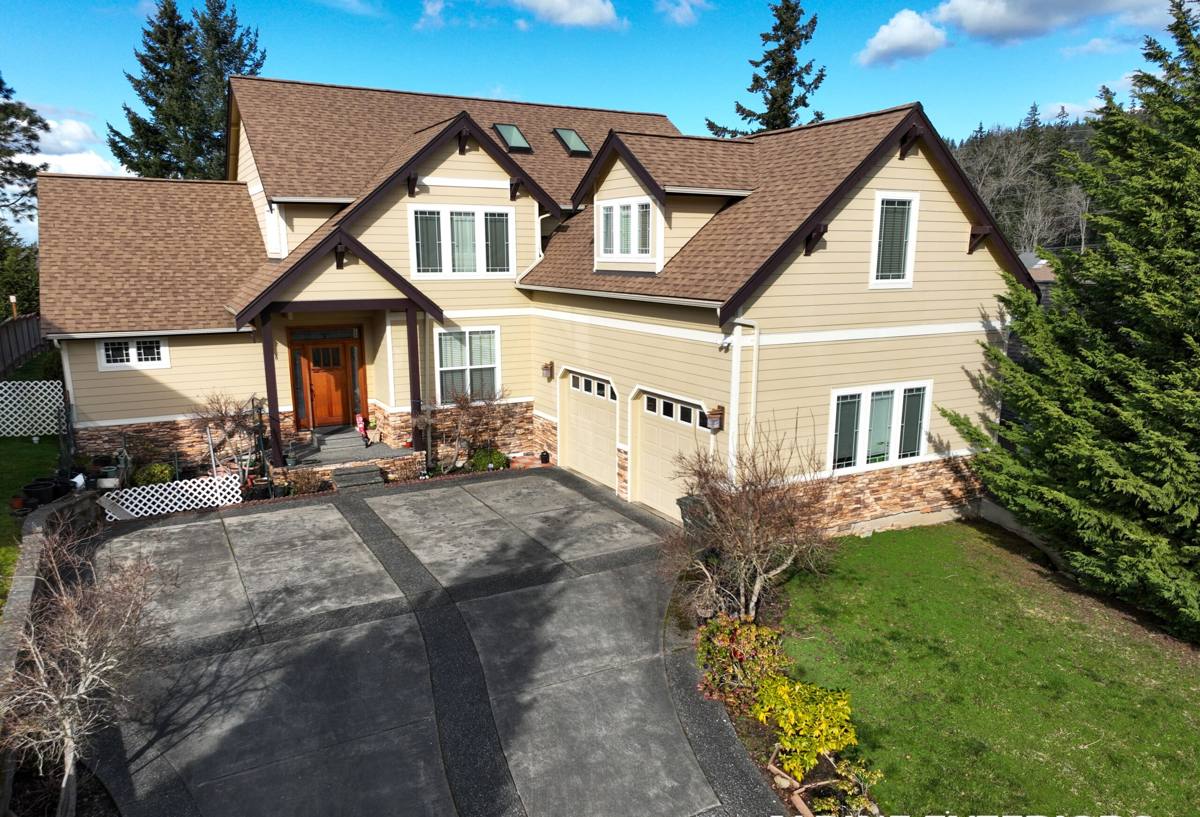
What Alger's Climate Actually Does to a Roof
Salt Air and Corrosion
Proximity to tidal water means airborne salt is a real, ongoing factor for exterior metal here — not a coastal-town myth. Salt accelerates corrosion on unprotected or poorly coated metal, and it's especially hard on fasteners, cut edges, and any spot where a panel's protective coating has been scratched or ground through during installation. This is less about which brand of metal you buy and more about the coating system and how carefully the installer protects it from the moment panels arrive on site to the last screw driven.
Driving Rain and Wind-Driven Water
Storms coming off the water don't always drop rain straight down — wind pushes it sideways and up under laps, ridge caps, and anywhere a panel seam isn't sealed correctly. A metal roof's watertightness depends almost entirely on details you can't see once the job is done: underlayment lap direction, sealant placement at seams and penetrations, and how flashing is integrated at valleys, walls, and chimneys. Wind-driven rain finds every shortcut.
Moss and Organic Debris
Tree cover and the damp, mild climate typical of this part of Skagit County mean moss and algae growth is a near-constant pressure on any roof surface, metal included. Metal roofing resists moss far better than asphalt shingles because there's no granule surface for spores to root into, but moss and debris can still build up in valleys, at panel laps, and around penetrations — and left alone, that buildup holds moisture against the metal and undermines the very corrosion resistance you're paying for.
Material and Coating Choices That Make Sense Near the Water
Not every metal roofing product is a good fit for a salt-air environment, and this is one area where we're direct with homeowners about trade-offs rather than upselling the most expensive option by default.
| Option | How It Handles Salt Air | Best Fit |
|---|---|---|
| Steel with a quality baked-on coating (e.g., PVDF-type finishes) | Strong corrosion resistance when coating stays intact; edges and cut ends need proper sealing | Most Alger homes, standing seam or concealed-fastener panels |
| Aluminum | Naturally corrosion-resistant even if the surface gets scratched, since it doesn't rust the way steel does | Homes closest to open water or with heavy, direct salt exposure |
| Exposed-fastener steel panels | Workable, but every exposed screw is a future maintenance point and a potential corrosion start | Budget-conscious projects, outbuildings, secondary structures |
| Uncoated or thin low-grade steel | Poor fit — coating failure and rust show up faster in salt air | Not something we recommend for this area |
For most primary homes in Alger, we lean toward standing seam or concealed-fastener steel panels with a quality factory finish, because the fasteners are hidden under the seam and protected from direct weather. Aluminum earns its higher price tag on homes with the most direct exposure to salt air, where long-term corrosion resistance matters more than upfront cost.
What a Correct Installation Actually Involves
The panel itself is maybe a third of what determines how a metal roof performs here. The rest is in the installation details.
Underlayment and Deck Prep
We start with an assessment of the existing deck — moisture damage from a prior leaky roof is common on older homes and needs to be dealt with before anything goes down, not covered up. A synthetic or self-adhered underlayment appropriate for metal (not a generic felt) goes down next, with special attention to lap direction so wind-driven rain can't work its way uphill under a seam.
Flashing at Valleys, Walls, and Penetrations
Valleys, chimney flashing, and wall-to-roof transitions are where almost every roof leak actually starts, metal or not. In a driving-rain environment like this, we treat these as the highest-priority details on the job — proper laps, correct sealant types compatible with the panel's coating, and enough clearance for water to move without backing up.
Fasteners and Sealants Rated for the Environment
Fastener choice matters more here than in a dry inland climate. We use fasteners and sealants rated for coastal or high-moisture exposure, and where panels are cut on site, cut edges get treated so bare metal isn't left exposed to salt air.
Ventilation
Metal roofs perform better with proper attic or roof-deck ventilation, which helps manage condensation on the underside of the panels — a real issue in a climate with the humidity and temperature swings typical of the Skagit County coast.
Our Process on an Alger Metal Roofing Project
- On-site assessment: We look at the existing roof, deck condition, ventilation, and how exposed the home is to salt air and prevailing storm wind direction.
- Honest scope and material recommendation: We tell you whether steel or aluminum makes sense for your specific exposure, and whether a full tear-off is needed or a metal retrofit over existing decking is viable.
- Written estimate: Clear line items — material, underlayment, flashing work, ventilation, and labor — so there's no ambiguity about what's included.
- Installation: Deck prep, underlayment, panel installation with attention to lap and fastening details, and flashing integration at every penetration and transition.
- Final walkthrough: We go over the finished roof with you, including what routine maintenance will look like given the moss and debris load typical of this area.
Maintenance: What Actually Keeps a Metal Roof Healthy Here
A metal roof in Alger is lower-maintenance than shingles, but "low-maintenance" isn't "no-maintenance" in a climate with this much moss pressure and salt air. A short annual routine goes a long way:
- Clear valleys, gutters, and downspouts of needles, leaves, and moss buildup before fall storms arrive
- Check for moss or algae accumulation at panel laps and around penetrations, and remove it gently — no pressure washing that can drive water under seams or damage the coating
- Look for any scratched or exposed bare metal after storms or falling branches, and get it touched up before corrosion starts
- Confirm fasteners on exposed-fastener sections are snug and sealant hasn't cracked or pulled away
- Keep overhanging branches trimmed back to reduce debris load and moss spore contact
- Have flashing at valleys and walls inspected periodically, since these are the most common failure points regardless of roof age
Signs You Should Call Someone Sooner Rather Than Later
Rust streaking below a fastener line, a panel seam that looks lifted or separated, visible daylight at a flashing joint, or a sudden increase in moss thickness in one concentrated area are all worth a call. Caught early, these are minor repairs. Left alone through a wet Skagit County winter, they can turn into deck damage that costs far more to fix.
Cost Factors for Metal Roofing in Alger
Pricing on any roofing job depends on specifics we can only confirm on site, but the factors that move the number most in this area are worth knowing up front.
| Factor | Why It Matters Here |
|---|---|
| Panel type and coating | Concealed-fastener standing seam and aluminum cost more upfront but reduce long-term corrosion risk near salt air |
| Roof complexity | Valleys, dormers, and multiple penetrations mean more flashing work — and more places for a leak to start if done wrong |
| Deck condition | Moisture-damaged decking from a prior roof needs repair before new panels go down, adding cost but preventing bigger problems later |
| Tear-off vs. retrofit | Removing an old roof versus installing over existing decking changes both cost and long-term performance |
| Ventilation upgrades | Older homes often need ventilation improvements to prevent condensation issues under a new metal roof |
Rather than quote a number without seeing the roof, we'd rather walk it, tell you honestly what it needs, and give you a written estimate based on your actual home — not a generic square-footage guess.
Why a Crew That Already Works in Alger Matters
Roofing decisions made without accounting for local conditions tend to show up as problems two or three years later — coating failure at cut edges, moss-driven moisture damage in valleys, or fasteners that weren't rated for the exposure. A crew that regularly works Alger and the surrounding Skagit County coastline already knows which details matter here and doesn't have to learn that on your roof. We factor in the salt air, the storm direction, and the moss season as a matter of course, not as an afterthought once something's already gone wrong.
If you're weighing metal roofing for your Alger home, we're happy to take a look and give you a straight, no-pressure assessment of what your roof actually needs. There's a free estimate request just below — reach out and we'll get you scheduled.