 Skagit County
 Why Alger Roofs Take a Different Kind of Beating
Alger sits in a part of Skagit County where three things gang up on a roof at once: salt-laden air moving in off the water, long stretches of driving, wind-pushed rain, and a moss season that seems to start earlier and end later every year. None of these alone is unusual for Western Washington. Together, on the same roof, year after year, they shorten the life of materials and fasteners that would last much longer in a drier or more sheltered location. A roof repair here has to account for all three, not just patch the visible symptom.
Salt Air and Metal Fasteners
Homes closer to the water pick up airborne salt that settles on roofing metal, nail heads, flashing, and vent boots. Over time this accelerates corrosion, especially on lower-grade fasteners or flashing that wasn't rated for coastal exposure. A repair that just replaces a shingle without checking the condition of the nails and flashing underneath it is a repair that fails again in a year or two.
Driving Rain and Wind-Driven Water
Rain that falls straight down is fairly forgiving of small roofing imperfections. Rain that's being pushed sideways by wind is not. It finds gaps at flashing edges, works up under shingle tabs, and exploits any seam that isn't properly lapped or sealed. Skagit County storms routinely deliver rain at an angle, which is why so many "mystery leaks" in this area trace back to flashing and edge details rather than a hole in the field of the roof.
Moss, Shade, and Slow Roof Death
Alger's tree cover and damp climate are ideal growing conditions for moss and algae. Moss doesn't just look bad — it holds moisture against the roofing material, lifts shingle edges as it grows, and works its way into seams and granule layers. On a shaded roof, moss can undo the benefit of a repair within a season or two if it isn't addressed as part of the job.
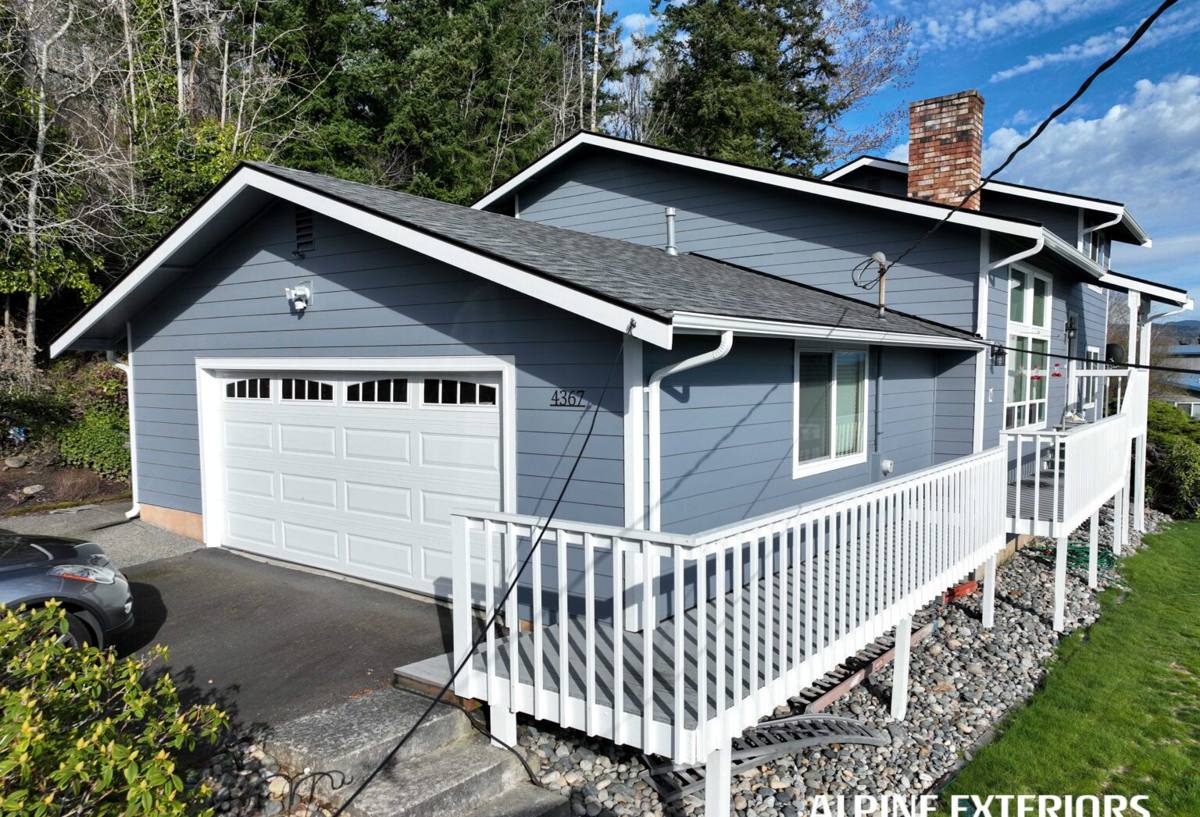
Signs Your Alger Roof Needs Repair, Not Replacement
Most roofs don't fail all at once. They show warning signs first, and catching them early is what keeps a repair a repair instead of turning it into a full replacement. Walk your property and look for the following:
- Granules collecting in gutters or at the base of downspouts
- Shingles that are curling, cupping, or missing tabs
- Dark streaking or thick moss growth, especially on north-facing or shaded slopes
- Soft or discolored ceiling spots after a heavy rain event
- Rusted, lifted, or gapped flashing around chimneys, skylights, and roof-wall intersections
- Daylight visible through the roof deck from inside the attic
- Sagging areas along the ridge or in roof valleys
- Nail heads backing out or visibly corroded fasteners
One or two of these on an otherwise sound roof usually points to a targeted repair. Several at once, especially combined with an older roof age, is a sign it's worth having a full inspection before spending money on spot fixes.
What a Correct Roof Repair Actually Involves
A roof repair that holds up in this climate is more than swapping out a damaged shingle. It's a short diagnostic process followed by work that addresses the cause, not just the symptom.
Diagnosis Before Anything Else
We start by tracing the actual source of the problem. Water can travel several feet from where it enters a roof before it shows up as a stain on a ceiling, so a repair that starts at the visible damage instead of the true entry point often misses the mark entirely.
Matching Materials, Not Just Covering Gaps
Whenever possible, repair materials should match the existing roof in type, profile, and where practical, color and age-appropriate wear. A mismatched patch stands out visually and can behave differently under thermal expansion and contraction than the surrounding material, which creates new stress points over time.
Flashing, Underlayment, and the Parts You Don't See
Most lasting leaks in Skagit County come down to flashing and underlayment, not the shingles themselves. A proper repair checks and, where needed, replaces step flashing, counter-flashing, valley metal, and any exposed underlayment, since these are the components doing the real work of keeping wind-driven rain out.
Moss and Debris Removal as Part of the Job
If moss or built-up debris contributed to the damage, removing it and treating the area is part of a correct repair, not an upsell. Leaving moss in place around a fresh repair just sets up the same failure to happen again.
Common Roofing Materials in Skagit County and How We Repair Each
Alger has a mix of roofing types, and each one calls for a different repair approach, especially with moss and salt exposure in the picture.
| Material | Typical Repair Approach | Moss/Salt Considerations |
|---|---|---|
| Asphalt shingle | Replace damaged tabs, reset lifted shingles, renew flashing seals | Prone to moss growth in shade; granule loss accelerates near salt air |
| Metal roofing | Reseal fastener penetrations, repair seams, address panel corrosion | Fastener corrosion is the main concern near the water; less moss-prone |
| Cedar shake | Replace split or curled shakes, treat for moisture and moss | Highest moss and moisture sensitivity; needs regular upkeep |
| Flat/low-slope membrane | Patch or reseal seams, check ponding areas and drains | Ponding water combined with debris speeds up membrane wear |
Whatever material your home has, the repair approach should match how that material actually fails, not a one-size-fits-all patch job.
Our Roof Repair Process, Start to Finish
- Inspection. We get on the roof (or use a safe vantage point when access is limited) and document the actual condition, not just the reported symptom.
- Honest assessment. We tell you plainly whether this is a repair situation or something closer to end-of-life for the roof, and why.
- Written scope and estimate. You get a clear description of what will be done and what it will cost before any work starts.
- The repair itself. Damaged materials are removed, the deck is checked underneath, and new materials are installed with proper flashing and sealing.
- Moss and debris cleanup. Affected areas are cleared and treated so the repair isn't undermined by the same growth that may have contributed to the damage.
- Final walk-through. We review the completed work with you so you know exactly what was done and what to watch for going forward.
Roof Repair vs. Replacement: Cost Factors
Homeowners often want a straight answer on repair versus replacement before they've had an inspection, which isn't realistic — but the factors that drive that decision are consistent enough to lay out honestly.
| Factor | Favors Repair | Favors Replacement |
|---|---|---|
| Roof age | Under roughly 15 years | Near or past expected material lifespan |
| Extent of damage | Localized to one area or slope | Widespread across multiple slopes |
| Underlying deck condition | Solid, no rot or sagging | Soft spots, rot, or structural sag present |
| History of repairs | First or second repair on the roof | Repeated repairs to the same or nearby areas |
| Moss/algae history | Isolated, treatable growth | Long-term, widespread moss with material breakdown |
General repair costs for a localized issue — a section of damaged shingles, a flashing repair, a valley reseal — tend to run in the low hundreds to low thousands of dollars depending on scope and access. Anything involving deck repair, widespread material failure, or extensive flashing replacement moves closer to a full re-roof conversation. We'll always tell you honestly which side of that line your roof is on.
Moss and Maintenance: Protecting the Repair You Just Paid For
A repair is only as good as what happens to the roof afterward. In a moss-heavy area like Alger, that means a bit of ongoing attention:
- Keep overhanging branches trimmed back to reduce shade and debris buildup
- Clear gutters and valleys before the fall rains set in
- Have moss treated before it establishes heavily, rather than after
- Schedule a roof check after major windstorms, which are common along this part of the county
- Watch for early warning signs listed earlier in this page rather than waiting for an interior leak
None of this requires a big time investment, but skipping it is one of the most common reasons a good repair doesn't last as long as it should.
Why a Crew That Already Works Alger Matters
Roof repair advice that works for a dry inland climate doesn't automatically apply here. A crew that regularly works in and around Alger and the rest of Skagit County already understands how salt exposure, wind direction, and shade patterns tend to affect roofs in this specific area, which shortens the diagnostic guesswork and gets the repair approach right the first time. Familiarity with local permitting requirements and typical weather windows for roof work also means fewer delays and fewer surprises once a job is scheduled. It's the difference between a repair based on general roofing knowledge and one shaped by what actually happens to roofs a few miles down the road.
Get a Straight Answer on Your Roof
If you're noticing moss buildup, a stain on a ceiling, or shingles that don't look right after the last windstorm, it's worth having someone take an honest look before the damage spreads. We offer free, no-pressure estimates for Alger homeowners — use the form below to get started.