 Skagit County
 Alger sits in the stretch of Skagit County where the terrain rolls between timber, small farms, and the edge of Samish Bay influence — close enough to salt water and low enough in elevation that homes here deal with a specific combination of weather stress most siding was never designed to survive. Salt-laden air, long stretches of driving rain off the water, and a moss season that can run from late fall through spring all work on exterior siding at the same time, and most homeowners don't notice the damage until it's already behind the surface.
This page is about one thing: siding repair for Alger homes, what it actually involves when it's done correctly, and why a crew that already works this specific corridor of the county catches problems that a general contractor from out of the area often misses.
What Alger's Climate Actually Does to Siding
It helps to separate the three stresses that matter most here, because each one damages siding differently.
Salt Air
Proximity to Samish Bay and the broader Salish Sea means airborne salt is a real factor for homes in and around Alger, even at a few miles' distance. Salt accelerates corrosion of exposed fasteners, trim flashing, and any metal components in the siding assembly. On wood-based products, salt combined with moisture speeds up fiber breakdown at seams and cut edges. It's a slow process, which is exactly why it goes unnoticed — by the time staining or pitting is visible, the underlying material has usually been absorbing damage for a while.
Driving Rain
Skagit County gets a lot of rain, but what matters more for siding is how much of it arrives sideways. Wind-driven rain off open fields and the nearby water doesn't just wet the siding face — it pushes moisture into every horizontal lap, seam, and penetration point (hose bibs, light fixtures, vents). Siding that isn't lapped correctly, or that has lost its seal at these penetration points, lets water track behind the cladding where it can sit against sheathing for days.
Moss Season
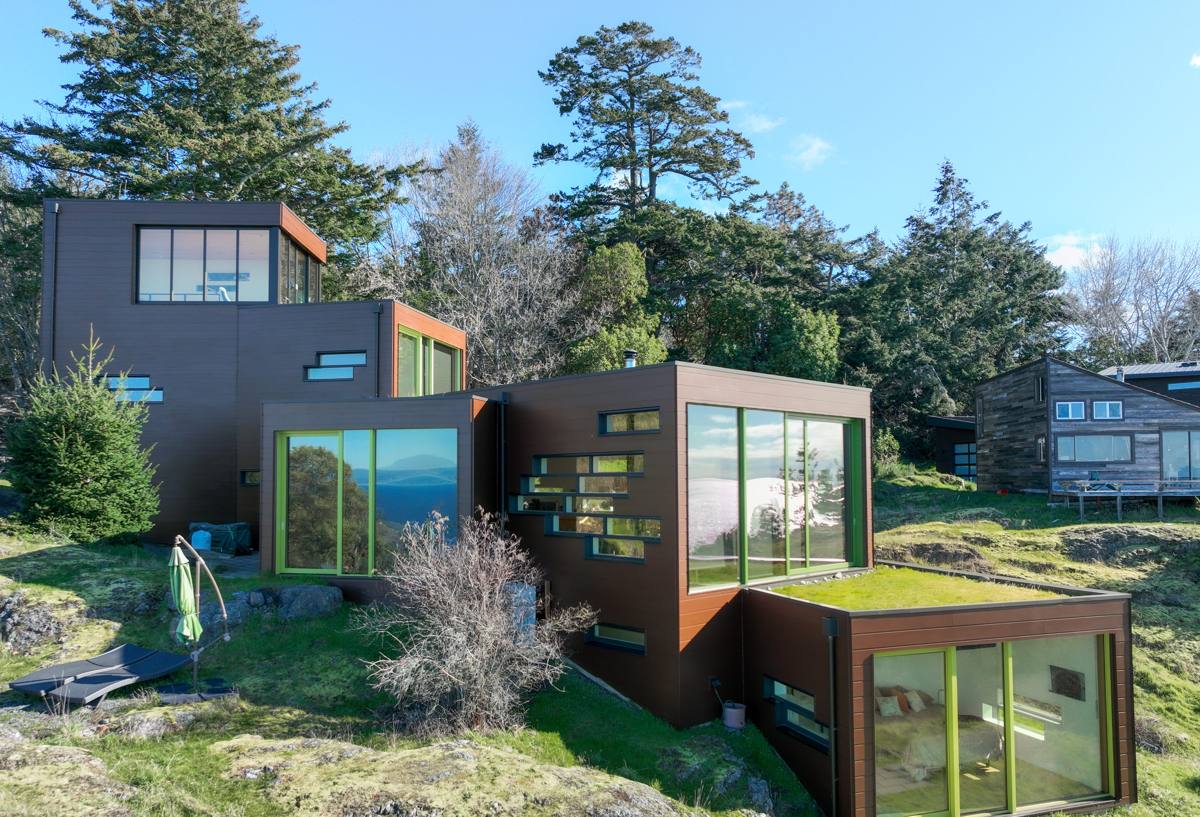
Skagit County's moss season is long — cool, damp, and shaded conditions from roughly October through April give moss, algae, and lichen plenty of time to establish. On siding, moss doesn't just look bad. It holds moisture directly against the surface far longer than open air would, and on wood-based or fiberboard products it creates a sustained damp environment exactly where rot organisms thrive. North-facing walls and anything shaded by trees — common around Alger properties with mature tree cover — see this first and worst.
What a Correct Repair Actually Involves
A lot of "siding repair" in this region amounts to patching the visible symptom without addressing what let the damage happen. That's why the same spot often fails again within a couple of years. A repair done right has a few non-negotiable steps.
- Find the actual water path, not just the visible damage. Stained or soft siding is often several inches away from where water is actually entering. We trace it back to the source before cutting anything out.
- Check the sheathing and framing behind the siding. If water has been getting behind the cladding, the sheathing may already be compromised. Replacing siding over rotten sheathing just resets the clock on the same failure.
- Correct the flashing and lap detail, not just the panel. Most repeat failures trace back to a flashing or lap gap that was never fixed the first time. A patch that ignores this will fail in the same place again.
- Match the repair to the surrounding material correctly. Mismatched replacement panels — wrong thickness, wrong exposure, wrong finish — create new water paths at the seams even when the individual piece is sound.
- Re-seal and re-prime cut edges. Any cut edge on fiber cement or wood siding needs to be sealed per manufacturer spec, or it becomes the next point of failure.
Signs Alger Homeowners Should Watch For
| Sign | What It Usually Means |
|---|---|
| Dark streaking or green film, especially north-facing walls | Moss/algae growth holding moisture against the siding surface |
| Soft or spongy spots when pressed | Moisture has reached the substrate — likely rot in progress |
| Paint or finish bubbling or peeling in patches | Moisture trapped behind the finish, often from a failed seal or lap |
| Rust streaks below fasteners or trim | Corrosion accelerated by salt air exposure |
| Visible gaps at seams, corners, or trim boards | Lost caulking or shifted material creating a direct water path |
| Warping or buckling panels | Repeated wet/dry cycling breaking down the material's structure |
Repair vs. Replacement: How We Decide
Not every damaged section needs full replacement, but not every problem is a simple patch either. The honest answer depends on how far the damage has spread and what's behind the siding.
When Repair Makes Sense
Localized damage — a section around one penetration, a few panels on one wall, damage caught early before it reached the sheathing — is usually a straightforward repair. We remove the affected material, check and dry out the area behind it, correct whatever let water in, and replace with matched material.
When Replacement Is the Honest Recommendation
If moisture damage has spread across multiple walls, if the sheathing itself is compromised in more than a spot or two, or if the existing siding material is simply past the point where patches will hold, we'll tell you that directly. Chasing spot repairs on siding that's structurally failing usually costs more over a few years than doing the job once, correctly.
Why a Local Crew Matters for This Kind of Work
Siding repair diagnosis is not a generic skill — it depends on knowing what's actually causing the damage in a given area. A crew that works Alger and the surrounding parts of Skagit County regularly already knows which walls take the worst of the driving rain in this corridor, how aggressively moss establishes on shaded elevations here, and which older installation methods common in the area tend to fail first. That local pattern recognition shortens the diagnosis and reduces the chance of a repair that treats the wrong problem.
What We Install When Replacement Is the Right Call
When a repair reveals that full replacement is the better long-term move, we install James Hardie fiber cement siding exclusively. It's not the only product on the market, and we're upfront about why we standardized on it rather than alternatives like vinyl, LP SmartSide, or primed wood: Hardie's fiber cement is non-combustible, holds its factory-applied ColorPlus finish far longer than field-applied paint systems, and its HZ5 product line is engineered specifically for the freeze-thaw and moisture cycling common in the Pacific Northwest. For a climate that combines salt air, driving rain, and long damp seasons the way Alger's does, a material that doesn't rely on paint film integrity to resist moisture is a meaningful advantage. Hardie also carries a strong transferable warranty when installed to manufacturer spec — which matters, because installation quality is what determines whether any siding product actually performs over time.
Our Repair Process
- On-site inspection. We look at the visible damage, but also check surrounding areas, penetrations, and flashing details that commonly cause the same failure.
- Diagnosis and honest scope. We tell you whether this is a contained repair or something that's spread further, and why.
- Remove and assess. Damaged material comes off, and we check the sheathing and framing underneath before anything goes back on.
- Correct the root cause. Flashing, laps, and seals get fixed — not just covered.
- Rebuild to spec. Matched material goes back in place, properly sealed and finished.
- Final walkthrough. We show you what we found and what we did about it.
A Practical Checklist for Homeowners
- Walk your home's exterior twice a year, especially after the wettest winter months
- Pay closer attention to north-facing and tree-shaded walls, where moss establishes first
- Check around every penetration — vents, hose bibs, light fixtures, deck ledgers
- Press gently on any discolored or stained siding to check for softness
- Don't wait on small gaps at trim or seams — they're the easiest point of entry for driving rain
- If you see rust streaking near fasteners, get it looked at before it spreads
If you're seeing any of these signs on your Alger home, or you just want an honest read on whether a section of your siding needs a repair or something more, we're happy to take a look. We offer free, no-pressure estimates — no obligation, just a straight assessment of what's actually going on and what it would take to fix it right.