 Skagit County
 Storm Damage Roof Repair for Alger Homes
Alger sits in a stretch of Skagit County where thick timber, the pull of Samish Bay, and I-5 wind corridors all meet in one small area. That combination is hard on roofs. A roof that would hold up fine in a drier, more open part of the state gets pushed harder here — by wind gusts funneling through the trees, by driving rain that finds every weak seam, and by a moss season that runs longer than most homeowners realize. When a storm does damage to a roof in this area, the fix needs to account for all of that, not just patch the visible hole.
This page covers what storm damage roof repair actually looks like for homes in and around Alger — what causes it, what a correct repair involves, and how we handle the job from first inspection to final walk-through.
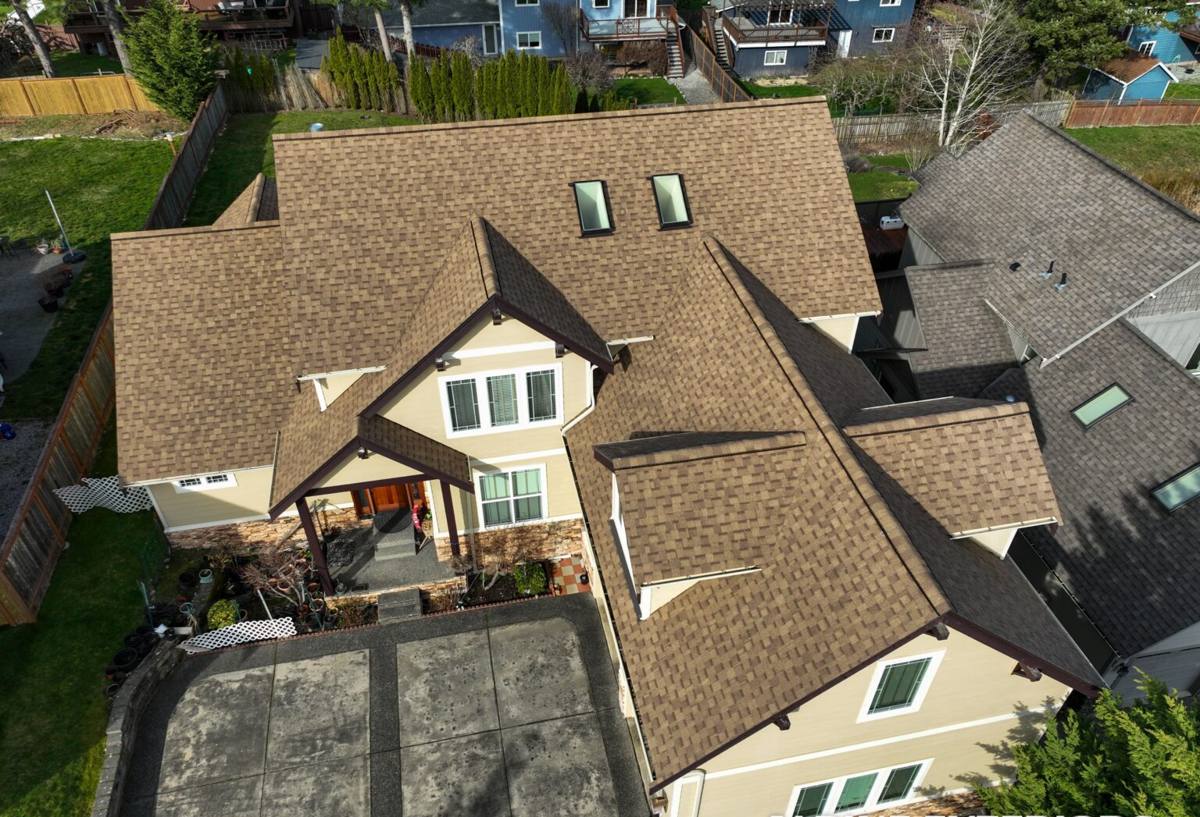
How Skagit County Storms Damage Roofs Around Alger
Storm damage in this area rarely comes from one single cause. It's usually a combination of wind, water, and standing moisture working on a roof over time, with a storm event exposing weaknesses that were already building.
Wind and Wind-Driven Rain
Alger's mix of open fields and dense tree cover creates uneven wind patterns. Gusts can lift shingles or roofing panels at the edges and ridges, then drive rain sideways underneath them during the same storm. Once wind has broken a seal, even a lighter rain afterward can work its way into the roof deck.
Falling Limbs and Debris
Properties near wooded lots or mature conifers see branch and limb strikes during windstorms. These can range from a few cracked or missing shingles to punctures that go straight through the roofing material and into the sheathing underneath.
Moss, Shade, and Trapped Moisture
Alger's tree cover means a lot of roofs stay shaded for large parts of the day, especially on north-facing slopes. That shade, combined with the region's long wet season, lets moss establish itself and hold moisture against the roofing material for months at a stretch. A storm that would otherwise cause minor, superficial damage can turn into a real leak when it hits a section of roof that's already been softened by trapped moisture under moss growth.
Salt Air
Being close enough to Samish Bay and the greater Puget Sound airshed means metal flashing, fasteners, and vents on Alger roofs deal with a steady low level of salt exposure. On their own, ordinary fasteners and flashing corrode faster here than they would further inland, and a corroded fastener or flashing seam is exactly the kind of weak point a storm exploits.
Signs Your Alger Roof May Have Storm Damage
Not all storm damage is obvious from the ground. Some of it only shows up as a slow leak weeks later, once wind and rain have had time to work a small problem into a bigger one. After any significant windstorm or heavy rain event, it's worth checking for the following:
- Shingles or panels that look lifted, curled, or out of alignment compared to the rest of the roof
- Granules collecting in gutters or at downspout outlets
- New or worsening moss growth, especially in shaded valleys and north-facing slopes
- Water stains or discoloration on interior ceilings, especially near exterior walls or chimneys
- Bent, missing, or rusted flashing around chimneys, vents, and skylights
- Debris, dents, or visible punctures from fallen branches
- Sagging or soft-feeling sections when walked (only assess this yourself with caution, or let us check it)
- Daylight visible through the roof deck from inside an attic space
Any one of these on its own might be minor. Several at once, or any sign paired with an active leak, means it's time for a proper inspection rather than a wait-and-see approach.
Common Storm Damage Repairs, and What Causes Them Locally
| Damage Type | What Typically Causes It in Alger | Typical Repair Scope |
|---|---|---|
| Lifted or missing shingles | Wind gusts through tree-lined lots and open corridors near I-5 | Localized shingle replacement and re-sealing; deck inspection underneath |
| Deck or membrane puncture | Falling limbs or debris strikes during windstorms | Cut back damaged material, repair or replace sheathing, re-roof the affected section |
| Flashing failure | Salt-air corrosion combined with wind flexing metal edges | Remove and replace flashing, re-seal with compatible materials |
| Soft or rotted decking | Long-term moisture trapped under moss, exposed by a storm | Moss and debris removal, deck repair or replacement, targeted moisture treatment |
| Gutter and downspout damage | Wind-driven debris and heavy rain volume | Repair or replace gutter runs, confirm proper drainage away from the roofline |
What a Correct Storm Damage Repair Involves
A rushed storm repair often just covers the visible symptom — a tarp over a hole, a few loose shingles nailed back down — without addressing what let the damage happen or what's underneath it. A correct repair works through the problem in order:
1. Confirm the Full Extent of the Damage
Wind and water damage is frequently larger than what's visible from the ground or even from a quick look on the roof. We check the surrounding area of any visible damage, not just the obvious spot, since wind-driven rain tends to spread moisture sideways under roofing material.
2. Check the Deck, Not Just the Surface
Roofing material is only as good as what it's fastened to. If water has been getting into the decking — especially in a shaded, moss-prone section — that wood needs to be assessed and, if needed, replaced before any new roofing goes down over it.
3. Match Materials and Fastening to Local Conditions
Given the salt air and wind exposure around Alger, we use fasteners and flashing suited to that environment rather than whatever is cheapest, and we make sure shingle or panel nailing patterns meet wind-resistance standards for the region.
4. Address the Root Cause, Not Just the Hole
If moss growth contributed to the damage, part of the repair includes clearing it and discussing options to slow it from coming back. If a tree limb is a recurring risk, we'll point that out too, even though tree work itself isn't something we do.
Our Storm Damage Repair Process
- Inspection and documentation. We walk the roof (or use appropriate access for steep or unsafe sections) and document the damage clearly, including photos useful for insurance purposes.
- Temporary protection if needed. If there's active leaking or an open puncture, we get the area weathertight first so the damage doesn't spread while repair materials or approvals are sorted out.
- Written scope and estimate. You get a clear, honest breakdown of what needs repair, what materials we'll use, and why — no vague line items.
- Repair work. Deck repair, material replacement, flashing work, and moss or debris removal, done in that order so nothing gets covered up before it's properly fixed.
- Final walk-through. We go over the completed repair with you and confirm everything matches what was scoped.
Working With Insurance on Storm Claims
Many storm damage repairs in Skagit County involve a homeowner's insurance claim. We're not your insurance adjuster and won't promise a specific claim outcome, but we can provide clear documentation and photos of the damage, a straightforward repair estimate, and honest answers if your adjuster or insurer has questions about the scope of work. Having a written record from an inspection done shortly after the storm tends to make the claims process smoother, which is part of why we recommend not waiting on visible damage.
Why a Crew That Already Works Alger Matters
Alger isn't a big town, and it doesn't have the volume of roofing activity that a place like Mount Vernon or Bellingham does. A crew that's unfamiliar with the area might not think to check for moss-related deck softening on a shaded north slope, or might use standard-grade flashing that won't hold up as well against the salt air coming off the bay. Working across Skagit County regularly means we've seen how these specific conditions — wind funneling through timber, long wet shaded seasons, coastal air — actually play out on real roofs, not just in general roofing guidelines. That local pattern recognition is part of what keeps a repair from becoming a repeat call next storm season.
Reducing Storm Damage Risk Going Forward
Once storm damage is repaired, a few ongoing habits make a real difference for Alger properties specifically:
- Clear moss buildup on a regular schedule, especially on shaded or north-facing roof sections
- Keep gutters and downspouts clear so wind-driven rain has somewhere to go
- Have flashing and fasteners checked periodically given the area's salt-air exposure
- Trim back limbs that hang directly over the roofline where practical
- Schedule a roof check after any major windstorm, even if nothing looks obviously wrong
None of these prevent every storm from causing damage, but together they reduce how often small issues turn into major repairs.
If a recent storm has left you with damage, or you just want a professional set of eyes on your roof after a rough stretch of weather, we're glad to take a look. Fill out the form below for a free, no-pressure estimate — we'll tell you honestly what we find and what it would take to fix it right.