 Skagit County
 Siding Replacement Built for Mount Vernon's Climate
Mount Vernon sits in the Skagit River valley, close enough to Puget Sound and the tidal reaches of Skagit Bay that homes here deal with a damp, salt-tinged air mass for much of the year, layered on top of the driving rain that moves up the valley off the water. Add in the shade from mature trees on many older lots and the moisture that lingers in low-lying areas near the river, and you get a climate that is genuinely hard on exterior siding. Wood fibers swell and split. Vinyl gets brittle and gapped by temperature swings. Paint fails early when it can't dry between storms. None of this is unique to Mount Vernon, but the combination — persistent humidity, salt-laced coastal air, and a moss season that can run from fall through spring — is more aggressive here than it is in drier parts of the state.
When we talk about siding replacement in this neighborhood, we're not just talking about swapping old boards for new ones. We're talking about matching the product and the installation to a specific set of conditions: a valley floor that holds moisture, a roofline that stays shaded longer than it should, and a building season that gives you a real window in spring and summer before the rain returns in earnest.
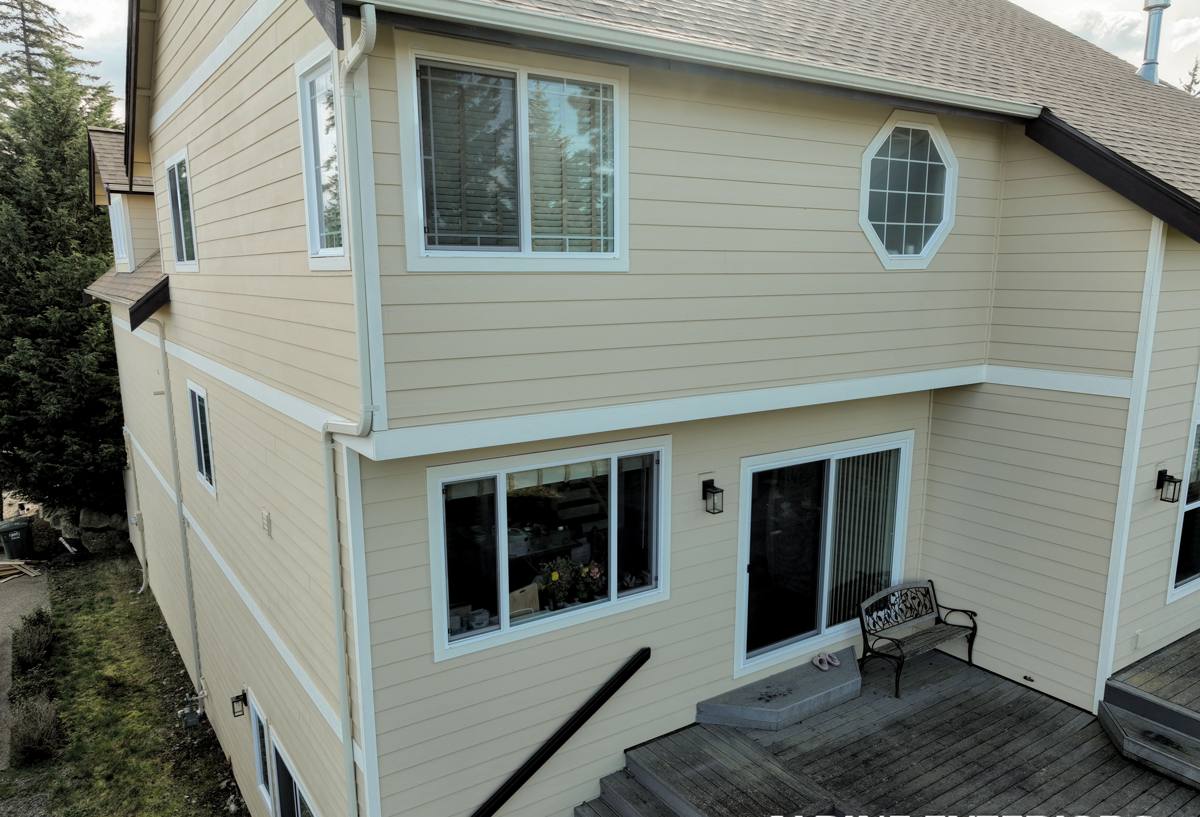
What Skagit Valley Moisture Does to Siding Over Time
Every siding material eventually loses a fight with sustained moisture. The difference is how long that fight takes and what failure looks like when it happens.
Wood and Wood-Composite Siding
Cedar and engineered wood products absorb moisture at cut edges, fastener holes, and any spot where the factory coating has been compromised. In a climate that doesn't dry out for long stretches, that absorbed moisture doesn't fully release before the next rain arrives. Over years, that shows up as swelling, delamination at the edges, and soft spots — especially on north-facing walls and anywhere siding sits close to grade or under a tree canopy.
Vinyl Siding
Vinyl doesn't rot, but it isn't a great fit for this climate either. It expands and contracts with temperature swings, and in areas with salt-laced air, that repeated movement combined with airborne salt exposure accelerates fading and brittleness. Vinyl also isn't a water barrier by itself — it relies heavily on what's behind it, and a lot of older vinyl installations in this area were done without adequate drainage planning behind the panels.
Moss, Algae, and Biological Growth
Mount Vernon's long wet season and shaded lots are ideal conditions for moss and algae to take hold on siding, trim, and anywhere water sits or drains slowly. On porous or textured surfaces, that growth holds moisture against the wall long after the rain has stopped, which compounds every other problem listed above.
Why James Hardie Fiber Cement Is the Right Answer Here
We install James Hardie fiber cement exclusively, and in a climate like Skagit Valley's, that's not a brand preference — it's a practical decision. Fiber cement is dimensionally stable, meaning it doesn't expand and contract the way wood or vinyl does with humidity and temperature swings, so seams and caulk joints hold up longer. It's non-combustible, which matters increasingly in Washington as wildfire risk expands into more of the state. And it's engineered specifically for moisture resistance — Hardie's HZ5 product line, in particular, is formulated for the freeze-thaw and moisture cycling common to the Pacific Northwest.
The factory-applied ColorPlus finish is a real advantage in a climate that doesn't give paint much of a chance to cure properly between storms. Because the finish is baked on in a controlled environment rather than applied on-site, it holds color and resists the fading, chalking, and peeling that field-applied paint struggles with here. That doesn't mean Hardie siding never needs attention — caulking, trim, and touch-up work still matter over the life of the siding — but it removes one of the biggest maintenance headaches homeowners in this area deal with.
| Material | Moisture Behavior in This Climate | Typical Maintenance |
|---|---|---|
| James Hardie Fiber Cement | Dimensionally stable, engineered for PNW moisture cycling | Periodic caulk/trim checks, occasional wash |
| Cedar / Wood Composite | Absorbs moisture at edges and fasteners; swells over time | Regular repainting/staining, edge sealing |
| Vinyl | Doesn't rot but relies on drainage plane behind it; brittle with age | Low, but panels fade and crack over time |
What a Correct Siding Replacement Job Involves
Ripping off old siding and nailing up new panels is the easy part to see. The parts that determine whether the job lasts fifteen years or fifty happen underneath, and they matter more in a wet climate than almost anywhere else in the country.
- Full tear-off and inspection of the wall sheathing for hidden rot, especially around windows, doors, and any spot where old flashing had failed
- Repair or replacement of any damaged sheathing before anything new goes up — covering a compromised wall just traps the problem
- A properly lapped weather-resistive barrier (house wrap) installed shingle-style so water sheds down and out, not into the wall cavity
- Correct window and door flashing integration, tied into the water-resistive barrier rather than just caulked over
- A drainage plane or rainscreen approach where appropriate, giving any incidental moisture behind the siding a path to escape
- Hardie panels installed to manufacturer fastening and clearance specs, including proper gap at grade, decks, and roof lines
- Factory-finish touch-up only where required, using Hardie-approved products to preserve the warranty
Skipping or rushing any one of these steps is how a siding job that looks fine for the first two years starts showing rot, staining, or paint failure by year five — problems that are far more expensive to fix than they would have been to prevent.
Our Process for Mount Vernon Homeowners
1. On-Site Assessment
We walk the property, look at the current siding condition, check for signs of moisture intrusion at trim and penetrations, and talk through what's driving the replacement — whether that's visible damage, an aging system, or just wanting something that will hold up better to the local climate.
2. Scope and Product Plan
We put together a clear scope: what's being removed, what the wall assembly will look like underneath, which Hardie product line and profile fits the home, and a realistic cost range based on square footage, trim complexity, and any repair work the walls need.
3. Scheduling Around the Weather
Siding replacement needs a run of dry-enough days to do the tear-off, sheathing repair, and weather barrier work properly. We plan around the Skagit Valley's wetter stretches rather than pushing work into conditions that compromise the install.
4. Installation and Walkthrough
Crews follow Hardie's fastening, clearance, and flashing specifications throughout — not as an afterthought, but as the baseline for every job. When it's done, we walk the property with the homeowner before calling it finished.
Why It Matters to Hire a Crew That Already Works This Area
Siding installation isn't one-size-fits-all across Washington. A crew that mostly works drier east-side climates or dense urban lots doesn't necessarily think about the same things a Skagit Valley home needs: extra attention to drainage on shaded, moisture-holding lots, awareness of how salt-influenced air near the water accelerates wear on fasteners and trim, and a schedule that respects how much of the year here is genuinely wet. A crew that already works Mount Vernon and the surrounding valley knows which details can't be shortcut in this climate, because they've seen what happens when they are.
Local familiarity also means fewer surprises during the project — knowing typical construction patterns in the area's housing stock, common problem spots on older homes, and how to sequence work around the valley's weather rather than fighting it.
Signs Your Mount Vernon Home May Need Siding Replacement
- Soft spots, bubbling, or visible swelling in wood or composite siding
- Persistent moss or algae growth that returns quickly after cleaning
- Paint that's peeling, chalking, or failing well before it should
- Visible gaps, warping, or cracking in panels, especially on shaded or north-facing walls
- Rising energy bills that may point to a compromised wall assembly behind the siding
- Staining or discoloration near trim, windows, or the foundation line that suggests water intrusion
Any one of these on its own might be minor. Several together, especially on a home more than fifteen or twenty years old, usually means it's worth having someone look at what's happening behind the siding, not just on the surface.
Cost Factors to Expect
Every home is different, but the factors that move the price of a siding replacement project are consistent:
| Factor | Why It Matters |
|---|---|
| Square footage and home shape | More wall area and more corners/angles mean more material and labor |
| Condition of the sheathing underneath | Hidden rot repair adds cost but is not optional once found |
| Trim and detail complexity | Multiple gables, dormers, and trim styles take more time to finish correctly |
| Hardie product line and profile | Lap, shingle, and panel styles vary in material and install time |
| Access and site conditions | Tight lots, slopes, or landscaping can add setup and protection time |
We'll walk through these specifics for your home during an on-site visit rather than quoting a number sight unseen — every Mount Vernon property has its own combination of these factors.
If your siding is showing its age or you're planning ahead for a replacement, we're happy to come take a look and talk through what your home actually needs. The estimate is free, there's no pressure, and you'll leave the conversation with a clear, honest picture of your options.