 Skagit County
 Why Anacortes Decks Take More Abuse Than Most
Anacortes sits right where marine air, near-constant rain, and heavy shade come together, and a deck out here works harder than the same deck would fifty miles inland. Salt-laden air off the water accelerates corrosion on fasteners and hardware that aren't rated for it. Driving rain off the Sound finds every gap in flashing and framing. And the long moss season that runs from fall through spring means anything that stays damp and shaded for weeks at a time will grow something green on it if it isn't built and maintained correctly.
None of that makes composite decking a bad choice for Anacortes — it's usually the right one. But it does mean the job has to be done with this climate in mind, not with a generic install that would work fine in a dry inland town.
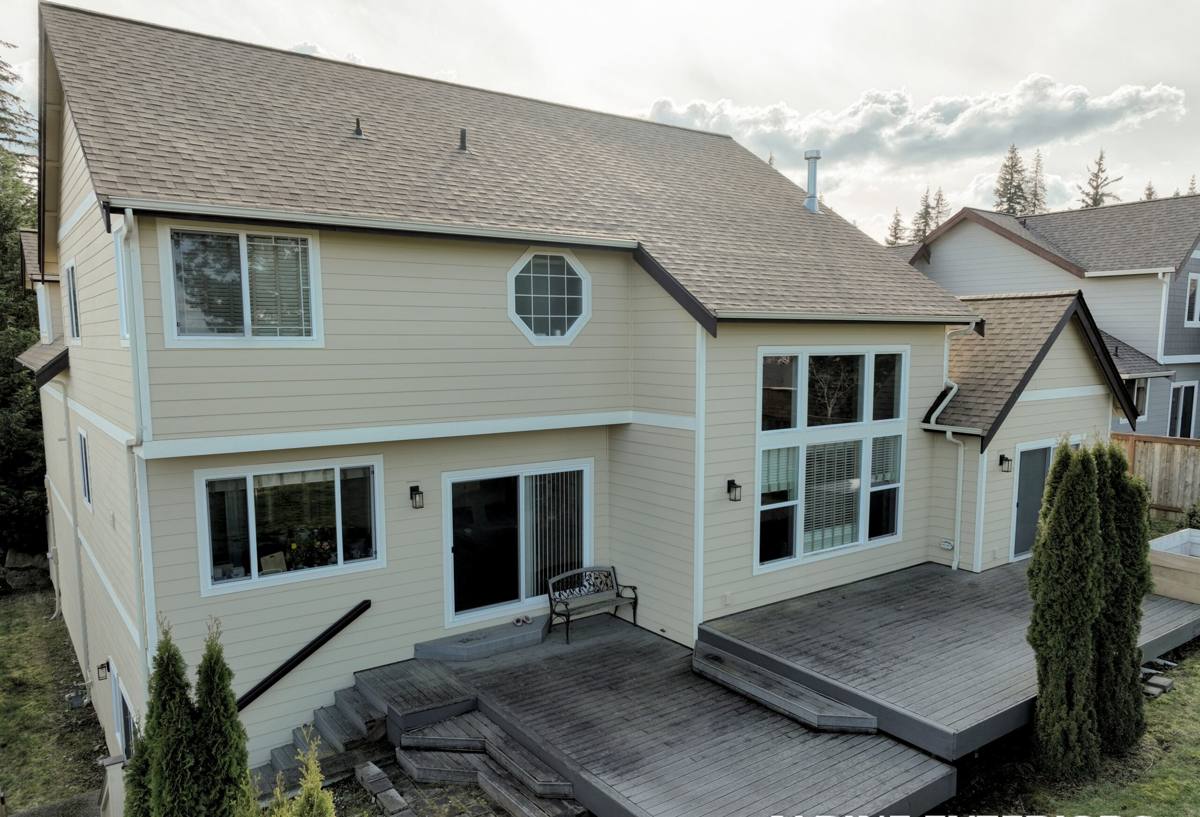
What Composite Decking Actually Solves Here
Composite decking is a manufactured board, usually a blend of wood fiber and plastic (or an all-plastic "capped polymer" board), designed to resist rot, splintering, and insect damage in a way raw lumber can't. For a Skagit County property that sits in near-constant moisture for half the year, that resistance matters more than it would somewhere drier.
Where It Outperforms Wood Locally
- No annual staining or sealing to keep water out of the board itself
- Consistent color and surface, so moss and algae are easier to spot and clean before they get established
- No splintering underfoot, which matters on a deck that stays damp and slick for months at a time
- Dimensionally stable enough to hold fastener lines straight through repeated wet-dry cycles
Where It Still Needs Respect
Composite isn't maintenance-free, and we won't tell a homeowner it is. It still needs airflow underneath, it still needs to be kept clear of standing water and debris, and cheaper boards can fade, stain, or trap moisture at the fastener points if they're installed without attention to drainage. The board only performs as well as the structure and drainage underneath it.
What a Correct Installation Involves
Most composite deck problems we get called out to inspect trace back to the substructure or the hardware, not the decking material itself. In a climate like ours, a few details separate a deck that lasts decades from one that develops soft spots, staining, or corrosion within a few seasons.
Framing and Ledger Attachment
The ledger board — where the deck attaches to the house — is the single most common failure point on any deck in a wet climate. It needs proper flashing that sheds water away from the house band board, not just caulk over a bolt pattern. We flash it the way it should be flashed for this weather, not the minimum a code inspector will accept.
Fasteners and Hardware
Salt air corrodes standard galvanized hardware faster than most homeowners expect, especially on decks with any water view or exposure. We use stainless steel or coated fasteners rated for coastal and marine-air environments, and we match hidden fastener systems to the specific composite board being installed — mixing systems is a common source of squeaks and loosening over time.
Drainage and Airflow Underneath
This is the detail that matters most for moss and mildew control. Composite boards need consistent spacing for water to drain through, and the joist bays underneath need airflow so the underside of the deck can dry out between rain events. A deck built low to the ground or against a slope without a drainage plan will stay damp underneath through most of the wet season, which is exactly the condition moss and algae need to take hold.
Board Layout and Gapping
Composite expands and contracts with temperature more than most people expect. Gapping has to account for that movement and for the moisture the board will absorb at the cut ends, which is why every cut end gets sealed rather than left raw.
Composite vs. Wood vs. PVC: What Actually Fits Anacortes
Homeowners usually ask us to compare three options. Here's how they hold up specifically against salt air, driving rain, and a long moss season, not just in general terms.
| Factor | Pressure-Treated Wood | Composite | PVC / Capped Polymer |
|---|---|---|---|
| Upfront cost | Lowest | Mid-range | Highest |
| Moisture resistance | Requires regular sealing | Good, especially capped boards | Best moisture resistance |
| Moss/algae resistance | Poor if not maintained | Fair to good depending on grade | Good, smooth surface sheds growth |
| Ongoing maintenance | Annual stain/seal | Periodic cleaning only | Periodic cleaning only |
| Typical lifespan here | 10-15 years with upkeep | 20-30 years | 25-30+ years |
| Feel underfoot | Natural, but can splinter | Consistent, wood-like texture | Smoother, more plastic feel |
Wood costs less to install but costs the most over time in this climate, because it demands upkeep that most homeowners eventually let slide. Composite is the middle ground we recommend most often for Anacortes: it resists the moisture and moss issues that wood struggles with, without the higher cost of full PVC. PVC is worth considering for decks with heavy water exposure or minimal maintenance tolerance, but it comes at a real price premium.
How We Handle a Composite Deck Project
Every property in Anacortes sits a little differently relative to sun, shade, wind, and water, so the process starts with looking at the actual site rather than a standard template.
- Site assessment — we look at grade, shade coverage, prevailing wind and rain exposure, and how close the deck sits to salt-influenced air, since all of that affects hardware and drainage decisions.
- Substructure evaluation — on replacement projects, we check the existing framing and ledger attachment before assuming it can be reused; a new composite deck on a compromised substructure just moves the problem underneath the new boards.
- Material selection — we walk through board grade and color options with an honest read on how each performs in shade versus sun exposure on your specific lot.
- Framing and flashing — ledger flashing, joist protection, and drainage slope get built in before a single composite board goes down.
- Installation — hidden fastener systems matched to the board, correct gapping, and sealed cut ends throughout.
- Walkthrough — we go over basic care specific to our climate so the deck is set up to be low-maintenance from day one, not just at installation.
Living With a Composite Deck Through Moss Season
Composite resists moss and algae far better than untreated wood, but "resists" isn't "immune," especially in shaded yards common around Anacortes tree cover. A little seasonal attention keeps a composite deck looking and performing the way it should for its full lifespan.
- Sweep leaves and debris off the deck regularly through fall — trapped organic matter is what feeds moss and algae growth
- Rinse the deck periodically through the wet months, especially in shaded corners that don't get direct sun or wind
- Keep gutters and downspouts clear so runoff isn't concentrating extra water onto one section of decking
- Check that furniture, planters, and rugs aren't creating permanently damp, shaded patches on the boards
- Clean with a soft-bristle brush and a cleaner made for composite decking rather than a pressure washer on high setting, which can damage the board's surface
What to Check Before Hiring a Deck Contractor in Anacortes
Composite decking is a forgiving enough product that a poor installation can look fine for the first year or two before drainage and hardware issues show up. It's worth asking a few direct questions before signing a contract.
- Do they flash the ledger board properly, or just caulk and bolt it?
- What fastener material do they use, and is it rated for coastal/marine air exposure?
- Do they account for drainage and airflow under the deck, or just match the joist spacing to the board manufacturer's minimum?
- Can they explain why they'd recommend one composite brand or grade over another for your specific yard?
- Are they licensed and insured to do structural framing work, not just surface-level decking?
Why Local Experience Matters on This Job
A deck built for a dry, sunny climate and a deck built for Anacortes are not the same project, even if the material list looks identical on paper. A crew that works Skagit County regularly already knows which yards sit in year-round shade, which lots catch the worst of the wind and salt off the water, and which drainage mistakes show up as moss and soft framing two winters later instead of two months later. That's the kind of judgment that doesn't come from a spec sheet — it comes from having built and repaired decks in this exact climate.
If you're weighing a new composite deck or replacing an aging wood one, we're happy to walk the site with you, look at your specific exposure and shade situation, and give you a straight read on what it'll take to do it right. Reach out for a free, no-pressure estimate using the form below.