 Skagit County
 Building New in Anacortes Means Building for the Water
Anacortes sits where the Salish Sea, Fidalgo Bay, and the open channels toward the San Juans all meet — which is exactly why homes here take a different kind of weathering than houses twenty miles inland. Salt-laden air moves off the water and settles on everything, including window hardware, flashing, and fasteners. Driving rain comes in sideways during fall and winter storms, testing every seam a window has. And Skagit County's long, damp shoulder seasons keep north- and west-facing walls shaded and moist for months at a time, which is exactly the environment moss and mildew like best.
None of that is a reason to avoid building here — it's just context that should shape how new-construction windows are specified and installed. A window that performs fine in a dry inland subdivision can underperform on a lot with direct marine exposure if the hardware, flashing details, and sealants weren't chosen with that exposure in mind.
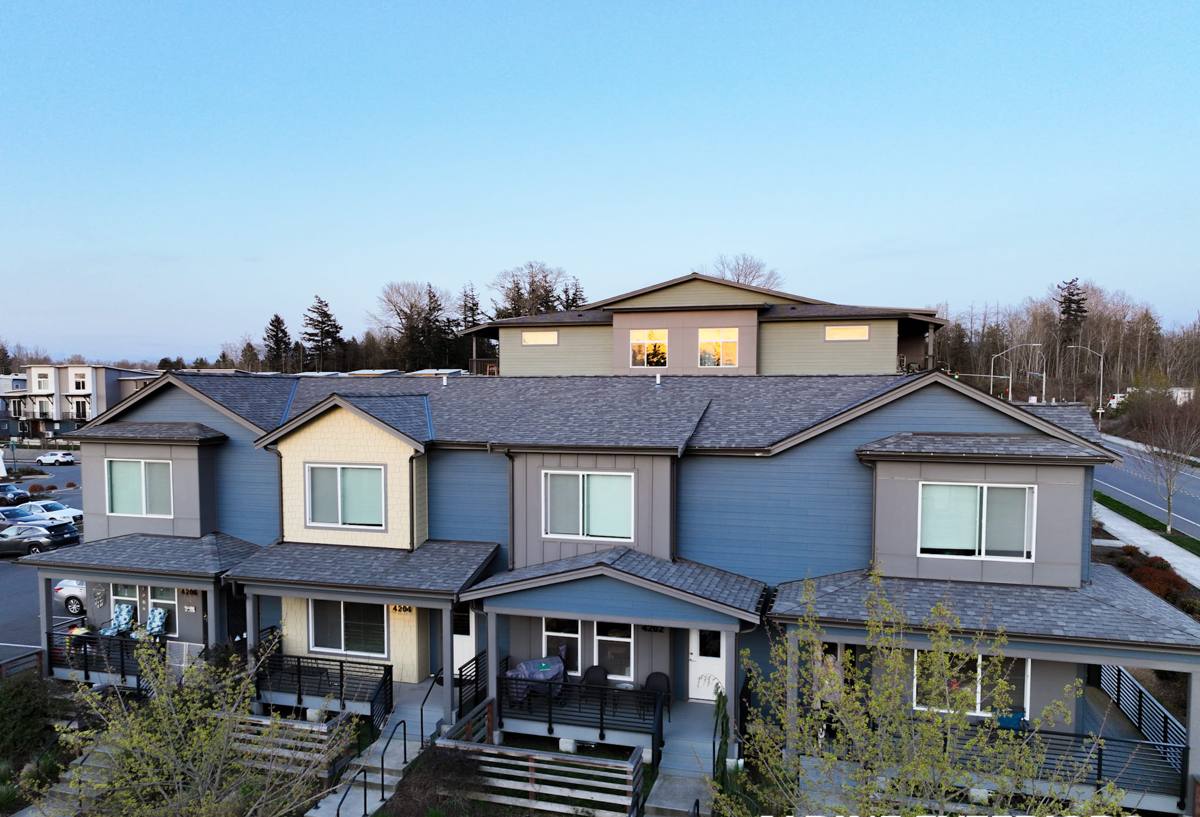
What "New-Construction Window" Actually Means
The term gets used loosely, but it has a specific meaning that matters for how the job gets done. A new-construction window has a nailing flange (also called a nail fin) built into the frame. That flange gets fastened directly to the sheathing before the weather-resistive barrier (WRB) and siding go on, which lets the flashing be integrated into the wall's water management system from the start — rather than retrofitted around an existing wall, as with a replacement or "pocket" window.
Nail-Fin vs. Block-Frame
Most residential new construction in this area uses flanged vinyl or fiberglass units. Some higher-end designs use block-frame (flangeless) windows set into a rough opening with separate flashing components — common with certain wood-clad or aluminum-clad lines. Block-frame installs give more flexibility on reveal and trim detail but demand more precise site-built flashing, since there's no integral fin doing part of the job.
Why the Distinction Matters Here
Because Anacortes gets sustained wind-driven rain off the water, the flashing plane behind the window — not just the window itself — is what keeps a wall dry over the next thirty years. A correctly installed new-construction window ties into the WRB with proper shingle-lap sequencing so water is always directed outward and down, never trapped behind the cladding.
The Install Sequence That Actually Keeps Water Out
New-construction window installation happens at a specific point in the build, and the order of operations is not optional if you want the wall to perform.
- Rough opening is checked for square, level, and correct dimension before anything touches it.
- A sloped sill pan is set at the base of the opening so any water that gets past the window has a path back outside instead of into the framing.
- Self-adhered flashing tape goes around the jambs and head, lapped correctly with the WRB already on the wall — bottom-up, so every layer sheds water onto the layer below it.
- The window is set, shimmed plumb and square, and fastened through the nail fin per the manufacturer's schedule — not just "close enough."
- Head flashing goes on last, lapped over the WRB above it, often with a drip cap on exposed elevations.
- Sealant is applied at specified points only — sealing the wrong gap can trap moisture instead of releasing it.
- Interior sealing and insulation around the frame happen after the exterior weatherproofing is confirmed, not before.
Skipping or reordering any of these steps is the single most common reason a "new" window leaks within a few years. It's rarely the window unit itself — it's almost always the flashing sequence around it.
Choosing Materials for a Marine Climate
Every window material handles salt air, humidity, and UV differently. For new construction in Anacortes, we weigh long-term performance in this specific climate more heavily than a generic spec sheet would.
| Material | How it handles salt air & damp | Maintenance | General cost tier |
|---|---|---|---|
| Vinyl | Won't corrode or rust; UV-stable formulations hold up well long-term | Low — occasional rinse | Lower to mid |
| Fiberglass | Very stable dimensionally, resists moisture and salt exposure well | Low | Mid to higher |
| Aluminum-clad wood | Good exterior protection, but hardware and clad seams need attention near salt air | Moderate — periodic inspection of seams and finish | Higher |
| Bare wood | Beautiful, but most exposed to moisture and rot in this climate without diligent upkeep | High | Higher |
Hardware matters as much as frame material. Standard steel or lower-grade hardware corrodes faster this close to the water — we favor stainless or marine-rated hardware packages on exposed elevations, which is a small upgrade at the time of build but a real difference ten years out.
Glass Packages
Low-E, argon-filled dual-pane glass is standard for new construction here and performs well against both heat loss and the region's overcast, low-light winters. On walls with heavy direct water exposure — typically west- and south-facing elevations closest to open water — the frame and flashing detail matter more to long-term dryness than which glass package is chosen, though a quality glass package still pays off in comfort and condensation resistance during Skagit County's cold, wet months.
Coordinating Windows With Siding and Trim
New-construction windows don't get installed in isolation — they need to be sequenced with the WRB, siding, and trim carpentry so every layer overlaps correctly. On a lot with direct marine exposure, we pay particular attention to head flashing and kick-out flashing where rooflines meet walls near window openings, since that's a common spot for water to find its way behind the cladding during the driving rain this area gets several months a year.
Trim details also affect long-term performance. Exterior trim boards that sit tight against a window without a drainage gap can trap moisture against the frame. Building in a small reveal and back-priming or capping cut ends of trim before installation reduces that risk substantially.
Our Process on a New-Construction Job
We work new-construction window installs on a defined schedule that lines up with framing and dry-in:
- Walk the rough openings with the builder or homeowner before windows arrive to confirm sizes and catch framing issues early
- Verify the WRB is installed correctly before any flashing work begins
- Install sill pans, flashing tape, and window units following manufacturer instructions and the sequence above
- Photo-document flashing and flange fastening at each opening before siding covers it
- Confirm operation, seal, and squareness of every unit before final sign-off
- Walk the finished openings with you so you know what was done and why
That documentation step matters more than it sounds — flashing is invisible once siding goes on, so having a record of how each opening was built gives you something to point to if a question ever comes up years later.
Why a Crew That Already Works Anacortes and Skagit County Matters
Anacortes has its own mix of conditions — waterfront and near-waterfront exposure, shaded lots under mature evergreens that stay damp longer, and building department expectations that come with permitting in the city versus unincorporated Skagit County. A crew that already works this area knows which elevations typically need extra flashing attention, which fastener and hardware upgrades are worth it given the salt exposure, and how local inspectors expect flashing and WRB integration to be documented.
That local experience shows up in details a homeowner may never think to ask about: sill pan slope on a west-facing wall that catches direct storm wind, hardware choices that won't show surface corrosion in five years, or trim details that keep moss from getting a foothold on shaded north walls. None of it is exotic — it's just knowing which details actually matter for this specific stretch of coastline versus a generic inland install.
Living With the Long Moss Season
Even with a correct install, Skagit County's shaded, damp stretches from fall through spring will encourage moss and algae growth on north- and west-facing surfaces over time. Windows themselves aren't usually where moss takes hold, but nearby trim, siding, and sills can collect it if drainage paths are blocked or debris accumulates in sills and tracks. Keeping weep holes and sill tracks clear, and rinsing pollen and organic buildup off periodically, goes a long way toward keeping both the windows and the wall around them performing as designed.
What to Confirm Before Work Starts
- Windows are true nail-fin new-construction units matched to your framing depth, not repurposed replacement units
- A written flashing sequence is part of the install plan, not left to individual judgment on site
- Sill pans are specified at every opening, especially on exposed elevations
- Hardware and fastener grade is appropriate for a marine environment
- The installer will document flashing before it's covered by siding
- Glass package (Low-E, gas fill) is spelled out, not just "standard glass"
- Warranty terms cover both the window unit and the installation labor, and you understand who to call for which
If you're building or framing a home in Anacortes and want windows installed by a crew that already knows this stretch of Skagit County's coastline, we're happy to walk your framed openings and put together a free, no-pressure estimate — no obligation, just a straight look at what your project needs.