 Skagit County
 Why Decks in Avon Wear Out Faster Than the Manuals Say
Most decking warranties and installation guides are written for a generic climate that doesn't exist in the Skagit Valley. Avon sits low in the county, close to the tidal reach of the Skagit River and the marine air that moves in off Skagit Bay. That combination means three things working against your deck at once: salt-tinged moisture that accelerates corrosion in fasteners and hardware, long stretches of driving rain that finds every gap in flashing and board spacing, and a moss season that can run from October through April. A deck that would last twenty years in a dry inland climate can be structurally compromised in half that time here if it wasn't built with this specific exposure in mind.
None of that means Avon homeowners are stuck replacing decks constantly. It means the replacement has to be designed for the conditions, not just rebuilt the way the last one was.
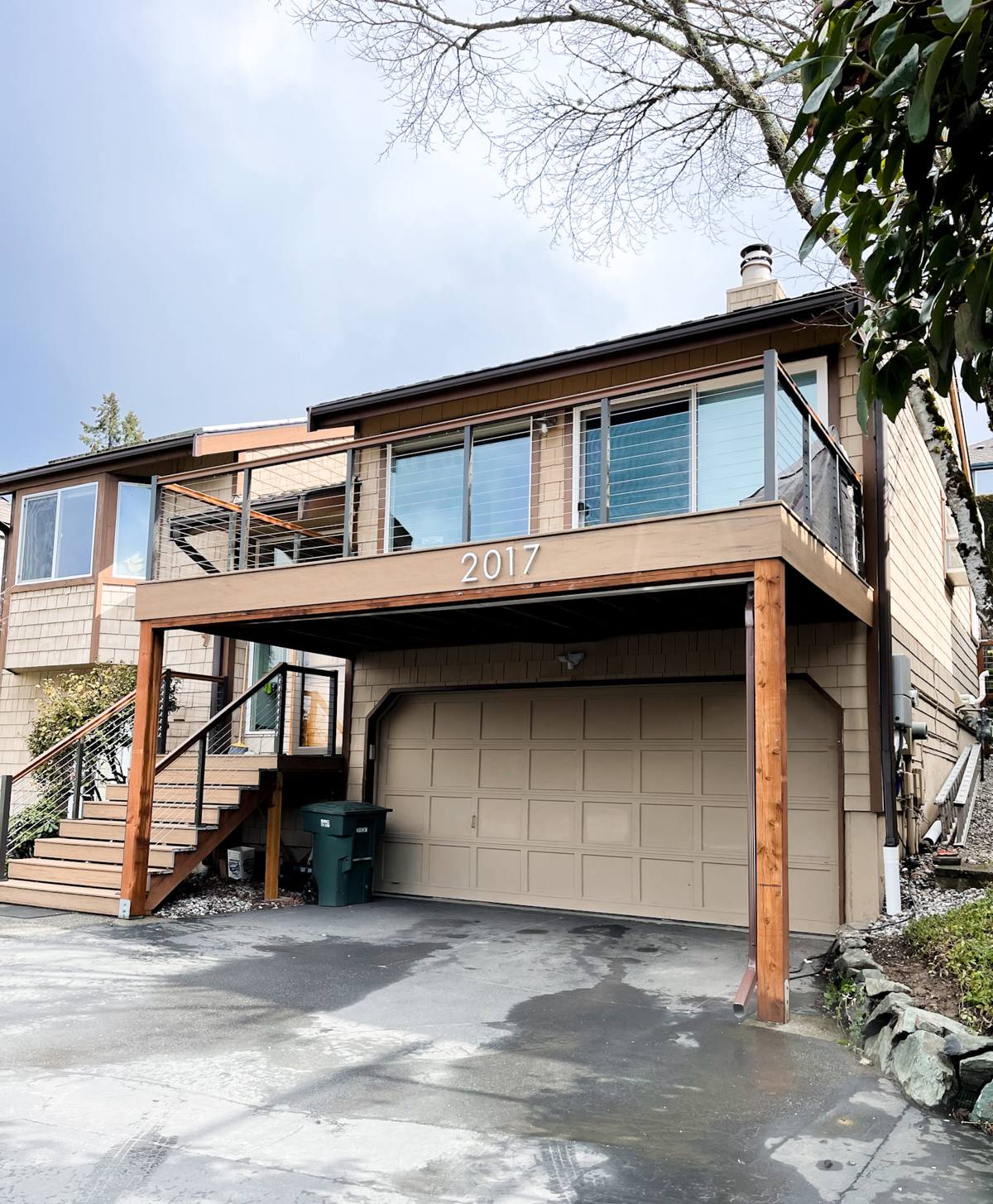
Signs a Repair Won't Cut It Anymore
We get called out for "a few loose boards" more often than not, and about half the time the deck actually needs full replacement, not patching. Here's what tells us the framing itself is compromised rather than just the surface:
- Soft or spongy spots when you walk the deck, especially near the house or around post bases
- Visible moss or algae growth on the underside of joists, not just the walking surface
- Rust streaking from fasteners, or fastener heads that have pulled through the wood
- Gaps opening up at the ledger board where the deck meets the house
- Railing posts that flex or wiggle when pushed
- A musty smell coming from underneath the deck, especially after a stretch of rain
- Boards that have cupped, split, or checked deeply along the grain
If you're only seeing surface graying or minor splintering on the boards themselves and the framing underneath is sound, that's a repair or resurfacing job, not a full replacement. We'll tell you honestly which category your deck falls into before we recommend the bigger scope.
What a Correct Deck Replacement Actually Involves
Framing and Structure
The framing is where most shortcuts get taken, and it's the part homeowners see the least once the new decking is down. For Skagit County's rain load, that means pressure-treated joists and beams rated for ground contact where they're close to grade, joist hangers and structural screws in stainless or hot-dip galvanized rather than standard coated fasteners, and post bases set to keep wood off standing water. We also size beams and joist spacing to current code span tables rather than assuming the old framing was built correctly, because plenty of older Skagit County decks weren't.
Ledger Attachment and Flashing
This is the single most common failure point we find on decks attached to Avon homes. The ledger board bolts to the house framing and has to be flashed correctly so rain doesn't track behind the siding and into the rim joist. With the amount of driving rain this area gets, a poorly flashed ledger doesn't just risk the deck — it risks rot getting into the house itself. We install proper ledger flashing with a drip edge and self-adhered membrane, not just caulk over the joint, which is a repair that fails within a season or two.
Decking Surface and Drainage
Board spacing matters more here than in drier climates. Too tight, and the gaps trap moisture and debris that feed moss growth; too wide, and you lose the finished look without much drainage benefit. We also grade attention to how water sheds off the deck surface and away from the house foundation, since a flat or negatively-pitched deck just pools water against your siding.
Railings and Guards
Railings take direct weather exposure and constant hand contact, so hardware corrosion shows up here first. We rebuild railing posts with proper blocking and code-required height and baluster spacing, and we match fastener material to the decking choice so you're not mixing metals that accelerate corrosion against each other.
Choosing a Decking Material for This Climate
There's no single "best" decking material — there's a best fit for how much maintenance you want to do and what you're willing to spend up front versus over time. Here's how the common options actually perform in Avon's rain-and-moss conditions:
| Material | Moss/Moisture Resistance | Maintenance | Typical Lifespan Here |
|---|---|---|---|
| Pressure-treated wood | Fair — needs sealing to resist moisture uptake | Annual cleaning and re-sealing recommended | 10–15 years |
| Cedar | Good natural rot resistance, but surface grays and can host moss without upkeep | Periodic cleaning, occasional oil or stain | 15–20 years |
| Composite decking | Very good — doesn't absorb water like wood, but surface texture can still hold algae film if not cleaned | Low — occasional wash | 25–30 years |
| PVC/cellular decking | Excellent — fully moisture-resistant material, least hospitable surface for moss | Lowest — occasional wash | 25–30+ years |
We don't push one product line over another as a rule — we walk through this table with you against your budget and how much deck maintenance you actually want to do each fall before the moss season sets in. If a manufacturer's product has a moisture-sensitive installation detail (some composite lines require specific hidden fastener systems, gap spacing, or ventilation clearances to hold their warranty), we'll tell you that up front rather than after the fact.
What Drives the Cost of a Deck Replacement
| Factor | Why It Moves the Price |
|---|---|
| Deck size and height off grade | More square footage and taller framing means more material and more structural bracing |
| Decking material chosen | PVC and premium composite run higher upfront than wood, but cost less in maintenance over time |
| Ledger and flashing condition | If the rim joist behind the ledger has rot damage, that repair adds scope before the deck itself starts |
| Railing style and code requirements | Cable rail and glass panel systems cost more in materials and labor than standard baluster rail |
| Stairs and landings | Each stair run adds framing, decking, and railing that a single-level deck doesn't need |
| Site access | Decks over slopes, water features, or with limited equipment access take longer to build safely |
We give a firm, itemized quote after seeing the deck in person — not a phone estimate — because the framing condition underneath is usually the biggest unknown until we pull the old boards.
Our Process for a Deck Replacement
- On-site assessment: We inspect the framing, ledger, and post footings, not just the visible decking, and tell you honestly whether it's a repair or a full replacement.
- Written scope and quote: You get a clear breakdown of materials, framing work, and labor before anything is scheduled — no surprise change orders for things we should have caught upfront.
- Demolition and disposal: Old decking and any rotted framing are removed and hauled off; we check the ledger and rim joist area as soon as it's exposed.
- Framing and flashing: New or repaired framing goes in to current span and fastener standards, with proper ledger flashing sealed before any decking goes down.
- Decking, railing, and stairs installation: Installed per the manufacturer's spacing and fastening specs, which is what actually keeps material warranties valid.
- Final walkthrough: We walk the finished deck with you, check for level, drainage, and railing rigidity, and answer maintenance questions specific to the material you chose.
Permits and Local Considerations
Most deck replacements that involve new framing, changes to footprint, or railing height changes require a permit through the local building department, and decks near the Skagit River floodplain or on properties with drainage easements can carry additional review. We handle the permit application and inspection scheduling as part of the job so you're not tracking that down yourself. If your property has any unusual site conditions — steep grade, proximity to water, existing drainage issues — we flag that during the initial assessment rather than discovering it mid-project.
Why a Crew That Already Works Avon Matters
A deck built to a generic spec sheet and a deck built for Skagit County's rain and moss cycle can look identical on install day and age completely differently by year five. Crews that work this area regularly know which fastener grades actually hold up against the salt-influenced moisture here, how far off grade to keep framing given how saturated the ground gets in winter, and which decking products handle a long wet season without turning into a moss farm by the second spring. That's not something you can substitute with a lower price from a crew that mostly builds decks somewhere drier.
We also know this area's inspection process and typical site conditions, which keeps the permit and inspection steps moving instead of stalling the project.
If your deck is showing its age or you're planning a replacement before next winter's rains set in, we're happy to come take a look. The estimate is free, there's no pressure to sign anything on the spot, and you'll get a straight answer about whether you need a full replacement or something less. Use the form below to get started.