 Skagit County
 Avon sits low in the Skagit River delta, in the flat farm-and-river country between Mount Vernon and Burlington, and that geography shapes what a roof has to deal with here. Open exposure across the delta means wind-driven rain hits roof planes harder and more often than it does in more sheltered parts of the county, moist river-bottom air keeps humidity high for long stretches, and mature tree cover around older properties means shade and moss are a year-round consideration rather than a seasonal one. Metal roofing can handle all of that better than most other roofing materials — but only when it's specified and installed with this specific climate in mind, not treated as an off-the-shelf product dropped onto any house anywhere.
What Avon's Climate Actually Puts a Roof Through
Three things define roofing conditions in this part of Skagit County, and they compound each other. Salt-tinged marine air moves inland off Puget Sound and up the river valley, which means even homes well away from open water get some exposure to airborne salts over time. Driving rain off Pacific storm systems doesn't fall straight down here as often as homeowners from drier climates expect — wind pushes it sideways into fascia, ridge lines, and any flashing detail that isn't built to shed water moving at an angle, not just gravity-fed water. And moss season, on shaded and north-facing roof planes, can run most of the year rather than a few weeks in fall.
None of those three conditions is unique to Avon — they show up across Skagit County. What's specific to this area is the combination and the intensity: open delta exposure to wind and rain, paired with the humidity that comes from being close to the river, paired with tree cover on a lot of older lots. A roofing system that isn't detailed for wind-driven moisture and long-term dampness will get tested here faster than it would somewhere drier or more sheltered.
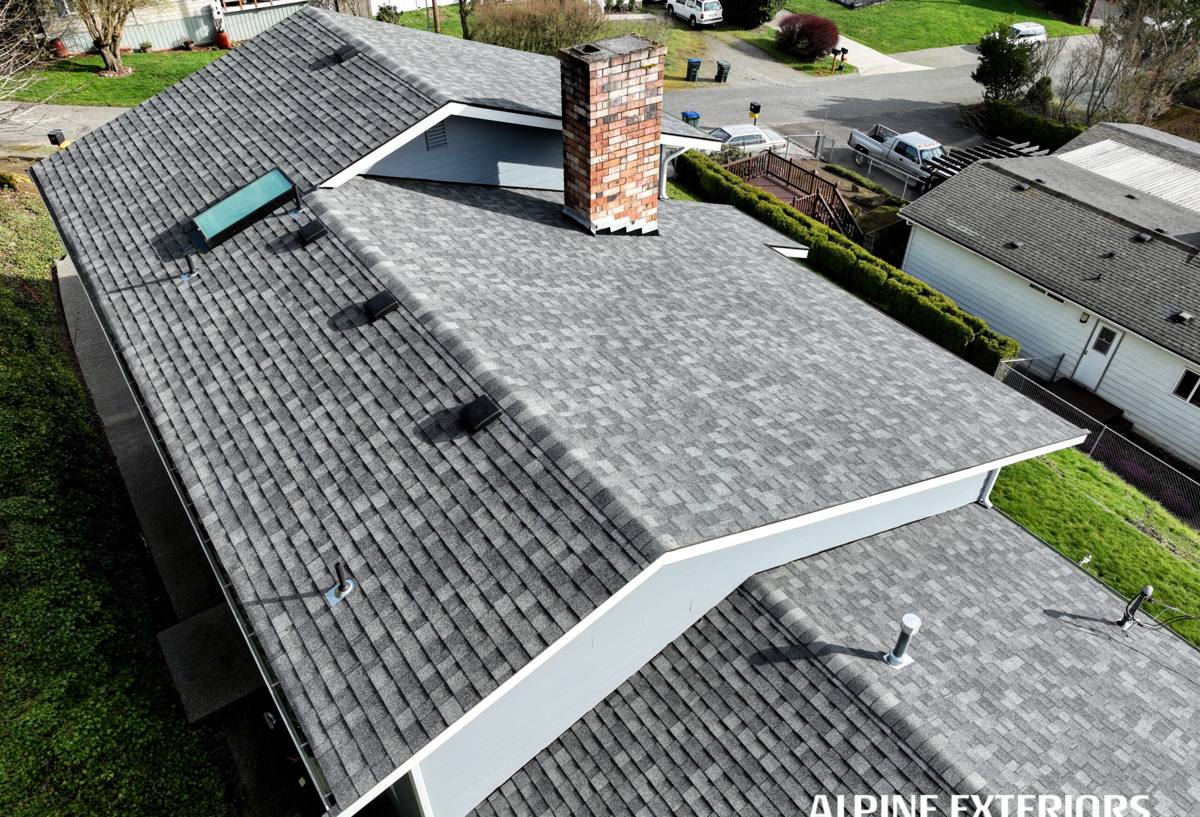
What a Correctly Installed Metal Roof Actually Involves
Metal roofing has a reputation for being simple and low-maintenance, and done right, it is. But "done right" is doing a lot of work in that sentence. A metal roof is a system of parts — panels, fasteners, underlayment, flashing, and ventilation — and every one of those parts has to be correct for the roof to perform the way metal is supposed to perform in a wet marine climate.
Underlayment and Water Barrier
A quality synthetic or self-adhered underlayment goes down first, and in this climate we don't treat that as a formality. It's the roof's backup plan for the moments when wind-driven rain gets past the panel seams or a fastener works loose years down the road. Skipping to a lighter-weight or lower-grade underlayment to save cost is one of the more common shortcuts we see on older installs, and it's usually the first thing that shows its weakness during a hard winter storm off the delta.
Fastening and Panel Attachment
How a panel is attached matters as much as the panel itself. Exposed-fastener systems rely on gasketed screws driven through the panel face, and every one of those penetrations is a spot that needs the right fastener, the right torque, and periodic attention over the life of the roof. Concealed-fastener systems, like standing seam, attach through clips hidden under the seam, which takes the fastener penetrations out of the weather-exposed field of the panel entirely — a real advantage in a climate that gives fasteners more sustained moisture exposure than a drier region would.
Flashing and Penetrations
Valleys, chimneys, vent stacks, skylights, and wall-to-roof transitions are where most metal roof leaks actually start — not in the open field of the panels. Correct flashing means custom-formed metal at every transition, proper lap direction so water is always shed downhill over the next piece, and sealant used as a backup, not as the primary defense. In wind-driven rain conditions, a flashing detail that would hold up fine in a calmer climate can fail here if the laps and overlaps weren't sized generously enough.
Ventilation and Condensation Control
A metal roof deck needs to breathe. Without proper intake and exhaust ventilation, humid air trapped under the roof deck can condense on the underside of cold metal panels, especially during the cold, damp stretches common to this part of the state. That trapped moisture can lead to deck rot and insulation damage that has nothing to do with the roof leaking from outside — it's a ventilation failure that shows up as an interior moisture problem months or years later.
Panel Types and How They Compare
Not every metal roofing product is built the same way, and the right choice depends on the house, the roof pitch, and the budget. Here's how the common options compare for a home in this area:
| Panel Type | Fastening | Best Fit | Trade-Offs in This Climate |
|---|---|---|---|
| Standing seam | Concealed clips, no exposed screws in the field | Homes wanting the longest service life with minimal maintenance | Higher material and labor cost; best resistance to wind-driven rain and long-term fastener corrosion |
| Exposed-fastener panel (5V, corrugated) | Gasketed screws through the panel face | Budget-conscious projects, outbuildings, some main homes | Lower upfront cost; fasteners need periodic inspection and eventual re-torquing or replacement |
| Metal shingles/shakes | Interlocking panels, mostly concealed fasteners | Homeowners wanting a traditional roof look with metal's durability | More seams and interlocks than standing seam, so installation precision matters more |
For most primary homes in this area, we lean toward standing seam or a quality metal shingle product specifically because they minimize the number of exposed fastener penetrations exposed to sustained wet weather. Exposed-fastener panels aren't a bad option — they're a legitimate, cost-effective choice for a lot of projects — but they come with a maintenance commitment that a homeowner should go in understanding.
Moss and Organic Growth on a Metal Roof
Metal doesn't feed moss the way a wood shake or an aging composition shingle can, and that's a genuine advantage in a moss-heavy part of the county like the shaded lots around Avon. But metal isn't immune. Moss and organic debris can still take hold in valleys, at panel overlaps, and anywhere leaves and needles collect and hold moisture against the surface, especially on north-facing planes that don't get much direct sun. Left long enough, that trapped organic matter can hold moisture against fasteners and seams and undercut some of the durability advantage metal is known for. Keeping valleys and gutters clear matters on a metal roof just as it does on any other roofing material — it's just a smaller, more manageable job than moss removal on shingles.
Salt Air and Corrosion — What Actually Matters
Coastal and near-coastal salt exposure is a real factor for metal roofing durability, and it comes down to two things: the coating on the panel and the material of every fastener and flashing piece that touches it. A quality painted steel or aluminum panel with a proper factory finish is engineered to resist the kind of airborne salt exposure common to Puget Sound-adjacent areas, but that resistance depends on using compatible fasteners and flashing metals throughout the system. Mixing incompatible metals — steel fasteners on an aluminum panel, for example — can set up galvanic corrosion at every contact point, which shows up as pitting and staining well before the panel itself would have failed on its own. Cut edges are the other vulnerable spot: any place a panel was field-cut needs the exposed edge treated or coated, because raw cut metal is where corrosion typically starts first in a salt-influenced environment.
What Drives the Cost of a Metal Roof
Metal roofing costs more upfront than asphalt shingles, and the spread between a basic exposed-fastener system and a premium standing seam installation is wide. A few factors explain most of that range:
| Factor | Effect on Cost |
|---|---|
| Panel and fastening system | Exposed-fastener panels run lower; standing seam runs higher due to labor and clip hardware |
| Roof complexity | More valleys, penetrations, and roof planes mean more custom flashing labor |
| Panel material and gauge | Heavier-gauge steel or aluminum costs more but resists denting and holds finish longer |
| Underlayment grade | A full self-adhered or high-grade synthetic underlayment adds cost but adds real backup protection |
| Tear-off vs. overlay | Removing old roofing and inspecting the deck adds labor but avoids covering hidden problems |
We'd rather walk a homeowner through these trade-offs honestly during an estimate than quote a bare number with no context. On a house in this climate, cutting the underlayment or flashing budget to hit a lower price is usually the wrong place to save.
Our Process for an Avon Metal Roofing Project
We approach every metal roof install the same disciplined way, regardless of panel type:
- Roof and deck inspection, including a look for existing moisture damage before any panels go on
- Removal of old roofing material and deck repair where needed, rather than roofing over problems
- Installation of a full water-resistant underlayment sized for wind-driven rain exposure
- Panel installation with attention to correct fastener type, spacing, and torque or clip engagement
- Custom flashing at every valley, penetration, and wall transition, formed on site to fit the specific roof
- Ridge and intake ventilation installed or verified to prevent under-deck condensation
- Final walk-through with the homeowner covering what maintenance the specific system needs going forward
We work Skagit County year-round, which means we're used to scheduling and staging metal roof installs around the wetter months rather than treating every install like a dry-season project. That matters for sequencing tear-off and dry-in so a house isn't left exposed longer than necessary.
Maintenance a Metal Roof Actually Needs
Metal roofing is genuinely lower-maintenance than most alternatives, but "lower-maintenance" isn't "no-maintenance." A short annual routine keeps most metal roofs performing for decades:
- Clear valleys, gutters, and any low points of leaves, needles, and debris at least once a year
- Check exposed fasteners for backing out or gasket wear if the roof is an exposed-fastener system
- Look for moss or organic buildup in shaded valleys and north-facing planes
- Inspect flashing at chimneys, vents, and skylights for sealant that's cracked or pulled away
- Watch for any staining or pitting near fastener heads or cut edges, which can signal early corrosion
- After major windstorms, do a visual check for lifted panel edges or displaced flashing
None of this is heavy lifting compared to the upkeep a shingle or wood roof needs, but skipping it entirely is how small, cheap-to-fix issues turn into deck damage over a few wet seasons.
Why a Crew That Already Works Avon Matters
Roofing crews that work all over Western Washington know roofing in general. A crew that regularly works Skagit County's delta communities knows this specific set of conditions — how far wind-driven rain travels up from the open flats, which roof orientations in this area tend to hold moss longest, and how salt-influenced air this far inland actually behaves compared to homes right on the water. That local pattern recognition shows up in small decisions during an install: how generous the flashing laps are cut, which underlayment grade gets specified by default, how ventilation gets sized for a house with mature shade trees. We also know the county's permitting process and inspection expectations, which keeps a project moving instead of stalling on paperwork a crew unfamiliar with the area might not anticipate.
If you're weighing metal roofing for a home in Avon or elsewhere in Skagit County, we're glad to take a look at your roof, talk through which panel system fits your house and budget, and give you a straight answer about what it'll take to do it right. Reach out for a free, no-pressure estimate.