 Skagit County
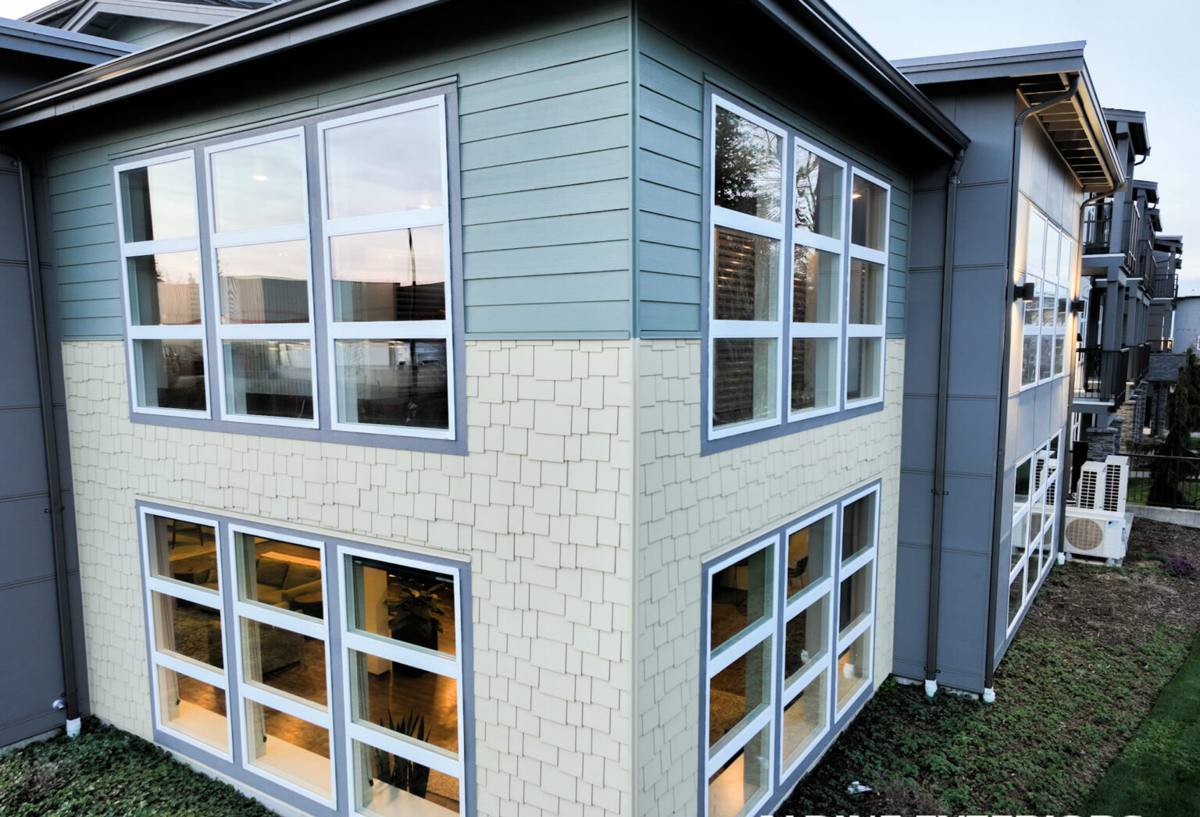
 Siding in Avon Works Harder Than People Realize
Avon sits low in the Skagit River delta, in the flat farm-and-floodplain country between Mount Vernon and Burlington. It's a different exposure profile than a hillside neighborhood or a dry inland town. Homes here deal with moist marine air moving up the valley, wind-driven rain off the river corridor and Puget Sound, and long stretches of overcast, humid weather that never quite lets siding dry out between storms. Add a moss season that can run most of the year in the shade, and you have conditions that are genuinely tough on exterior materials — tougher than most manufacturers' generic warranty language assumes.
None of that is unique to any one house. It's the baseline for the whole low-lying Skagit Valley. What it means practically is that siding replacement in Avon isn't just a cosmetic upgrade — it's a chance to correct the moisture and drainage details that let the last siding job fail early, and to put a product on the wall that's actually engineered for this kind of exposure.
What Salt Air, Driving Rain, and Moss Actually Do to Siding
Moisture Intrusion
Wind-driven rain doesn't just wet the surface of a wall — it pushes water sideways into laps, seams, and fastener penetrations. On older siding, or siding installed without proper flashing and a continuous water-resistive barrier, that moisture works its way behind the cladding. Once it's there, in a climate that stays damp for months at a time, it rarely gets a chance to dry out before the next storm arrives.
Salt Air and Fastener Corrosion
Proximity to Puget Sound and the tidal reaches of the Skagit River means a steady low-level dose of salt in the air, especially with onshore weather. Salt air accelerates corrosion on fasteners, flashing, and trim hardware. Corroded nails and screws lose holding power long before the siding itself looks obviously bad, which is part of why siding can look fine from the street and still be failing structurally.
Moss, Algae, and Organic Growth
Shade, moisture, and mild temperatures are exactly what moss and algae need. On wood-based or fiber-based products without a factory-cured, dense finish, organic growth can take hold in seams and on north-facing walls, holding moisture against the substrate and accelerating rot or delamination underneath.
How the Damage Typically Shows Up
| What You See | What's Usually Happening |
|---|---|
| Soft or spongy spots when pressed | Moisture has reached the sheathing or framing behind the siding |
| Dark streaking or green film, especially on shaded walls | Moss and algae holding moisture against the surface |
| Nail heads bleeding rust, or popped fasteners | Corrosion from salt-laden air weakening the fastener |
| Cupping, warping, or gaps opening between boards | Repeated wet/dry cycling stressing the material |
| Peeling or chalking paint that returns quickly after repainting | Moisture moving through the siding from behind, not just weathering from outside |
What a Correct Siding Replacement Actually Involves
Siding replacement done right is a system job, not a materials swap. Skipping any layer of that system is exactly what leads to the same problems resurfacing in a few years, in a climate like this one.
- Full removal of the old siding down to the sheathing, so hidden rot, soft framing, or existing moisture damage can actually be found and addressed — not covered over
- Repair or replacement of any damaged sheathing and framing before anything new goes on the wall
- A continuous, properly lapped water-resistive barrier installed shingle-style so water is always directed outward and down
- Correct flashing at every penetration and transition — windows, doors, deck ledgers, roof-to-wall intersections, and any utility penetrations
- Proper fastening pattern and fastener spec for the specific siding product, sized and spaced to manufacturer requirements rather than whatever's fastest
- Correctly sized gaps and clearances at trim, foundation lines, and dissimilar materials so the assembly can shed water and the siding isn't sitting in standing moisture
Each of those steps matters more in Avon's climate than it would somewhere dry. A minor flashing shortcut that might go unnoticed for a decade in an arid region can show up as a soft wall section in a few wet seasons here.
Why We Install Only James Hardie Fiber Cement
We don't install vinyl, LP SmartSide, Cemplank, Allura, primed spruce, or cedar. That's a deliberate standard, not a lack of options. In a climate defined by constant moisture exposure, salt air, and heavy moss pressure, the material choice is one of the biggest variables in how long a siding job actually lasts.
James Hardie fiber cement is non-combustible, dimensionally stable in wet conditions, and available in HZ product lines engineered for specific climate zones rather than a one-size-fits-all spec. The ColorPlus factory finish is baked on under controlled conditions, which gives it more consistent moisture and UV resistance than a field-applied paint job on wood-based siding, and it carries a strong transferable warranty when installed to Hardie's specifications. That combination — a stable substrate, a factory-cured finish, and a warranty backed by correct installation — is why it's the product we stand behind for homes in this kind of exposure.
How the Common Alternatives Compare in This Climate
| Material | Trade-off in Avon's Climate |
|---|---|
| Vinyl siding | Can warp or distort under repeated wet/dry and temperature cycling; seams are a weak point for wind-driven rain |
| LP SmartSide | Engineered wood needs consistent field maintenance of cut edges and seams; more sensitive to sustained moisture exposure than fiber cement |
| Cemplank / Allura | Competing fiber cement products with different plant specs and finish systems; we standardize on one system we can install and warranty consistently |
| Primed spruce or cedar | Natural wood requires ongoing painting/staining and is more prone to moss and rot in prolonged damp shade |
| James Hardie fiber cement | Non-combustible, dimensionally stable, factory-cured finish, climate-specific HZ formulation, strong transferable warranty |
Our Process for Avon Projects
- On-site assessment — we walk the exterior, check for soft spots, moisture damage, and problem areas specific to the home's orientation and shading
- Scope and estimate — a clear breakdown of removal, repair work, and the Hardie product line and color that fit the home
- Tear-off and inspection — old siding comes off, sheathing and framing get inspected, and any damage found gets addressed before moving forward
- Water-resistive barrier and flashing — installed correctly at every penetration and transition, not just at the obvious spots
- Hardie installation — installed to manufacturer fastening and clearance specs so the product performs and the warranty stays intact
- Final walkthrough — we go over the finished work with the homeowner before calling the job done
Why Hiring a Crew That Already Works in Avon Matters
A crew that regularly works this part of Skagit County already understands what the delta flats do to a house — where moss tends to build up fastest, how far wind-driven rain travels off open farmland, and how the salt air off the Sound and the river corridor factors into material and fastener choices. That's not something you can fully substitute with a generic install checklist. It also means knowing the local permitting process, understanding how the area's building patterns and older housing stock were originally built, and being available for follow-up if anything needs attention after the first real wet season tests the new siding.
Cost Factors for Siding Replacement in Avon
| Factor | Why It Matters |
|---|---|
| Home size and wall complexity | More corners, gables, and transitions mean more flashing detail and labor |
| Condition of existing sheathing | Hidden rot or moisture damage found during tear-off can add repair scope |
| Siding profile and color selection | Lap width, texture, and ColorPlus finish options affect material cost |
| Trim and accessory work | Window and door trim, corner boards, and fascia detail add to the scope |
| Access and site conditions | Landscaping, outbuildings, or tight lot lines can affect staging and labor time |
We don't quote a job without seeing the house — anything else is a guess. But the biggest cost swings usually come from what's found once the old siding comes off, which is exactly why full tear-off and inspection matter more than a quick surface estimate.
Getting Ready for a Siding Replacement
- Note any interior signs of water intrusion — stains, musty smells, or soft drywall near exterior walls — and mention them during the assessment
- Clear plantings, hoses, or stored items away from the exterior walls where the crew will be working
- Think through color and trim preferences ahead of time so the estimate can reflect what you actually want
- Ask about the specific Hardie product line and warranty terms for your home's exposure
- Plan for a walkthrough at the end of the job before final sign-off
If your Avon home is showing signs of moisture damage, moss buildup, or aging siding, we're happy to take a look and put together a straightforward, no-pressure estimate — just fill out the form below.