 Skagit County
 Roofing on Big Lake: A Different Set of Problems Than a Typical Skagit County Roof
Big Lake sits in a pocket of Skagit County where tree cover, standing water, and heavy shade combine to create some of the toughest conditions a roof will face in this region. Homes ringing the lake or tucked back in the timber get less direct sun than houses out in the open valley, which means roofs here dry out slower after every rain. Add in the driving rain that comes through with fall and winter storms off the Sound, and you've got a roofing environment that punishes shortcuts.
A roof that would hold up fine on a south-facing, wide-open lot in Mount Vernon can fail early on a shaded Big Lake property if it wasn't installed with that difference in mind. That's the gap we focus on closing: not just putting a new roof on, but putting on one that's built for the specific way water, moss, and moisture behave in this neighborhood.
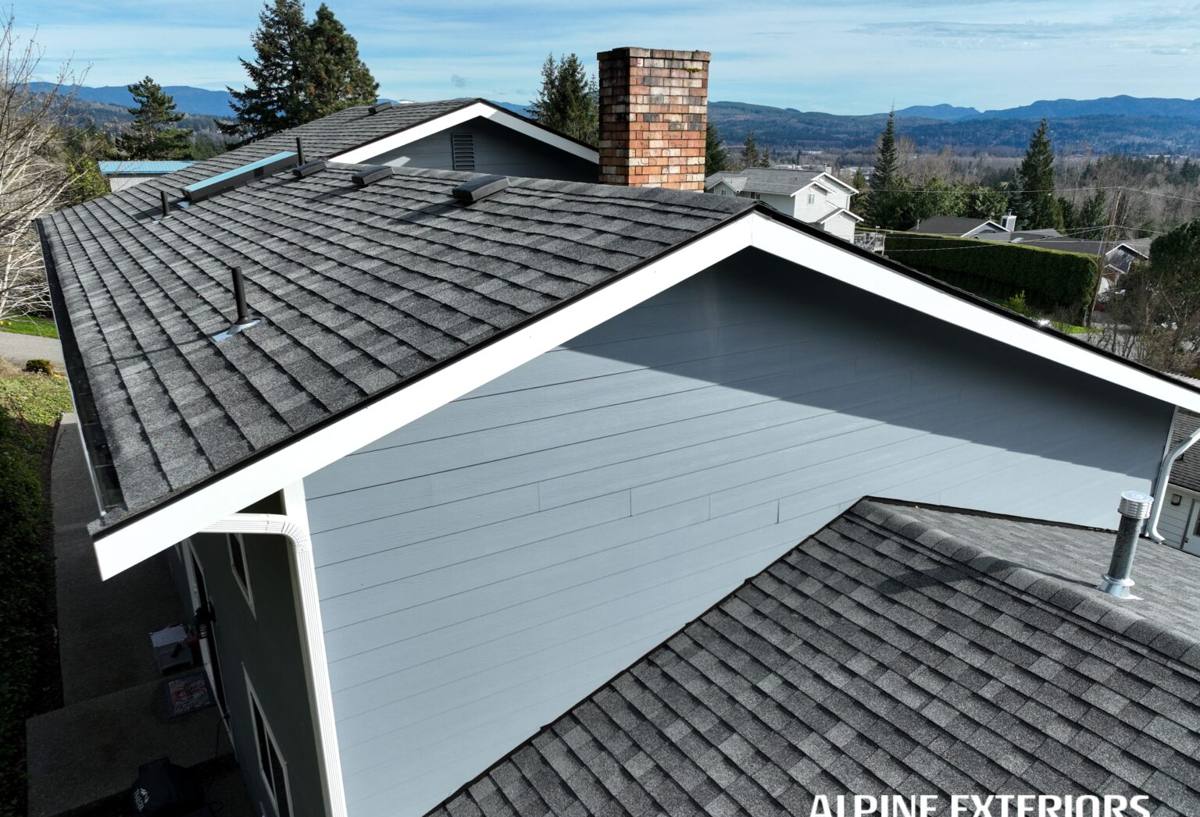
What Big Lake's Climate Actually Does to a Roof
Moss and Organic Growth
Tree canopy over or near a roof means constant leaf litter, needle drop, and shade — the three ingredients moss needs to take hold. Once moss establishes itself on a shingle roof, it lifts the shingle edges as it grows, which lets water track underneath instead of shedding off the surface. Left long enough, that turns into rot in the decking below, not just a cosmetic problem.
Driving Rain and Wind-Driven Moisture
Skagit County gets weather systems that push rain sideways, not just straight down. On a roof with weak flashing details — around chimneys, skylights, valleys, or wall intersections — wind-driven rain finds those gaps in a way a straight-down rain never would. This is one of the most common causes of hidden leaks we find on older roofs in this area.
Extended Damp Season
Between fall rains and the general marine climate that defines this part of Washington, roofs here can stay damp for long stretches without a real drying-out period. That extended dampness is hard on roofing materials that aren't rated or installed for consistent moisture exposure, and it's part of why ventilation and underlayment choices matter more here than in drier climates.
Signs a Big Lake Home Needs a New Roof, Not Another Repair
Repairs make sense when the problem is isolated. A full replacement makes sense when the roofing system as a whole has aged out or the damage is spread across the roof. Here's what we look for when we're deciding which side of that line a roof falls on:
- Granule loss heavy enough that you can see bare, shiny patches on shingles from the ground
- Moss coverage across large sections rather than a few isolated patches
- Soft or spongy spots when walking the roof, indicating decking rot underneath
- Daylight visible through the roof deck from inside the attic
- Multiple past repairs in different areas rather than one contained issue
- Shingles curling, cupping, or losing their seal along multiple courses
- Roof age at or past the manufacturer's expected service life for this climate
- Persistent leaks that return after being patched, suggesting a systemic flashing or underlayment issue
If a roof is showing two or more of these, replacement is usually the more honest recommendation than another round of patching.
What a Correct New Roof Installation Actually Involves
A new roof is more than shingles. The parts homeowners don't see are what determine whether the roof performs well in Big Lake's damp, shaded conditions or fails early.
Tear-Off and Deck Inspection
We remove the old roofing down to the deck rather than layering over it. That's the only way to actually see the condition of the plywood or OSB underneath — and in a lake-adjacent, tree-covered property, deck rot from long-term moisture intrusion is common enough that we treat this step as non-negotiable, not optional.
Underlayment
Underlayment is the roof's backup layer if wind-driven rain or an ice/snow event gets past the shingles. In a climate like this one, we lean toward synthetic or high-quality underlayment products with strong water resistance, and we pay particular attention to ice-and-water shield in valleys and along eaves, where water concentrates.
Flashing
Flashing around chimneys, skylights, vent pipes, and roof-to-wall transitions is where most leaks actually originate — not in the open field of shingles. We install new flashing as part of every roof replacement rather than reusing old pieces, since flashing that's been through even one Skagit County winter is often already compromised.
Ventilation
Good attic ventilation lets a roof system dry out between rain events instead of staying damp indefinitely. On shaded, tree-covered lots like many around Big Lake, we look closely at intake and exhaust balance — poor ventilation traps moisture, which accelerates both decking rot and moss growth from underneath.
Choosing a Roofing Material for a Shaded, Damp Lot
There's no single "best" material for every roof — the right choice depends on the home, the budget, and how much shade and moss pressure the specific lot deals with. Here's how the common options stack up for a Big Lake setting:
| Material | Moss/Moisture Resistance | Typical Lifespan | Notes for Shaded Lots |
|---|---|---|---|
| Architectural Asphalt Shingle | Moderate | 25-30 years | Most common choice; algae-resistant (AR) shingles help but don't eliminate moss risk under heavy tree cover |
| Standard 3-Tab Shingle | Lower | 15-20 years | Budget option; shows moss and wear faster in shaded, damp spots |
| Metal Roofing | High | 40-60 years | Sheds water fast and gives moss less to grip; higher upfront cost, strong long-term value on tough lots |
| Synthetic/Composite Shake | Moderate-High | 30-50 years | Good moisture behavior with a traditional look; installation quality matters more than with standard shingle |
For a lot with heavy overhead canopy, we're often steering homeowners toward metal or a higher-grade algae-resistant shingle, simply because the maintenance burden of a standard 3-tab roof under constant shade is real and ongoing.
Our Installation Process
- On-site inspection — we walk the roof, check the attic, and assess deck condition, ventilation, and any tree-cover or drainage issues specific to the property
- Written estimate — a clear scope of work and material options, with honest pricing and no pressure to decide on the spot
- Scheduling around weather — we plan installation windows with Skagit County's rain patterns in mind to keep the deck protected during the tear-off phase
- Tear-off and deck repair — old roofing removed, deck inspected, any damaged sections replaced before anything new goes down
- Underlayment, flashing, and ventilation installation — the system that determines long-term performance, done first
- Roofing material installation — installed to manufacturer specification, which is also what keeps material warranties valid
- Final walkthrough — cleanup, debris removal (including magnetic sweep for nails), and a review of the finished work with the homeowner
What Drives Roofing Costs in This Area
Roofing costs vary property to property, but a few factors consistently move the number for Big Lake homes specifically:
| Factor | Why It Matters Here |
|---|---|
| Roof pitch and access | Steeper roofs and lots with tree-restricted access take longer and require more safety setup |
| Deck condition | Moisture-related deck rot, common under long-term shade, adds replacement material and labor |
| Material choice | Metal and premium shingle products cost more upfront but reduce moss-related maintenance over time |
| Number of penetrations | Chimneys, skylights, and multiple vents each need individual flashing work |
| Tear-off layers | Roofs with existing layers of old roofing add disposal and labor time |
We give exact numbers only after seeing the roof in person — anything quoted sight-unseen isn't a real estimate.
Why It Matters That We Already Work in Big Lake
A crew that regularly works this specific area already understands how the lake's humidity, the tree canopy, and Skagit County's rain patterns interact on a real roof — not in theory. That shows up in small decisions: where we add extra ice-and-water protection, how we handle ventilation on a heavily shaded structure, and which materials we steer homeowners away from because we've seen how they hold up locally over time. It also means we're not learning the area on your project. We know what a healthy roof looks like out here, and what an early-failing one looks like too.
Get a Straight Answer on Your Roof
If you're weighing a repair against a full replacement, or you just want an honest read on how much life is left in your current roof, we're happy to take a look. Reach out below for a free, no-pressure estimate — we'll walk the roof, tell you what we actually see, and give you options that fit your home and your budget.