 Skagit County
 Board & Batten Siding: A Good Fit for Big Lake's Setting
Big Lake sits in a part of Skagit County where homes are often tucked among trees, close to water, and shaded for much of the day. That setting is beautiful, but it's also demanding on exterior materials. Board and batten siding — with its vertical lines, deep shadow reveals, and cabin-meets-modern look — happens to suit this kind of property well, both visually and functionally, when it's built out of the right material and installed correctly.
This page is about that one product, in that one area: what board and batten needs to hold up around Big Lake, what a correct installation actually involves, and why the product we put behind it matters as much as the look on day one.
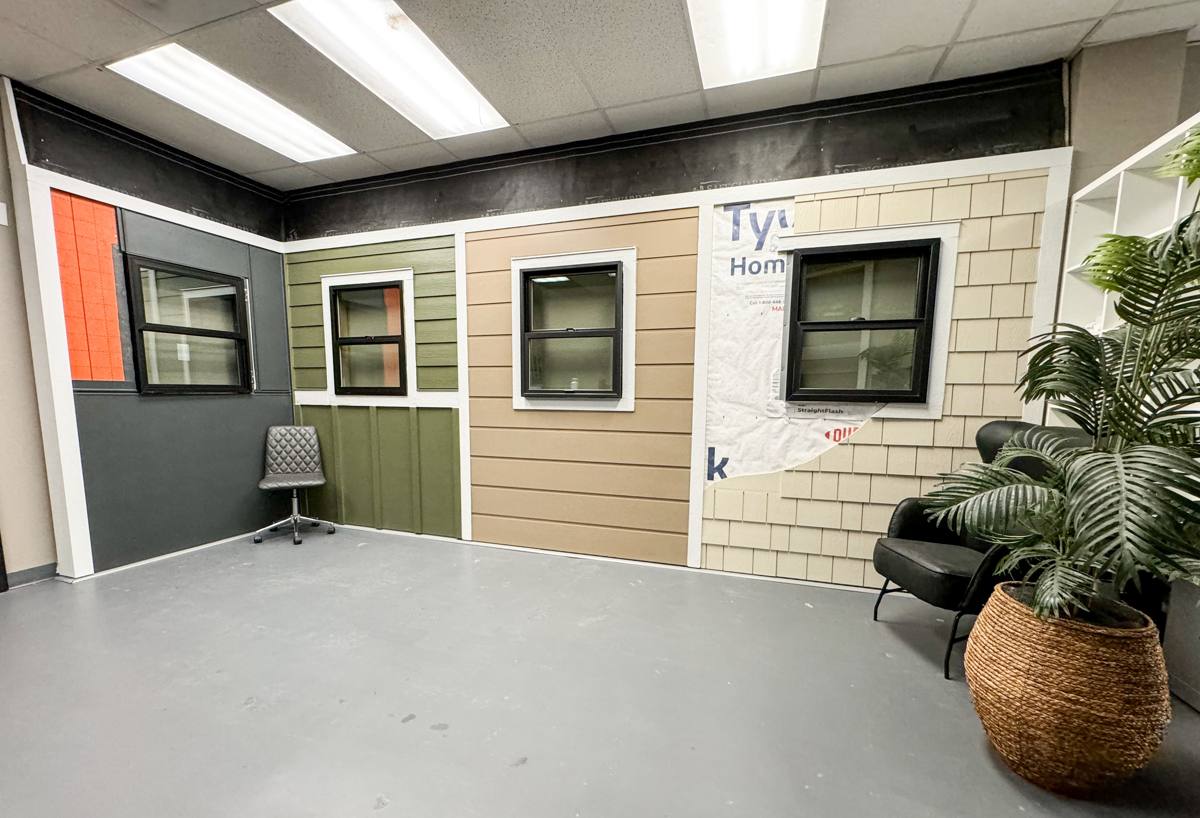
What Big Lake's Climate Does to Siding
Skagit County as a whole sees plenty of rain, but Big Lake's specific conditions add a few extra variables. Homes near the lake and under tree cover deal with slower drying times after storms — moisture that would evaporate quickly on an open, sunny lot can linger on a shaded wall for days. Add in driving rain that comes through the valley off Puget Sound, and you have an environment where siding needs to shed water fast and dry out even faster.
Moss and algae are the most visible symptom of this. A long moss season isn't just a cosmetic issue — moss holds moisture against a wall surface, and over years that constant dampness is exactly what breaks down materials that aren't built to take it. Salt-tinged air moving inland from the Sound adds a slow corrosive element too, working on fasteners, trim, and any paint film that isn't holding up its end of the job.
None of this makes board and batten a bad choice for Big Lake. It makes material selection and installation detail the whole ballgame.
The Specific Stresses at Play
- Shade and slow drying — tree-covered lots trap moisture against walls longer than open sites
- Driving, wind-pushed rain — moisture gets forced under laps and into seams, not just dripped down a flat wall
- Long moss season — organic growth that feeds off constant dampness and holds water against the surface
- Salt-influenced air — accelerates corrosion on fasteners and stress on paint and coating systems
- Freeze-thaw swings — less severe than inland Washington, but still enough cycles each winter to punish any material that absorbs water
What a Correct Board & Batten Installation Actually Involves
Board and batten looks simple from the curb — vertical boards, battens covering the seams — but the assembly behind that look is what determines whether it lasts 10 years or 40. A correct install in a climate like Big Lake's includes several things that aren't visible once the job is done:
Drainage Plane and Rainscreen
Water-resistive barrier goes on first, lapped correctly from bottom to top so gravity always has an escape path. Behind vertical siding especially, a rainscreen gap (typically furring strips) is what lets bulk water and trapped moisture actually drain and the wall assembly dry out, rather than sitting against the sheathing. On a shaded, damp lot like Big Lake, skipping this step is one of the most common reasons siding fails early.
Flashing at Every Transition
Windows, doors, roof-to-wall intersections, and the bottom termination of the siding all need proper flashing and kick-out details. Vertical board and batten actually has more seams and transitions than horizontal lap siding in a lot of designs, so this is not a place to cut corners.
Fastening Pattern
Battens need to be fastened through the underlying board and into framing or proper blocking, with fastener spacing that matches the manufacturer's engineering — not "close enough." Under-fastened battens work loose over time as the material expands and contracts with seasonal moisture swings, which is exactly the kind of movement Big Lake's damp-to-dry cycles produce.
Caulking and Sealant Discipline
Vertical joints, butt joints, and trim intersections get sealed with the right product, in the right places — and just as important, left unsealed where the assembly is designed to drain rather than seal. Sealing the wrong spots traps water instead of releasing it.
Why We Only Install James Hardie for This Application
Board and batten is available in several materials, and we get asked about most of them. Our answer is the same every time: we install James Hardie fiber cement, and we don't install the alternatives, because of how each one performs in exactly the conditions Big Lake produces.
Vinyl Board & Batten
Vinyl board and batten panels are inexpensive and easy to install, but they're a thin, flexible plastic product. In a shaded, damp climate, that flexibility shows up as warping and buckling over time, especially near dark colors that absorb heat unevenly. Vinyl also doesn't hold paint, so once a color is chosen, it's chosen for good — and it doesn't offer the crisp, deep-reveal look that real board and batten profiles are known for.
Primed Spruce or Cedar
Real wood board and batten has genuine appeal, and cedar in particular has a long history in this region. But solid wood is exactly the material that suffers most from moss, standing moisture, and long shade — it needs repainting or restaining on a real cycle, and any gap in that maintenance lets rot start, often behind the battens where it's hardest to catch early.
LP SmartSide
LP SmartSide is an engineered wood strand product, and it holds up reasonably well when maintained — but it's still wood-based, which means it's more sensitive to sustained moisture exposure than fiber cement, and edge-sealing at every cut becomes critical in a climate that doesn't give siding much of a chance to dry out. We don't consider that an acceptable margin for a shaded, moisture-heavy lot like the ones common around Big Lake.
Cemplank / Allura
These are also fiber cement products and share some of Hardie's core advantages over wood and vinyl. Our decision to standardize on James Hardie specifically comes down to their HZ5 engineered product line (built for the Pacific Northwest's moisture profile), the ColorPlus factory finish, and a warranty and manufacturer track record we're comfortable standing behind on every job we do.
Material Comparison for Big Lake Conditions
| Material | Moisture Performance | Maintenance | Typical Lifespan |
|---|---|---|---|
| James Hardie fiber cement | Non-combustible, engineered for wet climates, holds factory finish | Low — occasional wash, no repainting cycle with ColorPlus | 30+ years with correct install |
| Vinyl board & batten | Warps/buckles under heat and moisture cycling | Low effort but limited repair options | 15-25 years, shorter in tough spots |
| Cedar / primed spruce | Absorbs moisture, prone to rot without upkeep | High — regular painting/staining required | Highly maintenance-dependent |
| LP SmartSide | Wood-strand core, moisture-sensitive at cut edges | Moderate — edge sealing and paint upkeep | 20-30 years, maintenance-dependent |
Our Process on a Big Lake Job
1. On-Site Assessment
We walk the property and look specifically at sun exposure, tree cover, drainage around the foundation, and any existing moisture or moss issues on the current siding or trim. This tells us how aggressive the rainscreen and flashing detailing needs to be for that particular lot.
2. Prep and Moisture Barrier
Old siding is removed, sheathing is inspected for hidden damage (common on shaded walls that have been holding moisture for years), and any needed repairs happen before a single new panel goes up. Weather-resistive barrier and rainscreen furring go on next.
3. Installation
James Hardie boards and battens go up per the manufacturer's fastening schedule, with flashing integrated at every window, door, and roof intersection along the way — not added afterward.
4. Finish and Walkthrough
Trim, caulking, and touch-up work close out the job, followed by a walkthrough so you know what to expect from the new siding and how little upkeep it actually requires.
Living With Board & Batten in a Moss-Prone Climate
Even the right material benefits from a little attention. Here's what actually matters for a Big Lake property over the years:
- Keep tree branches and shrubs trimmed back from walls so air can move and sunlight can reach the siding
- Rinse off accumulated moss, pollen, or algae with a garden hose and soft brush — avoid pressure washing directly into seams
- Check gutters and downspouts each fall so water isn't dumping directly onto siding or the foundation line
- Look at caulking around windows and trim every couple of years and have gaps addressed before winter
- Have any impact damage or loose battens repaired promptly rather than waiting — small gaps are where moisture gets a foothold
Why Hiring Local Experience Matters Here
Big Lake isn't a subdivision with identical lots — it's a mix of wooded, waterfront, and hillside properties, each with its own sun exposure and drainage pattern. A crew that already works this part of Skagit County has seen how shaded lots behave differently from open ones, knows what moss and moisture damage looks like before it becomes a real problem, and doesn't need to relearn regional weather patterns on your project. That familiarity shows up in the details: where extra flashing gets added, how the rainscreen gap is sized, and which trim details actually hold up here versus in a drier part of the state.
What Affects the Cost of a Board & Batten Job
| Factor | Why It Matters |
|---|---|
| Home size and wall complexity | More corners, gables, and transitions mean more cutting, flashing, and labor time |
| Condition of existing sheathing | Hidden moisture damage found during tear-off adds repair scope before new siding goes up |
| Access and site conditions | Wooded or sloped lots common around the lake can affect staging and scaffolding needs |
| Trim and detail level | Corner treatments, window casing, and reveal width all affect material and labor |
| Color and finish | Factory-applied ColorPlus finishes vary slightly in cost versus field-applied paint |
Every property around Big Lake is a little different, and the only way to give you real numbers is to see the house. If you're weighing board and batten siding for a home in this area, we're happy to walk the property, talk through what your specific lot needs, and put together a free, no-pressure estimate.