 Skagit County
 Board & Batten Siding in Bow: Built for This Corner of Skagit County
Bow sits in one of the more exposed pockets of Skagit County — close enough to Samish Bay and Puget Sound to catch salt-laden air, open enough to take driving rain straight off the water, and shaded enough in places to grow a stubborn moss season that lasts most of the year. Any siding installed here has to handle all three at once, and board and batten's vertical-plank-with-cover-strip look is one of the more demanding profiles to get right in that environment. Done correctly, it's also one of the most striking — a clean, farmhouse-modern look that suits the rural and semi-rural character of Bow better than a lot of horizontal lap patterns.
This page covers what board and batten siding actually needs to survive in Bow's climate, what a correct installation involves, and why we install it exclusively in James Hardie fiber cement rather than the wood or engineered-wood alternatives.
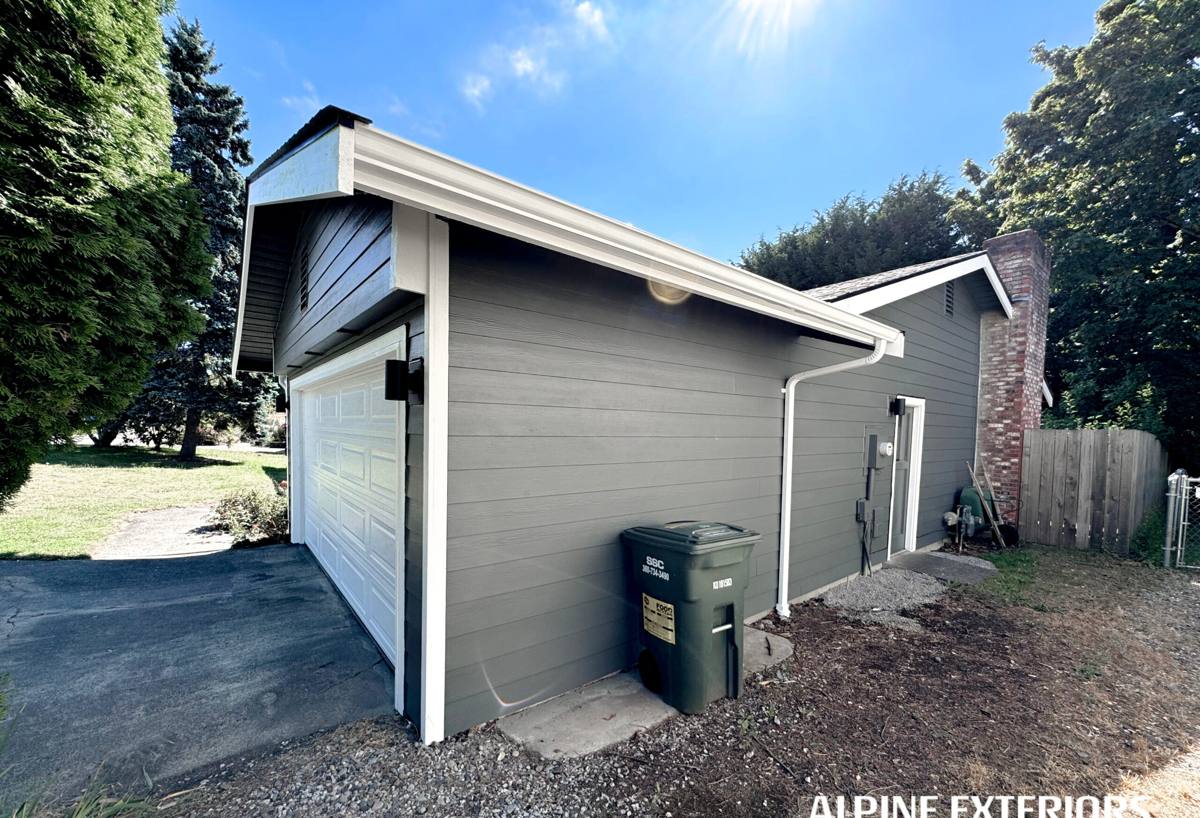
Why Bow's Climate Is Hard on Board & Batten Siding
Salt Air From the Bay
Board and batten's battens create dozens of extra vertical seams compared to lap siding — each one a potential entry point for moisture if it isn't detailed correctly. Add in the fine salt mist that drifts inland from Samish Bay and the greater Skagit County shoreline, and any exposed fastener, gap, or unsealed cut edge becomes a slow corrosion and rot risk over the years, not just a cosmetic issue.
Driving Rain
Storms coming off the water in this part of Skagit County tend to arrive at an angle, not straight down. That matters for board and batten specifically because the battens sit proud of the wall plane — a good install sheds wind-driven rain off the face of each batten, while a rushed one lets water track sideways behind the boards where it can sit against the sheathing.
Moss and Shade
Between tree cover and the region's long wet season, north- and east-facing walls in Bow can stay damp for weeks at a stretch. Moss and algae don't just look bad on siding — they hold moisture against the surface longer than bare siding would, which is exactly the condition that punishes any product with a lower tolerance for sustained wetness.
What a Correct Board & Batten Job Actually Involves
Board and batten looks simple from the street — vertical boards, thin strips over the seams — but the installation sequence is less forgiving than lap siding. Skipping steps doesn't usually show up as a problem in year one; it shows up in year five or six, as staining, soft spots, or batten separation.
- A continuous water-resistive barrier (WRB) installed and lapped correctly before any siding goes up
- Properly flashed windows, doors, and any wall penetrations, integrated with the WRB — not just caulked after the fact
- A rainscreen or drainage gap behind the siding so any moisture that does get past the surface can drain and dry instead of sitting against the sheathing
- Correct board spacing and batten overlap, sized to the manufacturer's specification rather than "close enough"
- Fastener placement and type matched to the product and substrate, with all cut ends and field-cut edges sealed
- Careful attention to bottom starter courses and any grade-level transitions, where splash-back and standing moisture are most common
Every one of those steps matters more in Bow than it would somewhere inland and dry, simply because the margin for error against salt air and sustained damp is smaller here.
Our Process for Bow Board & Batten Projects
1. On-Site Assessment
We walk the exterior and look specifically at exposure — which walls face the water and prevailing storms, which stay shaded and damp, where existing siding shows moss buildup or moisture staining, and where the current WRB and flashing are likely compromised.
2. Product and Layout Plan
We spec board width, reveal, and batten spacing to match the home's proportions and the look you want, and we plan the drainage plane and flashing details before a single board goes up — not as an afterthought.
3. Tear-Off and Substrate Check
Existing siding comes off and we inspect the sheathing underneath. Any rot or water damage gets addressed before new siding covers it up — installing over a compromised substrate just hides a problem instead of fixing it.
4. Installation to Manufacturer Spec
WRB, flashing, rainscreen, then boards and battens, installed and fastened to James Hardie's published specifications for our climate zone. This isn't a place to improvise.
5. Finish and Walkthrough
Factory-finished ColorPlus boards mean no field painting is needed for the color coat. We walk the finished job with you before calling it done.
Why We Install Only James Hardie Fiber Cement
We don't install LP SmartSide, vinyl, Cemplank, Allura, primed spruce, or cedar board and batten. Each of those products has real strengths, but none of them hold up as consistently as James Hardie fiber cement under Bow's specific combination of salt exposure, driving rain, and near-constant shaded moisture — and board and batten's extra seams and joints make that gap more consequential than it would be on a simpler profile.
| Factor | Wood / Engineered Wood | James Hardie Fiber Cement |
|---|---|---|
| Moisture behavior | Can swell, delaminate, or rot at cut edges and seams if moisture gets in | Non-combustible cement composite, engineered to resist moisture-related damage when installed to spec |
| Salt air exposure | Finish and fasteners more vulnerable to breakdown near the bay | Factory ColorPlus finish resists fading and holds up to coastal air |
| Moss/algae-prone walls | Sustained dampness accelerates wear on painted or primed surfaces | Dense composition tolerates prolonged damp exposure better than wood-based products |
| Maintenance | Periodic repainting, edge sealing, and rot checks | No repainting needed for the life of the ColorPlus finish; occasional wash-down |
| Warranty | Varies by product, often shorter or with more exclusions | Strong transferable manufacturer warranty on the product and finish |
James Hardie's HZ5 product line is engineered specifically for climates like ours — freeze-thaw cycles, sustained moisture, and coastal exposure — which is why it's the only board and batten system we put our name behind in Bow and the rest of Skagit County.
Cost Factors for Bow Board & Batten Projects
Every home is different, but the same handful of factors drive most of the cost variation we see on board and batten jobs in this area:
| Factor | Why It Matters |
|---|---|
| Tear-off scope | Full removal of old siding costs more than installing over adequately prepared walls, but it's often necessary to check the substrate |
| Substrate repair | Rot or water damage found underneath old siding adds cost but has to be fixed before new siding goes on |
| Wall complexity | Dormers, multiple gables, and lots of window/door openings mean more flashing detail and labor per square foot |
| Batten spacing and board width | Tighter reveals and narrower boards mean more material and more fastening/sealing per square foot |
| Access and site conditions | Steep grades, limited driveway access, or tight lot lines common in some Bow properties can affect staging and labor time |
Maintaining Board & Batten Siding in Bow
Even a correctly installed system benefits from a little seasonal attention, especially given the local moss and salt exposure:
- Rinse off accumulated grime, salt residue, and moss spores once or twice a year, especially on shaded or water-facing walls
- Trim back vegetation and tree limbs that keep siding shaded and slow to dry
- Check caulking at trim, windows, and penetrations periodically and have gaps resealed before they widen
- Watch grade-level courses after heavy storms for standing water or splash-back buildup
- Have a professional inspect flashing and drainage details if you notice staining, soft spots, or unusual discoloration
Why Hire a Crew That Already Works in Bow
Board and batten's failure points in this region aren't generic — they're specific to how Bow's weather actually behaves: which wall orientations catch the worst of the storms coming off the bay, which spots stay shaded long enough to grow moss, and where salt air does the most damage over time. A crew that's already worked on homes in this part of Skagit County has seen those patterns play out and builds the flashing, drainage, and batten details around them from the start, rather than treating this as a one-size-fits-all install.
If you're considering board and batten siding for your Bow home, we're happy to walk the property, look at your specific exposure, and put together a free, no-pressure estimate — no obligation, just a straight assessment of what your home needs.