 Skagit County
 Board & Batten Siding for Lyman Homes
Board and batten is one of the most requested siding styles in the Skagit Valley, and Lyman is a good example of why. The vertical lines suit the farmhouse and craftsman-style homes common up and down the river corridor, and the style holds up visually on everything from a full house to a garage, gable accent, or shop building. But the look is only half the story. In a community like Lyman, tucked into a river valley with heavy tree cover and a long wet season, the material and the installation details matter as much as the style. We install board and batten using James Hardie fiber cement exclusively, and this page walks through what that actually means for a Lyman home.
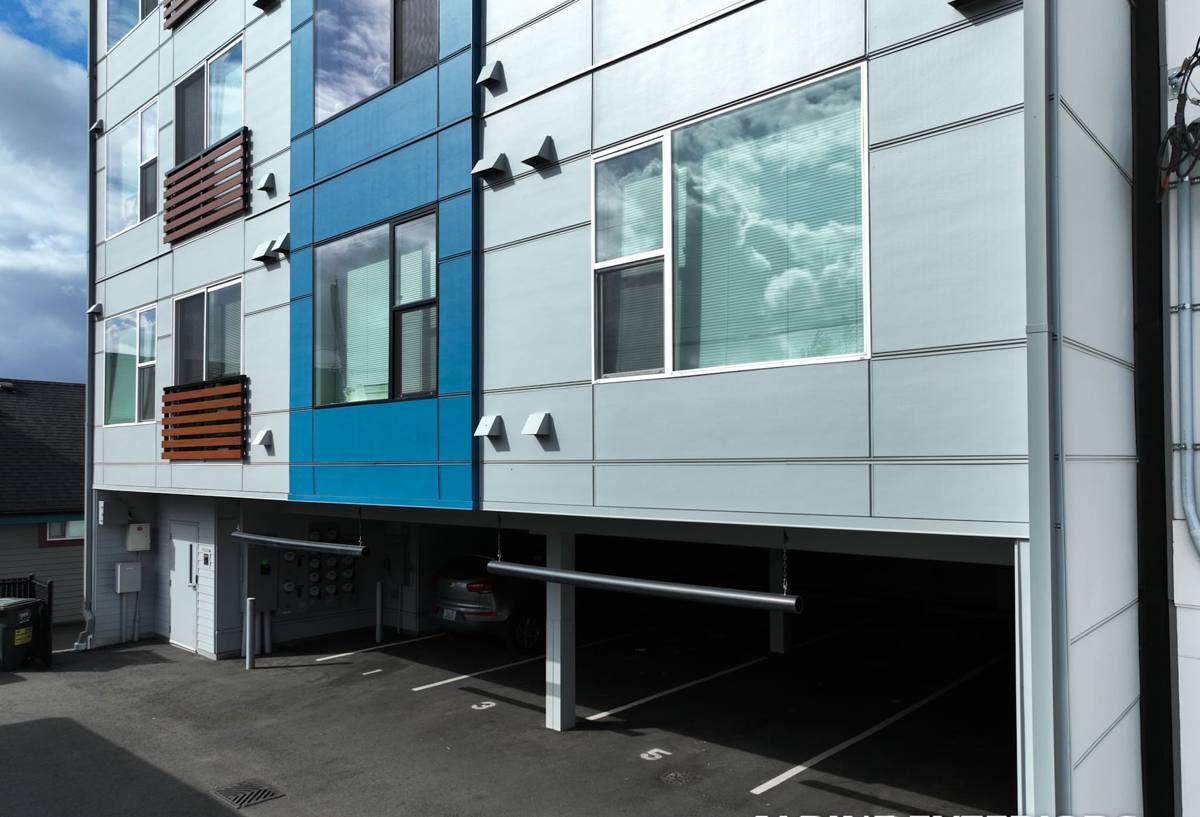
What Skagit County Weather Does to Vertical Siding
Board and batten has more seams and more exposed trim than lap siding, which makes it less forgiving of moisture mistakes. Skagit County's combination of salt-influenced air, driving rain off the water and valley winds, and a moss season that can run most of the year puts real stress on that trim over time.
Moisture Behind the Battens
The battens that cover each panel seam are the most vulnerable part of a board and batten system. If they're face-nailed without a drainage plane behind them, water that gets past the seam has nowhere to go and sits against the wall sheathing. In a wetter inland pocket like Lyman, where humidity lingers under tree canopy and fog settles in the valley overnight, that trapped moisture doesn't dry out quickly.
Moss, Algae, and Shaded North Walls
Homes in Lyman that sit close to trees or face north often deal with moss and green algae staining well before the siding itself is old. That's a coating and material issue as much as a cleaning issue — some materials hold moisture in their surface and give moss something to grip. A factory-cured, moisture-resistant panel resists that buildup longer than a raw or site-finished material.
Swelling, Cracking, and UV Fade
Wet winters followed by hot, dry summer stretches put wood-based and some engineered panels through repeated swelling and drying cycles. Over years that shows up as cracked caulk lines, raised grain, and paint that fails at the seams first — exactly where board and batten trim lives.
The James Hardie Board & Batten System
We use James Hardie's fiber cement panel system for board and batten work: a vertical HardiePanel base with HardieTrim boards installed over the seams. Both components are fiber cement — sand, cement, and cellulose fiber cured into a dense, stable board — not wood, not a wood-composite, and not vinyl.
A few things about the product line matter specifically here:
- Fiber cement doesn't absorb water the way wood or wood-composite panels do, which limits swelling and rot at the seams.
- It's non-combustible, which matters given how much of Skagit County borders timber and brush.
- Hardie's ColorPlus finish is baked on at the factory, formulated to resist fading and moss growth better than field-applied paint, and it comes with its own finish warranty separate from the product warranty.
- Hardie engineers its panels by climate zone rather than shipping one product nationwide, which is relevant in a region that sees this much annual rainfall.
This is also why we don't install vinyl board and batten, LP SmartSide, or cedar board and batten. Vinyl vertical panels can work loose or oil-can in wind-driven rain and don't take paint if you ever want a color change. LP SmartSide is a wood-strand product — better than raw wood in some ways, but it's still an engineered wood core that depends entirely on unbroken sealant at every cut and seam to keep water out. Cedar looks great on day one but needs ongoing refinishing to hold up in this much moisture. We'd rather install one product correctly than offer four we don't fully trust in this climate.
What a Correct Board & Batten Installation Involves
Board and batten fails early almost exclusively because of installation shortcuts, not because the material itself was wrong. The style has fewer forgiving details than lap siding, so the install sequence matters more.
Drainage Plane First
Every wall gets a weather-resistive barrier, and on most jobs we use a drainable house wrap or furring strategy that gives any water that gets behind the panel a path down and out, instead of trapping it against the sheathing. This is the single biggest difference between a board and batten job that lasts and one that doesn't.
Fastening and Batten Placement
Panels and battens get fastened per Hardie's published spacing and edge-distance requirements, not "close enough." Battens are set to cover the panel seam fully with consistent reveal, and fasteners are placed to avoid splitting or overdriving, which can crack the coating and open a path for water.
Flashing and Trim Details
Window and door heads, wall-to-roof intersections, and the base of the wall all need proper flashing and drip edges — not caulk standing in for flashing. Caulk is a secondary seal, not the primary water barrier, and it's the first thing to fail in freeze-thaw and constant-damp cycles.
A Quick Homeowner Checklist
- Is there a drainage plane or rainscreen behind the panels, or are they fastened directly to the wrap?
- Are battens spaced and fastened to the manufacturer's published pattern?
- Is flashing installed at every horizontal trim break, window, and door — not just caulked?
- Does the estimate specify James Hardie by product name, or just "fiber cement" or "board and batten siding"?
- Is there clearance at the bottom of the wall so panels aren't sitting in soil, mulch, or standing water?
Comparing Materials for Board & Batten Style
Homeowners in Lyman often ask what the real differences are between the materials that can achieve this look. Here's an honest comparison based on how each performs in this climate over time, not just on day-one cost.
| Material | Moisture Behavior | Finish Life | Maintenance |
|---|---|---|---|
| James Hardie fiber cement | Does not absorb/swell; stable at seams | Factory ColorPlus, long-life finish warranty | Occasional wash; no repainting on typical schedule |
| Vinyl vertical panel | Doesn't rot but can warp/gap in wind and heat | Color molded in, fades over time, cannot repaint easily | Low, but panels can crack or blow off in storms |
| LP SmartSide | Wood-strand core; depends on sealed cuts and edges | Factory primed or finished, repaint eventually needed | Moderate; edge sealing and caulk maintenance matter |
| Cedar board & batten | Absorbs moisture; prone to swelling/checking | Field-applied finish, shorter lifespan in wet climates | High; refinishing on a recurring cycle |
Cost is real too, and it's fair to say fiber cement usually costs more upfront than vinyl and can run comparable to or more than SmartSide, depending on the job. We think that cost difference is worth it against the maintenance and replacement cycle you'd otherwise be paying for over the life of the house — but that's a decision every homeowner should make with real numbers, not a sales pitch.
Cost Factors on a Lyman Job
Every board and batten estimate is a little different, but the main variables we see on jobs in this area are:
- Scope — full house re-side versus an accent wall, gable, or garage.
- Tear-off versus new construction — removing old siding and repairing sheathing adds time and cost but is often necessary to do the job right.
- Trim complexity — dormers, multiple gables, and window trim detail all add labor.
- Access — steep lots, tree cover, and setback from the road (common on river-valley properties) can affect staging and scaffolding.
- Color — factory ColorPlus finishes versus primed panels finished on site.
We give a written, itemized estimate before any work starts, so you can see exactly where the cost is going rather than a single lump number.
Our Process
- On-site walkthrough — we look at existing siding condition, wall sheathing, moisture history, and sun/shade exposure specific to your lot.
- Written estimate — itemized scope, product line, and timeline, with no pressure to sign on the spot.
- Prep and drainage plane — removal of old siding where needed, sheathing repair, and installation of the weather barrier system before a single panel goes up.
- Panel and batten installation — installed to Hardie's fastening and flashing specifications, not shortcuts.
- Final walkthrough — we go over the finished job with you and cover warranty paperwork.
Why Hire a Crew That Already Works in Skagit County
Lyman and the surrounding river valley communities have their own quirks — humidity that lingers longer under tree cover, seasonal moss growth that starts earlier than it does closer to open water, and older housing stock where sheathing condition varies a lot house to house. A crew that regularly works this stretch of Skagit County has already seen what happens when board and batten is installed without a drainage plane in exactly this kind of climate, and builds every job assuming this weather, not a drier region's weather. That's a different starting point than a crew driving in from outside the area for a one-off job.
If you're considering board and batten siding for a home in Lyman, we're glad to walk the property, look at what you're working with, and put together a straightforward, no-pressure estimate using the form below.