 Skagit County
 Roof Repair Built for Bow's Coastal Microclimate
Bow sits close enough to Samish Bay and Padilla Bay that salt-laden air is a daily fact of life for anyone who owns a roof here, not just an occasional nuisance after a storm. Combine that with the steady, driving rain that moves through Skagit County for much of the year and the deep shade cast by mature fir and cedar cover on many Bow properties, and you get a roofing environment that ages materials faster than it would a few miles inland. Fasteners corrode sooner, moss and algae colonies get a longer growing season, and underlayment that would last decades in a drier climate can fail early if it was installed wrong the first time.
A roof repair here isn't just patching a leak — it's addressing the specific combination of salt, moisture, and shade that caused the problem in the first place. That's the lens we use on every Bow roof repair call.
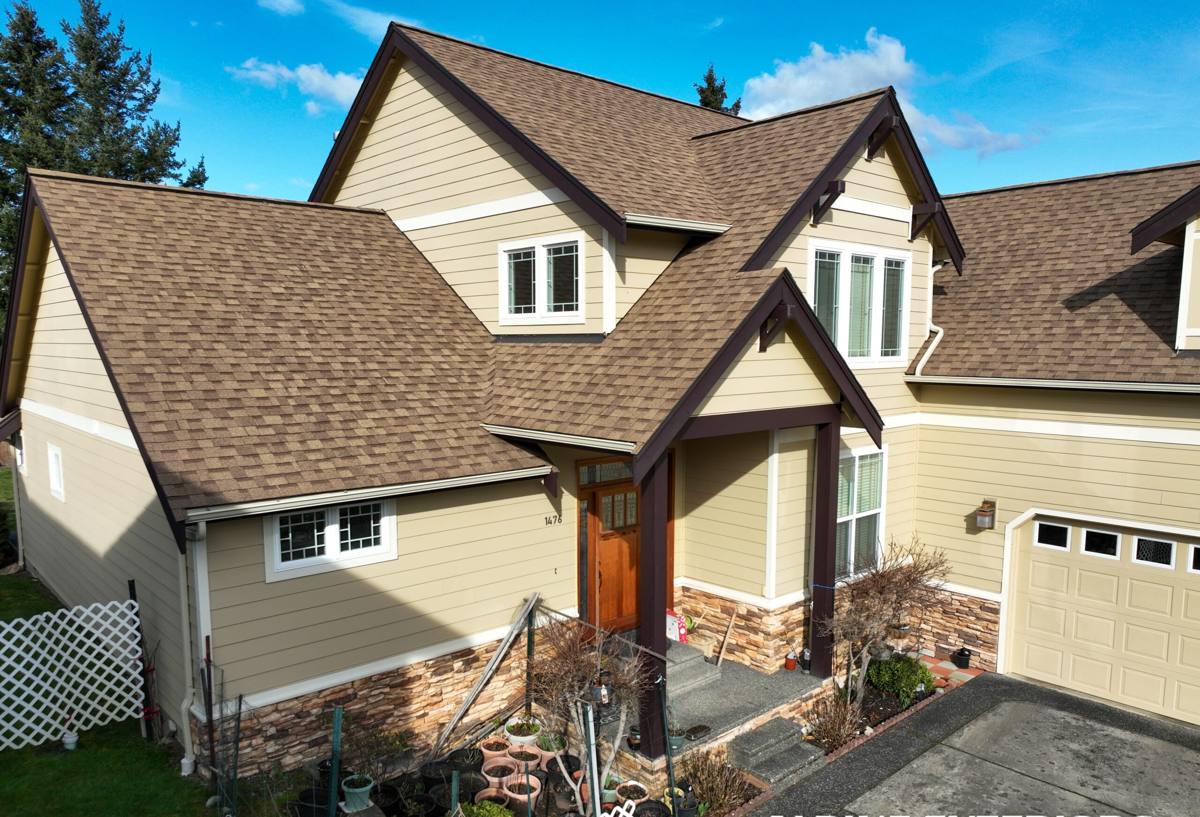
Signs Your Bow Roof Needs Repair Now
Some roof problems announce themselves with an obvious ceiling stain. Others build quietly for a season or two before anyone notices. Given the moss season and salt exposure typical around Bow, we tell homeowners to watch for these specific warning signs rather than waiting for an active leak:
- Moss or dark algae streaking concentrated on north-facing or heavily shaded slopes
- Granules collecting in gutters or at downspout outlets after a hard rain
- Rusted or corroding metal flashing around chimneys, vents, and skylights
- Shingles that look cupped, curled at the edges, or lifted at the tabs
- Soft spots or slight sagging when walked on (a sign of decking damage underneath)
- Daylight visible through the roof deck from inside an attic or crawlspace
- Musty odor or visible mold on attic framing near the eaves
- Water stains on interior ceilings that appear only during heavy wind-driven rain
Any one of these on its own might not be urgent. Two or three together, especially on a roof that hasn't been inspected in a few years, is worth a closer look before the next wet season.
What a Correct Roof Repair Actually Involves
It Starts With Finding the Real Source
Water rarely stains the ceiling directly below where it entered the roof. It travels along rafters, sheathing, and underlayment before it shows up as a spot on the drywall. A repair that just re-seals the area above the visible stain often misses the actual entry point, which is why the same leak can "come back" after a patch job. We trace the path from the interior damage back up through the attic and roof deck before we touch a single shingle.
Flashing Is Usually the Real Culprit
In our experience working roofs around Skagit County, flashing failure — not worn-out field shingles — causes the majority of active leaks. Chimney flashing, valley flashing, and the metal around vents and skylights take the brunt of wind-driven rain and are the first place salt air corrosion shows up. A proper repair replaces failed flashing rather than caulking over it, since caulk is a short-term fix that fails again within a season or two in this climate.
Matching Materials, Not Just Colors
When we replace shingles or panels, we match the existing material's type, weight, and exposure — not just the color. Mixing incompatible materials or fastener metals accelerates corrosion, particularly this close to salt water, where dissimilar-metal contact speeds up galvanic corrosion in flashing and fasteners.
Ventilation Gets Checked, Not Ignored
A repair that ignores attic ventilation is treating a symptom. Poor airflow traps moisture under the deck, which feeds both rot and the moss and algae growth that's already working overtime in Bow's damp, shaded conditions. Where ventilation is part of the problem, we say so plainly rather than quietly re-shingling over it.
Moss, Algae, and Salt Air: The Long-Term Enemy
Skagit County's moss season runs long compared to drier parts of the state, and Bow's tree cover and coastal humidity make it worse than average. Moss isn't just cosmetic — its root structure lifts shingle tabs and holds moisture against the roof surface, which is exactly what accelerates decking rot underneath.
Salt air adds a second, separate problem: it corrodes exposed metal faster than an inland roof would ever experience. Nail heads, flashing, and even some fastener coatings show pitting and rust years before they would elsewhere. We factor both of these into how we scope a repair — a fix that only addresses the visible leak but leaves moss colonies and corroding flashing in place is a fix that buys you a year, not a decade.
Why We Don't Recommend Pressure Washing Moss Off
Pressure washing looks like a quick moss fix, but it drives water and debris up under shingle tabs and strips the mineral granules that protect shingles from UV and weather. Our standard is soft removal methods and treatment products designed for roofing, followed by addressing the shade and airflow conditions that let moss take hold in the first place. It's a maintenance-and-repair combination, not a one-time power wash.
Common Roofing Materials Around Skagit County
Bow homes carry a mix of roofing materials, and each responds differently to the local combination of salt air, rain, and moss pressure. Here's how the common options compare for repair and long-term upkeep in this specific climate:
| Material | Moss/Algae Resistance | Salt Air Durability | Typical Repair Approach |
|---|---|---|---|
| Asphalt composition shingle | Moderate — algae-resistant granules help but wear over time | Good, if flashing and fasteners are corrosion-resistant | Spot shingle and flashing replacement, granule inspection |
| Metal (standing seam or panel) | Strong — sheds moss more easily due to slope and surface | Depends heavily on coating quality near salt exposure | Seam and fastener inspection, coating touch-up, panel replacement if pitted |
| Cedar shake | Weak without regular maintenance — moss-prone in shade | Fair, but metal flashing paired with it corrodes fastest | Individual shake replacement, flashing renewal, treatment |
| Composite/synthetic shingle | Good — engineered to resist organic growth | Good, generally low-maintenance fasteners | Panel or tile replacement, flashing check |
None of these materials are maintenance-free in a climate like this one. The difference is how often they need attention and how forgiving they are of a delayed repair.
Repair vs. Replace: How We Help You Decide
Not every roof problem in Bow needs a full replacement, and not every leak is fixable with a small patch. We walk homeowners through the honest trade-offs rather than defaulting to whichever job is bigger. The general factors we weigh:
| Factor | Leans Toward Repair | Leans Toward Replacement |
|---|---|---|
| Age of roofing material | Under roughly two-thirds of its expected lifespan | Near or past its expected service life |
| Extent of damage | Isolated to one section, flashing, or a handful of shingles | Widespread across multiple slopes or the whole roof |
| Decking condition | Solid, no soft spots or rot found | Soft, delaminated, or rotted sheathing discovered |
| Repair history | First or second repair on this roof | Repeated repairs to the same areas over recent years |
We'll always give you the repair option first if the roof structure supports it. If a roof is genuinely past the point where repair makes financial sense, we'll say so directly and explain why, rather than let a homeowner keep paying for repeated patches.
Our Repair Process
- Inspection. We get on the roof (or use a camera where access is limited) and trace leaks from the interior damage back to the actual entry point.
- Written scope. You get a clear explanation of what's failing, why, and what the repair involves — no vague line items.
- Repair work. Flashing, decking, underlayment, and shingles or panels are addressed in the order that actually stops water intrusion, not just the fastest visible fix.
- Moss and debris check. Where moss or organic buildup contributed to the problem, we address it as part of the same visit rather than leaving it for a separate call.
- Final walk-through. We show you what was done and what to watch for going forward, especially heading into the next wet season.
Why a Local Skagit County Crew Matters in Bow
A crew that already works Bow and the surrounding Skagit County communities knows which slopes typically hold moss the longest, how the shift from bay-adjacent salt exposure to more inland conditions changes what a roof needs, and what a normal amount of wear looks like on a five-year-old roof here versus a roof in a drier climate. That local pattern recognition shortens the inspection and keeps the repair scope honest — we're not guessing at conditions we've never seen.
Being nearby also means a faster response when a storm exposes a leak and a straightforward follow-up if a repair needs a second look. That matters more here than in a lot of places, given how quickly a small gap in flashing can turn into a bigger problem during a stretch of driving rain.
Maintenance Between Repairs
A repair holds up longer when it's supported by basic maintenance in between visits. For Bow homes specifically, that means:
- Clearing gutters and downspouts at least twice a year, more often under heavy tree cover
- Trimming back branches that keep a section of roof shaded and damp longer than the rest
- Scheduling a moss inspection before peak moss season rather than after growth is established
- Checking attic ventilation isn't blocked by insulation or debris
- Having flashing checked every few years given how much faster salt air ages exposed metal here
If you're seeing any of the warning signs above, or you just want an honest read on where your Bow roof stands, we're happy to take a look. Estimates are free, there's no pressure to book anything on the spot, and you'll get a straight answer about whether you need a repair, a bit of maintenance, or nothing at all right now — just fill out the form below.