 Skagit County
 Roofing in Bow Isn't the Same as Roofing Twenty Miles Inland
Bow sits close enough to the water that salt air is a real factor in how a roof ages, not just a talking point. Add in long stretches of driving rain off Samish and Padilla Bay and a moss season that can run most of the year in shaded spots, and you've got a combination that wears roofs down faster than it does in drier parts of Skagit County. A roof replacement here has to account for all three at once: corrosion-resistant metal components, water management that doesn't rely on hope, and enough ventilation and airflow to keep moss from getting a foothold in the first place.
A lot of roofs fail early in this area not because the shingles themselves were bad, but because the details underneath them were built for a milder climate. Underlayment that isn't fully sealed, flashing that was reused instead of replaced, or a ridge vent that can't keep up with our humidity all show up as problems within a few years instead of a couple of decades.
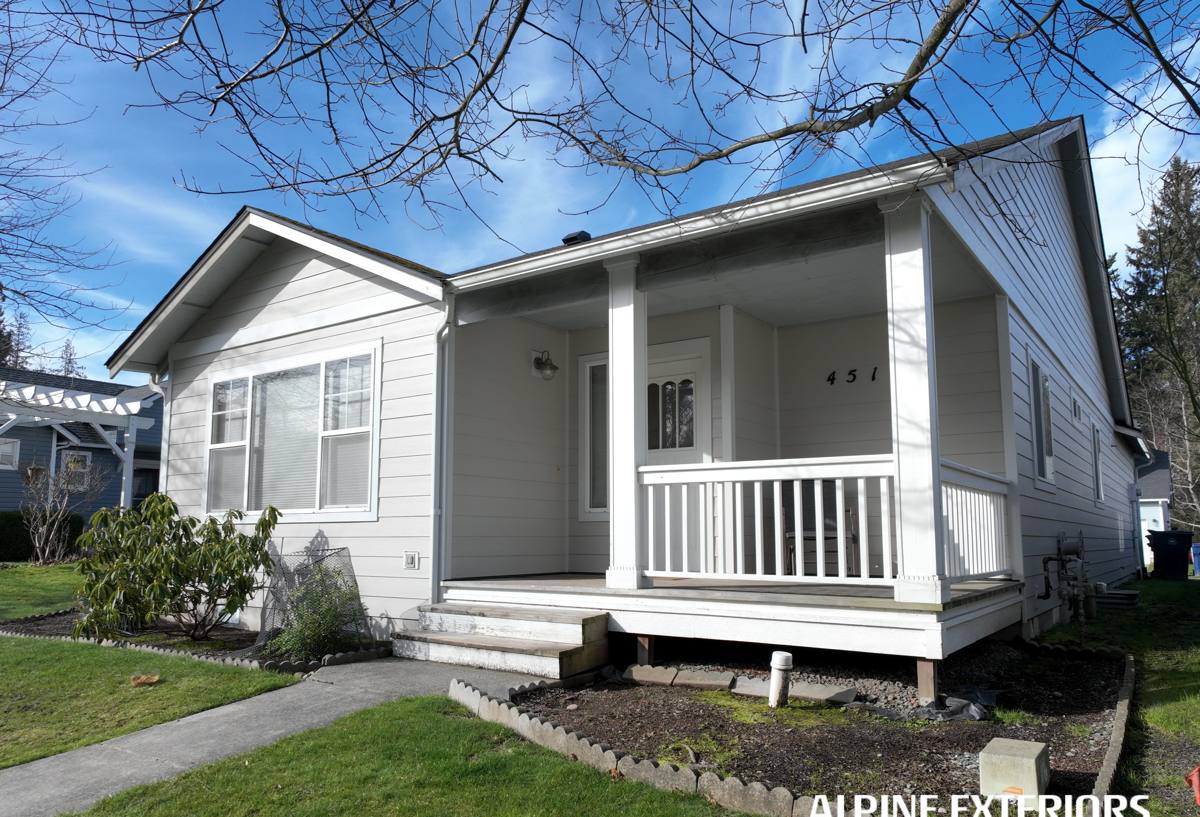
Signs a Bow Roof Needs Replacement, Not Another Repair
Homeowners in this area often ask for a patch when what the roof actually needs is a full replacement. Here's what tends to separate the two:
- Granule loss heavy enough that you're finding shingle grit in gutters and downspouts every time it rains
- Moss or moss stains coming back within months of being cleaned, even on north-facing or shaded slopes
- Shingles that are curling, cupping, or cracking rather than just discolored
- Soft spots or sagging in the roof deck, especially near valleys or chimneys, which usually means moisture has reached the wood
- Daylight visible through the attic roof boards, or consistent damp smell in the attic during wet months
- Flashing around vents, skylights, or chimneys that's rusted, lifted, or was caulked instead of properly re-flashed
- A roof approaching or past its expected material lifespan, especially if it was installed without upgraded underlayment
One or two of these can often be addressed with targeted repair. Several at once, or any sign of deck damage, usually means repair is just delaying a replacement that's already due.
What a Correct Roof Replacement Actually Involves
Tear-Off and Deck Inspection
We remove the old roofing down to the deck rather than laying new material over old. That's the only way to actually see what condition the plywood or sheathing is in — soft, delaminated, or water-stained boards get replaced before anything new goes down. Covering up a compromised deck is one of the most common shortcuts that leads to early failure in wet coastal climates.
Ice and Water Protection Where It Matters
Eaves, valleys, and any roof-to-wall transitions get self-adhering ice and water shield, not just standard felt. Given how much sustained rain Bow gets compared to areas further from the water, this is one of the details we won't skip to save cost.
Underlayment and Flashing
Synthetic underlayment across the full deck, new flashing at every penetration and transition — chimneys, skylights, sidewalls, vent stacks — rather than reusing what's already there. Old flashing that looks intact can still have pinholes or gaps that only show up once water starts moving behind it.
Ventilation
Balanced intake and exhaust ventilation keeps the attic close to outdoor temperature and humidity, which slows moss regrowth, reduces condensation on the underside of the deck, and helps shingles last their full rated life. A hot, damp attic ages a roof from the inside just as much as weather ages it from the outside.
Roofing Material Installed to Spec
Correct nailing pattern and placement, proper starter strip and drip edge at eaves and rakes, and manufacturer-specified exposure. This is where a lot of the difference between a roof that lasts and one that doesn't actually comes from — installation detail, not just the shingle brand.
Choosing a Roofing Material for Skagit County's Coastal Conditions
There's no single "best" roofing material for every Bow home — it depends on budget, roof pitch, and how much long-term maintenance you want to take on. Here's how the common options compare for this climate specifically:
| Material | Performance in Salt Air / Moss Climate | Typical Lifespan | Maintenance |
|---|---|---|---|
| Architectural asphalt shingle | Good with algae-resistant granules; standard grades can streak faster near the water | 25–30 years | Periodic moss/debris removal |
| Metal (standing seam or panel) | Strong once properly coated and fastened; needs coastal-rated fasteners and coatings to resist salt corrosion | 40–50+ years | Low; occasional fastener and sealant check |
| Composite/synthetic shake or slate | Holds up well to rain and doesn't feed moss the way wood can, but cost is higher upfront | 40–50 years | Low |
| Cedar shake | Attractive but moss, moisture retention, and salt exposure shorten its practical life here without diligent upkeep | 15–25 years with upkeep | High |
For most Bow homes, we steer people toward algae-resistant architectural shingles or coastal-rated metal, not because other materials can't work, but because they require the least fighting against the climate to hold up. Cedar shake can still be the right call for the look a homeowner wants — it just needs a realistic maintenance plan going in, including regular cleaning and treatment, or moss and moisture will win faster than the material's rated lifespan suggests.
Moss Isn't Just Cosmetic
Moss holds moisture against the roof surface, which shortens shingle life, promotes granule loss, and can work its way under shingle edges over time. In a location like Bow, where shaded, north-facing slopes rarely dry out fully between rain events, moss prevention has to be built into the replacement itself:
- Algae-resistant shingle granules where the roof design allows it
- Zinc or copper strips near the ridge on moss-prone slopes, which release trace metal ions that discourage regrowth as rain washes over them
- Improved attic ventilation so the roof deck sheds heat and moisture more evenly
- Trimming back overhanging branches where practical, since shade and debris are the biggest drivers of moss return
Our Roof Replacement Process
- On-site inspection and estimate — we walk the roof and attic, note deck condition, ventilation, and flashing issues, and give a written scope, not just a number
- Material selection — we go over the trade-offs for your specific roof pitch, shading, and budget rather than pushing one product
- Scheduling around weather — replacement work gets timed for a realistic dry window, since a rushed install in wet conditions is how underlayment gets compromised before the roof is even finished
- Tear-off, deck repair, and dry-in — old roofing comes off, damaged decking gets replaced, and the roof is protected the same day whenever possible
- Installation — underlayment, flashing, ventilation components, and roofing material installed to manufacturer and code specification
- Final walkthrough — we cover what was done, what the maintenance expectations are, and what your warranty actually covers
What Drives the Cost of a Roof Replacement
| Factor | Why It Matters |
|---|---|
| Roof size and pitch | Steeper roofs take longer and require more safety setup, adding labor cost |
| Deck condition | Hidden rot or delamination found during tear-off adds material and labor to repair before roofing can go on |
| Material choice | Standard asphalt shingle is the most budget-friendly; metal and composite materials cost more upfront but less over time |
| Number of penetrations | Chimneys, skylights, and multiple vent stacks each need individual flashing work |
| Ventilation upgrades | Adding or correcting intake/exhaust venting is worth the added cost in this climate but does add to the scope |
| Access and layout | Roofs with limited ground access or complex valleys take longer to stage and complete |
Anyone quoting a roof replacement in Bow without inspecting the attic and deck in person is guessing. We'd rather give you an accurate number after actually seeing the roof than a low estimate that grows once tear-off starts.
Why It Matters That We Already Work in This Area
A crew that regularly works Skagit County's coastal communities already knows which slopes in a given neighborhood hold moss longest, how far salt exposure typically extends from the water, and which flashing and fastener grades actually hold up here versus further inland. That's not something you can fully substitute with a generic install — it shapes material recommendations, ventilation design, and even the time of year we'll recommend scheduling the work. It also means we're a known, reachable crew if a question comes up on the roof five years down the line, not a name from an out-of-area outfit that isn't coming back.
If your roof is showing signs of wear, or you just want an honest read on whether repair or replacement makes sense for your Bow home, we're happy to take a look. Reach out for a free, no-pressure estimate using the form below.