 Skagit County
 Burlington Windows Face a Specific Kind of Weather
Burlington sits in the Skagit Valley, close enough to the water that homes here deal with salt-laden air, close enough to the mountains that they catch driving rain off the Sound, and wet enough for most of the year that moss and mildew have a long season to work with. None of that is dramatic on its own, but stacked together, year after year, it's exactly the combination that finds every weak point in a window installation. A window that would hold up fine in a dry inland climate can fail here in five or six years if it wasn't flashed, sealed, and fitted correctly the first time.
Window replacement isn't just a cosmetic upgrade in Skagit County — it's one of the more effective ways to stop water intrusion at the wall, since window openings are one of the most common places moisture finds its way behind siding. Get the installation right and a window can last decades. Get it wrong and you're looking at rot, mold, and a repeat job sooner than you'd like.
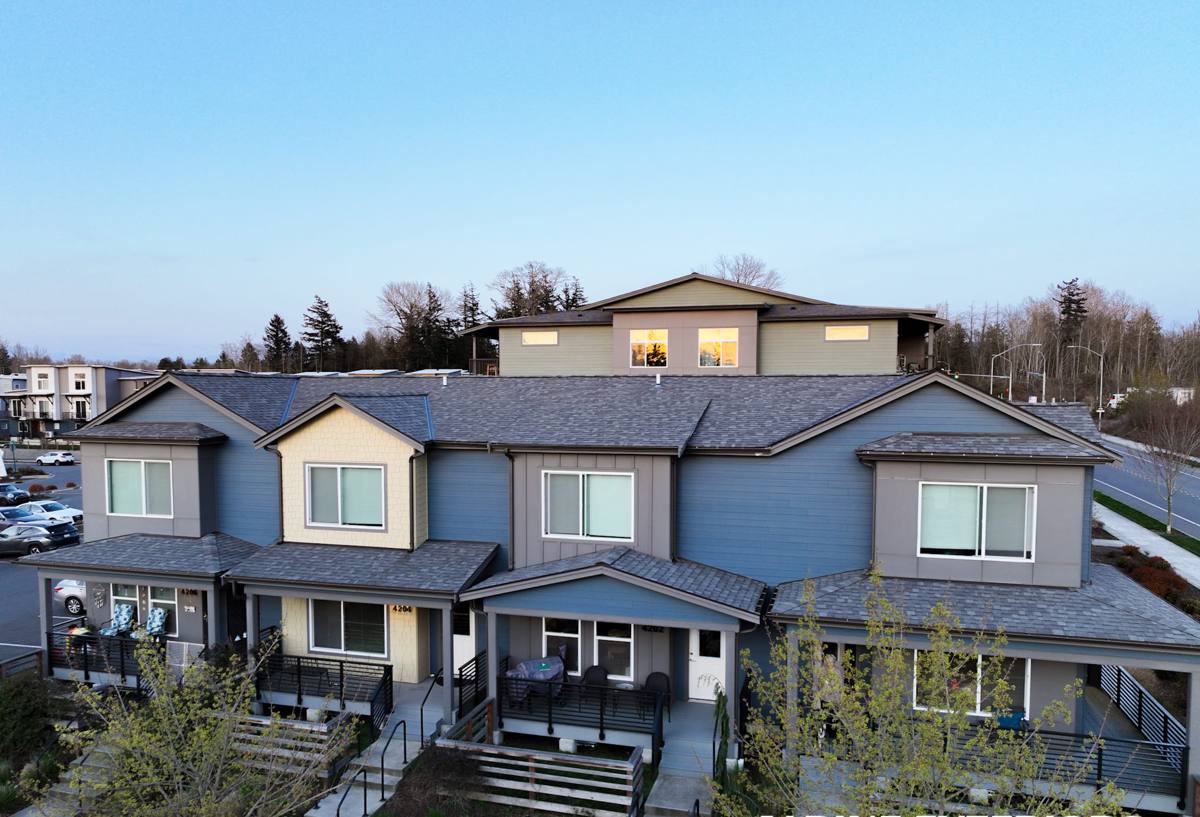
What Salt Air, Rain, and Moss Actually Do to a Window
Salt air
Even a few miles inland, airborne salt accelerates corrosion on hardware — hinges, locks, balance systems, and fasteners. Cheaper coated hardware pits and seizes up faster than it should; window frames with exposed metal components take the worst of it.
Driving rain
Skagit County storms don't always come straight down — wind-driven rain hits windows at an angle, which means it's testing your flashing and sealant joints, not just the glass. A window that's watertight in a light shower can still leak in a sideways storm if the flashing detail underneath was skipped or done wrong.
Moss and prolonged dampness
Wet weather here doesn't let up for months at a time, so any spot where water sits — a poorly sloped sill, a gap in caulking, a low point in trim — stays damp long enough to grow moss, mildew, and eventually rot. That's a maintenance issue on siding and trim, and a structural one if it reaches the framing around a window opening.
Signs a Burlington Home's Windows Are Already Losing the Fight
- Fogging or a permanent haze between the panes of a double-pane window (a failed seal, not a cleaning problem)
- Soft or discolored trim and siding directly around the window frame
- Drafts you can feel near the frame even when the window is fully latched
- Windows that stick, won't stay open, or are hard to lock — often a sign the frame has shifted or swollen
- Visible gaps in exterior caulking or paint that's cracking and peeling right at the window edge
- A musty smell in the room, especially after a stretch of rain
- Moss or dark streaking on the sill or the wall just below the window
Any one of these is worth a look. Several at once usually means water has been getting behind the window for a while, and a straightforward glass replacement won't fix it — the frame and flashing need attention too.
What a Correct Installation Actually Involves
The window unit itself matters, but in this climate the installation detail matters more. Most leaks we're called out to fix trace back to flashing and sealant work, not the window brand.
Removal and opening inspection
Once the old window is out, the rough opening gets inspected before anything new goes in. This is the point where hidden rot or water damage shows up — and it needs to be dealt with, not covered over.
Flashing, in the right order
Flashing has to be layered correctly — sill pan first, then side flashing, then the housewrap lapped over the top — so that any water that does get past the window sheds outward and down, never inward. This sequence is easy to get wrong in a hurry, and it's the single biggest factor in whether a window stays dry for 20 years or leaks in year three.
Shimming and squaring
A window that's not shimmed level and square will bind, won't seal evenly against its weatherstripping, and puts uneven stress on the frame — all of which shorten its life.
Sealant and insulation
The gap between the window frame and the rough opening gets sealed and insulated, not just caulked over on the outside. Interior air sealing matters as much as exterior weatherproofing for keeping drafts and condensation out.
Exterior finish work
Trim, caulking, and paint or stain get finished so water sheds away from every joint, with no exposed seams for driving rain to find.
Choosing Materials for This Climate
There's no single "best" window material — the right choice depends on budget, maintenance tolerance, and how exposed the home is. Here's how the common options hold up in Skagit County's conditions specifically:
| Material | How it handles salt air & rain | Maintenance | Typical cost position |
|---|---|---|---|
| Vinyl | Good — won't corrode or rot; seams and hardware are the main watch points | Low | Most affordable |
| Fiberglass | Very good — dimensionally stable in temperature swings, resists moisture well | Low | Mid to upper-mid |
| Wood (unclad) | Poor without diligent upkeep — the wet season is unforgiving on exposed wood | High | Varies, often high |
| Wood-clad (vinyl or aluminum exterior) | Good on the exterior face; cladding seams need correct detailing | Moderate | Upper-mid to high |
| Aluminum | Fair — conducts cold and can promote condensation unless thermally broken | Low | Varies |
Our standard recommendation for most Burlington homes is vinyl or fiberglass, simply because they hold up with the least upkeep in a climate that already asks a lot of exterior surfaces. Unclad wood isn't something we push here — not because it's a bad product, but because the maintenance schedule it needs to stay watertight in this much rain isn't realistic for most homeowners, and a missed year of upkeep is exactly when rot gets started.
New Construction, Retrofit, or Full-Frame Replacement
Not every window job is the same job. Three common situations:
New construction windows
Installed with a nailing fin directly to the sheathing, before siding goes on. This gives the most control over flashing sequencing and is the strongest long-term approach when it's an option.
Retrofit (pocket) replacement
The new window is fitted into the existing frame, leaving trim and siding undisturbed. Faster and less invasive, and appropriate when the existing frame and flashing are still sound — but it depends on that frame being genuinely in good shape, which is why we check it first rather than assuming.
Full-frame replacement
Everything down to the rough opening comes out. More work, but it's the right call whenever there's already water damage, rot, or a flashing problem that a retrofit would just seal back in.
We tell homeowners honestly which category their windows fall into — a retrofit is quicker and cheaper, but if the opening's compromised, doing a retrofit anyway just delays a bigger repair.
Energy Performance and Condensation
Skagit County's mild-but-damp climate means condensation is often a bigger day-to-day nuisance than heat loss. Double or triple glazing with a warm-edge spacer and a decent low-E coating cuts down on interior condensation on cold, wet mornings, which in turn cuts down on the mildew that tends to grow on sills and window frames when moisture sits there all winter. Look for NFRC-rated U-factor and condensation resistance numbers rather than marketing claims — the ratings are standardized and comparable across brands.
Our Process
- On-site assessment of existing windows, framing condition, and drainage around each opening
- Straightforward recommendation on retrofit vs. full-frame, with the reasoning explained
- Material and product selection based on budget and exposure, not a one-size-fits-all pitch
- Installation with sill pan flashing, proper shimming, and interior/exterior sealing done in the correct order
- Final check of operation, seal, and finish work before we consider the job done
Why a Crew That Already Works Burlington Matters
Window installation done to a manufacturer's generic instructions can still leak in Skagit County if it doesn't account for local wind-driven rain patterns and the length of the wet season. A crew that regularly works Burlington and the surrounding valley knows which flashing details actually hold up here, what local building department expectations are for window replacement, and how much lead time weather adds to a schedule. That's not something a traveling crew or an out-of-area installer picks up on the first job.
After Installation: Keeping Windows in Good Shape
- Rinse salt residue off exterior frames and hardware a few times a year, especially after storms
- Check exterior caulk lines annually and touch up any cracking before wet season sets in
- Keep gutters and downspouts clear so water isn't sheeting down across window heads
- Clear moss or debris off sills and tracks so water isn't sitting against the frame
- Operate every window through its full range a couple of times a year so hardware doesn't seize
If you're dealing with drafty, foggy, or water-stained windows anywhere in Burlington, we're happy to take a look and give you a straight answer on what's actually needed — no pressure, no inflated scope. Reach out for a free estimate using the form below.