 Skagit County
 Why Cedardale Roofs Age Differently Than Roofs Inland
Cedardale sits close enough to Skagit County's saltwater and river-valley air that roofing materials here take a different kind of beating than the same products would twenty or thirty miles inland. It's not one dramatic event that wears out a roof in this area — it's the steady combination of salt-laden moisture in the air, long stretches of driving rain off the water, and a moss season that can run most of the year in shaded, north-facing sections of a roof. Any one of those on its own is manageable. Together, they shorten the useful life of a poorly installed or poorly maintained asphalt shingle roof faster than most homeowners expect.
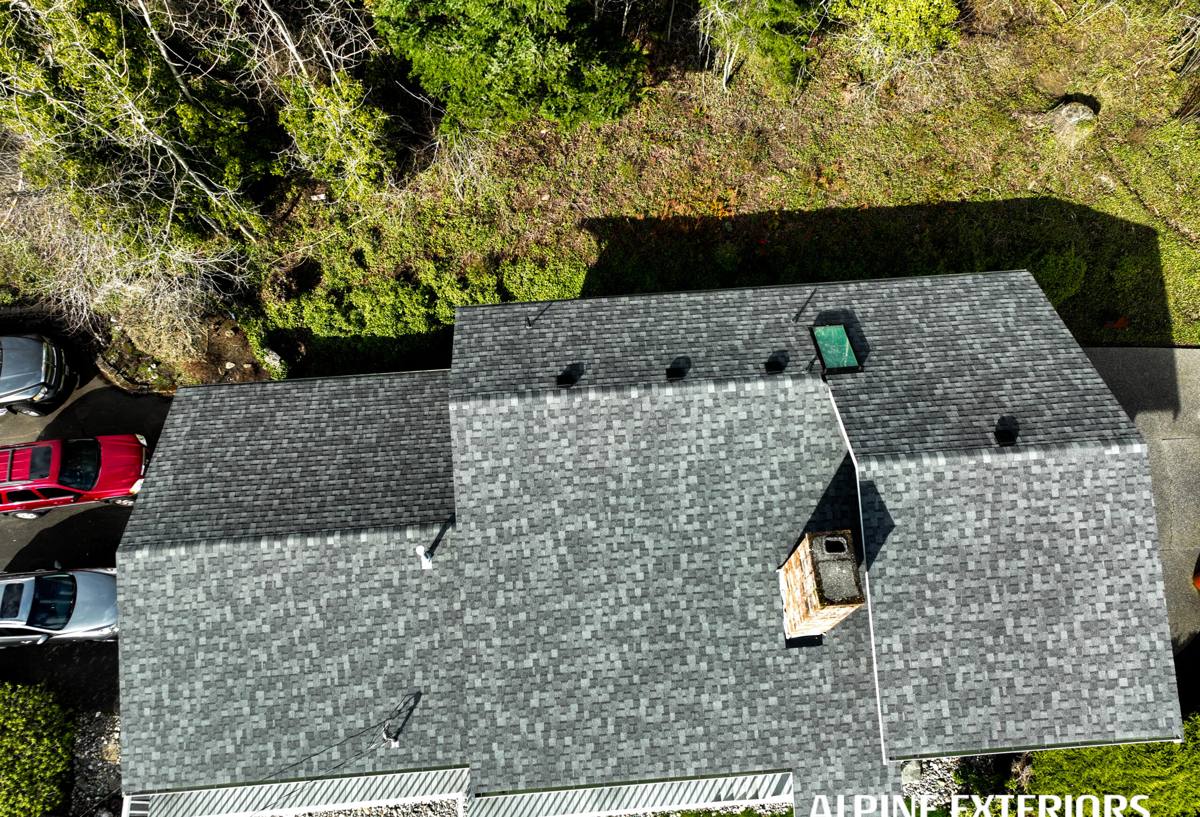
An asphalt shingle roof done right for Cedardale isn't fundamentally a different product than what you'd install anywhere else in Western Washington. What changes is the attention paid to ventilation, fastening, flashing detail, and the underlayment system underneath the shingles — the parts you don't see once the job is finished, but that determine whether the roof is still performing well in fifteen years.
What Local Homes Actually Need From an Asphalt Shingle Roof
Homes in and around Cedardale generally need three things from a roofing system more than homes in drier parts of the state:
- Sustained wind-driven rain resistance — not just shedding water on a calm day, but keeping water out when rain is being pushed sideways into laps, valleys, and edges.
- Moss and algae resistance — especially on north- and east-facing slopes, under tree cover, and anywhere shade keeps a section of roof damp longer than the rest.
- Corrosion-resistant fasteners and flashing — salt air in the air accelerates corrosion on the wrong grade of metal, which is a slow, invisible failure point until it isn't.
None of these needs are exotic. They're addressed with correct product selection and correct installation practice — but they're also the details that get skipped when a crew is treating a Skagit County roof the same way they'd treat one in a dry climate zone.
Choosing the Right Asphalt Shingle for This Environment
Asphalt shingles come in a range of grades, and the differences matter more here than in milder climates. We walk homeowners through the trade-offs rather than defaulting to whatever's cheapest or whatever has the flashiest marketing.
| Shingle Type | Typical Lifespan | Best For | Trade-Offs |
|---|---|---|---|
| 3-Tab (standard) | 15–20 years | Budget-conscious rebuilds, rentals | Lower wind rating, less algae resistance unless treated, flatter appearance |
| Architectural / Dimensional | 25–30 years | Most Cedardale homes | Higher upfront cost, but far better wind and impact performance |
| Algae-Resistant (AR) Cap | Same as base shingle | Shaded lots, north-facing slopes, heavy tree cover | Slight cost premium; doesn't eliminate moss, reduces streaking and buildup |
| Impact-Resistant (Class 4) | 25–30+ years | Homes wanting longer maintenance intervals | Highest material cost; often qualifies for insurance discounts |
For most Cedardale homes, we recommend an architectural shingle with an algae-resistant cap as the baseline — the added cost over standard 3-tab is modest, and the return in reduced moss cleaning and streaking over the life of the roof is real. We're honest about the fact that no shingle is maintenance-free in this climate; the goal is picking the version that needs the least fighting against.
Moss, Algae, and Salt Air: The Maintenance Reality
Moss doesn't damage a roof by sitting on top of it — it damages a roof by holding moisture against the shingle surface and working under tabs and edges over time, which is exactly the kind of slow deterioration that's easy to ignore until it isn't. In Cedardale's climate, shaded slopes and roofs under mature trees are the most at risk, and that risk builds year over year if it's never addressed.
What actually helps
- Algae-resistant shingles on shaded or north-facing sections
- Keeping gutters and valleys clear so water doesn't sit
- Trimming back overhanging branches where practical
- Gentle, low-pressure moss removal on a regular schedule — never pressure washing, which strips granules and shortens shingle life
- Zinc or copper strips near the ridge on moss-prone roofs, which slow regrowth without chemical treatment
Salt air adds a second, quieter factor: it accelerates corrosion on exposed metal — nails, flashing, vents, and fasteners — faster than it degrades the shingles themselves. That's why fastener and flashing selection matters as much as shingle selection on a Cedardale roof.
What a Correct Installation Actually Involves
A roof that performs well here isn't just shingles nailed to plywood. The parts underneath and around the shingles are what determine whether wind-driven rain stays out and whether moisture gets a chance to build up in the attic.
The system, layer by layer
- Deck inspection and repair — soft, delaminated, or water-damaged sheathing gets replaced before anything goes down, not covered over.
- Ice-and-water shield at eaves, valleys, and penetrations — the areas most exposed to wind-driven rain and ice damming get a self-adhering membrane, not just felt.
- Synthetic underlayment across the full deck for a secondary water barrier that outperforms old-style felt in wet climates.
- Corrosion-resistant flashing at chimneys, walls, skylights, and valleys — this is where leaks most often start, and it's where cutting corners shows up first.
- Balanced attic ventilation — intake at the eaves, exhaust at the ridge, sized correctly for the attic volume. Poor ventilation traps moisture, which shortens shingle life from underneath.
- Correct nailing pattern and fastener count — matched to the shingle manufacturer's wind rating, using corrosion-resistant nails appropriate for a coastal-influenced climate.
- Shingle installation with proper offset, exposure, and starter course to keep the wind and water resistance intact at every edge.
Skipping or shortcutting any one of these steps doesn't usually cause an immediate problem — it causes a problem in year eight or year twelve, which is exactly the kind of failure that's hardest to trace back to its cause.
Our Process for Cedardale Roofing Projects
We keep the process straightforward and transparent from the first visit to final cleanup:
- On-site inspection — we look at the deck, existing ventilation, flashing condition, and moss/algae patterns specific to your roof's exposure.
- Written estimate — clear scope, materials, and pricing, with options explained rather than a single take-it-or-leave-it number.
- Scheduling around weather — asphalt shingle installation needs a reasonably dry window, and we plan around Skagit County's rain patterns rather than rushing a job into wet conditions.
- Tear-off and deck assessment — old material comes off, and any deck damage is identified and addressed before underlayment goes down.
- Installation following the layered system above, with attention to ventilation and flashing details.
- Site cleanup — magnetic sweep for nails and full debris removal before we consider the job done.
- Walkthrough — we review the finished roof with you and go over any maintenance recommendations specific to your property's shade and exposure.
What Drives Cost on a Cedardale Roofing Project
| Factor | Why It Matters Here |
|---|---|
| Roof pitch and complexity | Steeper roofs and multiple valleys take longer and require more flashing work |
| Deck condition | Hidden water damage from long-term moss or old leaks adds repair cost that's only visible after tear-off |
| Shingle grade selected | Standard vs. architectural vs. impact-resistant changes both material and labor cost |
| Ventilation upgrades needed | Older homes often need added intake or exhaust venting to meet current standards |
| Access and tree cover | Heavily wooded lots common in Cedardale can add setup and cleanup time |
| Flashing and penetration count | Chimneys, skylights, and multiple vents each add labor and material |
We'd rather walk a homeowner through these factors honestly during the estimate than give a number that doesn't hold up once tear-off reveals what's actually going on underneath.
Signs Your Roof Needs Attention
- Granules collecting in gutters or at downspout outlets
- Curling, cracking, or cupped shingles, especially on south- and west-facing slopes
- Visible moss or algae streaking that's expanded over the past year or two
- Soft spots or sagging when walked on (a sign to call a professional, not to keep walking)
- Water staining on interior ceilings or in the attic near penetrations
- Missing or lifted shingles after a windstorm
- Flashing that looks rusted, loose, or pulled away from a chimney or wall
Catching these early is almost always cheaper than waiting — a repair addressed while it's still a repair costs a fraction of what it costs once it's become a full replacement with deck damage attached.
Why Local Roofing Experience Matters in Cedardale
Skagit County's roofing conditions aren't the same as roofing conditions two hours south or east. A crew that regularly works Cedardale and the surrounding Skagit County area already knows which slopes tend to hold moss, how much wind-driven rain a given roof orientation typically takes, and which flashing details actually hold up against salt air over time — instead of learning those lessons on your roof. That experience shows up in the small decisions made on-site: where to add an extra course of ice-and-water shield, how to detail a valley in a heavy-shade area, which fastener grade makes sense given the property's exposure. It's the difference between a roof that looks right on installation day and a roof that's still performing correctly a decade later.
Get a Free, No-Pressure Estimate
If your roof is showing wear, due for replacement, or you just want an honest opinion on its current condition, we're happy to take a look. The estimate is free, there's no pressure to move forward, and you'll get a clear explanation of what we see and what your realistic options are. Use the form below to get started.