 Skagit County
 Board & Batten Siding in Cedardale's Climate
Cedardale sits in one of the wetter, damper pockets of Skagit County, close enough to tidal water and marine air to pick up salt-laden wind on top of the region's already heavy fall-through-spring rainfall. That combination is hard on any exterior cladding, but it's especially unforgiving on board and batten siding, where the entire look of the system depends on tight, consistent vertical seams. If those seams and the material behind them aren't built for sustained moisture exposure, you end up with staining, soft spots, and green moss growth working down from the eaves and around the battens within a few seasons.
We install board and batten siding on Cedardale homes regularly, and the jobs we get called back to fix almost always share the same root cause: a product or installation method that was fine for a drier climate but wasn't matched to what this part of Skagit County actually throws at a house year-round.
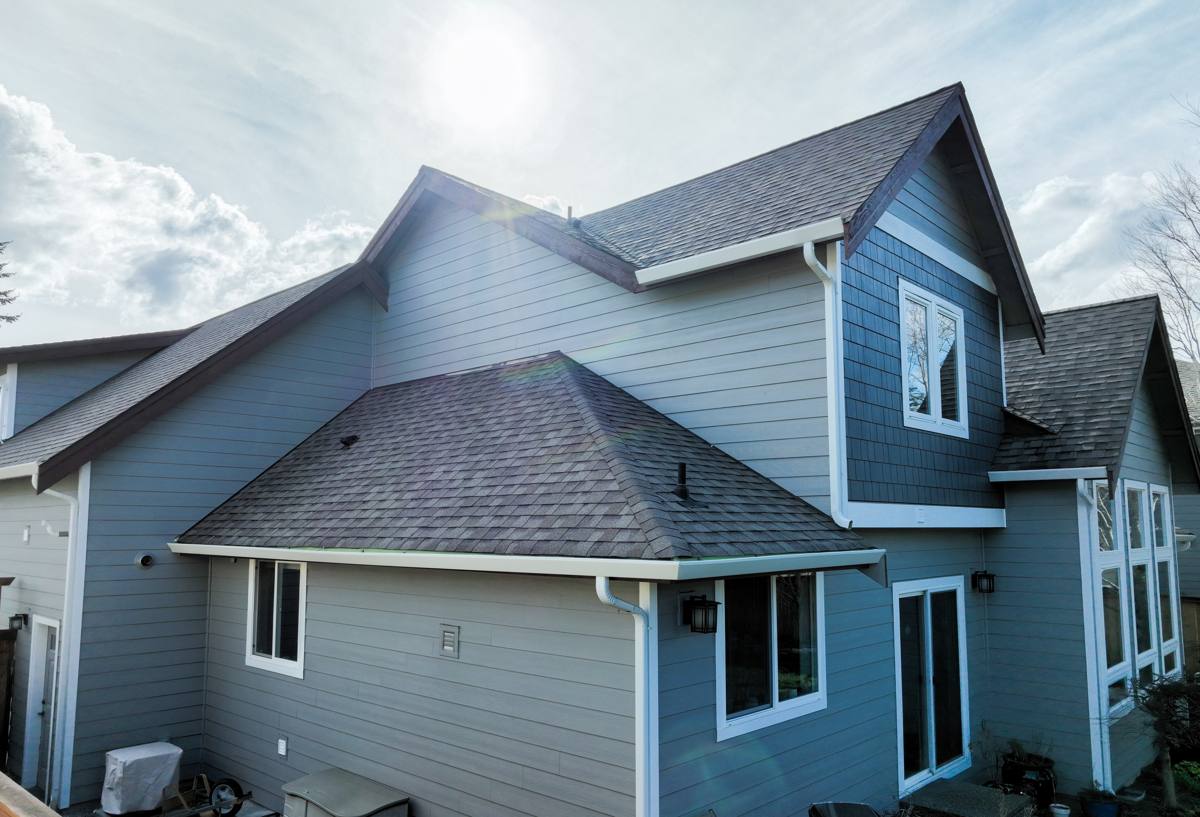
Why Board & Batten Is a Popular Choice Here
Board and batten has real appeal for Cedardale's mix of farmhouse-style homes, newer builds, and rural properties. The vertical lines read as more substantial and architectural than flat lap siding, and it pairs well with the barns, outbuildings, and agricultural character of the surrounding area. It also does something practical: vertical channels shed water differently than horizontal lap siding, which can be an advantage if the profile and flashing details are done correctly.
That last part is the catch. Board and batten only works as well as its weakest seam. Done right, it's a durable, low-maintenance look. Done with the wrong material or shortcuts on flashing, it's one of the faster ways to trap moisture against a wall.
What Cedardale's Climate Demands From the System
- Moisture resistance at every seam — battens create dozens of vertical joints per elevation, each one a potential water entry point if not backed and flashed properly.
- Resistance to sustained dampness — Skagit County's long wet season means siding often doesn't get a real chance to dry out between rain events from October through April.
- Moss and algae resistance — shaded north walls and areas near tree cover in and around Cedardale stay damp longer, which is exactly what moss needs to establish.
- Salt-air tolerance — proximity to Puget Sound tidal influence means fasteners, trim, and finish coatings all face more corrosion pressure than they would further inland.
- Dimensional stability — wide swings between soggy winters and warm, dry late summers stress any wood-based product through repeated swelling and shrinking.
What a Correct Board & Batten Installation Involves
Board and batten looks simple from the street — vertical boards, battens over the seams — but the installation details that actually keep water out are mostly invisible once the job is done.
Behind the Siding
A correct install starts with a weather-resistant barrier and rainscreen or furring strategy that lets any moisture that does get behind the cladding drain and dry rather than sit against the sheathing. In a climate as consistently damp as Cedardale's, skipping this step is one of the most common causes of hidden rot we find when we open up a wall during a re-side.
Seam and Batten Placement
Battens need consistent spacing and fastening patterns that account for expansion and contraction, with fasteners set to manufacturer spec rather than "close enough." Butt joints where boards meet at corners or window returns need to be flashed, not just caulked and hoped for.
Flashing and Transitions
Every window, door, roofline, and deck ledger intersection is a place water wants to get behind the siding. Z-flashing above horizontal trim, proper kick-out flashing at roof-to-wall transitions, and correctly lapped house wrap at all penetrations matter more in Cedardale's climate than almost anywhere drier in the state.
Fastening and Hardware
Given the salt-air exposure, fastener corrosion resistance isn't optional. We use fasteners and trim hardware rated for coastal-adjacent exposure, not standard interior-grade hardware that will streak and weaken over a few wet seasons.
Why We Only Install James Hardie for This Application
Board and batten is one of the styles where the choice of base material matters most, because the vertical seam count multiplies whatever weakness the product has. We install James Hardie fiber cement exclusively, and for board and batten specifically, the reasoning is straightforward:
- It won't rot. Fiber cement doesn't feed moss the way wood-based or wood-fiber composite products can, and it doesn't soften when it stays damp for weeks at a time — a real factor in a Cedardale winter.
- It holds paint and factory finish. Hardie's ColorPlus finish is baked on at the factory and engineered to resist fading and moisture-related failure far longer than field-applied paint on wood or engineered wood products, which matters on board and batten where touch-up painting around every batten is tedious and expensive.
- It's dimensionally stable. Because it doesn't swell and shrink with moisture the way wood-based products do, the tight reveals and seams that make board and batten look crisp stay crisp for years instead of gapping or cupping.
- It's engineered for this exact climate. Hardie's HZ5 product line is formulated for regions with significant moisture and freeze-thaw cycling, which fits western Washington's Skagit County conditions better than a general-purpose or southern-climate formulation.
We don't install LP SmartSide, vinyl, cedar, primed spruce, or other fiber cement brands like Allura or Cemplank. Some of those products perform fine in the right climate and application; we simply won't put our name behind them for board and batten work in a place as consistently wet as Cedardale, where seam count and moisture exposure are both working against the material.
Comparing Siding Options for Cedardale's Conditions
| Material | Moisture/Moss Resistance | Salt Air Behavior | Long-Term Board & Batten Fit |
|---|---|---|---|
| James Hardie fiber cement (HZ5) | High — won't rot, resists moss growth on the material itself | Good with corrosion-resistant fasteners and trim | Holds tight seams and factory finish for the long term |
| Wood / cedar | Moderate to low — absorbs moisture, needs repainting/sealing | Weathers faster near salt air | Seams and battens need frequent recaulking and repainting |
| Vinyl | Doesn't rot, but can warp/crack with temperature swings | Can chalk and discolor over time | Board and batten profiles in vinyl often look visibly thin |
| LP SmartSide / engineered wood | Better than raw wood, but edges remain moisture-sensitive | Cut edges need careful sealing near salt exposure | Seam integrity depends heavily on installation quality |
What Drives the Cost of a Board & Batten Job
| Factor | Why It Matters in Cedardale |
|---|---|
| House wrap / rainscreen system | Proper drainage behind the siding is essential given the wet season length |
| Existing siding removal and sheathing condition | Older homes in the area sometimes have moisture damage that needs repair before re-siding |
| Trim and flashing detail | More window/door/roofline transitions mean more flashing work and labor time |
| Batten spacing and reveal width | Tighter, more custom spacing takes more layout and fastening time |
| Color and finish selection | ColorPlus factory finishes vs. field painting affect both cost and long-term maintenance |
Our Process for Cedardale Homes
1. On-Site Assessment
We walk the property, check existing siding and sheathing condition, note shaded or moss-prone areas, and look at how the home is exposed to prevailing wind and rain direction.
2. Plan and Product Selection
We spec the Hardie board and batten profile, reveal width, and ColorPlus color that fit the home's style, then plan flashing and drainage details specific to the trouble spots we identified.
3. Prep and Moisture Check
Old siding comes off, sheathing gets inspected and repaired as needed, and any rot or hidden moisture damage is addressed before anything new goes up — closing that up under new siding just delays a bigger problem.
4. Installation
House wrap, drainage plane, flashing, boards, and battens go in to manufacturer spec, with fastening and hardware selected for the salt-air exposure common around Cedardale.
5. Final Walkthrough
We review the finished job with the homeowner, including basic care guidance for keeping moss and mildew from establishing on trim, gutters, and shaded elevations.
Why Hiring a Crew That Already Works Cedardale Matters
Board and batten mistakes tend to be slow-developing — a poorly flashed seam might not show a problem for a year or two, by which point moisture damage is already inside the wall. A crew that already works this specific area of Skagit County has seen which elevations catch the worst weather, which older homes tend to have hidden moisture issues behind the siding, and how quickly moss establishes on north-facing walls near tree cover. That local pattern recognition is the difference between a board and batten job that still looks sharp in ten years and one that needs seam repairs in three.
Questions Worth Asking Any Contractor Before You Hire
- What drainage or rainscreen approach do you use behind board and batten, and why?
- How do you flash window and door transitions on a vertical-seam siding system?
- What fastener and trim hardware do you use given the salt-air exposure in this area?
- Do you inspect and repair sheathing before installing new siding, or install over existing damage?
- Can you explain why you use the siding brand you use, not just that you use it?
If you're considering board and batten siding for a home in Cedardale, we're glad to walk the property, look at what your current siding is telling you, and put together a straightforward, no-pressure estimate for a Hardie system built for this climate — no obligation either way. Use the form below to get started.