 Skagit County
 Storm Damage Roof Repair in Cedardale
Cedardale sits close enough to Puget Sound and the Skagit River delta that its roofs take a different kind of beating than homes further inland. Salt-laden air corrodes fasteners and flashing faster than manufacturers' warranties assume. Winter storms bring sideways rain that finds every gap in a roof system, not just the obvious holes. And the long, damp Skagit County moss season keeps shingles wet for weeks at a time, which softens granules and shortens the life of anything already stressed by wind. When a storm passes through and leaves you with missing shingles, a leak, or a soft spot in the decking, the repair needs to account for all of that — not just patch the visible damage and move on.
This page covers what storm damage roof repair actually involves for a Cedardale home, what we look for beyond the obvious, and how our process works from the first call to the final walkthrough.
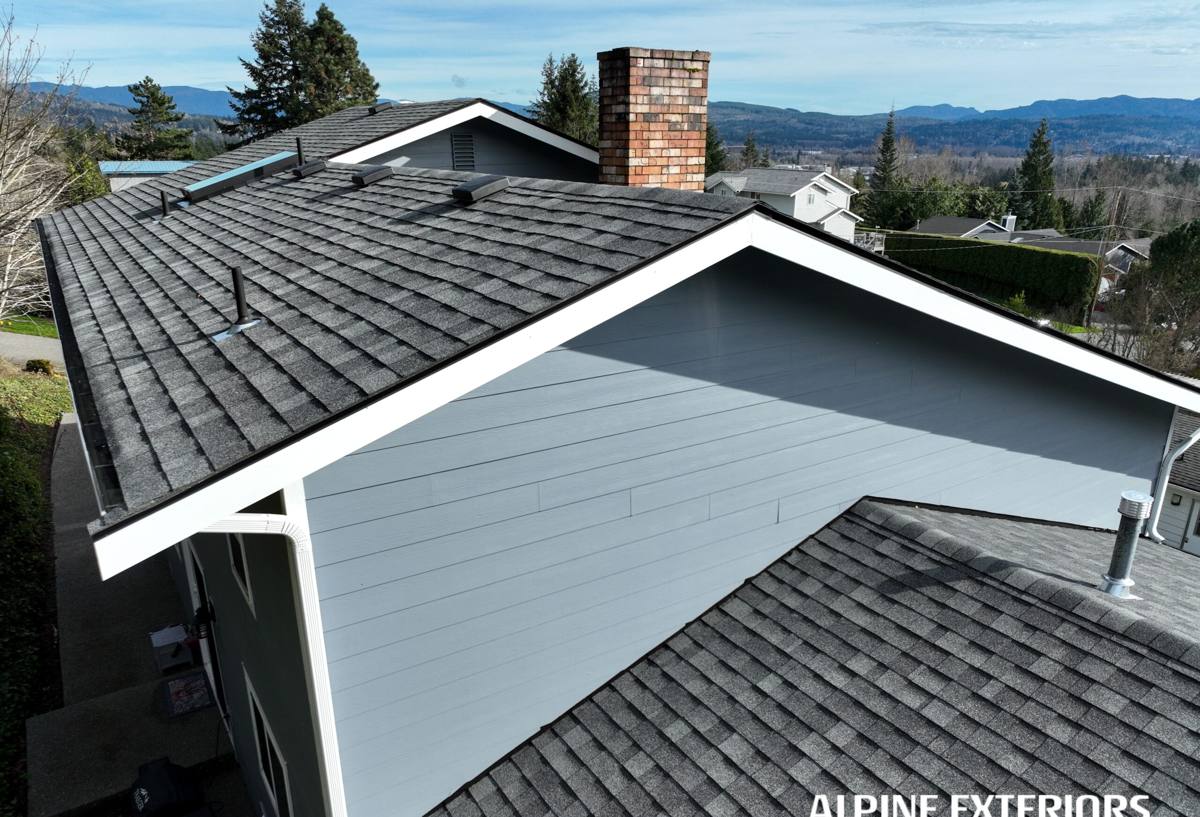
Why Cedardale Roofs Take Storm Damage Differently
Salt Air and Metal Fatigue
Roofing systems rely on metal in more places than most homeowners realize — nail heads, flashing at valleys and chimneys, drip edge, vent caps, and fastener strips on ridge caps. In a marine-influenced area like Cedardale, that metal corrodes faster than it would 20 or 30 miles inland. A storm that would just loosen a shingle on a drier roof can tear it completely free here, because the fasteners underneath were already weakened by salt exposure. This is why storm damage in Cedardale often looks worse than the wind speed alone would suggest.
Driving Rain and Wind-Driven Water Intrusion
Skagit County storms rarely come straight down. Wind pushes rain sideways and up under shingle tabs, lap siding, and flashing edges that were never designed to shed water moving in that direction. A roof can pass a calm-day visual inspection and still leak badly the next time wind direction and rain intensity line up the wrong way. That's why we always ask about wind direction and duration when a homeowner calls about a new leak — it tells us where to look first.
Moss Season and Hidden Deck Damage
Skagit County's moss season typically runs from fall through spring, and it doesn't just make a roof look neglected. Moss holds moisture against the shingle surface, which accelerates granule loss and can work its way under tabs that a storm has already lifted. On an older roof, this means storm damage repair sometimes uncovers softened decking or fastener pull-through that had nothing to do with the storm itself — the storm just exposed a problem that moss and moisture had already started.
What a Correct Storm Damage Repair Actually Involves
A lot of storm repair work in this region gets done as a quick patch — a few shingles swapped, some sealant smeared on a flashing joint — without anyone checking whether the underlying deck or underlayment took on water. That approach tends to fail again in the next storm. A correct repair covers the full path water could have taken, not just the spot where it's visibly showing up inside.
- Inspect the full roof plane involved, not just the reported leak location — wind damage is rarely limited to one shingle
- Check decking for soft spots or delamination anywhere water may have tracked, which is common after prolonged Skagit County rain events
- Evaluate flashing at valleys, chimneys, skylights, and wall intersections, since these are the most common failure points in wind-driven rain
- Match replacement shingles as closely as possible in type, color, and exposure to limit visible patchwork
- Re-secure or replace fasteners showing corrosion, not just the ones that failed outright
- Confirm attic-side conditions where accessible, since a slow leak can show water staining well before it shows up on a ceiling
- Clear moss and debris from the repair area and surrounding roof plane before closing up the work
Our Process for Cedardale Storm Repairs
1. Initial Assessment
We start with a roof-level inspection, not just a look from the ground. Storm damage in this area is often more extensive than what's visible from the driveway, especially on roof planes facing the direction the storm came from. We document what we find with clear notes on affected areas, not vague summaries.
2. Scope and Explanation
Before any work starts, we walk the homeowner through exactly what we found, what caused it, and what the repair will involve. If the damage is limited to a section of roof, we repair that section — we don't push a full replacement on a homeowner who doesn't need one. If we do think a fuller repair or eventual replacement makes sense given the roof's age and condition, we'll say so plainly and explain why.
3. Repair Work
Repairs are done to match the existing roof system as closely as possible — same or compatible shingle type, correct flashing details for the specific roof geometry, and fastener choices suited to a marine climate. We don't shortcut flashing work with sealant alone; sealant is a backup, not the primary water barrier.
4. Cleanup and Walkthrough
We clear debris, check gutters and downspouts for anything the storm knocked loose, and walk the homeowner through what was done and what to watch for going forward.
Repair vs. Replacement: How We Decide
Not every storm-damaged roof needs to come off. The right call depends on the roof's age, how much of it was affected, and what condition the rest of it is in. The table below covers the general factors we weigh — every roof is different, so this is a starting point for the conversation, not a formula.
| Factor | Leans Toward Repair | Leans Toward Replacement |
|---|---|---|
| Roof age | Under 15 years, good general condition | Nearing or past expected service life |
| Extent of damage | Localized to one section or plane | Multiple planes or widespread granule loss |
| Decking condition | Solid, dry deck under damaged shingles | Soft spots or rot found in multiple areas |
| Shingle match availability | Close match available for a clean patch | Discontinued style, patch would stand out badly |
| Storm frequency exposure | First significant damage in years | Repeated storm damage on the same roof |
Cost Factors for Storm Damage Repair
We don't quote pricing without seeing the roof, since storm damage varies so much from one house to the next. In general, cost is driven by a handful of factors: how much roof surface is affected, whether decking needs to be replaced along with shingles, how complex the flashing details are at valleys and penetrations, and how accessible the roof is for the crew. A single-plane shingle repair with sound decking underneath is a modest job. A repair that turns up soft decking, damaged flashing at a chimney, and matching shingles that are hard to source will cost more and take longer — and we'll explain exactly why before we start, not after.
Insurance and Documentation
Many storm repairs in Skagit County go through homeowners insurance. We document damage with clear photos and written notes that hold up for a claims adjuster, and we're straightforward about what's storm-caused versus what's pre-existing wear — inflating a claim isn't something we'll do, and being honest about the difference tends to make claims go smoother, not slower. If you're not sure whether your damage is worth filing a claim over, we can give you our honest read before you decide.
What to Do Right After a Storm
- Check for granules collecting in gutters or downspouts — a sign of shingle wear or impact damage
- Look for visible gaps, curled edges, or missing shingles from the ground with binoculars rather than climbing up yourself
- Note any new water stains on ceilings or in the attic, even faint ones
- Take photos of visible exterior damage as soon as it's safe to do so, for your own records
- Avoid tarping or DIY patch attempts on a wet or windy roof — it's not worth the fall risk
- Call for an inspection sooner rather than later — a small leak left through a few more Skagit County rain events can turn into a decking problem
Why a Crew That Works Cedardale Regularly Matters
Storm damage repair isn't just about swapping shingles — it's about knowing how this specific area's climate stresses a roof over time. A crew that works Cedardale and the surrounding Skagit County communities regularly has a feel for which flashing details tend to fail first in salt air, how far moss tends to have crept under tabs by the time a homeowner calls, and what a wind-driven leak from a Sound-facing storm typically looks like versus one caused by long-term wear. That local pattern recognition shows up in faster, more accurate diagnoses and repairs that are built for the conditions the roof will actually face again next winter.
If a recent storm left your Cedardale roof with missing shingles, a new leak, or damage you're not sure how serious it is, we're glad to take a look and give you a straight answer. Reach out for a free, no-pressure estimate using the form below.