 Skagit County
 Siding Built for Sedro-Woolley's Wet, Shaded Climate
Sedro-Woolley sits in the Skagit River valley, tucked against the Cascade foothills, with more tree cover and more shade than the open farmland and coastal towns closer to Puget Sound. That combination — heavy rain, dense canopy, and long stretches where a north-facing wall barely sees direct sun for weeks — creates a very specific set of demands on exterior siding. Homes here don't just get wet; they stay wet longer than homes a few miles away in more exposed locations. That's the detail that matters most when you're choosing a siding product and an installer.
We install siding across Skagit County, and Sedro-Woolley jobs get the same standard as every other one: correct flashing, correct clearances, and a product engineered for Pacific Northwest moisture. What changes house to house isn't the standard — it's how much attention a given elevation needs based on shade, tree drip line, and how close the siding sits to grade or landscaping.
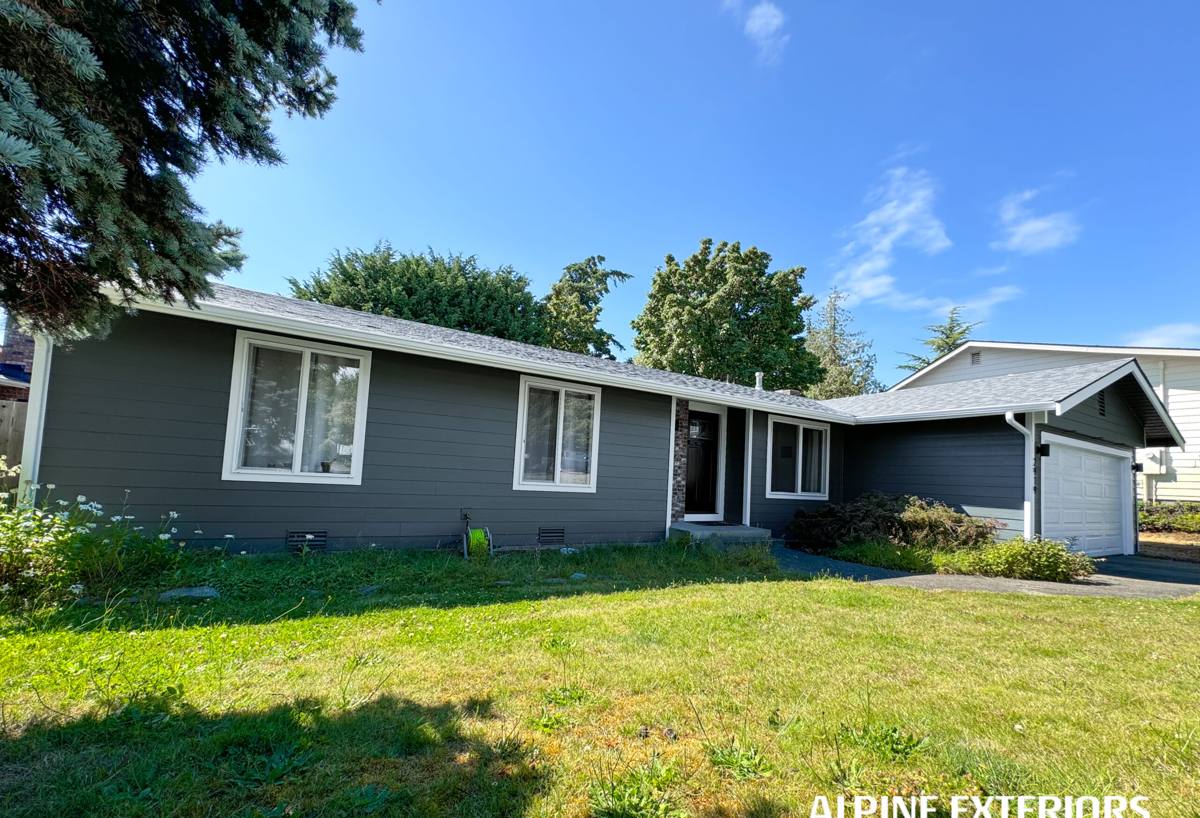
What Skagit County Weather Does to the Wrong Siding
Skagit County as a whole deals with driving rain off Puget Sound, salt-tinged air closer to the water, and a moss season that can run from fall through spring. Sedro-Woolley, being further inland, sees less of the direct salt exposure that hits Anacortes or La Conner, but it more than makes up for it with humidity and shade. Moisture sits on siding longer under a tree canopy, and that's exactly the condition that punishes the wrong material:
- Wood-based products (cedar, primed spruce, engineered wood like LP SmartSide) rely on an intact factory coating and careful field sealing of every cut edge. Miss one edge, and moisture wicks into the substrate. In a shaded, humid valley setting, that mistake shows up faster than it would on a sun-exposed wall.
- Vinyl siding doesn't absorb water the way wood does, but it moves — a lot — with temperature swings, and it depends entirely on the water-resistive barrier and flashing behind it to keep moisture out of the wall assembly. In a climate with this much sustained rain, any gap in that hidden layer becomes a slow, invisible problem.
- Any siding installed without proper rainscreen gap or flashing detail will trap moisture against the sheathing regardless of what the siding itself is made of. This is a installation problem more than a product problem, but some products are far less forgiving of installation shortcuts than others.
None of this means those products are junk — it means they each carry a maintenance burden or an installation-sensitivity that we've decided isn't worth the risk on homes in this climate.
Why We Install Only James Hardie Fiber Cement
We standardized on James Hardie fiber cement siding for every home we work on, including here in Sedro-Woolley, for a simple reason: it's the product line best matched to Skagit County's moisture load, and it doesn't ask a homeowner to babysit it.
How it holds up to the local climate
Fiber cement is dimensionally stable — it doesn't swell, cup, or split the way wood-based sidings can when they take on and release moisture repeatedly through a wet Cascade-foothills fall and winter. It's also non-combustible, which matters as Washington summers have trended drier and wildfire smoke seasons have become a regular part of the calendar even on the wet side of the state.
ColorPlus factory finish
James Hardie's ColorPlus finish is baked on at the factory under controlled conditions, not brushed on at the job site. That finish is engineered to resist the fading, cracking, and peeling that field-applied paint eventually shows, and it carries its own dedicated finish warranty separate from the substrate warranty.
HZ product lines matched to region
Hardie engineers its HZ5 and HZ10 formulations for specific climate zones — HZ5 for regions like ours with sustained moisture and moderate freeze-thaw exposure. Installing the version actually engineered for the Pacific Northwest, rather than a generic product, is part of what "installed to spec" means to us.
Warranty
James Hardie backs its siding with a long, transferable limited warranty — a real factor if you plan to sell the home down the road, since it follows the house rather than the original owner.
What a Correct Installation Involves
The siding material is only part of the job. Most siding failures we get called out to inspect — on any brand, not just Hardie — trace back to installation shortcuts, not the product itself. A correct install includes:
- Weather-resistive barrier installed and lapped correctly, with all penetrations (vents, hose bibs, electrical) properly flashed before siding goes up.
- Rainscreen gap behind the siding so water that does get past the outer layer can drain and the wall can dry, instead of sitting against the sheathing.
- Correct fastener pattern and clearance — Hardie specifies minimum clearance from grade, roofing, and decking, and specific nailing patterns by product line and exposure.
- Sealed and primed cut edges on every field cut, since factory-primed edges only protect the piece until it's cut to fit.
- Proper trim and flashing at windows, doors, and roof lines — the joints and transitions are where most water intrusion actually starts, not the field of the siding itself.
Any of these done wrong will shorten the life of even the best material on the market. This is why we treat installation quality as equal in importance to the product decision.
Our Process, Start to Finish
1. On-site assessment
We walk the exterior, check for existing moisture damage, evaluate the current siding and water-resistive barrier condition, and look at shade patterns and drainage around the foundation — details that matter more on a wooded Sedro-Woolley lot than they would on an open, sun-exposed site.
2. Scope and estimate
We give a written scope covering tear-off (if applicable), any sheathing repair needed, house wrap, flashing detail, and the Hardie product and color selected, so there's no ambiguity about what's included.
3. Tear-off and substrate check
Old siding comes off and we inspect the sheathing underneath. This is often where hidden moisture damage from a prior installation shows up — it gets addressed before anything new goes on the wall.
4. Weather barrier, flashing, and rainscreen
This hidden layer is what actually keeps water out of the wall long-term. We don't skip or shortcut it to save time, regardless of what's visible from the curb.
5. Siding installation
Panels or lap siding go up to Hardie's fastening and clearance specifications, with every cut edge sealed and every penetration properly flashed.
6. Trim, caulking, and final inspection
Trim boards, corners, and joints get finished, and we walk the completed job checking clearances, fastener lines, and sealant before calling it done.
Cost Factors for a Sedro-Woolley Siding Installation
Every home is different, but the line items that actually move the price are consistent. We won't quote a number without seeing the house, but this is what goes into that number:
| Factor | Why it matters |
|---|---|
| Home size and wall complexity | More corners, gables, and dormers mean more cuts, trim, and labor hours |
| Tear-off vs. new construction | Removing old siding and disposing of it adds labor and dump costs |
| Sheathing condition | Hidden rot or moisture damage found during tear-off requires repair before new siding can go on |
| Siding profile and product line | Lap siding, panel siding, and shingle-style Hardie products differ in material and install cost |
| Trim and accessory work | Window and door trim, corner boards, and fascia detail add material and time |
| Access and site conditions | Steep lots, dense landscaping, and limited staging area (common on wooded Skagit County lots) can slow the work |
Signs Your Sedro-Woolley Home Needs New Siding
Because moisture sits longer on shaded walls in this valley, damage isn't always obvious from the ground. Look for:
- Soft or spongy spots when you press on the siding, especially near the bottom courses or under windows
- Persistent moss or dark streaking that comes right back after cleaning
- Visible warping, cupping, or separation at seams and corners
- Paint that's peeling or bubbling rather than just fading
- Gaps or cracked caulking around trim, windows, and penetrations
- A musty smell or interior wall staining near exterior walls, which can indicate moisture already inside the assembly
Why a Local Crew That Already Works Sedro-Woolley Matters
A crew that works Skagit County regularly knows which details to spend extra attention on here versus a job in a drier climate. That includes recognizing which walls on a wooded, shaded lot need extra flashing attention, understanding how the valley's rain patterns differ from the more exposed towns closer to the water, and knowing what moss and mildew growth actually indicates versus what's cosmetic. It also means being available for warranty follow-up and questions after the job is done, rather than being a crew that was in the area once and moved on.
After Installation: What Upkeep Actually Looks Like
One of the practical advantages of fiber cement in this climate is how little ongoing maintenance it asks for compared to wood-based siding. There's no repainting cycle to stay ahead of the way there is with cedar or primed wood. Homeowners still benefit from an occasional gentle rinse to keep moss and organic buildup from taking hold in shaded areas, and a periodic look at caulking around trim and penetrations, but that's a fraction of the upkeep wood or vinyl siding demands over the same years in a valley climate like this one.
If you're weighing a siding replacement or repair in Sedro-Woolley, we're glad to come take a look and give you a straightforward, no-pressure estimate — no obligation, just an honest read on your home's siding and what it actually needs.