 Skagit County
 Deck Building in Sedro-Woolley's Climate
Sedro-Woolley sits inland from the Skagit River delta, but the same weather pattern that soaks the rest of Skagit County reaches it too: long stretches of driving rain from fall through spring, damp air off the Sound and the Sound-fed valleys, and a moss season that can run most of the year on shaded, north-facing structures. A deck here isn't just outdoor furniture — it's a wood or composite structure that sits low to wet ground, catches runoff from the house, and stays damp for days at a time between dry spells. Decks that aren't built for that reality start showing problems within a few seasons: soft boards, rusted fasteners, slick moss buildup, and ledger connections that trap moisture against the house.
We build and repair custom decks for homeowners throughout Sedro-Woolley and the surrounding Skagit County area, and the approach we use here is shaped by what actually fails on decks in this climate — not a generic build sheet. That means specific fastener choices, specific attention to drainage and airflow under the deck, and material recommendations that account for how much shade and moisture a given yard actually gets.
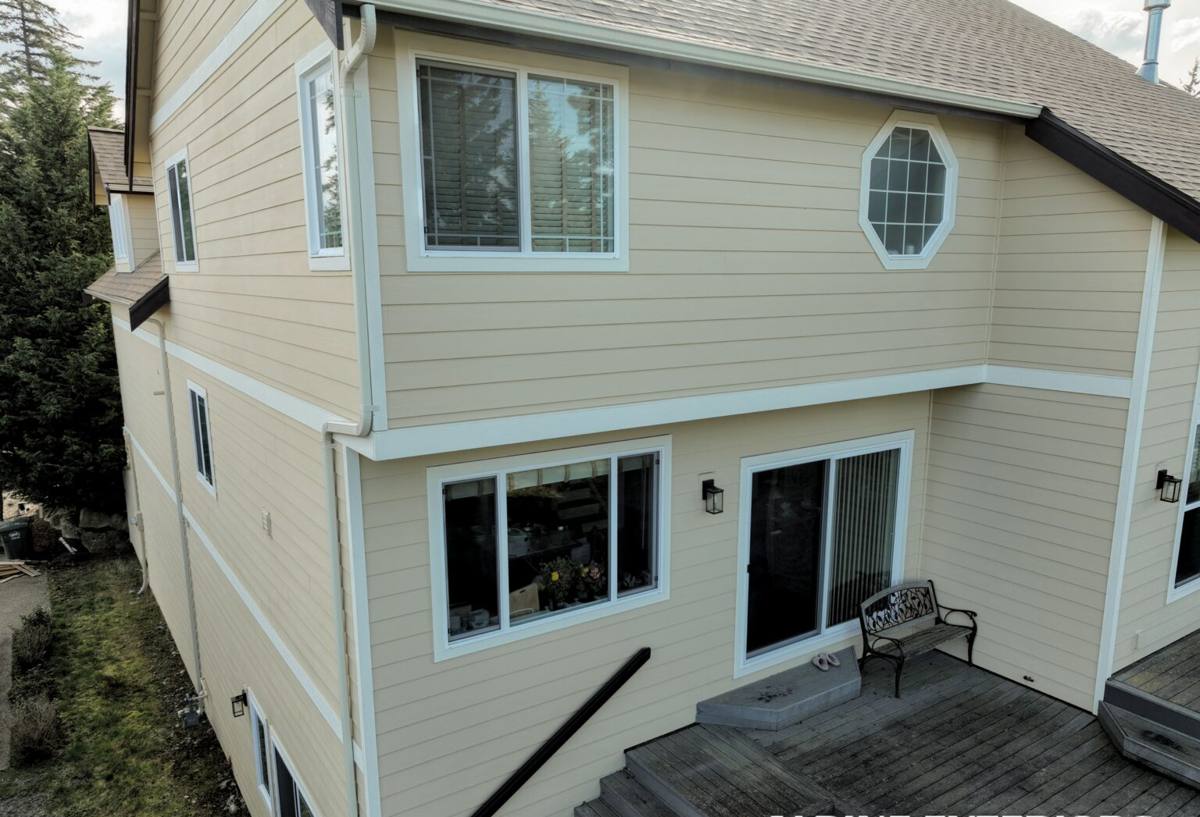
What a Correctly Built Deck Needs Here
Framing and Fasteners
Standard hot-dip galvanized fasteners hold up fine in dry climates, but in a wet coastal-influenced climate they corrode faster than the wood around them, especially where they're in contact with pressure-treated lumber's chemical preservatives. We frame with corrosion-resistant hardware rated for treated lumber contact, and we pay close attention to joist hangers, post bases, and any hardware near ground level or under low-clearance sections where moisture sits longest.
Ledger Attachment and Flashing
The ledger board — where the deck attaches to the house — is the single most common point of hidden rot on decks in this region. If it isn't flashed correctly to shed water away from the house sheathing, moisture gets trapped behind the ledger and rots both the deck framing and the wall structure behind it, often invisibly for years. Proper ledger flashing, correct fastener spacing, and a small air gap or flashing tape detail at that connection are non-negotiable on every deck we build.
Drainage and Ground Clearance
Low decks built close to grade without adequate airflow underneath stay damp constantly, which accelerates rot and gives moss and algae a place to establish. Where clearance allows, we grade and vent the space under the deck; where a deck is necessarily low, we're more selective about decking material and more aggressive about drainage planning so water doesn't pool under the structure.
Choosing the Right Decking Material
There's no single "best" decking material — the right choice depends on how much sun and shade the deck gets, how much upkeep the homeowner wants to do, and budget. Here's how the common options actually perform in Skagit County's damp, moss-prone conditions:
| Material | Moss/Moisture Behavior | Maintenance | Typical Lifespan |
|---|---|---|---|
| Pressure-treated wood | Absorbs moisture, needs regular sealing to shed water and resist moss | Annual cleaning, re-sealing every 1-2 years | 15-20 years with upkeep |
| Cedar | Naturally rot-resistant, still needs sealing in shaded/damp spots | Cleaning and re-oiling every 1-2 years | 15-25 years with upkeep |
| Composite decking | Doesn't absorb water or rot, but moss and algae can still grow on the surface film in shaded areas | Periodic washing, no sealing needed | 25-30+ years, manufacturer-dependent |
| PVC/capped composite | Fully moisture-sealed surface, easiest to keep moss-free with washing | Occasional washing | 25-30+ years, manufacturer-dependent |
For decks with heavy tree cover or north-facing shade — common in wooded Sedro-Woolley lots — we often steer homeowners toward composite or capped PVC simply because it holds up to constant dampness without the sealing maintenance wood requires. For sunnier, more exposed decks, cedar or well-maintained pressure-treated wood is a solid, more budget-friendly option. We'll walk the site with you and give an honest read on what fits your yard rather than pushing one product line.
Design Considerations for This Area
Covered vs. Open Decks
A partial roof or pergola cover over a deck cuts down significantly on how much direct rain the boards take on, which slows moss growth and extends the life of both wood and composite decking. It's a worthwhile add for homeowners who use the deck often and want fewer weekends spent power-washing. Fully open decks still perform well when built correctly — they just need a slightly more disciplined maintenance routine.
Railings and Guardrails
Any deck more than 30 inches above grade needs a code-compliant guardrail, and railing hardware faces the same corrosion pressure as framing fasteners. We use railing systems and connectors suited to a wet climate, and we size baluster spacing and rail height to current code so the finished deck passes inspection without a callback.
Stairs and Landings
Exterior stairs see the most foot traffic in wet, mossy conditions and are where slips are most likely. We factor tread material, stair pitch, and drainage into the design so stairs don't become the slickest part of the deck.
Our Deck-Building Process
- On-site assessment — we look at grade, drainage, sun exposure, and the existing structure (for repairs or rebuilds) before recommending anything.
- Design and material selection — layout, decking material, railing style, and any covered elements, sized to your yard and budget.
- Permitting — we handle the permit application with the City of Sedro-Woolley or Skagit County, depending on the property's jurisdiction.
- Framing and ledger work — correct fastener hardware, ledger flashing, and structural framing built to span and load requirements.
- Decking, railing, and finish work — installed to manufacturer spec for composite/PVC, or properly sealed for wood.
- Final walkthrough — we go over care and maintenance specific to the material you chose before we consider the job done.
Permits and Local Code
Most new deck construction and many deck rebuilds in Sedro-Woolley require a building permit, and requirements can differ slightly depending on whether the property falls under City of Sedro-Woolley jurisdiction or unincorporated Skagit County. Permitting covers footing depth and spacing, ledger attachment method, guardrail height, and stair geometry — all things that get checked by an inspector, not just eyeballed. We pull the necessary permits as part of the job rather than leaving it to the homeowner to sort out, and we build to pass inspection the first time.
Maintenance That Actually Matters Here
Moss and mildew are the two things that shorten a deck's life fastest in this climate, and both are manageable with a routine that isn't complicated — it just has to happen on a schedule instead of only when the deck already looks bad.
- Sweep debris and standing leaves off the deck regularly, especially in fall — trapped organic matter holds moisture and feeds moss growth
- Wash the deck surface at least once or twice a year with a deck-safe cleaner to remove algae and moss film before it gets established
- Check and clear gaps between boards so water drains through instead of pooling
- Re-seal or re-stain wood decking on the schedule the sealer manufacturer recommends — usually every 1-2 years in this climate
- Inspect the ledger board area and any low-clearance sections yearly for soft spots, staining, or fastener corrosion
- Keep nearby vegetation trimmed back so the deck gets airflow and doesn't sit in constant shade
Repair, Rebuild, or Replace
Not every deck problem means starting over. Soft or discolored boards in isolated spots, a handful of corroded fasteners, or a railing that's come loose can often be repaired without touching the rest of the structure. But if the ledger connection has been compromised, if framing members are soft or spongy across multiple joists, or if the deck was never flashed correctly at the house in the first place, patching individual boards just delays a bigger problem. We'll tell you honestly which situation you're in before we quote anything — a full rebuild isn't the answer for every worn deck, and we're not going to sell you one it doesn't need.
Why Hire a Crew That Already Works in Sedro-Woolley
A deck built to a generic national spec sheet doesn't account for what actually happens to lumber and hardware in Skagit County's rain and salt-influenced air. We work on homes throughout this area regularly, which means we've seen how different lots — shaded, sloped, close to the river, exposed to wind — actually perform over time, and we build accordingly instead of guessing. That local familiarity shows up in the small decisions: which fastener grade to spec, how much slope to build into the decking, whether a given yard needs a covered section to keep moss under control. It's the difference between a deck that looks right on day one and one that still looks right in year ten.
If you're planning a new deck, replacing an aging one, or dealing with soft boards and moss buildup on your current deck, we're happy to take a look and give you a straightforward, no-pressure estimate. Use the form below to get started.