 Skagit County
 Building Composite Decks for Sedro-Woolley's Climate
Sedro-Woolley sits where the Skagit Valley flattens out below the Cascade foothills, and that location comes with a specific set of weather problems for anything built outdoors. Homes here see long stretches of driving rain off the Sound and the valley, damp, low-light winters that favor moss and algae growth on any horizontal surface, and enough humidity year-round that wood decking rarely gets a real chance to dry out between storms. A deck built for a drier climate, or built without much thought for this one, tends to show it within a few seasons: cupped boards, black staining in the shade, soft spots where water sits.
Composite decking was developed specifically to deal with this kind of environment better than solid wood does, but "composite" isn't one product, and not every composite board or installation approach holds up the same way here. This page covers what actually matters for a composite deck built in and around Sedro-Woolley: what the material is, what correct installation looks like given our rain and moss season, what it costs to do right, and how we run the job from first look to final walkthrough.
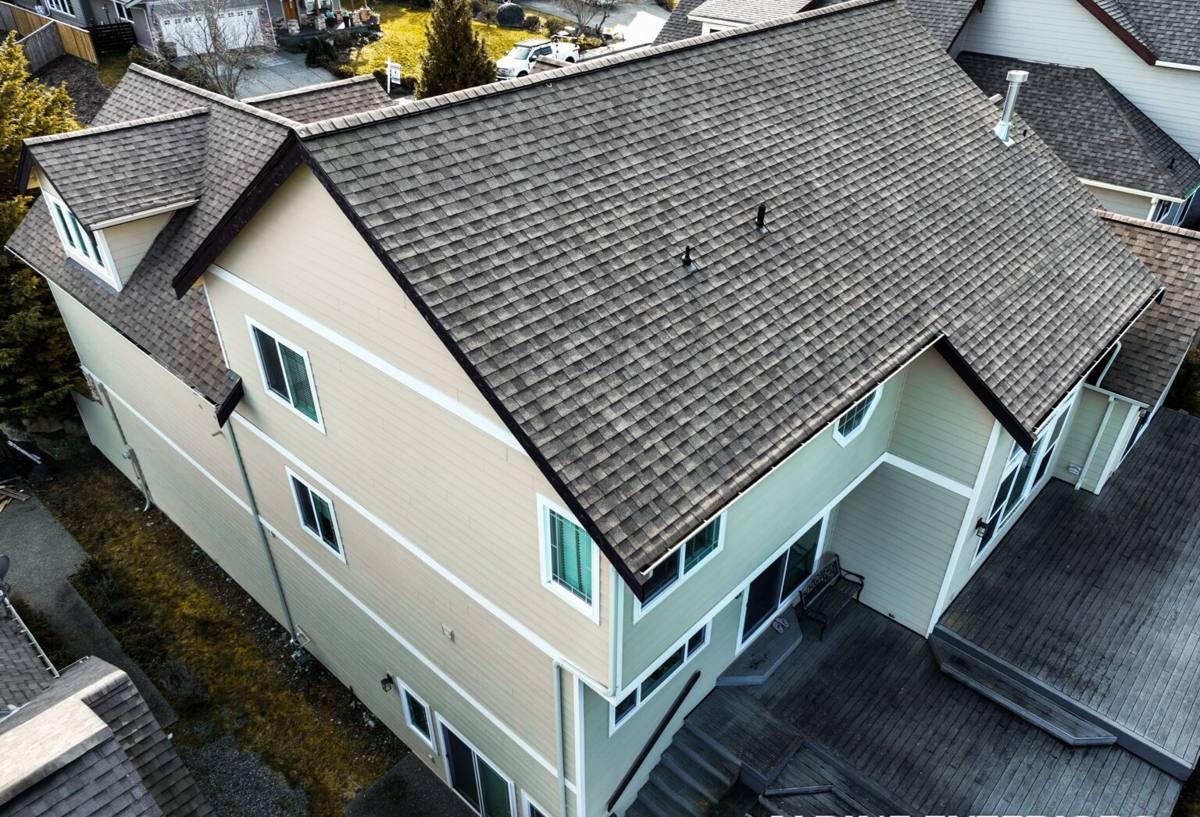
What Composite Decking Actually Is
Composite deck boards are made from a blend of wood fiber and recycled plastic, formed into a board and, in almost every product worth installing today, wrapped in a plastic "cap" shell on all four sides. That cap layer is the part that matters most for our climate — it's what keeps water, dirt, and organic material from getting into the wood fiber core in the first place. Older, uncapped composite products from years back let moisture wick into the core over time, which is part of why composite decking earned a mixed reputation in some circles. Capped composite is a different product in practice, and it's the only kind we install.
Within capped composite there's still real variation: board density, the texture and color-fastness of the cap, and how the boards are engineered to handle thermal expansion all differ by manufacturer and product line. We'll walk you through the specific options and trade-offs for your project rather than push one brand — the right choice depends on your budget, how much sun or shade the deck gets, and how the space will be used.
How It Differs From PVC and Wood
PVC decking is a related but distinct product — it's fully synthetic, with no wood fiber at all, which makes it even more moisture-indifferent but changes the feel underfoot and the price point. Solid wood, whether cedar or a pressure-treated species, costs less up front but demands real annual upkeep — stripping, sealing, and re-staining — to keep moisture out, upkeep that's harder to stay ahead of in a climate that rains as often as ours does.
Why Composite Makes Sense for This Area's Weather
Driving Rain and Standing Moisture
The capped surface of a good composite board sheds water instead of absorbing it, which matters when a deck can go weeks at a time without a real dry spell. The bigger factor, though, is what's underneath the boards — proper drainage and airflow in the substructure do more to protect a deck long-term than the board material alone.
Moss and Algae
Skagit County's long moss season is hard on any outdoor surface with texture and shade, and decking is no exception. Composite's smooth, non-porous cap gives moss and algae far less to grip onto compared to raw wood grain, and it doesn't provide the organic food source that wood fiber does. It's not moss-proof — nothing outdoors here truly is — but it's dramatically easier to keep clean, and buildup that does form usually rinses off rather than staining the board permanently.
Freeze-Thaw at the Foothills Edge
Sedro-Woolley sits close enough to the foothills that winter temperature swings are a bit more pronounced than closer to the Sound. Composite boards handle freeze-thaw cycling well, but the fasteners, board spacing, and substructure all need to be installed with thermal movement in mind — composite expands and contracts more than wood with temperature, and a deck installed without accounting for that can develop buckling or gapping issues over a few winters.
What a Correctly Built Composite Deck Involves
The board itself is maybe a third of what determines how a composite deck performs over time. The rest comes down to the structure underneath and the details most homeowners never see once the project is finished.
- Footings and framing sized to code — post spacing, beam sizing, and joist span all need to match the actual load and local building requirements, not just "what the last deck used."
- Joist spacing matched to the board manufacturer's spec — composite boards often require tighter joist spacing than wood, especially at angles or on stairs; installing composite on wood-spec framing is a common shortcut that leads to bounce and premature sagging.
- Ledger board flashing done correctly — where the deck attaches to the house is the single most common failure point on any deck in a wet climate; proper flashing keeps water from working its way behind the siding.
- Ground and structural clearance — enough air gap under the deck to let moisture evaporate rather than sit trapped against framing.
- Hidden fastener systems — most quality composite installs today use a clip-and-groove fastening system rather than face-screwing, which gives a cleaner look and avoids creating screw-hole entry points for water.
- Correct board gapping — spacing that accounts for both drainage and the board's expected thermal expansion.
- Joist tape or a comparable protective layer — a moisture barrier on top of the joists themselves, which extends the life of the framing lumber even though the composite boards above it are moisture-resistant.
Skip any one of those and the boards can be flawless while the deck still fails early — usually at the framing or the ledger connection, not the decking surface itself.
Composite vs. Other Decking Materials
| Material | Moisture/Moss Resistance | Annual Maintenance | Typical Lifespan | Relative Cost |
|---|---|---|---|---|
| Capped Composite | Strong — sheds water, resists staining | Occasional wash | 25–30+ years | Mid to upper |
| PVC | Strongest — fully synthetic | Occasional wash | 25–30+ years | Upper |
| Cedar | Moderate — needs sealing to hold up | Annual strip/seal or stain | 10–15 years with upkeep | Lower up front |
| Pressure-Treated Wood | Weak without upkeep | Annual sealing recommended | 10–15 years with upkeep | Lowest up front |
Cost Factors for a Composite Deck Project
Every composite deck quote in this area is built from the same handful of variables. Rough, honest ranges — actual numbers depend heavily on your site:
| Factor | Why It Moves the Price |
|---|---|
| Deck size and shape | Square footage and the number of angles, stairs, or level changes all add labor |
| Board tier | Composite product lines range from entry-level capped boards to premium high-density lines |
| Substructure condition | New framing vs. attaching to or replacing an existing structure |
| Height and railing needs | Elevated decks require more framing, code-compliant railing, and sometimes stairs |
| Site access | Slope, existing landscaping, and how close a work area is to the house affect labor time |
| Permitting | Most new decks require a permit through the local building department; this is a real line item, not paperwork we skip |
We'll walk your specific site before giving a number — a flat "per square foot" figure without seeing the ground, the house connection point, and the grade isn't an honest estimate.
Our Process From Estimate to Finished Deck
Site Assessment
We look at the ground, the drainage path, how the deck will tie into the house, and what condition any existing structure is in before we talk numbers. This is also where we flag anything specific to your lot — grade, shade, prior moisture damage — that affects the build.
Design and Permitting
We handle the structural planning and the permit application, sized correctly for your project rather than assuming the minimum will pass. Skipping permitting on a new deck is a common corner-cutting move in this trade, and it's one that can come back on the homeowner at resale or insurance time.
Build
Footings and framing go in first, built to the spacing the composite manufacturer specifies rather than generic wood-deck spacing. Ledger flashing, joist protection, and drainage detailing happen before a single deck board goes down. Boards are installed with the fastening and gapping the product calls for.
Final Walkthrough
We go over the finished deck with you, including what maintenance actually looks like and what warranty coverage applies to the boards versus the installation work.
Maintenance: What Owning a Composite Deck Actually Looks Like
Composite cuts the workload compared to wood, but "maintenance-free" oversells it, especially in a climate with a real moss season. Here's what ongoing care realistically involves:
- Sweep off debris and standing organic matter regularly through fall and winter, when leaves and needles trap moisture against the board surface
- Wash the deck surface a couple of times a year with mild soap and water to stay ahead of moss and algae film before it sets in
- Keep gutters and downspouts near the deck clear so runoff isn't dumping directly onto the boards
- Check railing and stair connections annually for looseness — hardware, not the boards themselves, is usually the first thing to need attention
- Avoid pressure-washing at close range or high pressure, which can damage the cap layer on some products — a soft wash is enough
Why Hiring a Crew That Already Works Sedro-Woolley Matters
A lot of what makes a composite deck perform well here isn't in the product spec sheet — it's knowing how the local building department wants footings and setbacks handled, understanding which lots around Sedro-Woolley have drainage quirks from the valley's flat grade, and having built enough decks through a Skagit County winter to know exactly where water tends to find its way in. A crew that's only installed decking in a drier climate, or that's new to this county's permitting process, is more likely to miss the details that don't show up as a problem until year three.
We work this area regularly, which means we're not learning the local code requirements or the regional weather pattern on your project. It also means if something ever needs a warranty follow-up, we're not a company that has to drive in from out of the area to take a look.
If you're weighing composite decking for a Sedro-Woolley property, we're glad to come take a look at your site and put together a straightforward, no-pressure estimate — just fill out the form below.