 Skagit County
 Windows Built for Concrete's Upriver Climate
Concrete sits up the Skagit River corridor, in the foothills of the North Cascades, and that location changes what a window has to deal with compared to homes closer to the water. Along the coastal parts of Skagit County, salt air is the main enemy of exposed metal and finishes. Up here, the bigger issues are moisture and temperature swing: heavier, longer rain events funneling down the valley, high humidity that lingers under tree cover and in shaded lots, a long moss season that keeps trim and sills damp for months at a time, and colder winter nights and hotter summer days than you'd see right on the water. A window that was only ever tested against mild coastal conditions can struggle here — not because it's a bad product, but because it was never matched to this specific climate.
That combination of dampness and temperature swing is exactly why energy efficiency and moisture management have to be solved together on any window job in this area. A window that stops air leaks but traps moisture in the wall cavity is just moving the problem, not fixing it.
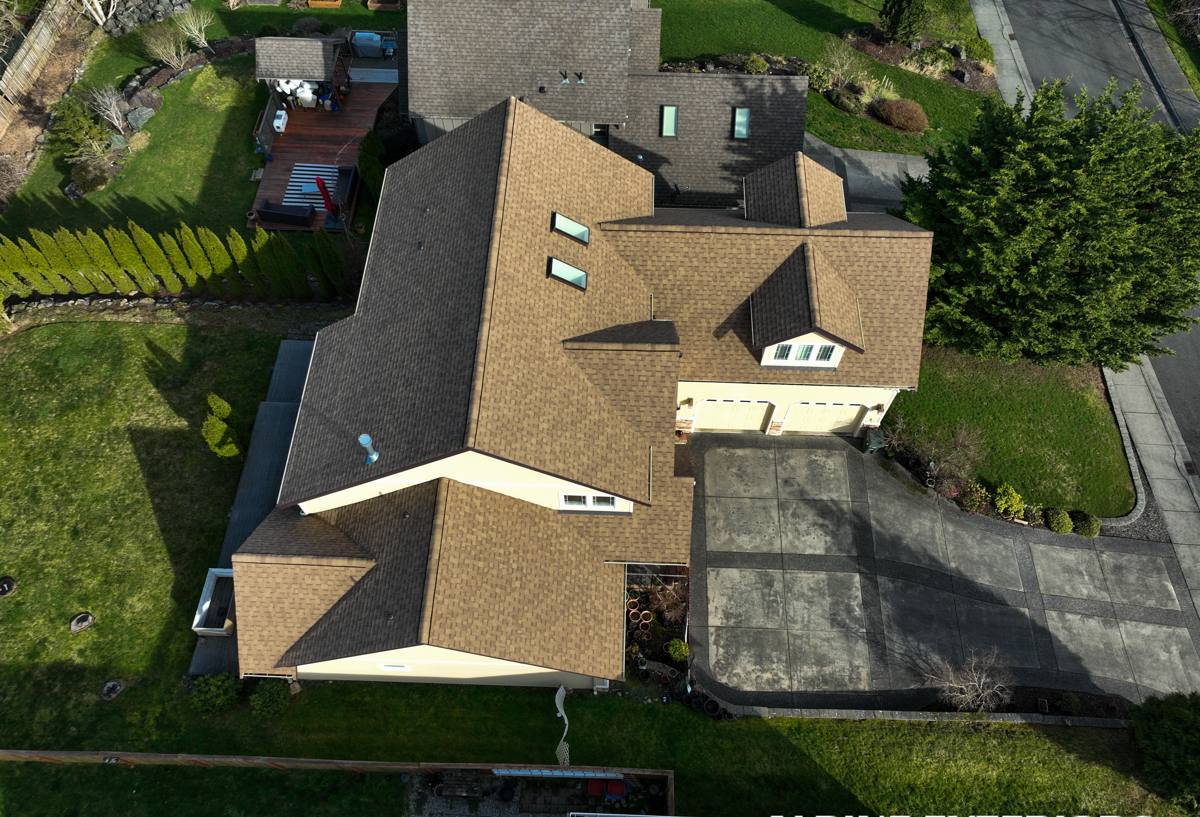
What a Correctly Specified Window Needs to Do Here
Before we talk about brands or styles, it helps to know what we're actually solving for on a Concrete home. There are four things every window in this climate has to manage at once:
- Air infiltration control — stopping drafts around the sash and frame, which is where most of the winter heat loss and summer heat gain actually happens.
- Condensation resistance — the temperature swing between a cold night and a warm, humid house creates condensation risk on the glass and frame. Poor condensation resistance leads to sill rot and mold, not just fogged glass.
- Water management at the opening — the window itself can be excellent and still cause damage if the flashing and sill pan around it aren't detailing water away from the wall assembly.
- UV and thermal stability — long summer sun exposure on south- and west-facing walls can degrade seals and finishes faster than expected, especially on older frame materials.
Get all four right and a window will genuinely lower your heating and cooling costs and stay trouble-free for decades. Miss any one of them and you end up with a window that looks fine but underperforms — or worse, one that's quietly rotting the wall behind it.
Why Older Concrete Homes Are Especially Sensitive to This
A lot of the housing stock in and around Concrete includes older single-pane wood windows, early aluminum-frame replacements, or homes with limited attic and wall ventilation. These older assemblies weren't built with today's insulation standards in mind, so when we replace windows in these homes we're not just swapping glass — we're often correcting decades of built-in air leakage and moisture patterns at the same time.
Frame Material Comparison
There's no single "best" frame material — the right choice depends on the home, the budget, and how much upkeep you want to take on. Here's how the common options stack up for this climate specifically:
| Frame Material | Moisture Performance | Maintenance | Best Fit For |
|---|---|---|---|
| Vinyl | Good — won't rot, minimal expansion issues | Low | Most homes; strong value for the performance |
| Fiberglass | Excellent — very stable in temperature swings | Low | Homes with heavy sun exposure or wide seasonal swings |
| Wood | Requires diligent upkeep in high-moisture areas | High | Historic character homes where original look matters |
| Wood-clad (wood interior, clad exterior) | Good if flashing detail is correct | Moderate | Homes wanting a wood interior look without full wood maintenance |
| Aluminum | Poor thermal performance, prone to condensation | Low | Rarely recommended for primary living-space windows in this climate |
Our standard recommendation for most Concrete homes is vinyl or fiberglass, specifically because they hold up to the damp/dry, cold/hot cycle here without the ongoing sealing and repainting that wood demands. We're not against wood windows on principle — on a home where matching original character matters, they're a legitimate choice — but we're upfront that they come with a real maintenance commitment in this climate, not a "set it and forget it" one.
Glazing, Gas Fill, and Coatings — What Actually Matters
The frame gets most of the attention, but the glass package is doing a lot of the energy-efficiency work. A few things worth understanding before you shop:
Double vs. Triple Pane
Double-pane windows with a good low-E coating and argon fill are the standard, cost-effective choice for most homes in this area and perform well. Triple-pane adds meaningfully better insulation and sound dampening, at a higher upfront cost — worth considering on north-facing rooms, bedrooms near a busy road, or homes where winter heating cost is a real concern.
Low-E Coatings
Low-emissivity coatings reflect heat back into the room in winter and block excess solar heat gain in summer. Given how much temperature swing Concrete sees between seasons, a properly specified low-E coating pulls real weight here — it's not an upsell, it's one of the highest-value parts of the window.
Gas Fill and Spacer Systems
Argon (or krypton on premium units) between panes slows heat transfer compared to plain air. The spacer that separates the panes at the edge of the glass also matters more than most homeowners realize — a warm-edge spacer reduces the cold edge effect that causes condensation to form in a ring around the glass first.
Our Installation Process
- On-site assessment — we look at existing frame condition, sill and header flashing, insulation behind the trim, and any signs of past moisture intrusion before we quote anything.
- Product selection — we walk through frame material, glazing package, and grille/style options matched to the home and your budget, not a one-size-fits-all package.
- Removal and opening prep — old units come out carefully to protect surrounding siding and trim, and we inspect the rough opening for rot or damage before anything new goes in.
- Flashing and sill pan installation — this is the step that gets skipped by rushed crews and causes the most callback problems down the road. We treat it as non-negotiable.
- Window set and shimming — square, plumb, and properly shimmed so the sash operates correctly and the seal performs as designed.
- Insulation and air sealing — low-expansion foam or backer rod around the frame, sized correctly so it doesn't bow the frame inward.
- Interior and exterior trim-out — finished to match the home, with attention to caulking joints that will actually shed water instead of trapping it.
- Final walkthrough — operation check on every window, and a plain explanation of what was done and why.
Signs Your Current Windows Are Already Failing
Not every window problem is obvious from across the room. Here's what we'd look for on a home in this area:
- Fogging or a permanent haze between the panes — the seal has failed and the gas fill is gone.
- Soft or discolored wood at the sill or lower corners of the frame.
- Noticeable draft when standing near the window on a windy day.
- Difficulty opening, closing, or locking — often a sign the frame has shifted or swollen.
- Moss or dark staining building up on the exterior trim faster than on the rest of the siding.
- Condensation forming on the inside of the glass regularly through fall and winter.
- Noticeably higher heating bills compared to similarly sized homes with newer windows.
Cost Factors to Understand Before You Get Quotes
| Factor | Why It Moves the Price |
|---|---|
| Frame material | Vinyl is typically the most affordable; fiberglass and wood cost more upfront |
| Glazing package | Triple-pane and premium low-E/gas-fill combinations add cost but lower long-term energy bills |
| Rough opening condition | Rot repair or reframing behind old windows adds labor beyond the window itself |
| Number and size of openings | Larger or custom-shaped windows cost more per unit than standard sizes |
| Full-frame vs. insert replacement | Full-frame replaces flashing and trim too; inserts are faster but only make sense on sound existing frames |
We'll always tell you honestly if insert replacement is appropriate for your home or if the existing frame condition means a full-frame job is the right call — the cheaper option isn't always the right one if the frame behind it is already compromised.
Why Hiring a Crew That Already Works Concrete Matters
Window performance claims on a spec sheet assume ideal lab conditions. What actually determines how a window performs for the next twenty years is the install — the flashing detail, the shimming, the air sealing, and whether the crew understood what this specific climate does to a wall assembly over time. A crew that regularly works homes throughout Skagit County, from the coastal towns dealing with salt air to upriver communities like Concrete dealing with humidity and moss, has already seen how different frame materials and installation details hold up here over multiple seasons — not just on paper.
That experience also means fewer surprises during the job itself. Rural and older properties in this area often have non-standard rough openings, settled framing, or original wood trim worth preserving, and it helps to have a crew that's used to working around those realities rather than treating every home like a new-construction install.
Getting Started
If your windows are original to the home, showing condensation or drafts, or you're just planning ahead for a remodel, we're happy to come take a look and give you a straightforward, no-pressure assessment of what your home actually needs. There's a form below to request a free estimate — we'll walk the home, answer your questions honestly, and give you options that fit your budget and your house, not a one-size-fits-all package.